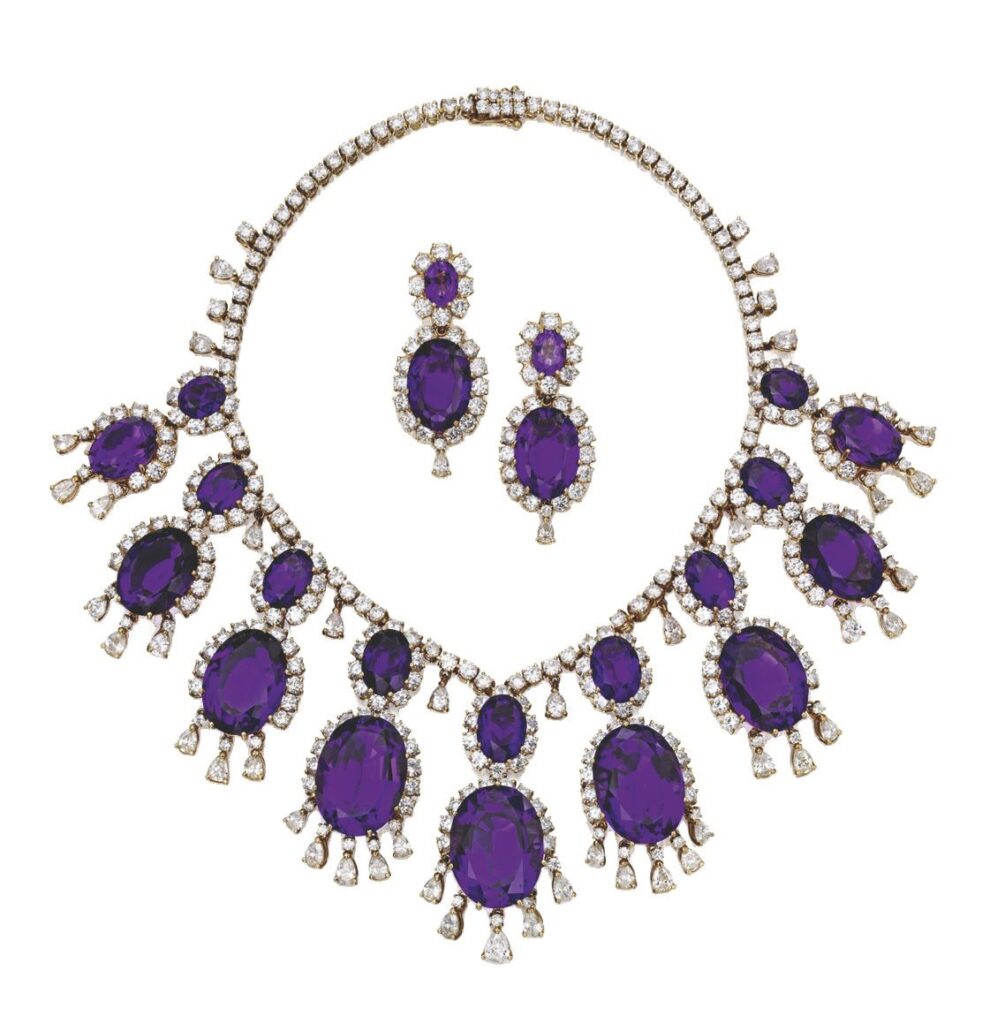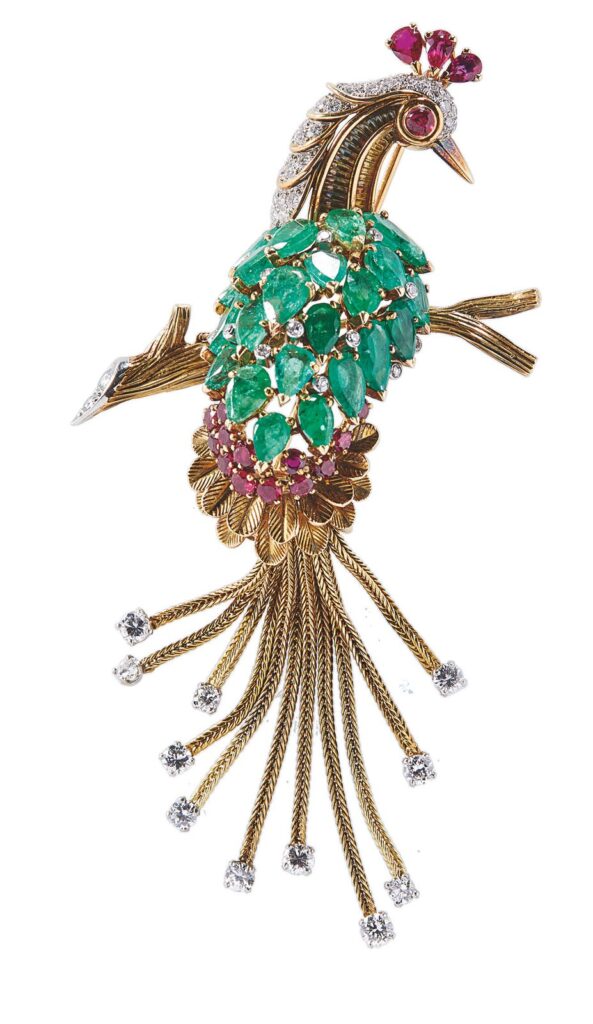
Hardly any gemstone combines so many stories and meanings as Amethyst, the Queen of Quartz. Its deep purple hue was once reserved for kings and clerics. Beyond its status of power, it was believed to have magical properties protecting against drunkenness and evil. Its history stretches from early antiquity to contemporary fashion, carrying legends and symbolism along the way.
The name amethyst, from the ancient Greek amethystos, meaning “not intoxicated,” recalls a legend in which the goddess Diana transformed a maiden into clear crystal to save her from Bacchus (Dionysus). When Bacchus spilled wine on the crystal, it stained the stone purple. This tale gave rise to the enduring belief that amethyst wards off drunkenness, a faith still visible in museum collections of goblets and cups.

Prehistoric Cults
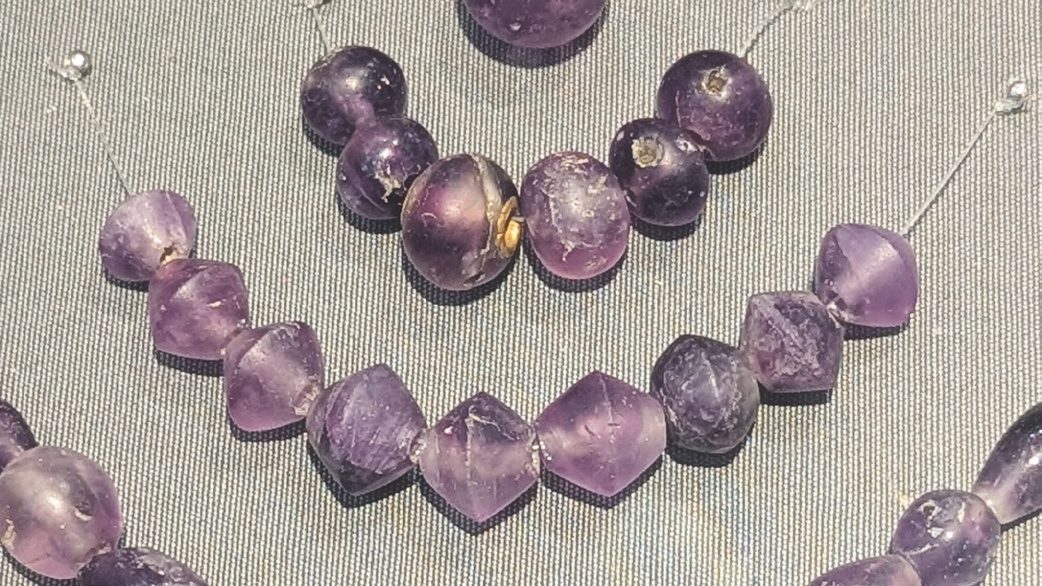
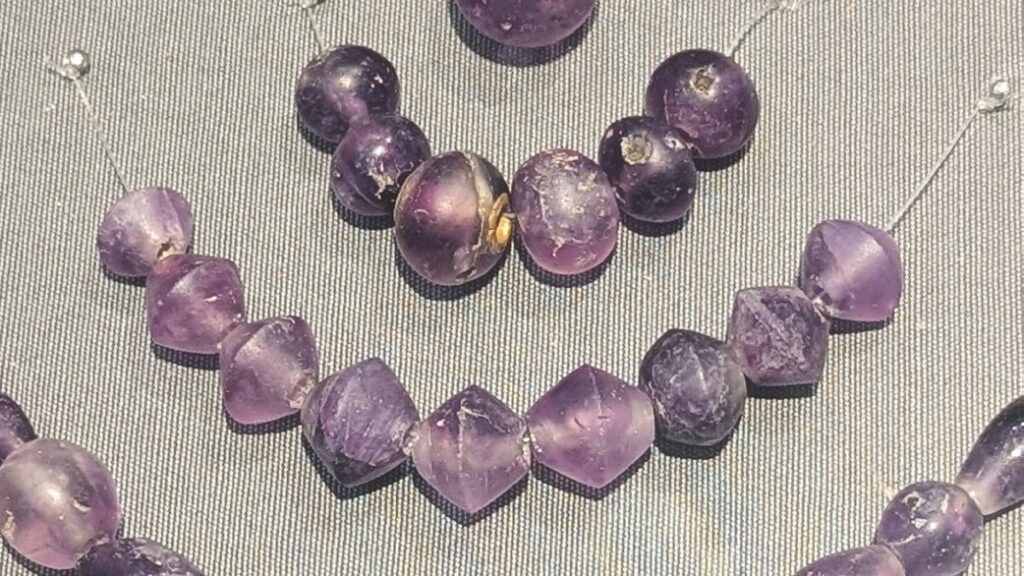
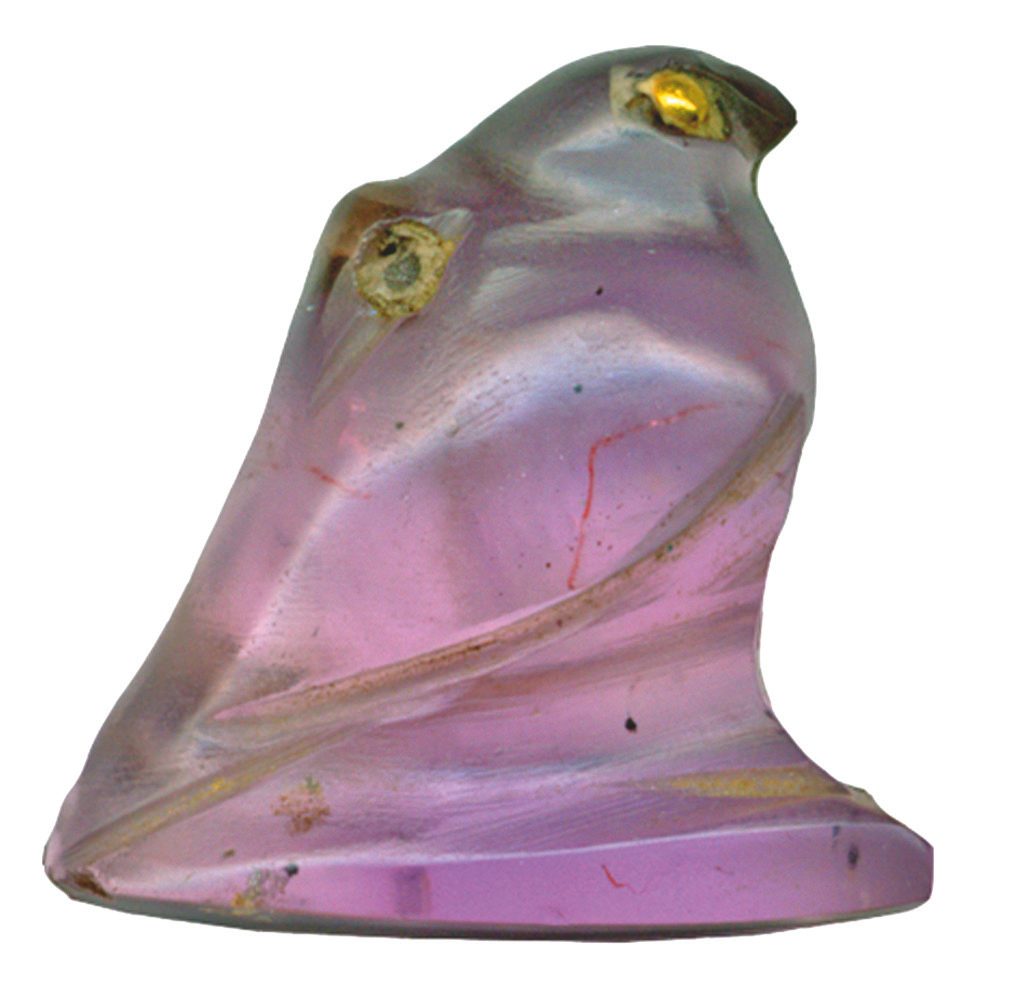
The earliest amethyst artifacts, dating to around 3000 BCE, were found in Egypt and Nubia. At that time, amethyst was fashioned into beads and pendants using a rotary bow-driven tool. Its popularity peaked during the Middle Kingdom (circa 2000 BCE), when Egyptians wore amulets in life and in burial as protective charms against evil. Numerous beads and beautifully carved scarabs from Nubia or southern Egyptian sites attest to its widespread use—even across the ages.

Curiously, predynastic Egyptians were already experimenting with amethyst imitations, coating soapstone with violet glazes or firing powdered quartz into lilac-hued materials that could be carved into beads, cameos, or small figures symbolizing goddesses.
We also know about the importation and adaptation of Egyptian artefacts and iconography in Bronze Age Greece, such as the Prosymna tomb beads dating from the Palatial period (2000–1200 BCE), mixing amethyst necklaces with amethyst-colored glass beads.
Antiquity (circa 800 BCE–500 AD)
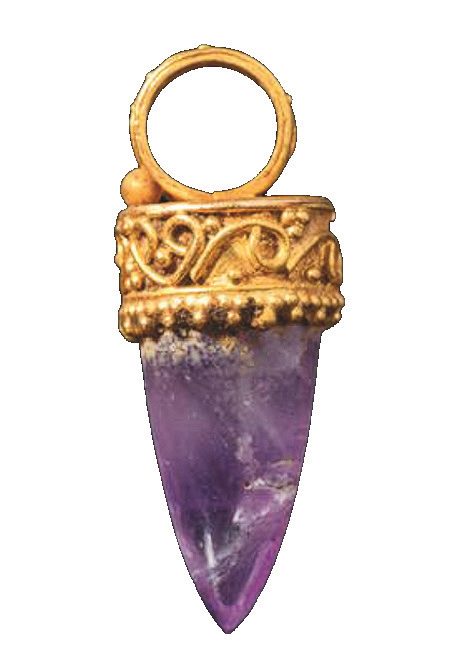
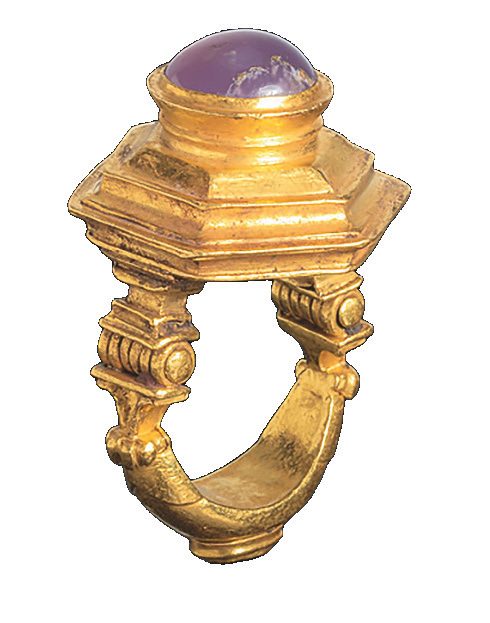
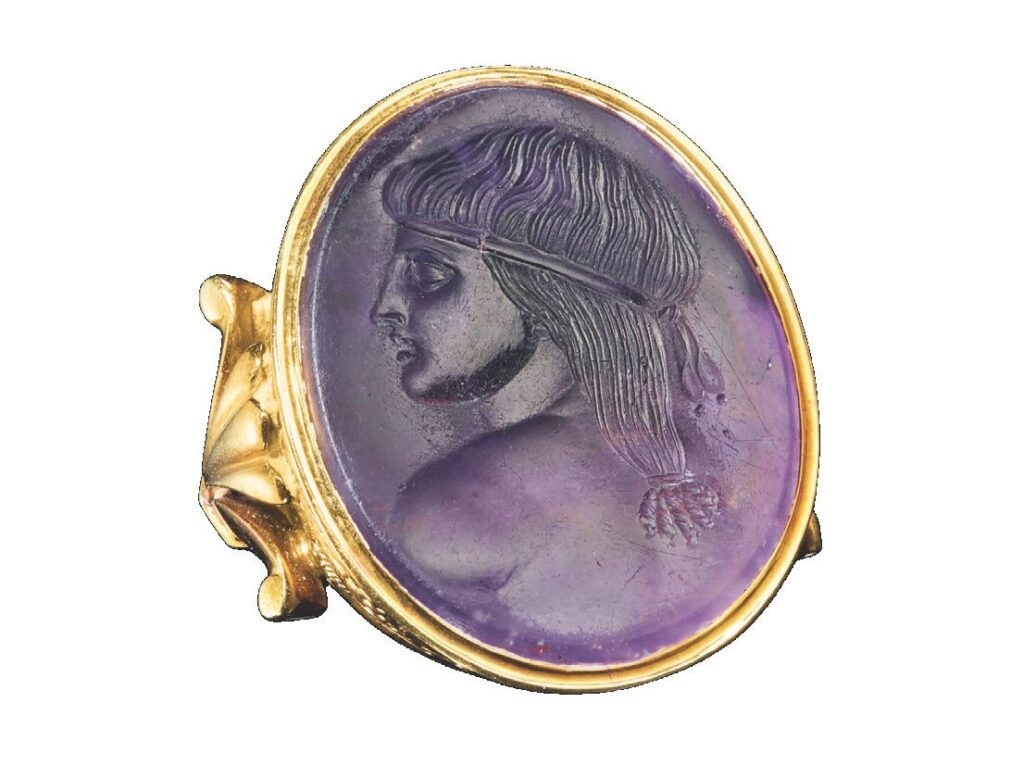
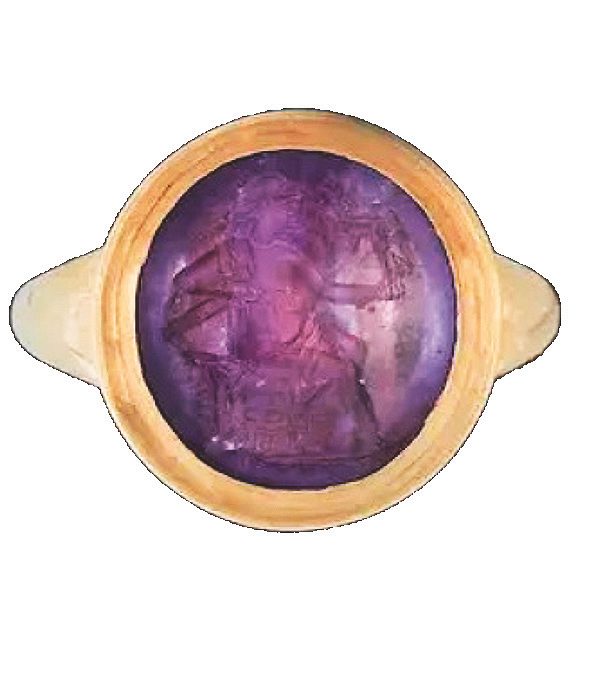
Since antiquity, amethyst symbolized dignity and spiritual power. In the Old Testament, it adorned the high priest’s breastplate, a crowning jewel of devotion. Ptolemean, Roman, and Greek elites prized it as a token of authority, and Pliny the Elder lauded its “shining purple.”
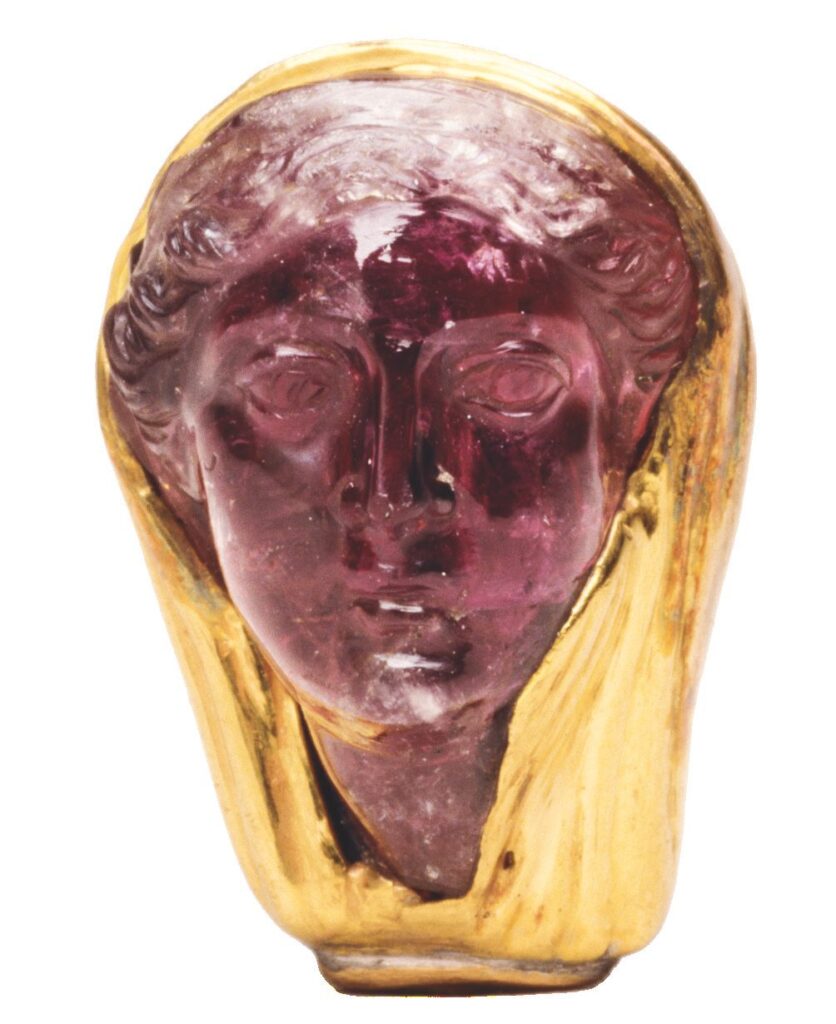
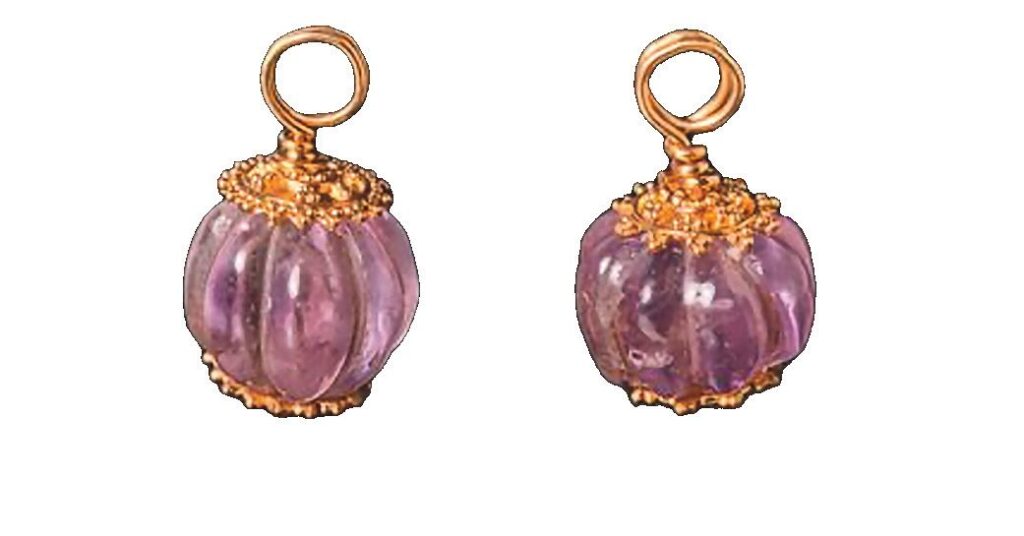
During the Roman-Hellenistic period (ca. 300 BCE– 400 AD), amethyst served as ornaments and talismans, embodying the gem’s beauty and protective symbolism. By the late Roman Empire, its use extended to lower social classes, showing its broad appreciation. Timeless in its appeal, this jewelry would be as desirable to wear today as it was in antiquity.
Byzantine and Early Europe (500 AD–1453 AD)
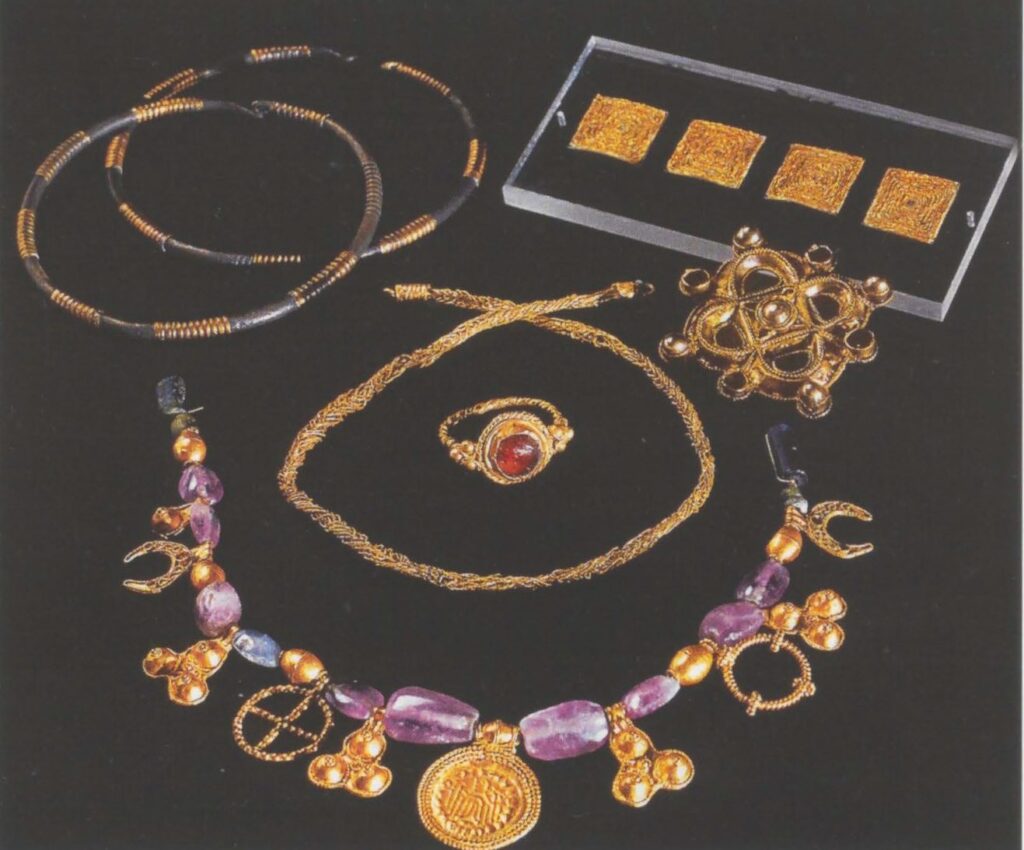
From the 4th century onward, gemstones circulated across the Mediterranean and Merovingian worlds. Amethyst was prized in both the Byzantine Empire and Germanic kingdoms evidencing East-West trade influences.
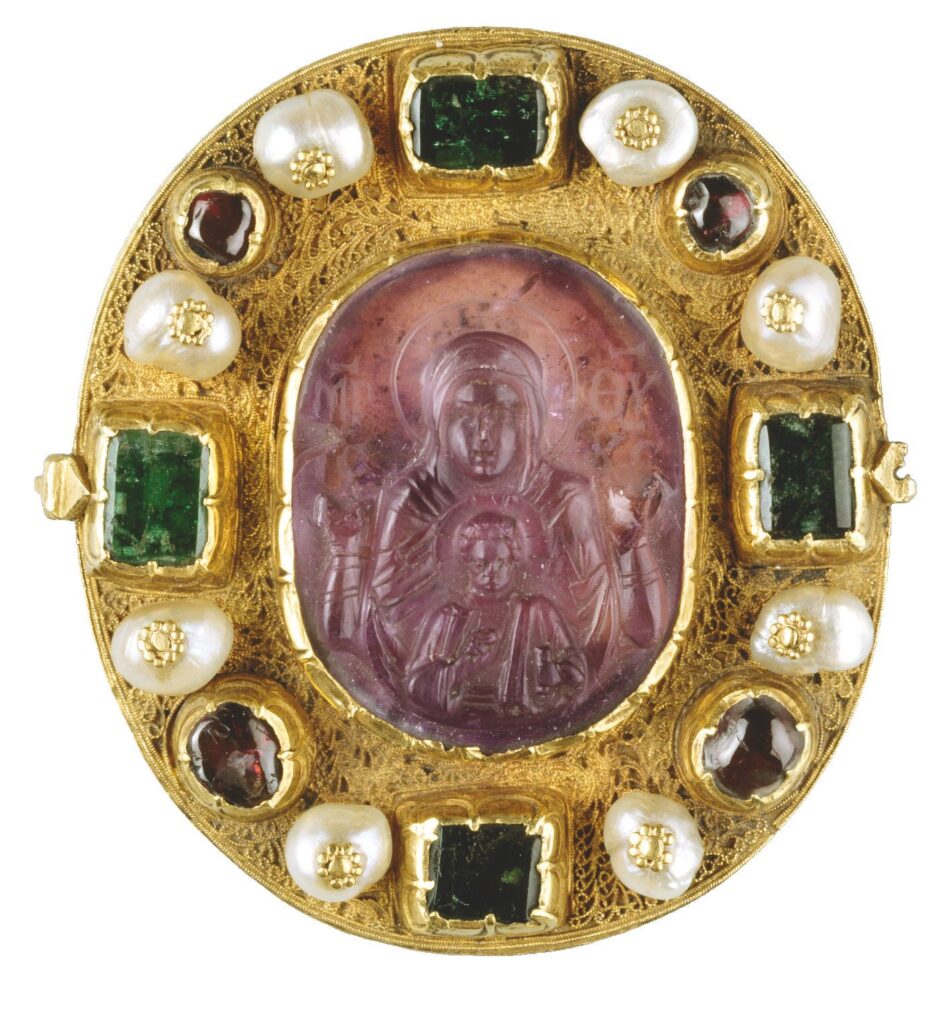
Beads reveal similar shapes, drilling techniques, and necklace usage, although Byzantine examples were more often paired with pearls.
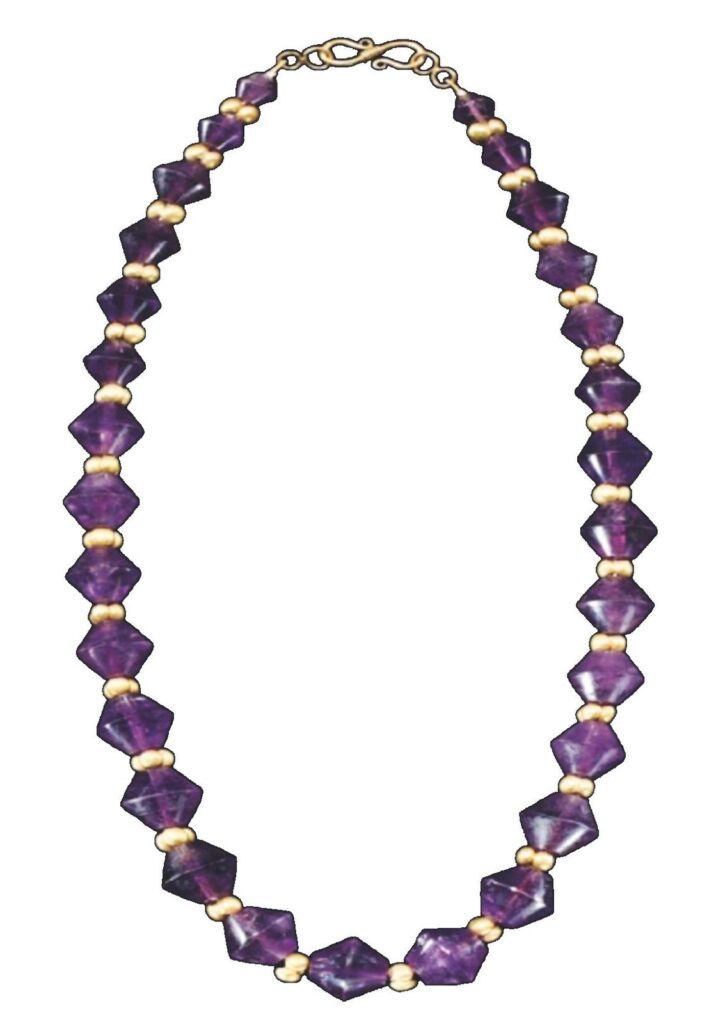
Amethyst also appears in Anglo-Saxon Britain, southern Scandinavia, and the Frankish kingdoms, signaling its popularity among ordinary people. It featured prominently in women’s necklaces and brooches.
Beyond ornaments, it increasingly acquired sacred significance: Christian crosses and ciboria were inlaid with gold, enamel, and gemstones, while emperors’ jeweled garments echoed the high priest’s breastplate and the heavenly Jerusalem. Amethyst became so treasured that 6th-century edicts reserved the gemstone for the imperial family.
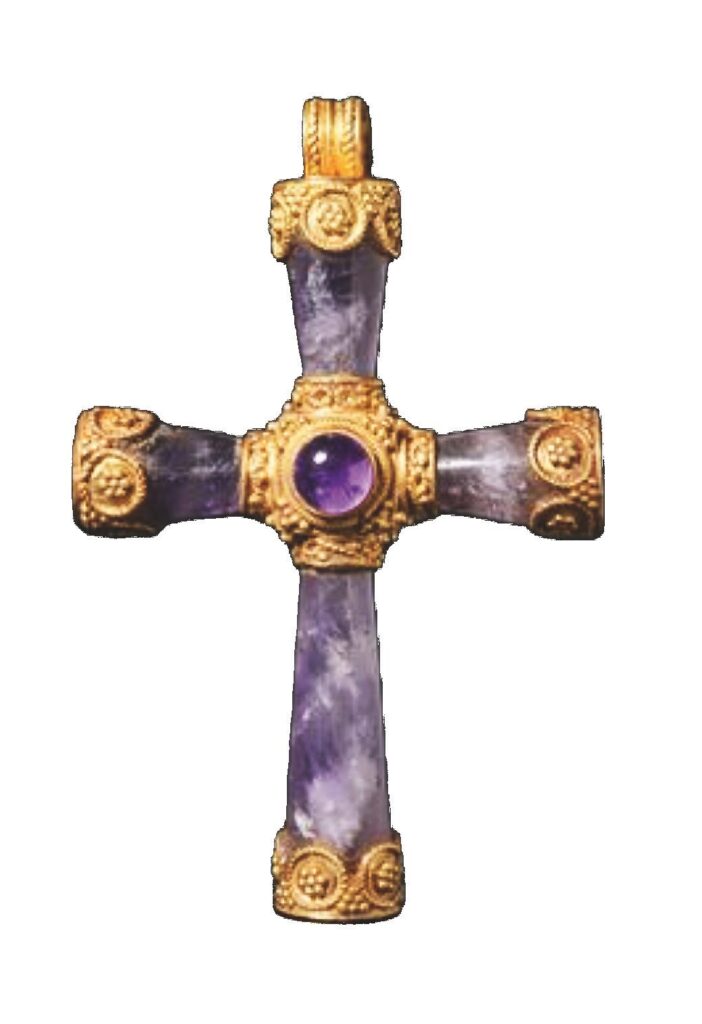
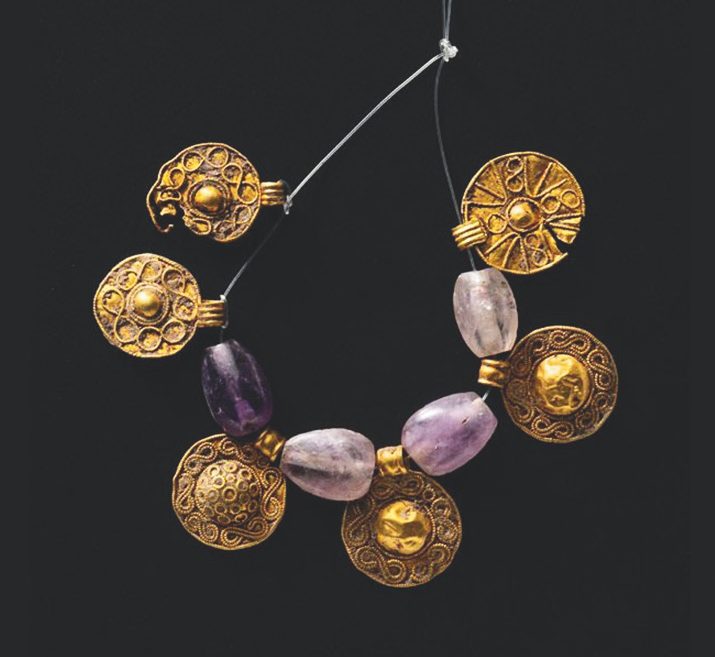
A ciborium is a covered vessel, often made of precious metal, used in Christian liturgy to hold the consecrated hosts (the Eucharist). It typically resembles a chalice with a lid and is kept in the tabernacle when not in use.
Medieval Period (circa 500 AD–1500 AD)
In the Middle Ages, amethyst became the clergy’s emblem: popes, cardinals, and bishops wore it as a sign of purity and steadfast faith, and its violet glow was thought to ward off temptation and evil. Linked to Saint Valentine, it symbolized love, while its royal allure also adorned profane crowns and scepters.
Christian crusaders carried amethyst on rosaries and portable altars to the Holy Land, trusting the stone to bring courage and divine protection.
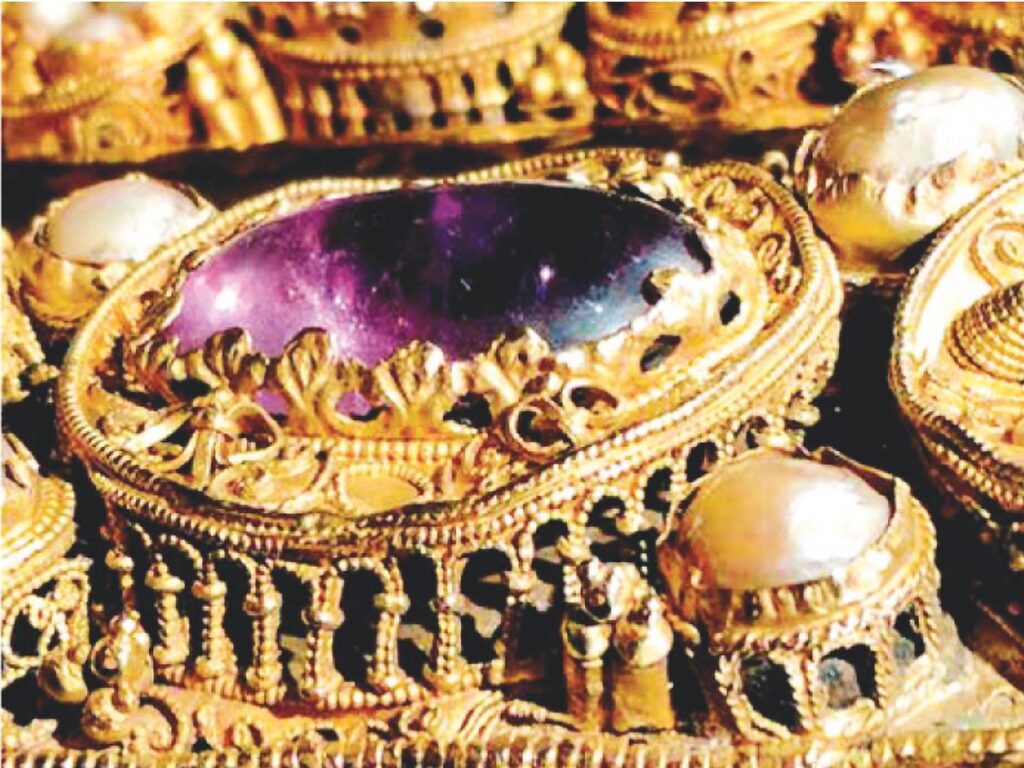
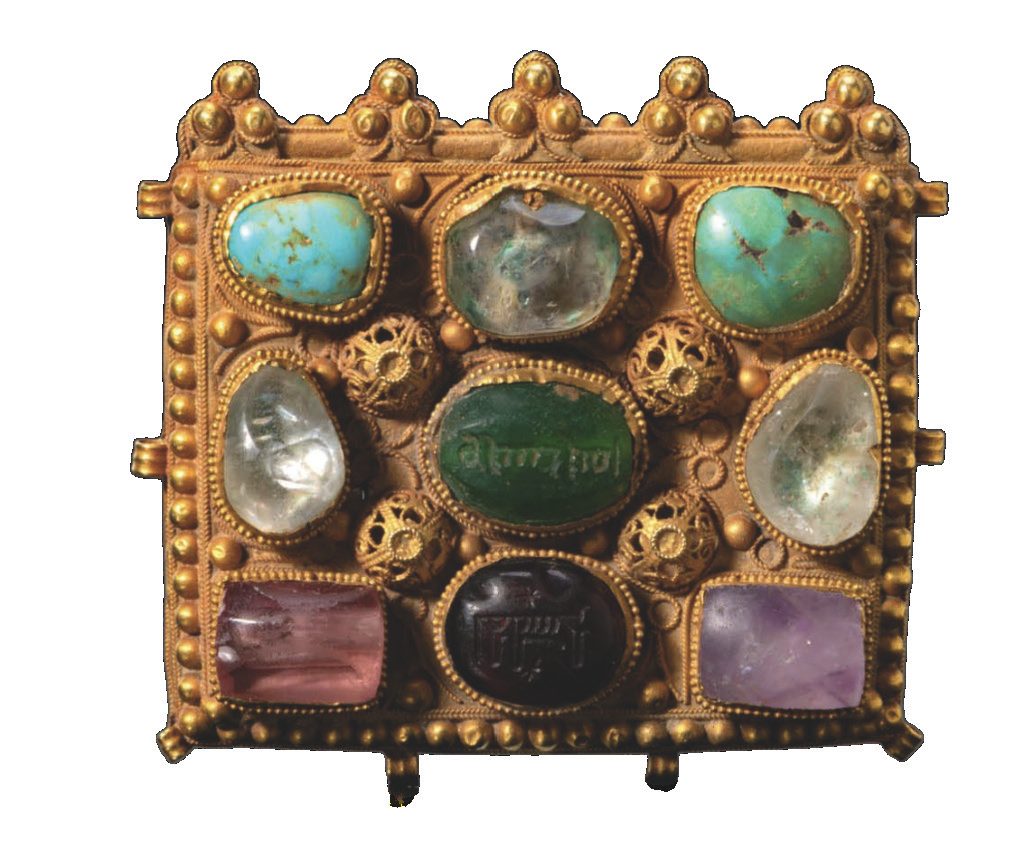
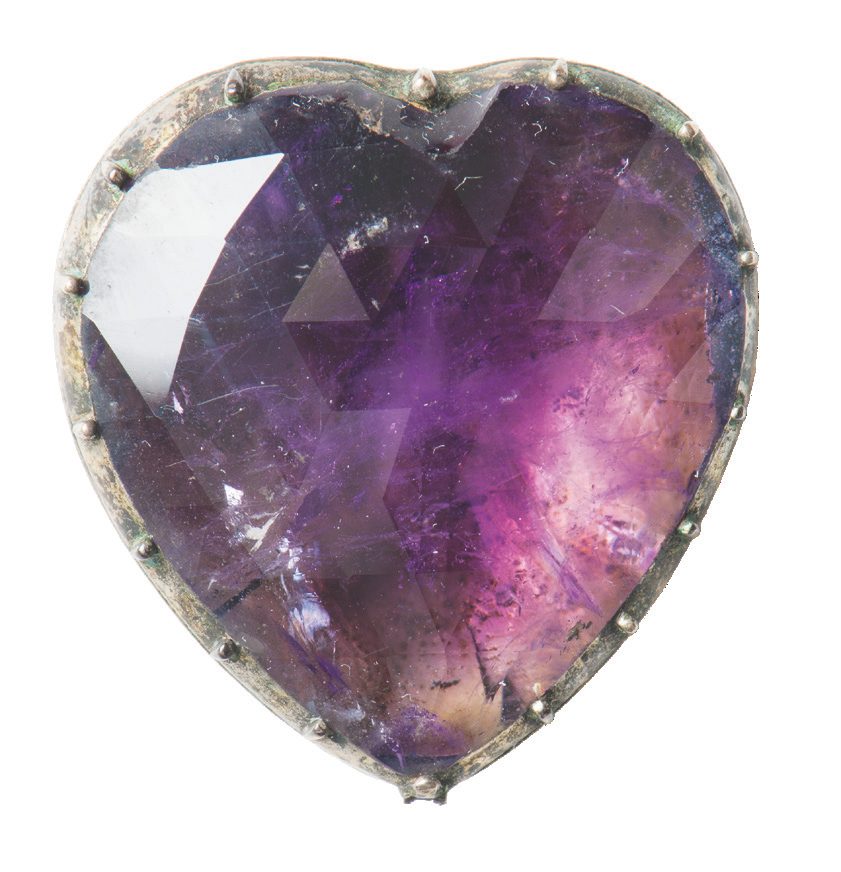
By the end of the Middle Ages, around the year 1500, amethysts, once primarily cabochon-cut, increasingly appeared as faceted stones. Early Renaissance cuts were simple, but faceted stones (mostly table cut and rose cut) gained brilliance by the century’s close, mirroring the era’s sophistication.
Once reserved for royalty and clergy, amethyst from the 16th century became a favorite of the rising bourgeoisie—adorning belts, chains, and rings imbued with violet symbolism for betrothal and devotion. Amethyst continued decorating church treasures and royal collections, prized by the Medici, Habsburgs, and Tudors.
Rings and pendants showcased luminous purple amethysts in gold or gold and silver, framed with delicate enamel or companion stones. Throughout changing fashions, the essence remained: bold colors, scrolling goldwork, and the striking contrast of violet with garnets, emeralds, or pearls, reflecting earthly beauty and refined taste.
Baroque (circa 1600–1750)
In the 17th century, amethyst assumed a new role as a jewel of splendor and divine drama. Its royal hue adorned kings, cardinals, and courtiers, complementing the glittering gold and silver of Baroque tastes.
Amethyst appeared on secular objects such as vases, caskets, boxes, statuettes, music clocks, and decorative plaques. Goldsmiths set stones amid swirling rocaille and floral motifs, cutting them into rose and step facets to capture candlelight.
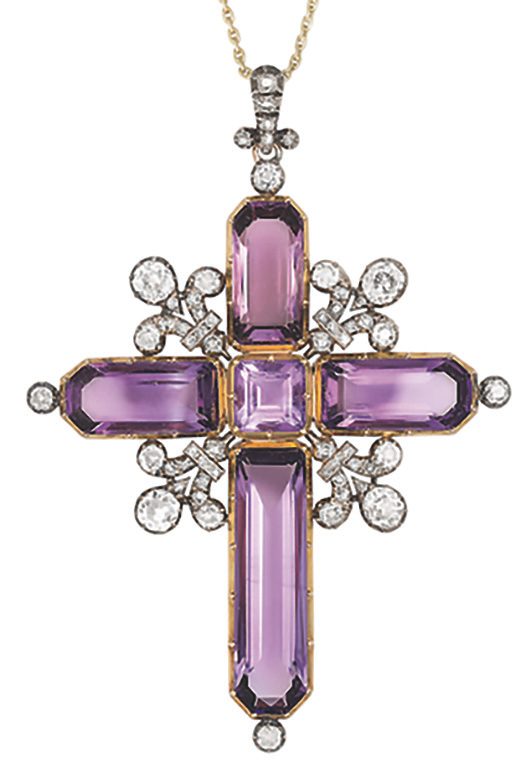
Cross-shaped pendants and jeweled brooches transformed amethyst into signs of devotion, uniting earthly beauty with spiritual aspiration. Entire parures of necklaces, earrings, and brooches shimmered at European courts, amethysts sparkling alongside diamonds in a dazzling interplay of light.
Since high-quality sources from Brazil and Russia were not yet known, moderate stones were often backed with pink foil to enhance color and brilliance.
Rococo (circa 1715–1789)
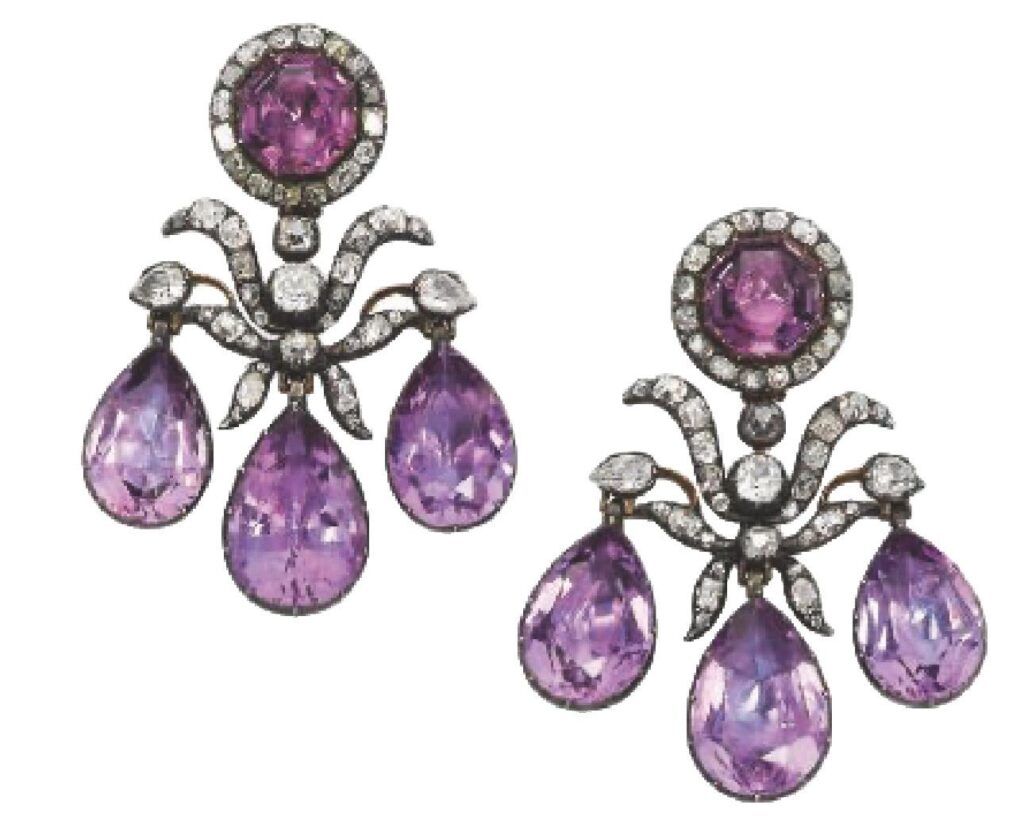
The Russian Tsar Peter I exploited Siberian mineral resources around 1720, initiating the first Urals amethyst mining. These high-quality stones with a spectacular and intense violet hue became central to Romanov collections. Empress Catherine the Great popularized Siberian amethyst across Europe, often mounted in silver.
By the late 18th century, amethyst was worn by nobles such as Marie Antoinette, until the upheavals of the French Revolution disrupted courtly traditions.
19th Century
Napoleon and Empress Josephine influenced jewelry fashion with classicist styles inspired by Nature and Greco-Egyptian antiquity. Brazilian amethyst imports surged, making high-quality stones widely available.
By the end of the Napoleonic era in 1815, Europe was ravaged by the wars, and humility tempered its spirit. Jewelry emphasized delicate gold filigree and “semi-precious” stones, including amethyst, reflecting restrained elegance. In Germany and Austria this period was called Biedermeier.

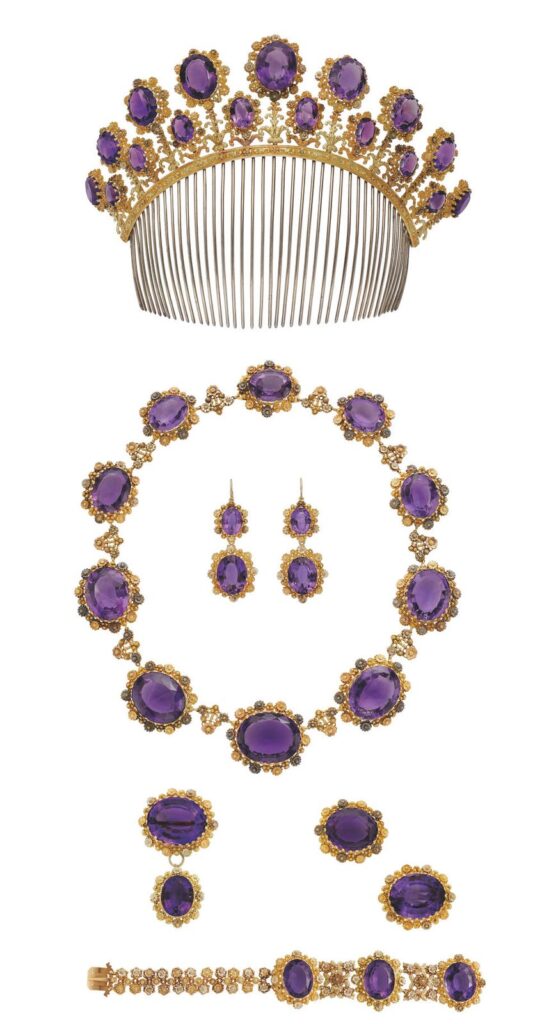
England’s Regency style commonly accentuated the subtle elegance of amethyst by pairing the lilac gemstone with ivory and pearls. Typical pieces were necklaces, earrings, brooches, and tiaras made of gilded silver or gold wires, decorated with faceted amethysts.
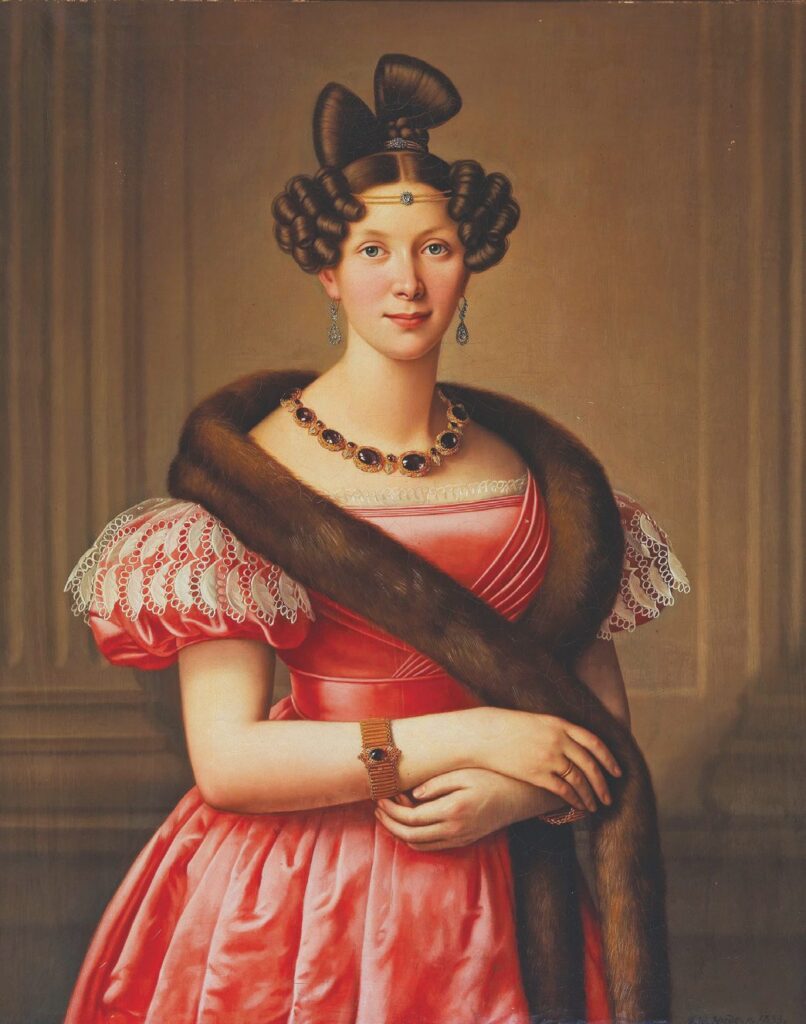
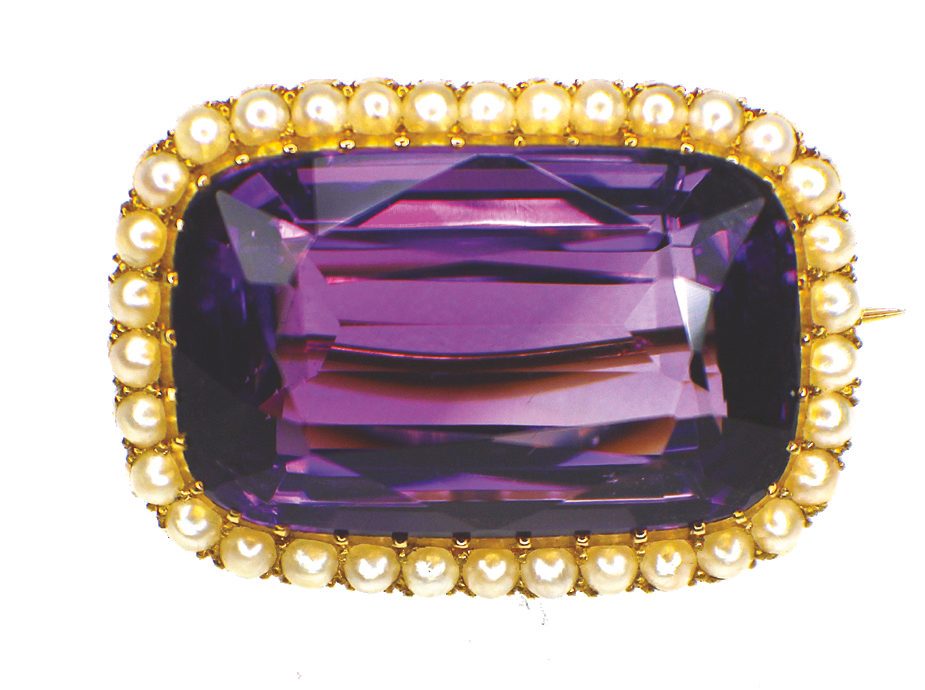
Later, in the Victorian era, Renaissance Revival pieces celebrated antique aesthetics, with masters like Castellani and Giuliano producing exquisite amethyst necklaces and pendants for Europe’s rising bourgeoisie.
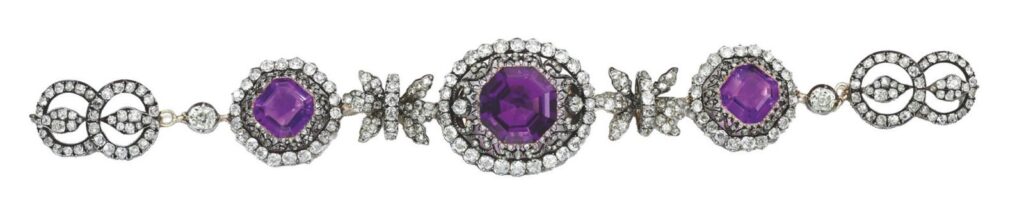

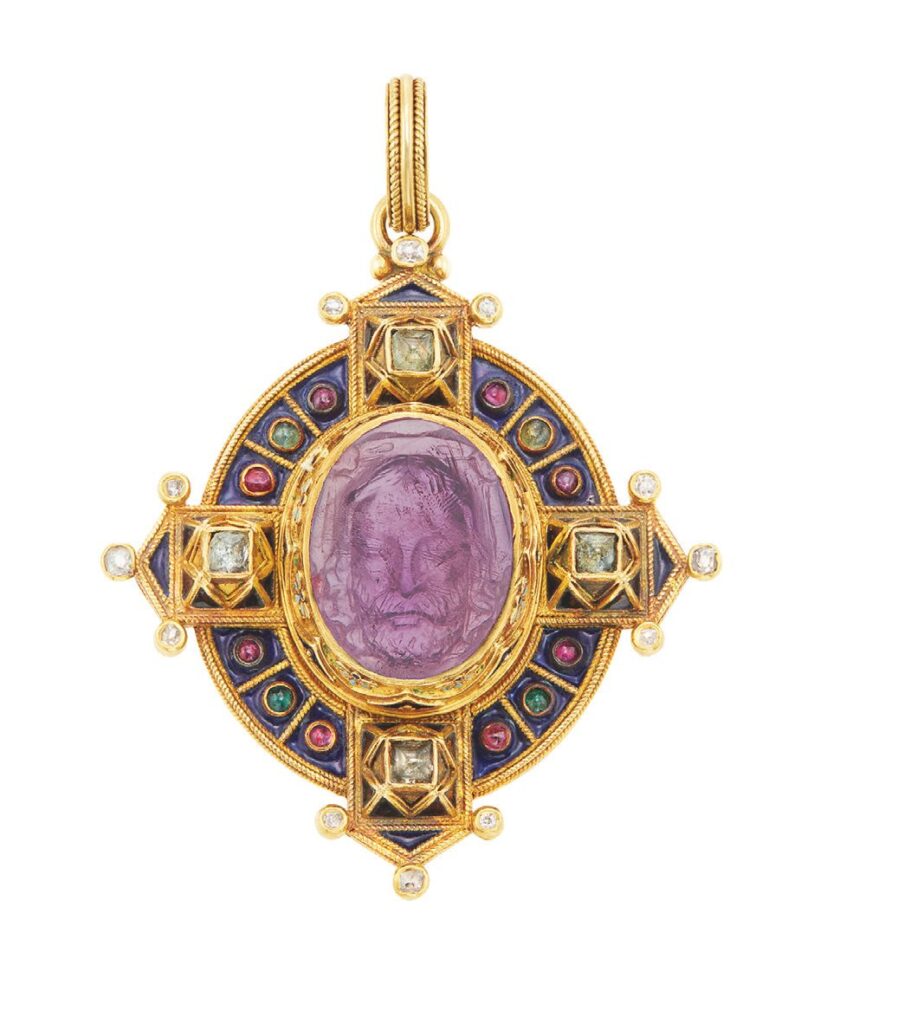
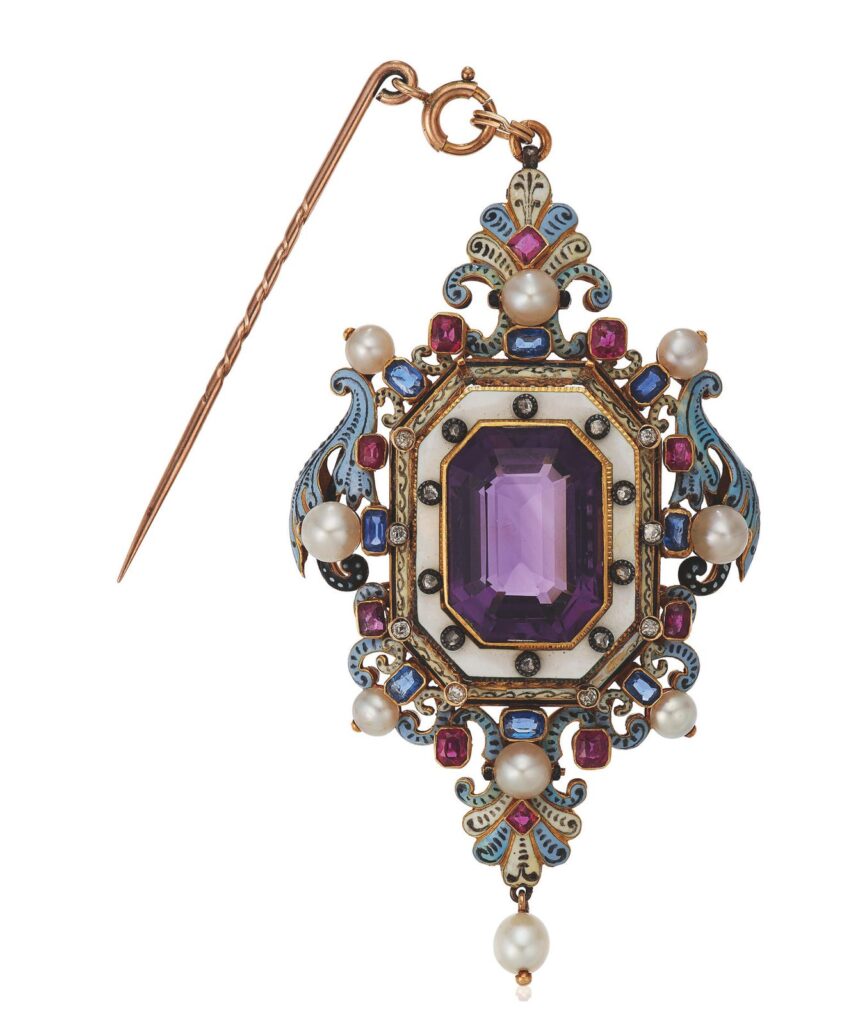
Belle Époque/Edwardian Era (circa 1870–1914)
By the late 19th century, the middle class embraced amethyst for its vibrant color and versatility. Jewelry incorporated playful, imaginative designs such as garlands and bows, often featuring platinum and silver settings.
Modern Times
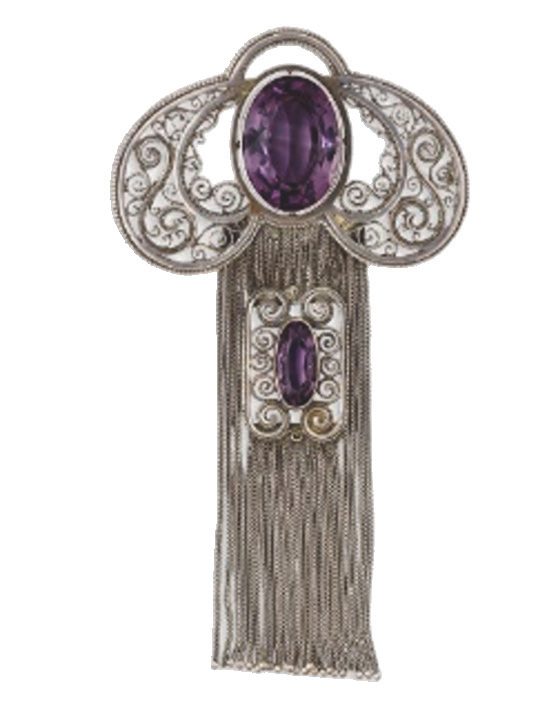
In the 20th century, violet became the color of creatives, dreamers, and reformers. Artists of the Wiener Werkstätten used amethyst, even in rough form, for bold designs, as seen in Josef Hoffmann’s silver pendants and brooches.
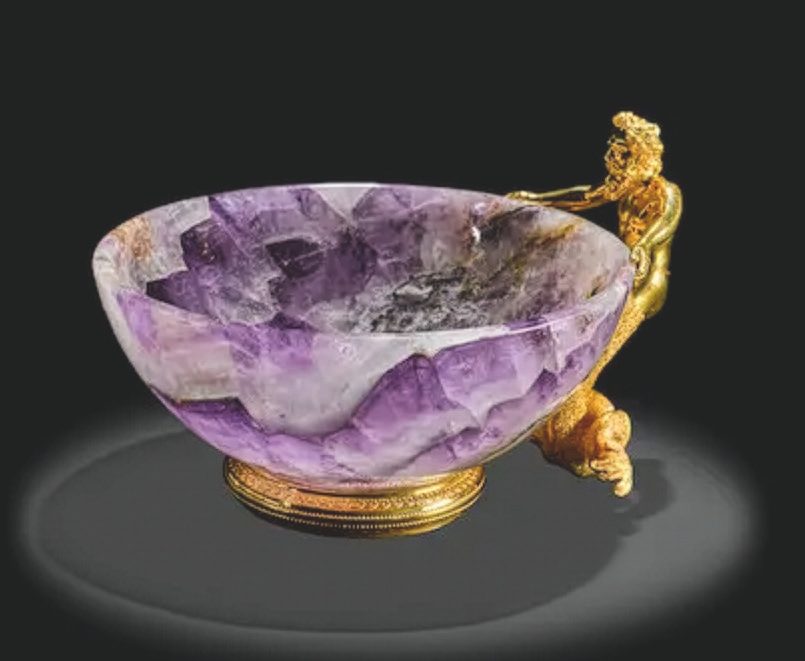
German manufacturer Theodor Fahrner produced sterling silver brooches set with faceted amethysts, while in France, the “Art Déco” style, named after the Exposition Internationale des Arts Decoratifs et Industriels Modernes in Paris 1925, evolved as a new and important movement.
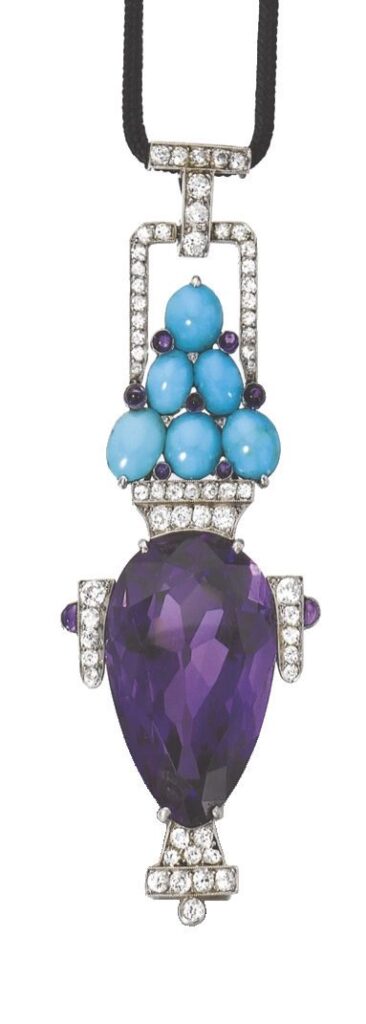
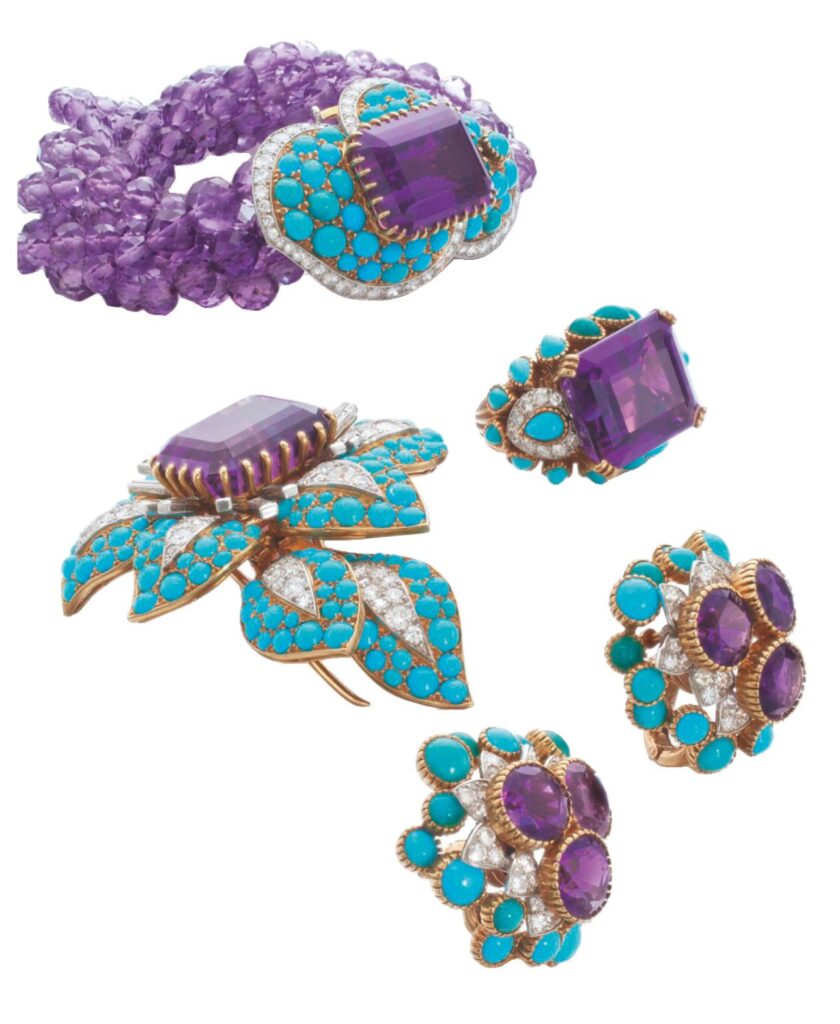
In 1915, Cartier introduced a pendant that beautifully encapsulated the maison’s evolving aesthetic. The combination of amethyst and turquoise was both daring and innovative for the time, marking a turning point in Cartier’s design philosophy with striking color oppositions.

In the 1930s, jewelry became geometric, bold, and even oversized, often featuring large colored central gems. A main characteristic of the Art Déco era was the white appearance, since intense colored gemstones were set in white metals like platinum and the newly invented white gold.
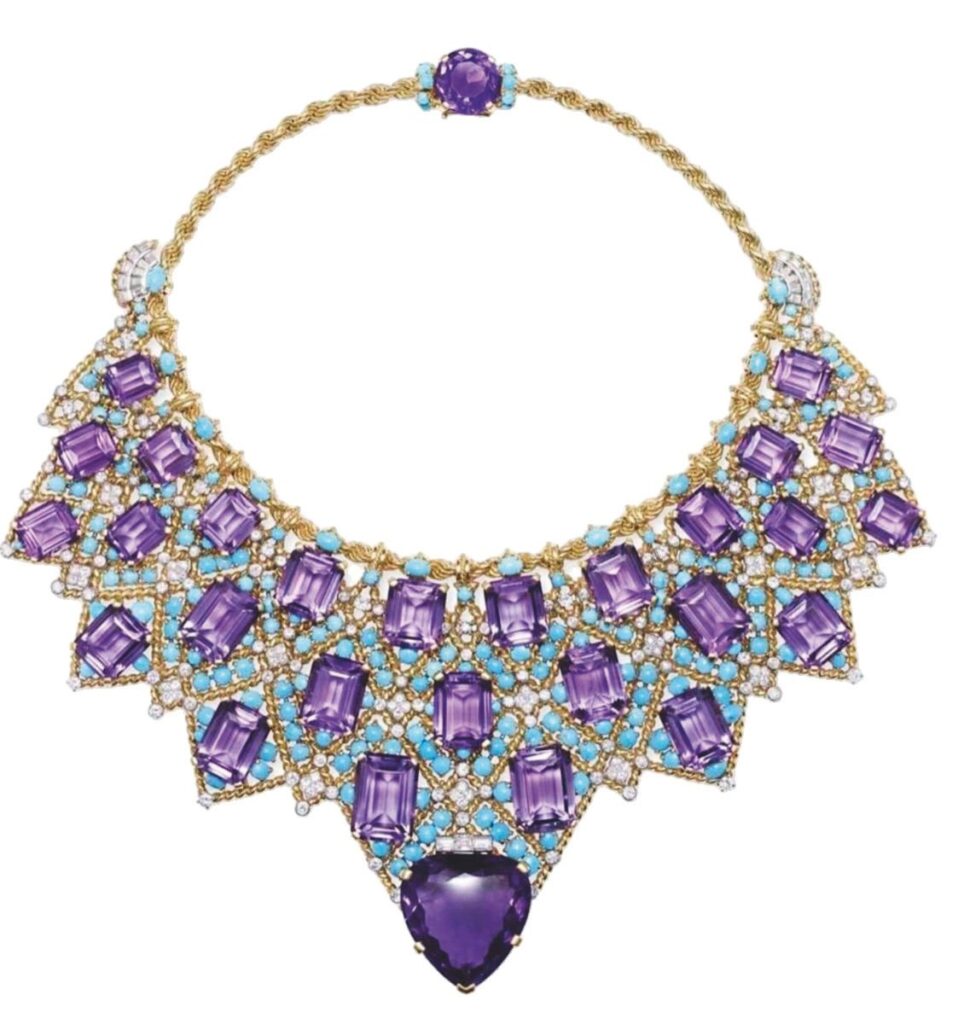
During the 1940s, Europe’s hardships due to the war contrasted with America’s rise of Hollywood glamour. Elegant cocktail rings and brooches featuring single amethysts became symbols of status and style. Since then, amethyst has appealed to royalty, celebrities, and fashion enthusiasts alike.
Summary
From Egyptian origins to global fashion statements, amethyst has long symbolized authority, devotion, and artistic refinement. Its striking color, rich symbolism, and versatility have secured its place among the world’s most celebrated gemstones. From sacred treasures to courtly elegance, from Renaissance enlightenment to modern creativity, amethyst continues to captivate.
About the Authors
Dr. Kristina Riedl (EG) and Ioannis Alexandris (BA, G.G, GIA) are gemologists and experts on vintage, antique, and period jewelry. (They can be reached through their websites: www.accade.at and gemolithos.com)