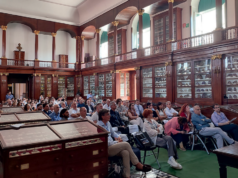



The International Gemmological Conference (IGC) convened its 38th edition, from October 20–24, 2025 at the Athens Chamber of Commerce and Industry, located in the heart of the city. The event also included pre- and post-conference excursions, which took place on October 17–19 and October 24–27, respectively.
The 38th edition of the IGC gathered leading researchers, laboratory directors, and specialists in gemology and gem science from around the world. True to its tradition, the conference maintained a scientific focus, prioritizing research and discovery over commercial interests.
The program was organized into thematic sessions encompassing the full spectrum of gem-related disciplines: the history and curation of gemstones, pearls and amber, general gemology and research, corundum (sapphires and rubies), jade, and diamonds.
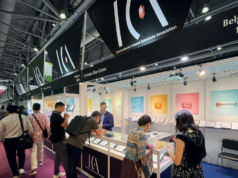
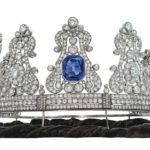
After the opening remarks, Dr. Jayshree Panjikar (IGC Executive secretary) offered a brief history of the IGC, followed by the Opening Session, Gemmology and Greece. Several experts, including the author, who also represented ICA, explored the mineralogy of Greek gemstones, ancient jewelry, gem education in Greece, the art of glyptography, and the gems and lewels of Greece’s Royal and prominent personalities.
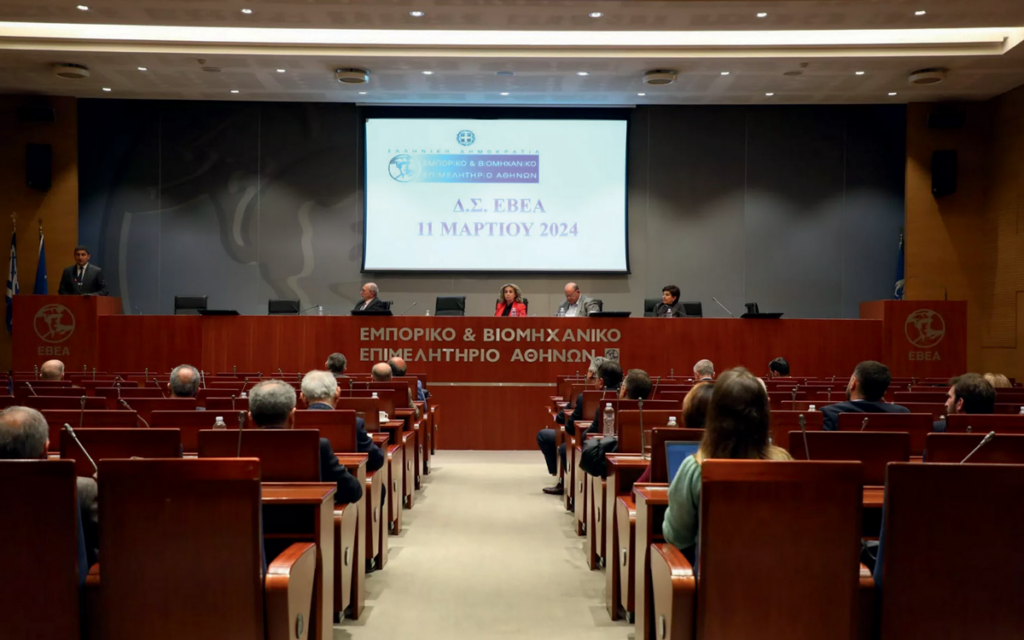
Session 1: History and Museums, chaired by Karen Fox, featured talks by experts on the history of selected gemstones and their mining, as well as museum collections featuring gems and jewelry from world-renowned collections, including fancy-color diamonds, historic emeralds, and traditional garnet cutting techniques.
Pearls and Amber were featured in Session 2, chaired by Dr. Michael Krzemnicki. Presentations described advances in pearl cultivation, new classification schemes, and inclusion studies in amber as well as amber from Myanmar.
Session 3: Gemmology 1, chaired by Dr. Ahmadjan Abduriyim, focused on mineralogical research topics such as pink fluorite, mineral pigments in jasper, and a review of Fe-Ti charge transfers and their application to minerals and gems.
Session 4: Gemmology 2, chaired by Dr. Karl Schmetzer, and featured a discussion on zoisite and its many colors, blue rose quartz, and pink-orange gem quality euclase from Brazil.
Chaired by Dr. Pornsawat Wathanakul, Session 5: Gemmology 3 included presentations by experts on typomorphic features of tourmalines of the Malkhan pegmatite field, studies on how colored gemstones crystallize at depth in East Africa, hessonite garnet, Hurlbutite from Myanmar, as well as glass imitations of larimar.
Session 6: Gemmology 4, chaired by Prof. Dr. Stefanos Karampelas, featured speakers on a variety of topics relating to spinel origin, emerald enhancement, and the Salininha emerald deposit in Brazil, among others.
Dr. Ulrich Henn chaired Session 7: Corundum 1, and welcomed several speakers with presentations on noble gas in corundum, age dating and origin, and age determination of yellow sapphires.
Session 8: Corundum 2, chaired by Dr. Jayshree Panjikar, continued with presentations on Greenland rubies, blue sapphire from Brazil, and transparent brown sapphire.
Session 9: Corundum 3, chaired by Shane Mcclure featured five presentations discussing heat treatment detection, trace element studies, effects of gamma irradiation on corundum, the challenges of detecting treatment of ruby and sapphire in the Thai market, and Padparadscha sapphires and heat treatment.
Session 10: Jade, chaired by Thye Sun Tay, showcased three presentations on comparison of green Fei Cui from Myanmar, Guatamala, Italy, and Russia, as well as origin determination of purple jadeite, and finally a description of dyed purple jade from Myanmar.
The IGC conference wrapped up with Session 11: Diamonds, chaired by Prof. Dr. Emmanuel Fritsch. Among the topics were diamonds from the Argyle Mine in Australia, gemological characteristics of diamonds with yellow and red luminescence, identification of melee synthetic colored diamonds, diamonds from Thailand, diamonds from Myanmar, and nitrogen aggregates in yellow HPHT and CVD synthetic diamonds.

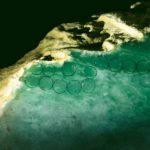
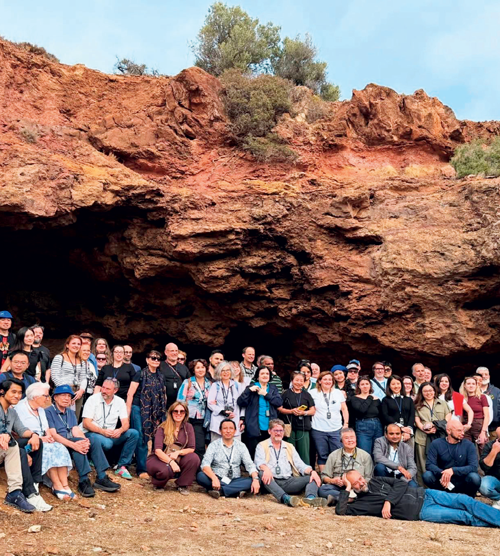
During the event, the group took an excursion to the Lavrion Mines and Cape Sounion, two of the significant sites in ancient Attica, connected historically by the rich silver and lead mines of Lavrion that funded Athens.
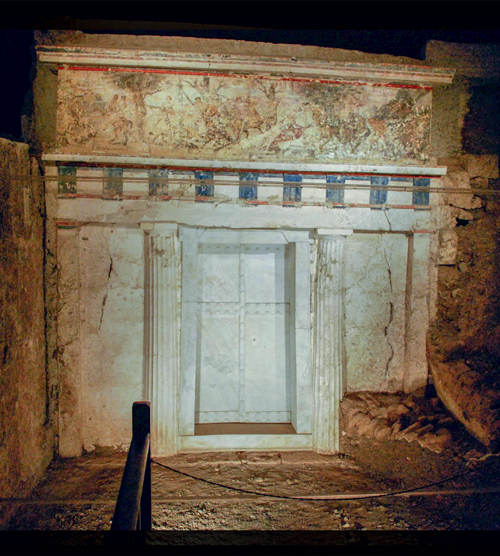
Complementing the technical program, the Pre-Conference Excursion visited geologically and archaeo- logically significant sites across Northern and Central Greece, including Meteora, Mount Olympus, and Vergina.
The Post-Conference Tour led participants to beautiful Santorini, where the visit combined geological study with archaeological exploration and cultural sightseeing.
Established in the 1930s, with its first formal meeting held in 1952, the IGC has upheld a long-standing tradition of scientific excellence and international collaboration, inviting delegate participation from gemological institutions worldwide.
The IGC 2025 in Athens continued this tradition, and provided distinguished gathering at the forefront of gemological science, showcasing a variety of cutting-edge research, methodological innovation, advances in treatment detection, and the integration of gemology with heritage, geology, and technology. The city of Athens, with its unique blend of ancient heritage and modern academic infrastructure, provided a fitting and inspiring setting for this landmark event.
For more information on the IGC Athens event, visit the IGC website: https://www.igc-gemmology.org

Ioannis Alexandris is the CEO of the Gemolithos Group of companies, with offices in Munich, London, Hong Kong and Beijing. He has traded historical and royal period jewelry and is the founder of “Gemolithos Helps,” a non-profit organization supporting children in need, primarily for education in Africa. The author of numerous articles, with a book on antique jewelry coming out soon, he also presents lectures on vintage and antique jewels.
- Ioannis Alexandris
- Ioannis Alexandris
- Ioannis Alexandris