In October 2025, Guild Field Gemology visited Kitwe Zambia for the Pridegems/Grizzly Mine's low to medium-grade rough emerald auction, followed by visits to the Grizzly Mine, Chinese held mining concessions, and artisanal miners. We collected research samples from numerous areas including the Musakashi area of North-Central Zambia. Our trips involved mine-to-market research and sample collection for gemological studies. In December 2025, we visited Dubai during the December Show and, in February 2026, we visited Dubai for the Grizzly Mine medium to high-grade auction for a complete mine-to-market emerald rough study. Also, in 2025, we visited Jaipur, India to study the industry there and complete our mine-to-market Zambian emerald research. Mr. Tidiane Ndiaye, the son of Grizzly Mine Limited founder Mr. Abdoulaye Ndiaye, enabled our visit to Zambia, and he shared his time and expertise with us.
Emeralds have been known in Zambia to the outside world since the 1928 discovery by geologists working for the Rhodesia Congo Border Concession Co. Further exploration of the emerald deposits continued in the 1940s and 1950s by Rhokana Co. and Rio Tinto Mineral Search of Africa. Serious mining and commercial production were underway by the 1970s. By the 1980s the Zambian Government experimented with nationalization of the mines and created the Restricted Area (Ndola Rural) and then the trading authority Reserved Mineral Corporation.
Private enterprise mining like Gemfields' Kagem Mine and the Grizzly Mine proved more efficient and productive. The large mechanized open-pit mines of Grizzly and Kagem are by far the two largest producers operating in Zambia and, along with the Belmont Mine in Brazil, are the three largest emerald producing mines in the world.

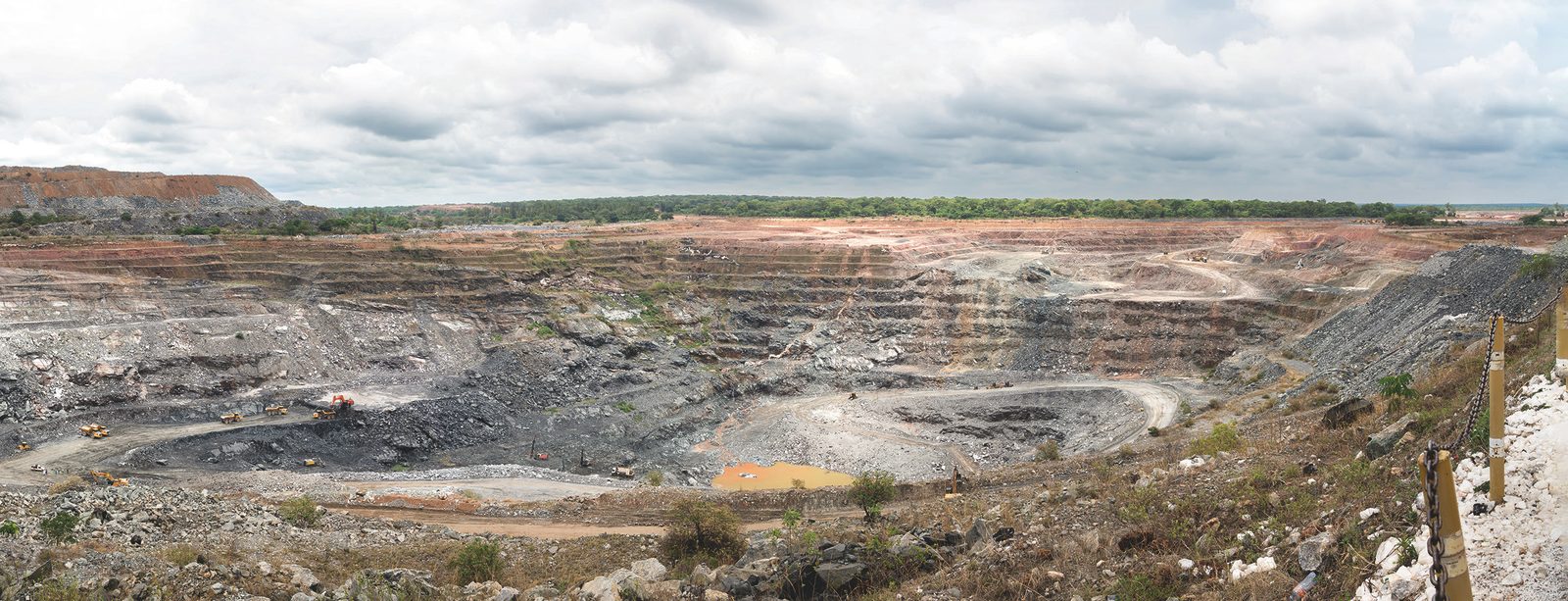
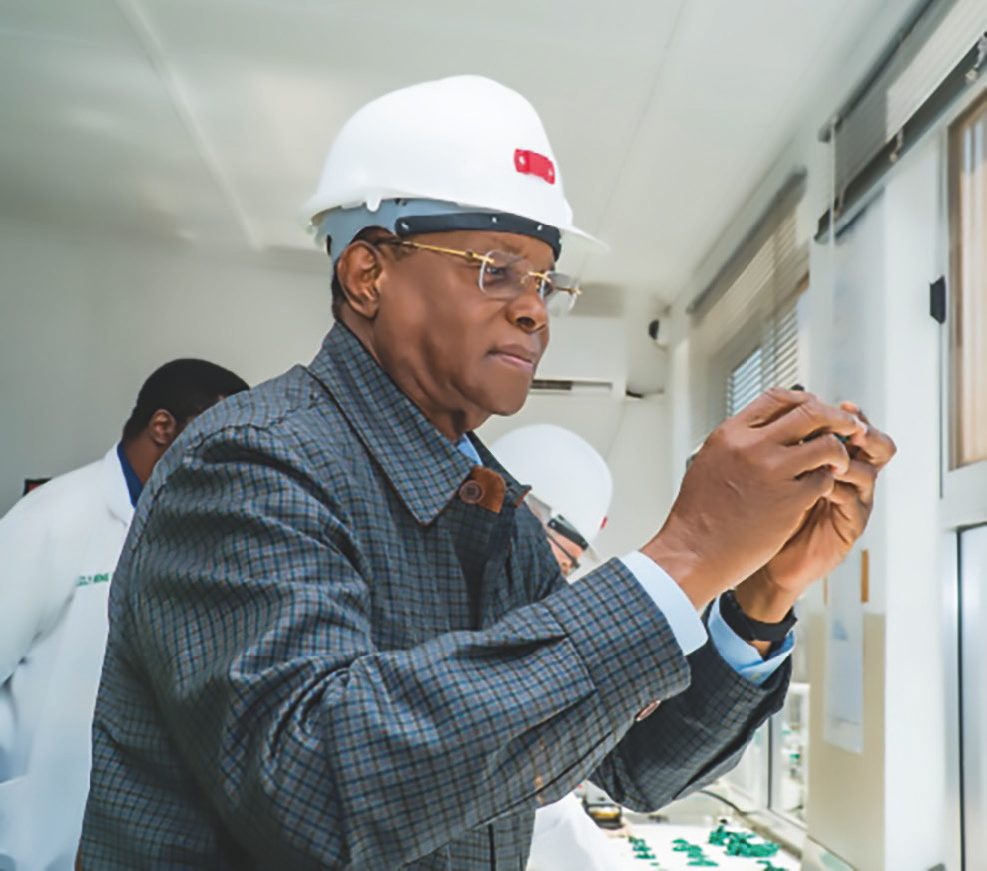
The Grizzly Emerald Mine is owned by Grizzly Mining Limited, founded in 1997 by Abdoulaye Ndiaye, affectionately known as “Papa Gunase.” It is located in the Lufwanyama region of Zambia's mineral-rich Copperbelt Province, neighboring Gemfields' Kagem Mine and near the Kafubu River.
The first mining license was the Pilala mining license in 1997 followed by the Kuba (1999), Lumpuma (2002), Chimpundu (2007), Mazombwe (2012), Aakala (2015), Storti (2015), Demar (2018), and Ndongo (2019) mining licenses. Their first international rough emerald auction was held in Dubai in 1999 (first Kitwe auction in 2000) coinciding with the discovery of a 50-kilogram specimen (Natural Wonder) in 1999. Mr. Ndiaye was born in Senegal and moved to the Lufwanyama region of Zambia in 1972 to trade in emeralds. Before going to Zambia, he trained in Israel to cut emeralds and diamonds as well as to learn gemology. In 2017, he went into partnership with an Israeli diamond company but bought back the 50% share in 2019 and continues to own 100%. During his leadership, the Grizzly Mine has produced over 170 million carats of emerald and beryl.
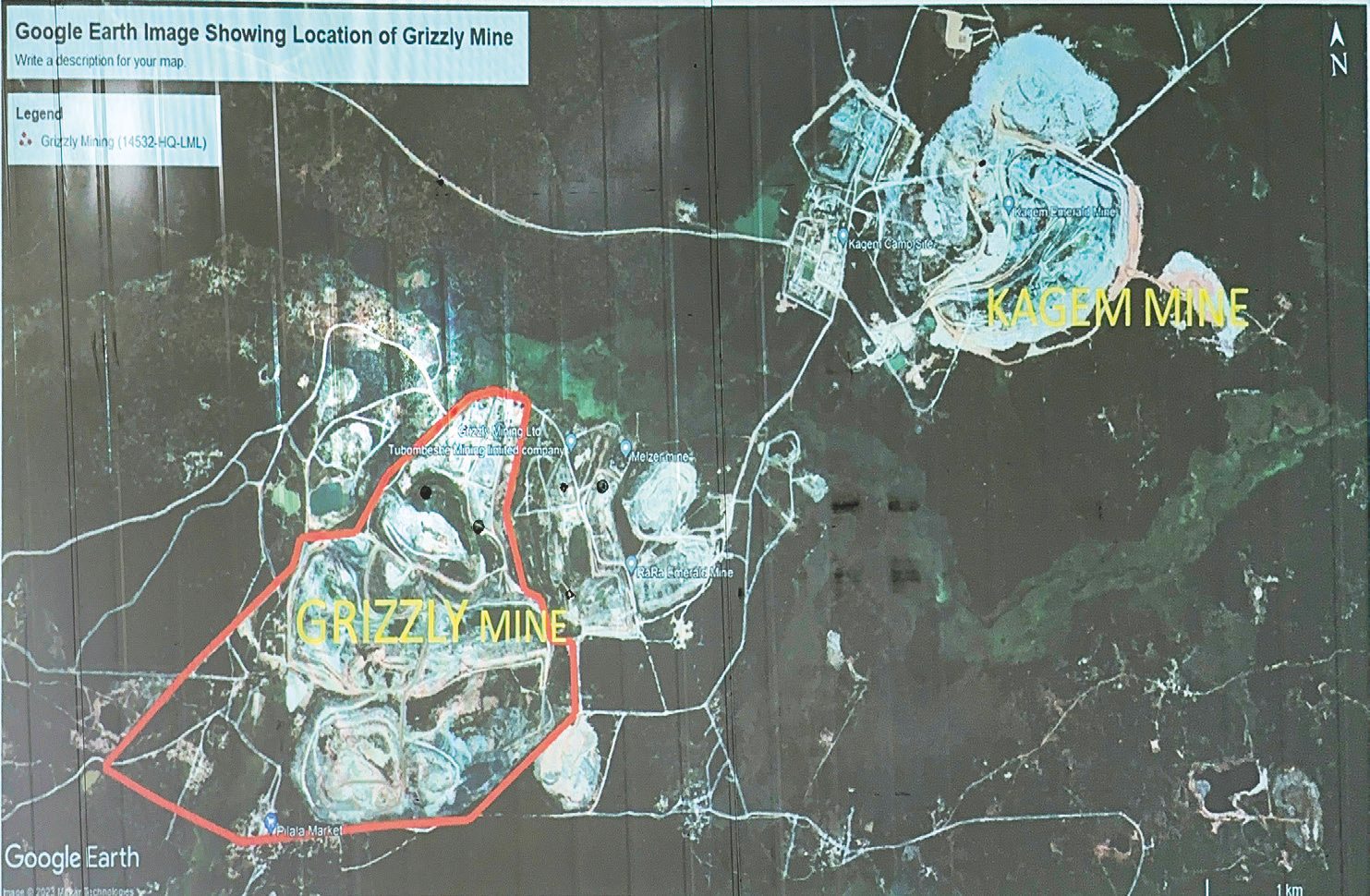
Grizzly Mine is a neighbor to Gemfields Kagem Mine, from PPT presentation. (Photo: Xie Haihui. ©Guild Institute of Gemology)
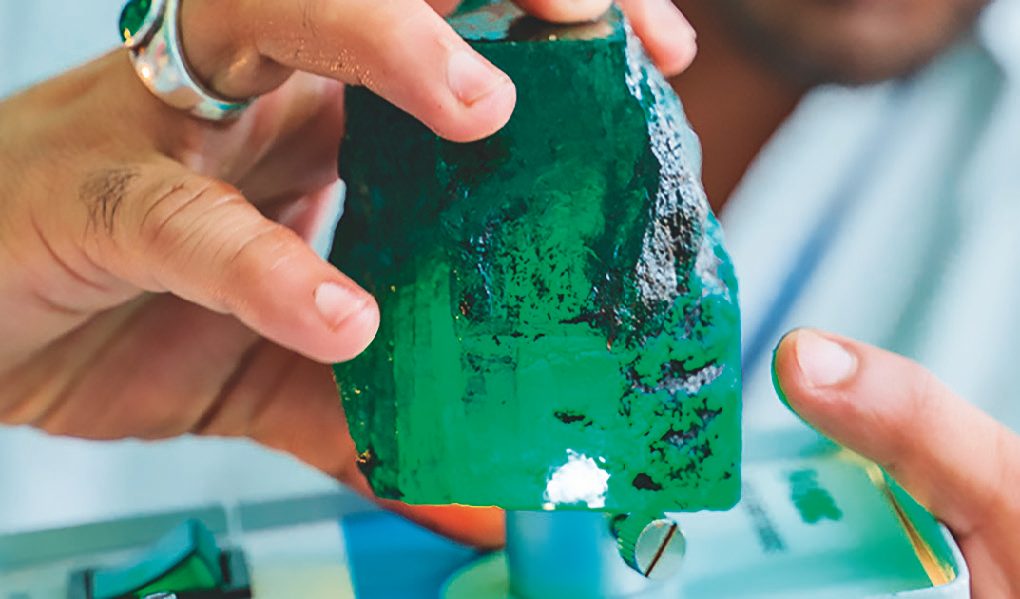
Grizzly Mine Geology and Exploration
Like most Zambian emeralds and most emerald production in Africa as well as globally (Musakashi stones are a famous Zambian exception), Grizzly Mine emeralds are produced related to pegmatite intrusions into schist. The talc magnetite schist (TMS) is where the emerald formation area lies in the alteration or contact zone with the pegmatite containing the beryllium for beryl and the schist containing chromium and vanadium for the emerald color variety. Emeralds form at the alteration or contact zones at the pegmatite intrusions into the schist. Once the pegmatite molten fluids reach the schist base, a spreading of the pegmatite along schist fractures can take place with the spreading out of the pegmatite horizontally like a mushroom effect while the pegmatite forces upward vertically through the schist. This not only creates a larger potential emerald producing alteration zone but also is very helpful in core drilling to reach wider pegmatite intrusion contact areas than just the veins of the upward pegmatite intrusion. The pegmatite does not come in as one event but as a series spreading out in the mushroom shape in schist fractures and continuing the upward thrust.
Grizzly has found the thickness of the mushrooming pegmatite intrusions to be over a meter. Grizzly carefully looks for the quartz tourmaline veins and the reaction zone near the base of the schist to plan their mining. When they find the thicker area of the mushroomed pegmatite, they know they are close to the more vertical intrusion pushing upward through the schist.


Once Grizzly was mining the reaction zone, they found an expectancy of 160 grams of emerald per ton of reaction zone. But this can vary widely when anomalies like rich pockets are hit, as one very rich area gave two kilograms per ton of reaction zone. Grizzly looks for geological structures with an S-shaped folding back of the pegmatite at north to south geological folds, especially at the bends, creating trap zones of the pegmatite fluids that create longer cooling and potentially larger production and high-quality crystals. The S-folding is a regional feature running from one end of the mine to the other. By focusing on these geological features, high production areas can be exploited and larger specimens potentially retrieved.
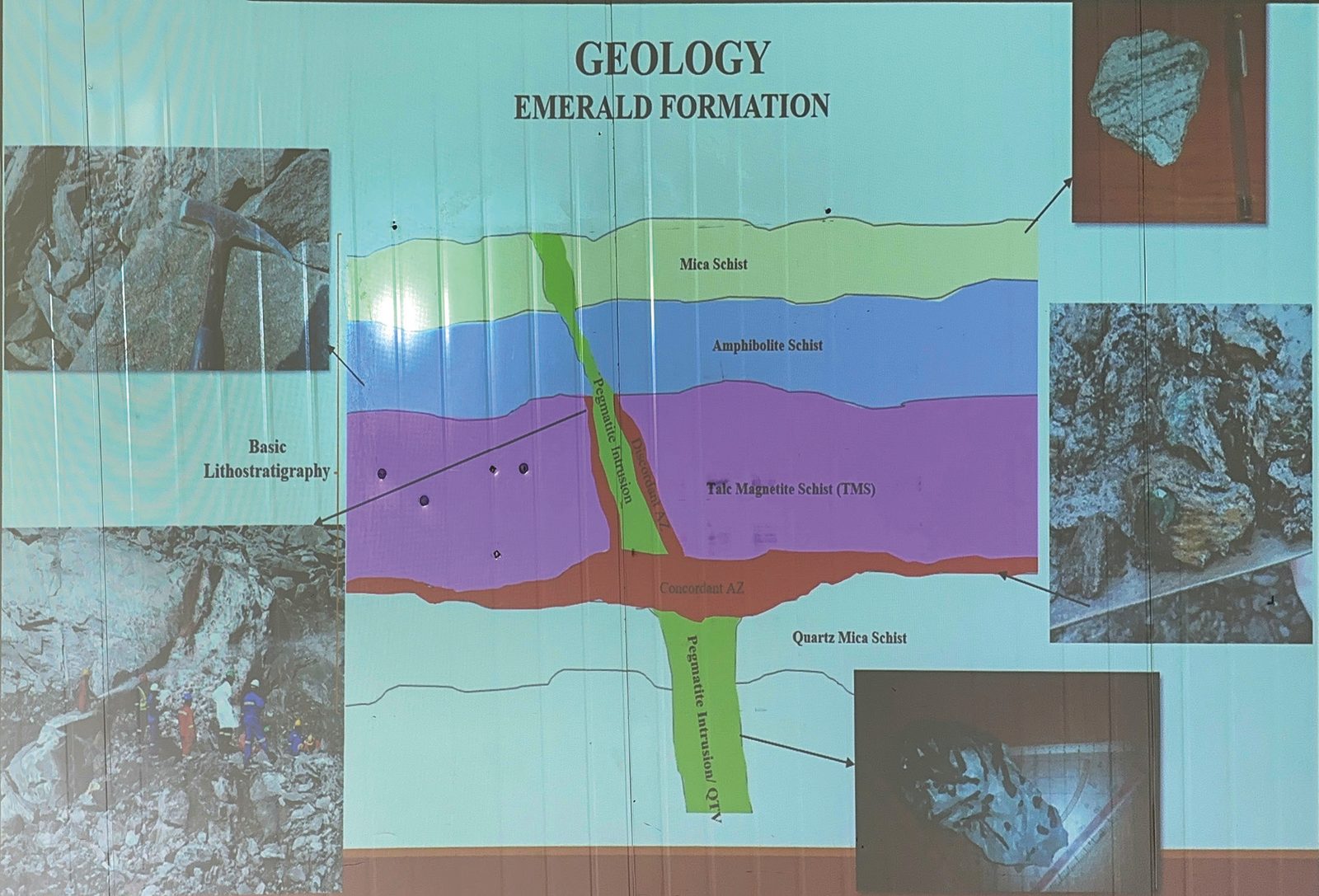
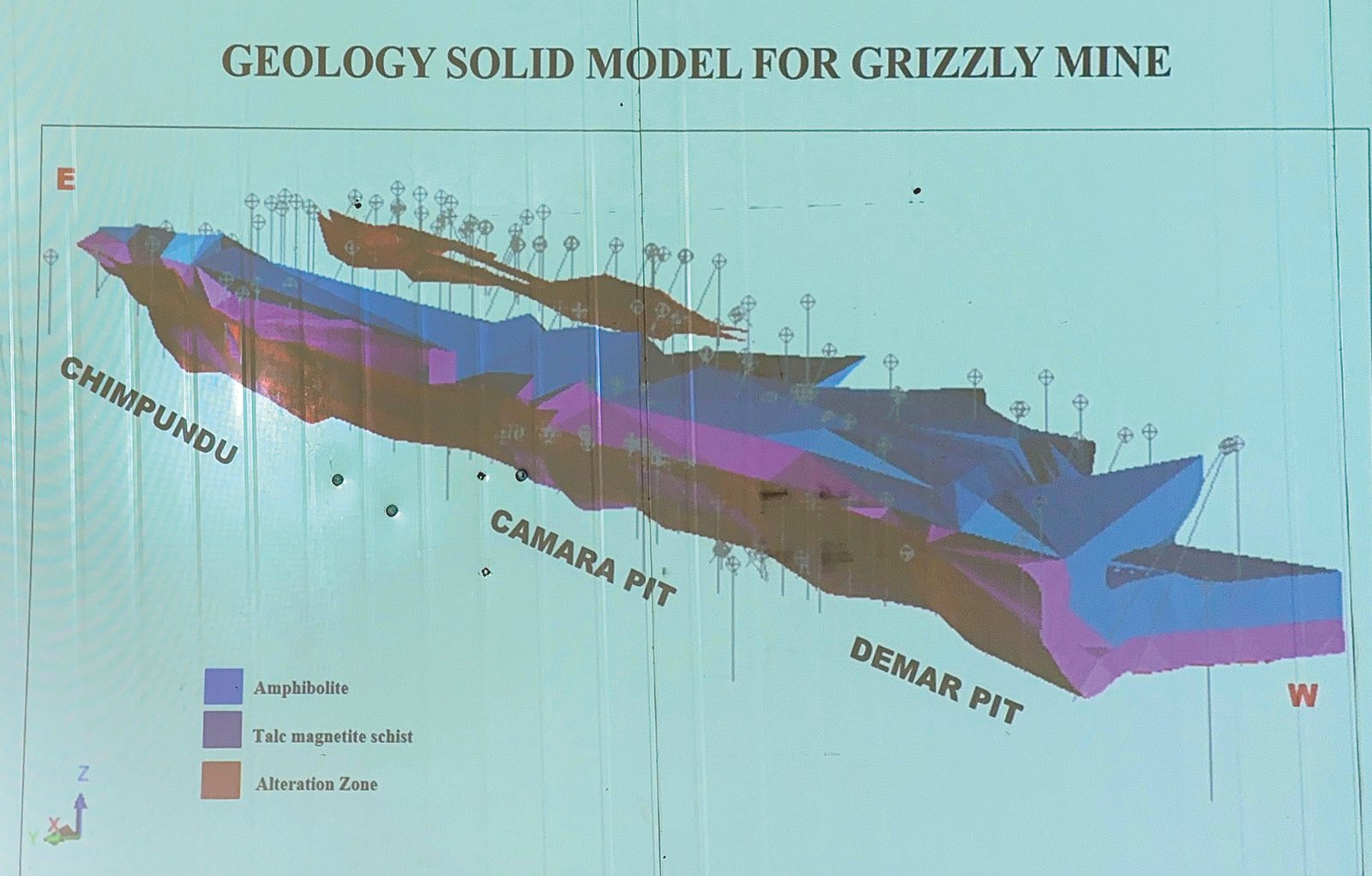
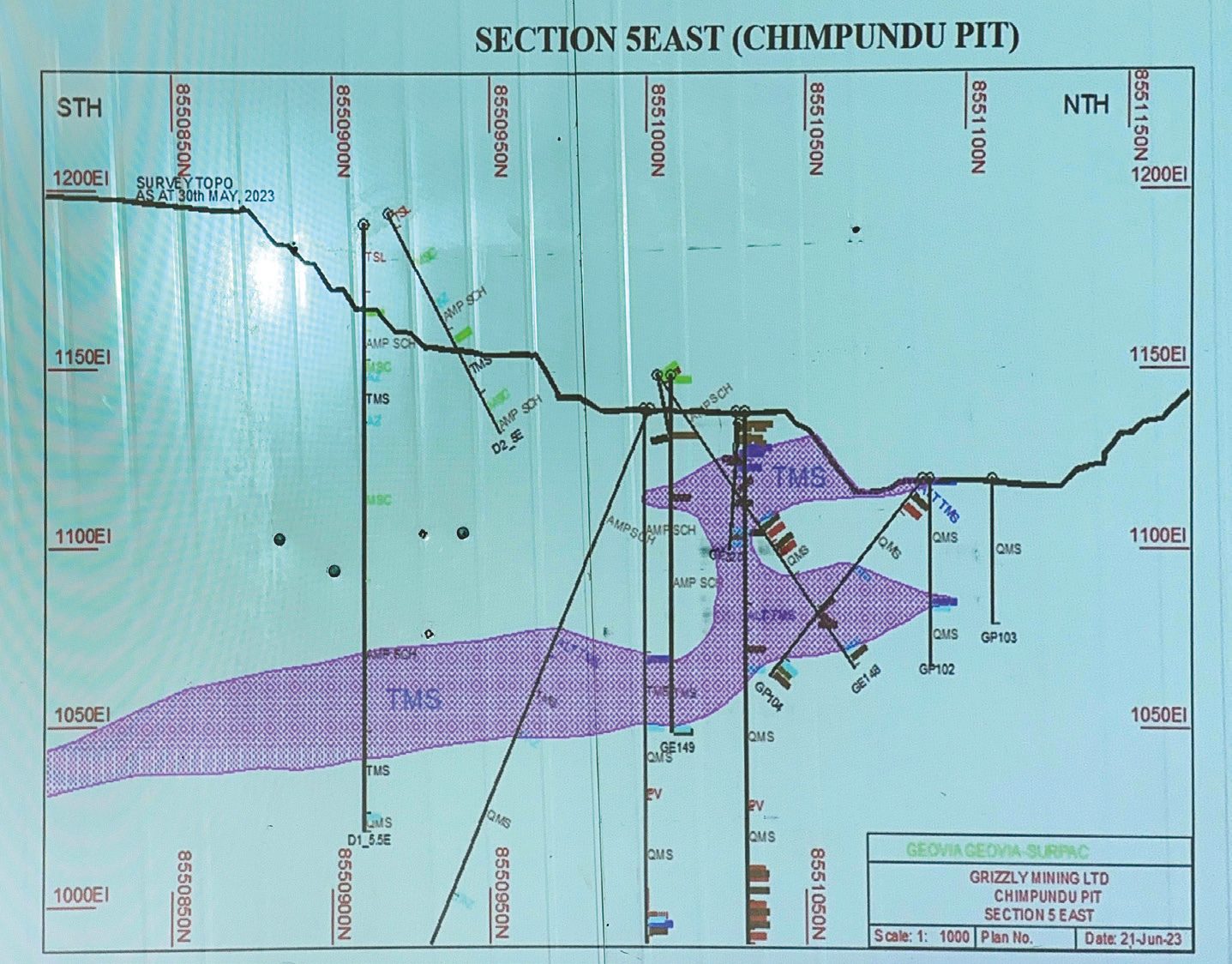
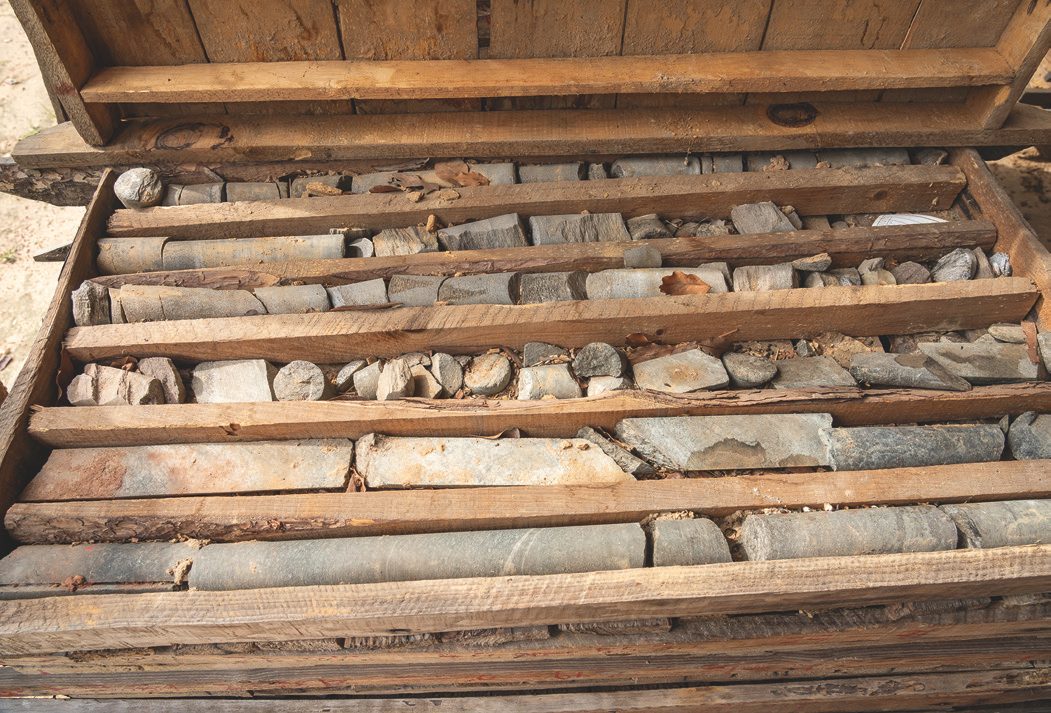
Grizzly exploration methods include geological mapping of the surface and pit, geochemistry (Cr, V, Rb, Sr, K, Mg, Fe), geophysical survey (ground magnetics, radiometrics), core drilling, data processing, geological interpretation and resource modelling. Core drilling is done both from the surface vertically and in the pit in a horizontal direction, enabling a good understanding and confidence of how many pegmatite veins, S-shape folds, and chemistry there are.
Mining Operation
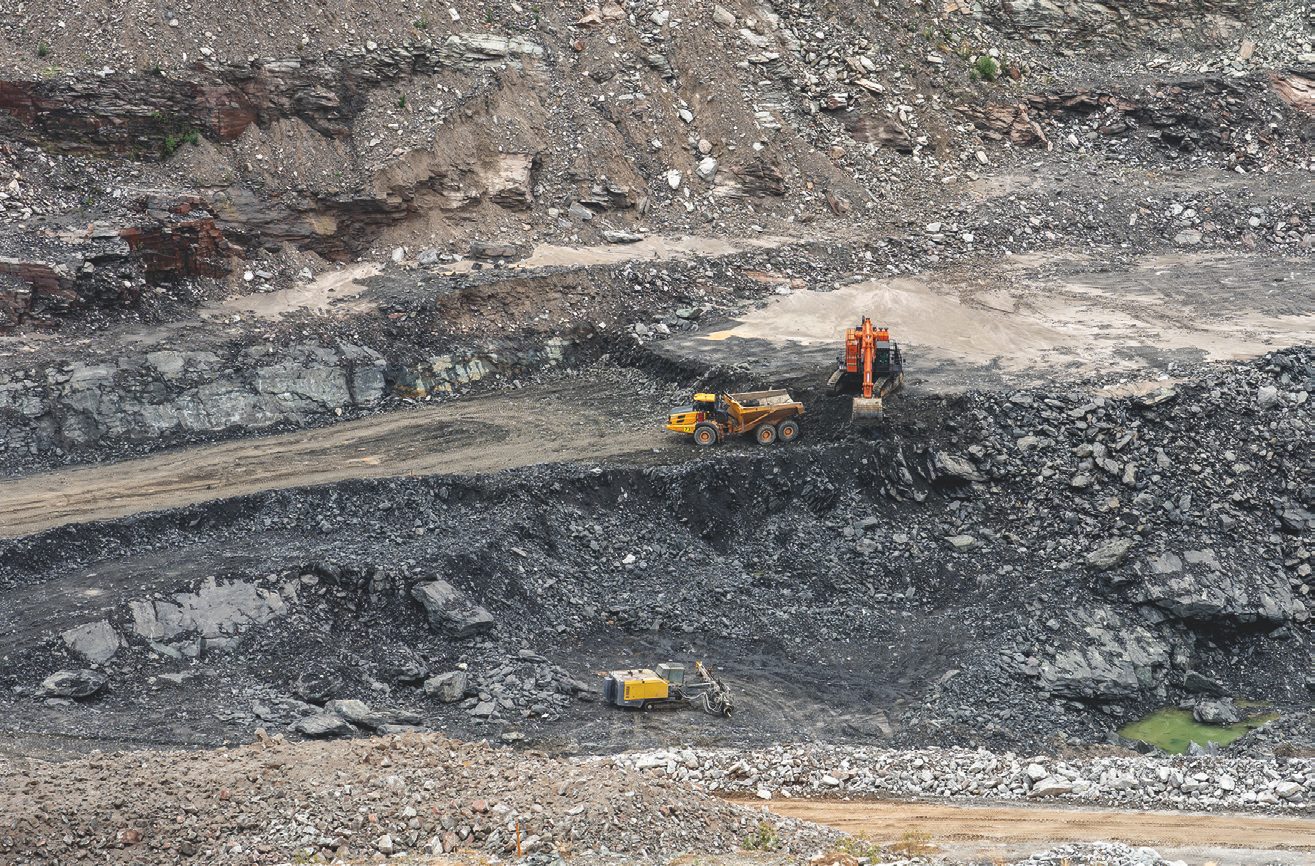
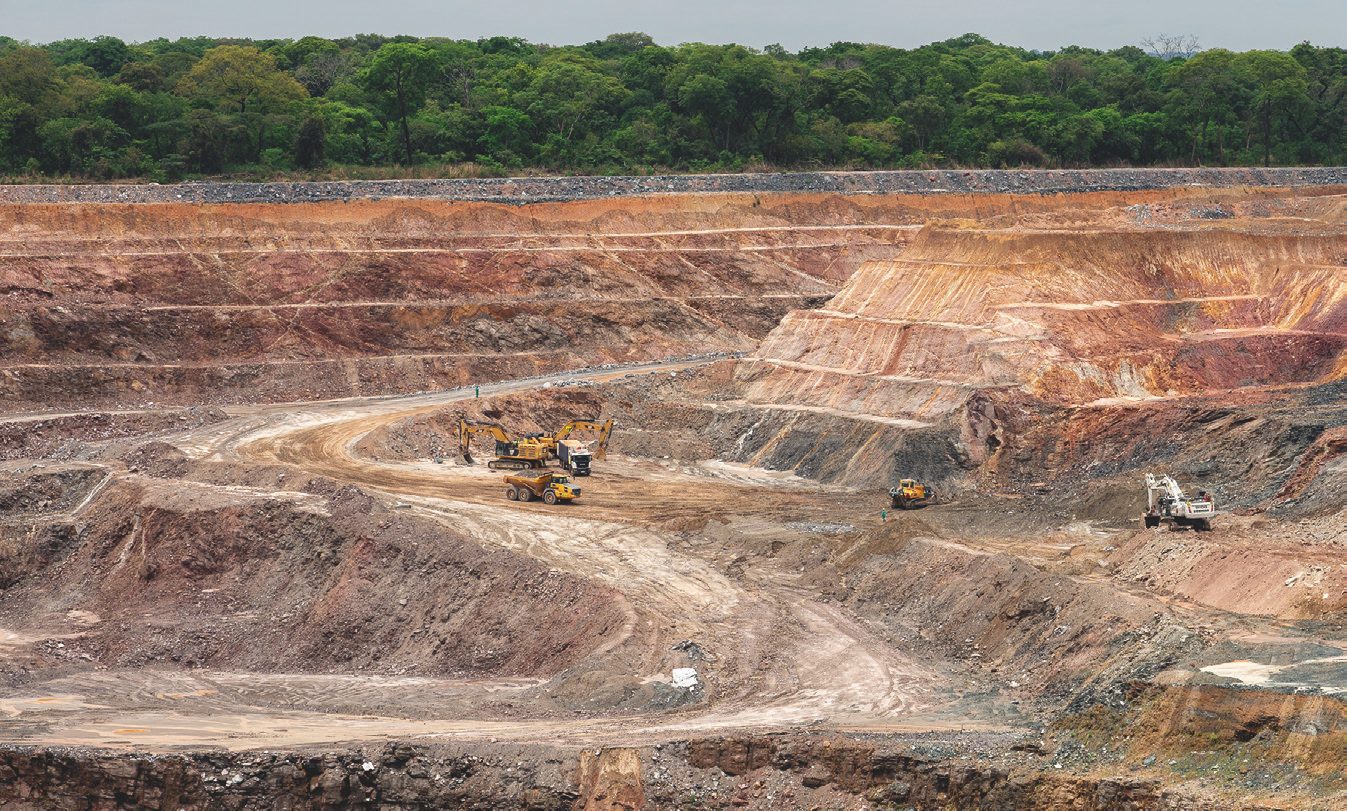
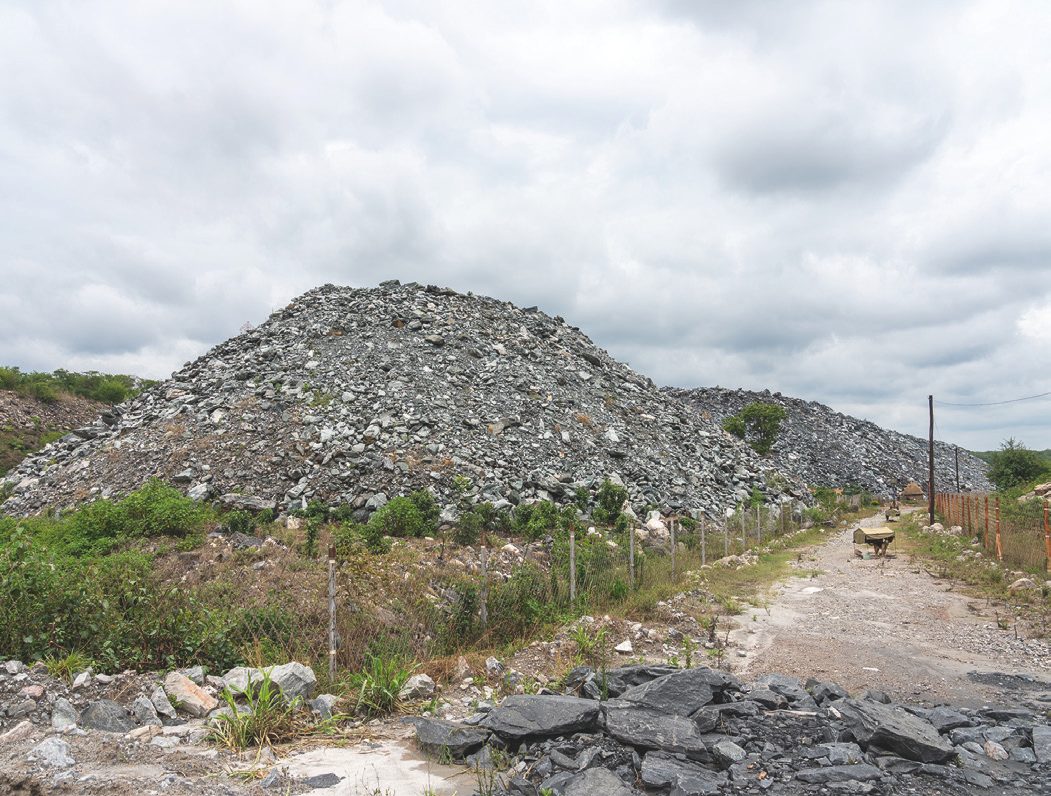
The main mining operations extend across a large east- to-west open area encompassing three major pits: Chimpundu Pit on the east, with Camara Pit and Demar Pit on the west. The entire open pit is currently approximately 1.3 kilometers long. Mining is progressing both east and west simultaneously with the west Demar pit being the most productive. All three pits have been producing, including high quality stones. The Demar Pit has pegmatites averaging about 30 meters apart and the pegmatites have both a nice S-shape fold and a strong undulating shape, vertical and semi-vertical characteristics to the pegmatite intrusions. The mine footwall where the pit started is to the north and the geological layers dip from north to south. The mining operation is mechanized open-pit, and once greater depths are reached (over 150 meters) it is potentially underground. Grizzly moves an average of 10 million tons of rock per year to produce 9,000 kilograms of emerald and beryl. The monthly production is greatly influenced by the rainy season when it is necessary to use pumps to remove rainwater, which fills the bottom of the pit, thus slowing down mining time. The process involves drilling and blasting, loading rock, and hauling (both waste rock and production material), ripping, and chiseling. The ripping is a process where, after coming close to a production area, the rock is removed mechanically utilizing a mechanical hammer and ripping of the rock to avoid further blasting into a productive area and further harm (blasting induced fissures) to the emerald crystals. Grizzly reports the ripping process has greatly helped reduce adding fissures in the emerald crystals from mining, while still providing sufficient speed of mining. Trucks carry the loaded waste rock to the dumps and carry potential emerald producing rocks to the washing/processing plant. Chisel crews that find emerald in rock go to the sorting processing area. Interestingly, in some areas, the chisel crews extract 80% of the production and the washing plants 20%, but in other areas that can reverse especially with high quality material. Due to the large increases in mining production, the stockpile of potential emerald bearing ore waiting for processing has become enormous, over 850,000 tons of ore in the Mbuzi Yard (in addition to stockpiles in the washing plants) waiting to be processed for emerald recovery. Stockpiles are higher during the dry season and processed at a higher rate during the rainy season when mining slows down.
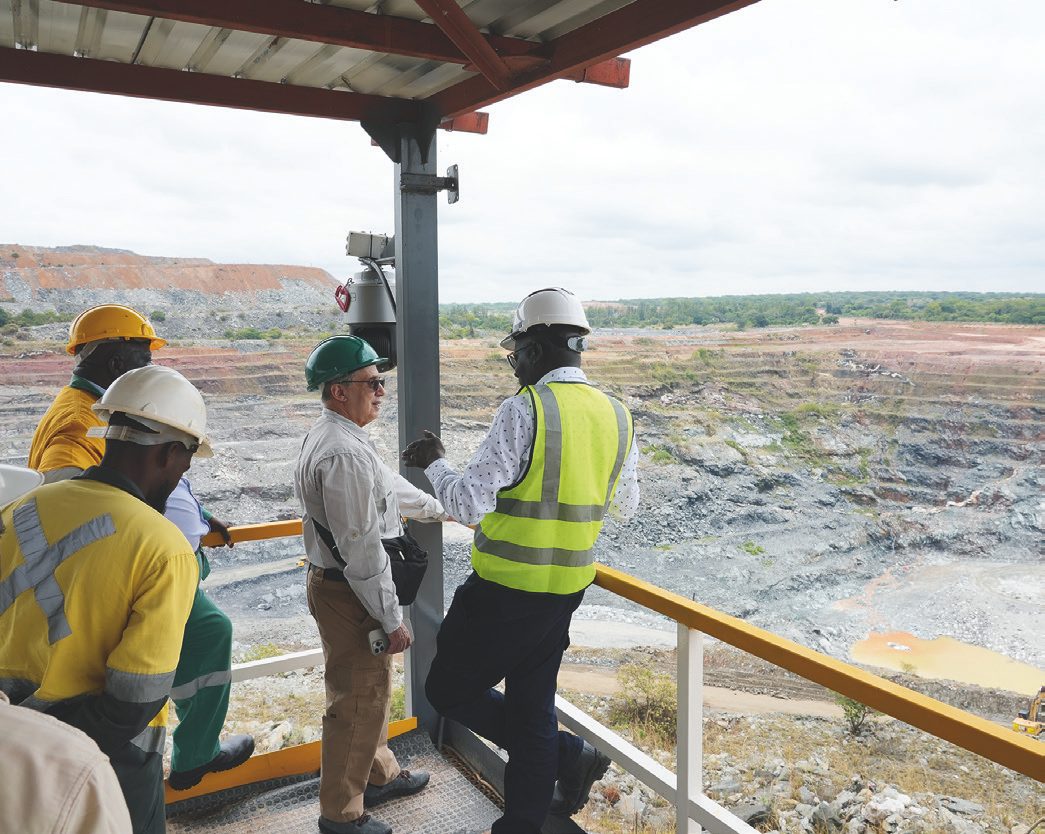

This has led to building a new washing plant and upgrading the original washing plant to have two active plants. The upgraded washing plant can accommodate 10 tons of ore per month. But even with the upgraded washing plant and the new one, the stockpiles from the large mining production continues to grow.
The largest washing plant uses an initial crusher and secondary crusher while the other washing plant just washes and processes. Grizzly is very selective about which rocks go to the crusher. When high grade material is being recovered, those rocks will not be crushed.
Currently, Grizzly is running both washing plants with one shift each. They plan on increasing production by adding a second shift to both plants and ultimately running three shifts at both plants. They are currently expanding worker accommodation in order to fit in the increased personnel.

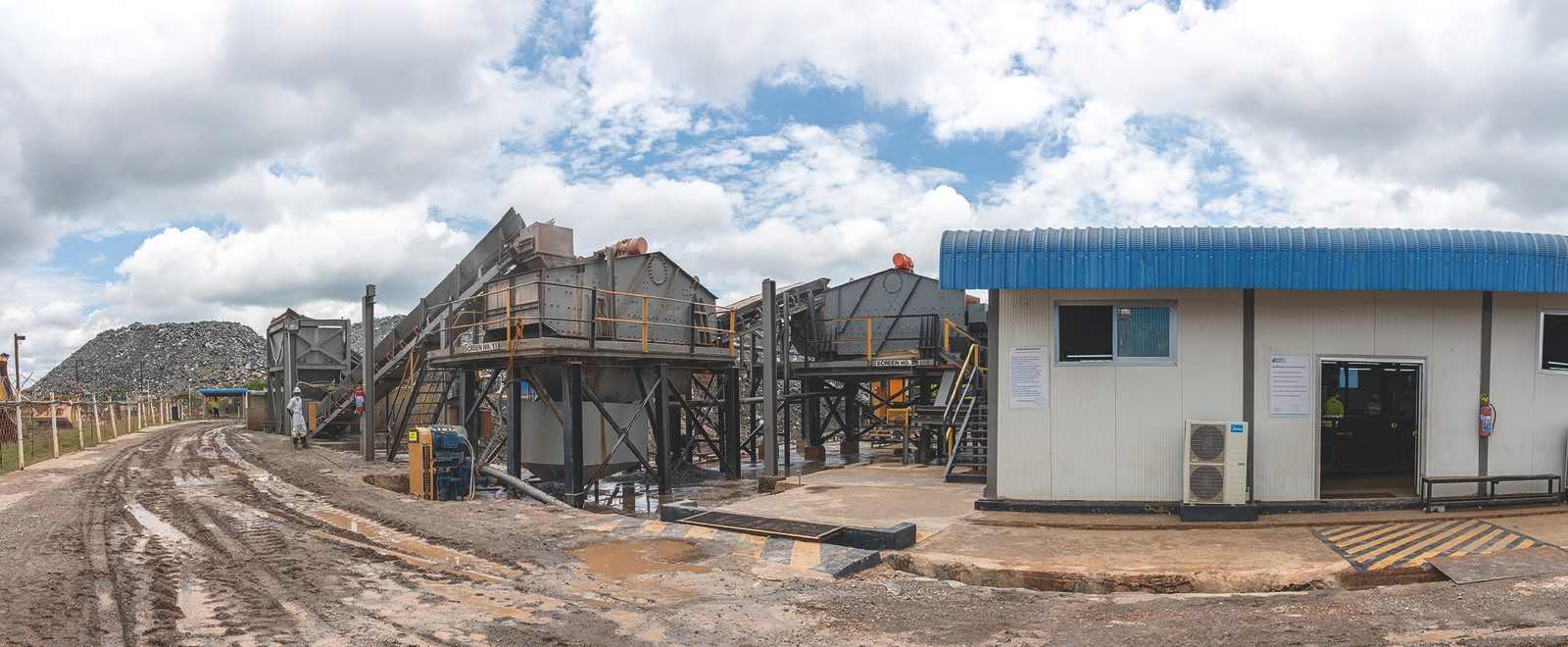
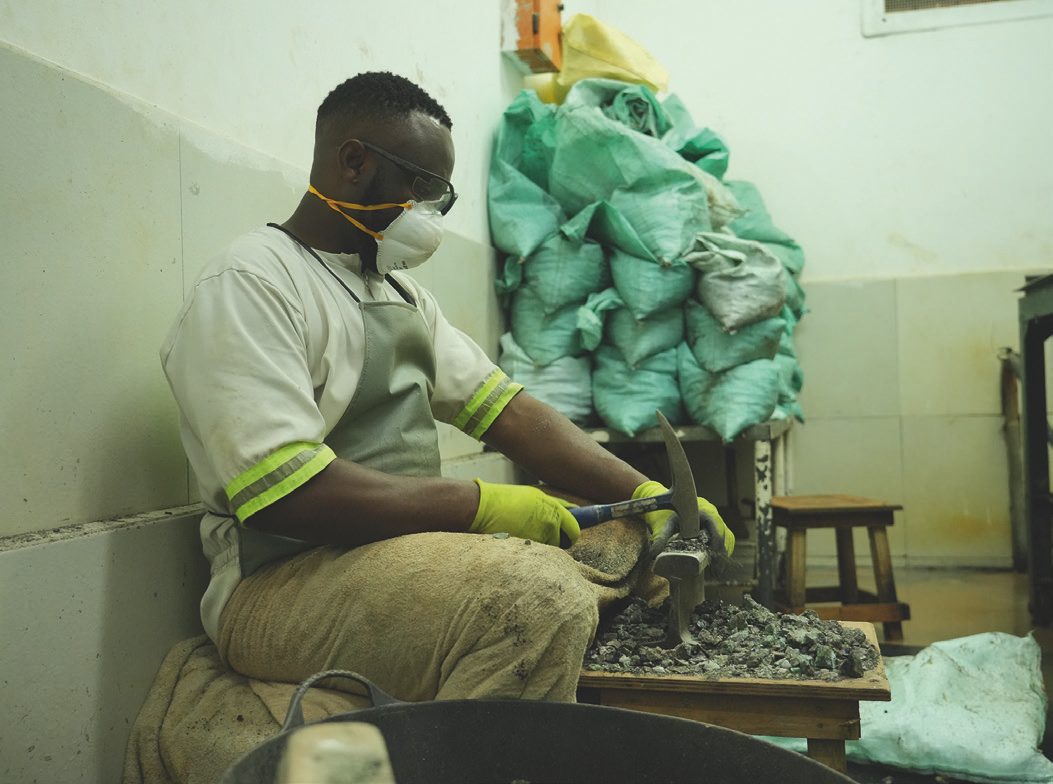
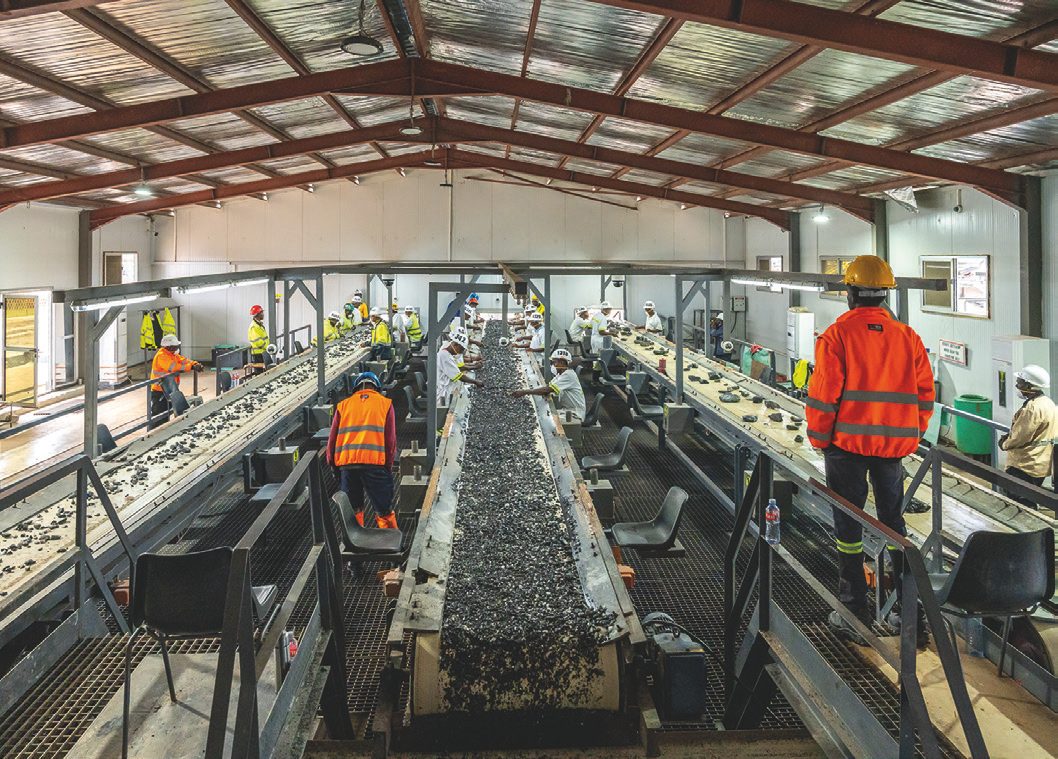
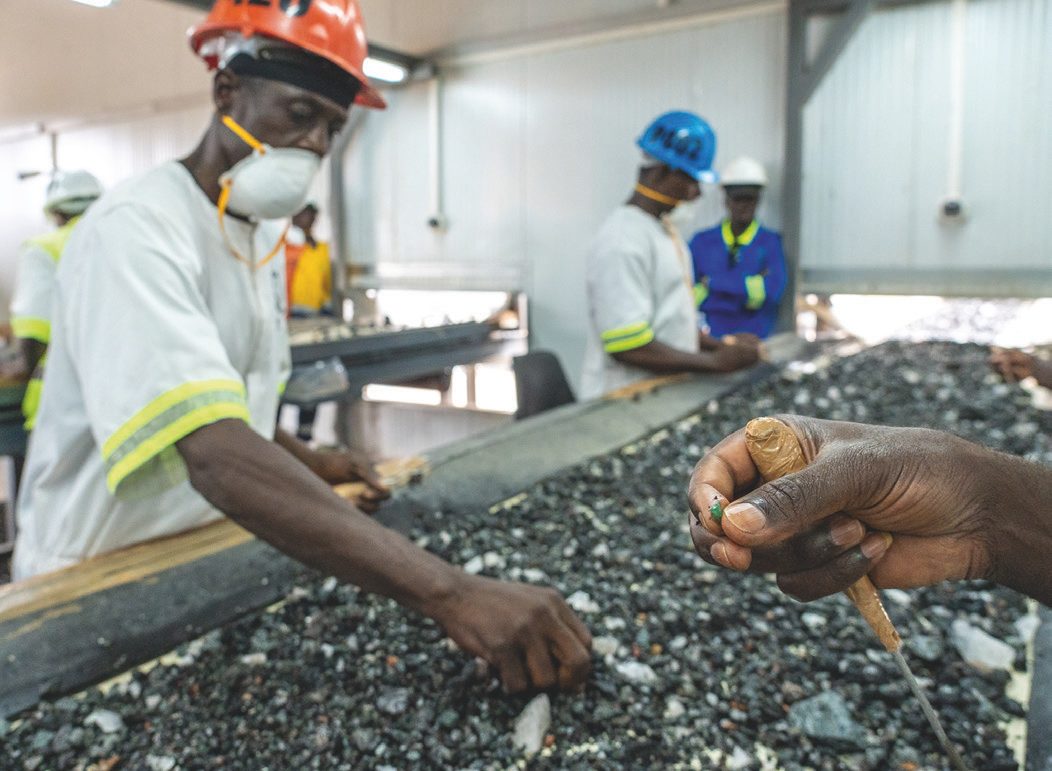
The washing plants utilize picking belts where the schist is placed on each belt by size, from smaller to larger. Sorters watch the belts closely and scan each piece of schist ore for the green color emerald crystals. Using a metal rod, they flip the schist over and observe it from different angles. Any schist containing emerald is taken off the belt and placed in a lock box for transportation to the sorting room for extraction of the emerald from the schist and sometimes quartz, followed by grading.
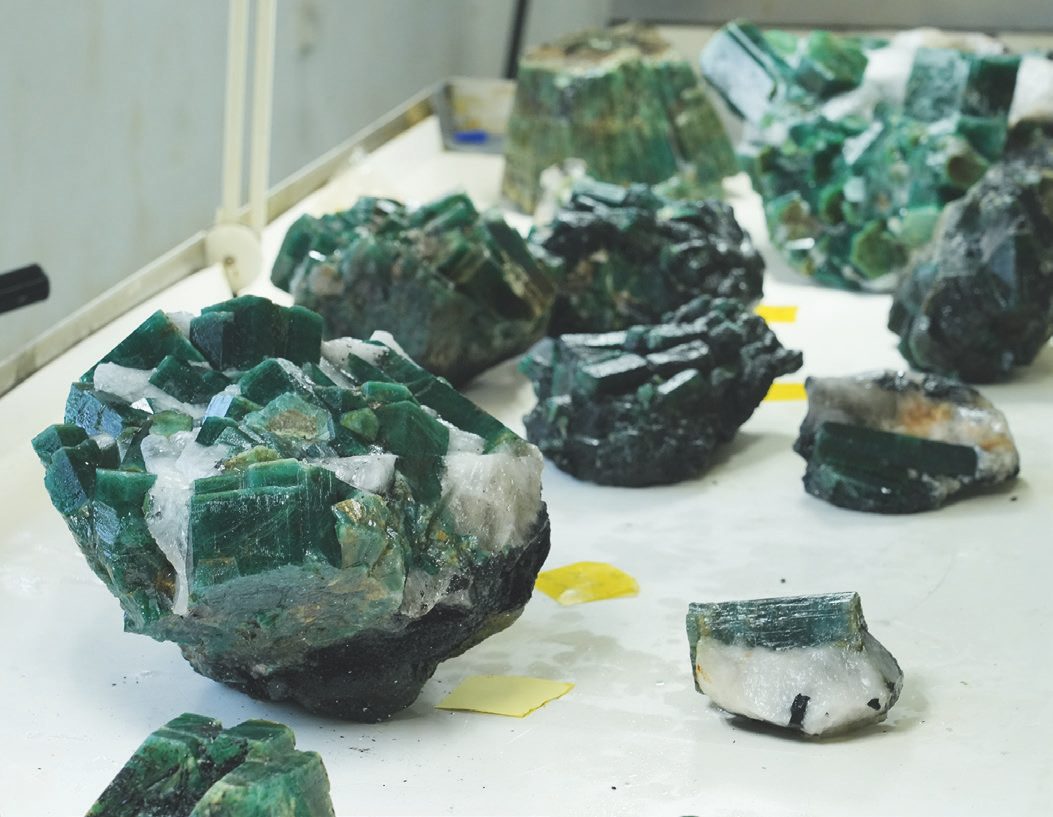
Like other sophisticated emerald mining operations, Grizzly Mine sorts by size, shape color, and clarity in proprietary categories that combine the factors for size, qualities, and weight retention potential, as well as the occasional collector specimen.
The expected increase in production from the washing plants is 13 million tons per year of processed ore and 11,000 kilograms of emerald/beryl rough. Eventually, Grizzly is looking to triple production or even more because of their efforts to increase processing rate and their geological studies of their mining area.
Prospecting has indicated that mining in the west direction would offer the best potential for production, with one to two kilometers of the west direction of the Darma pit to be explored. Initial geological surveys indicate it may contain the largest reserves yet.
The mine has three layers of production and, in the eastern direction, the third layer still has another one kilometer of estimated production. The second layer averages about 60 meters and the third layer about 80 meters. The eastern side has the deepest current mining depths of 110 meters while the western side has between 70 to 80 meters.
Grizzly's target for the waste rock is now an average of 47,000 tons per day in the dry season, removed during mining. A deeper fourth layer may be reached by shaft and potential underground mining in the future.
Grizzly will have two mining teams in the pits with one moving east and one moving west. They estimate, at current mining production rates, to have 15 years more of mining just in the eastern direction at current depths and far more in the western direction. The years 2023 through 2025 saw a huge increase in emerald/beryl saleable material produced with a significant increase continuing in 2025. Reforestation has already begun in some areas such as the northern waste rock dump.
The security crew makeup was very interesting. The security personnel are basically broken into three groups. Local Zambian, Senegalese with strong loyalty ties to the owner, and Nepalese-descent Gurka who are known for their courage, intensity, and loyalty. This group provides security and strong loyalty ties to the company.
Grizzly also exploits the Musakashi emerald mining area west of Kitwe that has given gemological laboratories so much difficulty in origin determination due to their similarities to Colombian and Afghan emeralds, which are a completely different formation than other deposits in Africa. They have even been called a new type of Afghan emerald that was later disproved. This shows the necessity for laboratories to invest the time and resources in Field Gemology. Guild Laboratory is currently in the process of detailed study on the samples collected.
Grizzly Mine Production
The Grizzly Mine also works in cooperation with other emerald mines such as their sister mine Pridegems (on the northeastern side of the operation). Guild Field Gemology attended their auction in Kitwe for low to medium-grade emerald rough.
Zambia produces most of the emerald in the world and, in a relatively consistent manner (for colored gemstones) because of two huge producing mines: Grizzly and Gemfields' Kagem. The production from Grizzly has been increasing dramatically and this Zambian production has helped make emerald a leading colored gemstone in the market for cutters, jewelry manufacturers, and retailers to promote and plan their business months ahead of time.
I have always found it interesting that many in the trade lump the description of gemstones (including emerald) from different sources into a one-color range that might be typical of a particular source, but in reality, is far from absolute. When trade members think of Zambian emerald, they think bluish green, with a color that can be described as cooler than typically seen from, say, Colombia.
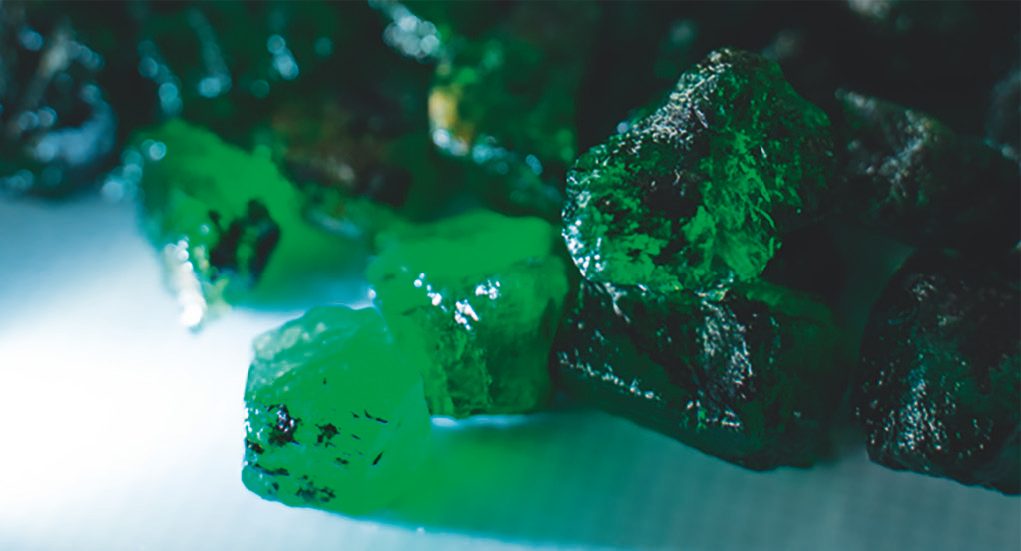
But anyone who has seen mine production from Zambia can see yellowish green, pure green, the typical bluish green, cooler green colors, warmer colors, lower saturation, vivid saturation, light tones through dark tones, and even green beryl and aquamarine found in the pegmatites. While the typical color may be a cooler bluish green, the whole green color range is widely variable. Mr. Tidiane Ndiaye discussed with us how Grizzly's top color production can have a very slight touch of yellow, creating brighter and a less cool color sensation than the colors typically associated with Zambian emerald. They have found this color to be preferred in some markets.
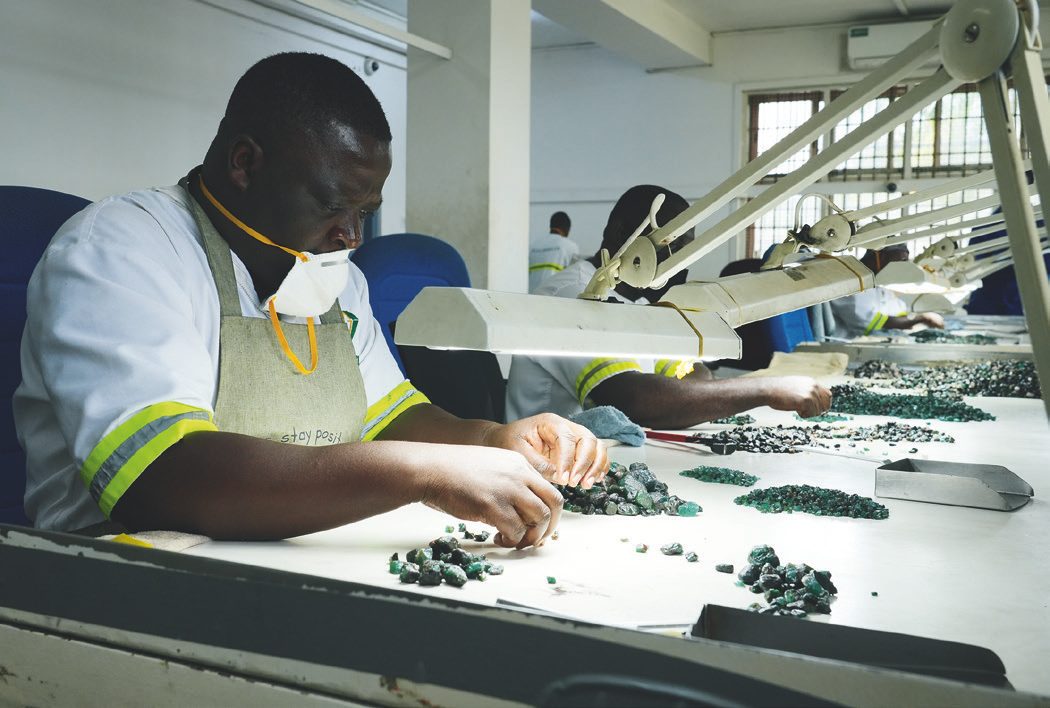
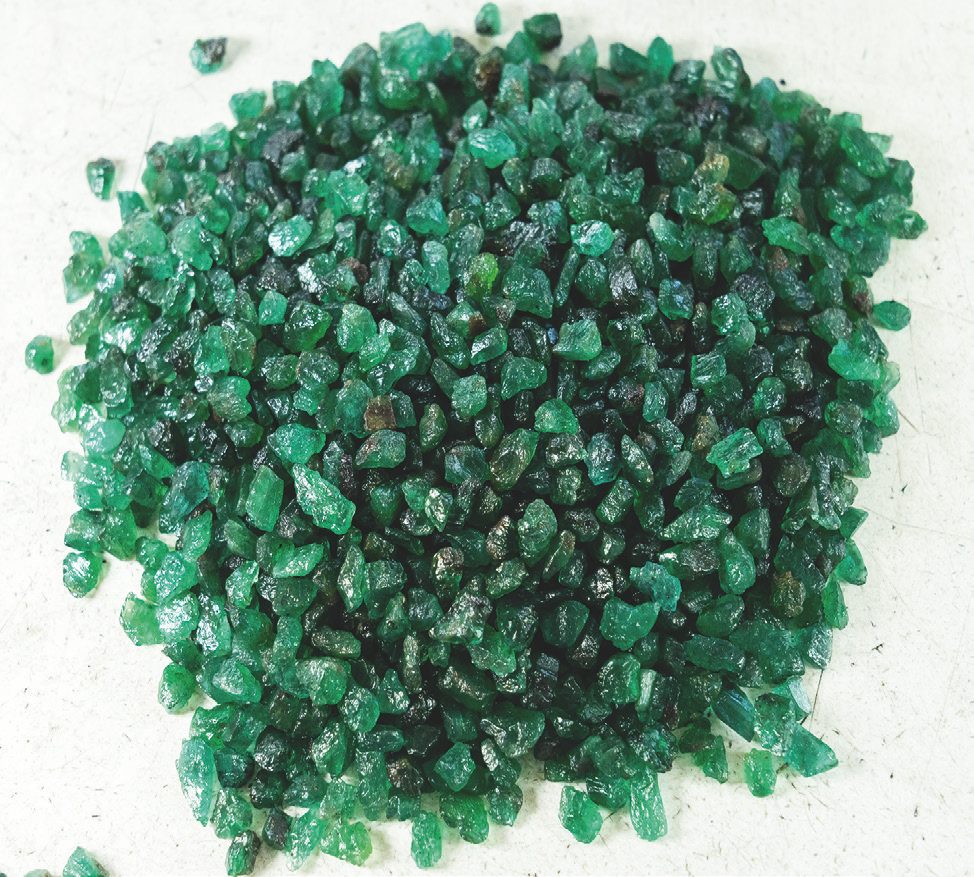
While prices have fluctuated for emerald rough since Covid, depending on rough supply and cut demand overall, Mr. Tidiane Ndiaye has seen a steady increase post-Covid. While many of the major emerald mines have reported that commercial level goods have seen large productions enter the market (especially in 2023 and 2024) and prices lowered for those goods, they also see that the market absorbed the production and prices stabilized better.
For premium quality, the market demand versus supply has seen more consistency with price pressures leading to steady increases, although emerald has had much more stable prices than other gems like ruby where production (especially fine color) has not nearly met demand and prices have increased dramatically. For an example of the rarity of high-grade emerald rough, Mr. TJ stated that, if they take 300 to 400 kilograms of medium to high grade rough to Dubai for an auction, they would have three to four kilograms of fine high-grade material.
Artisanal Mining and Chinese Concessions
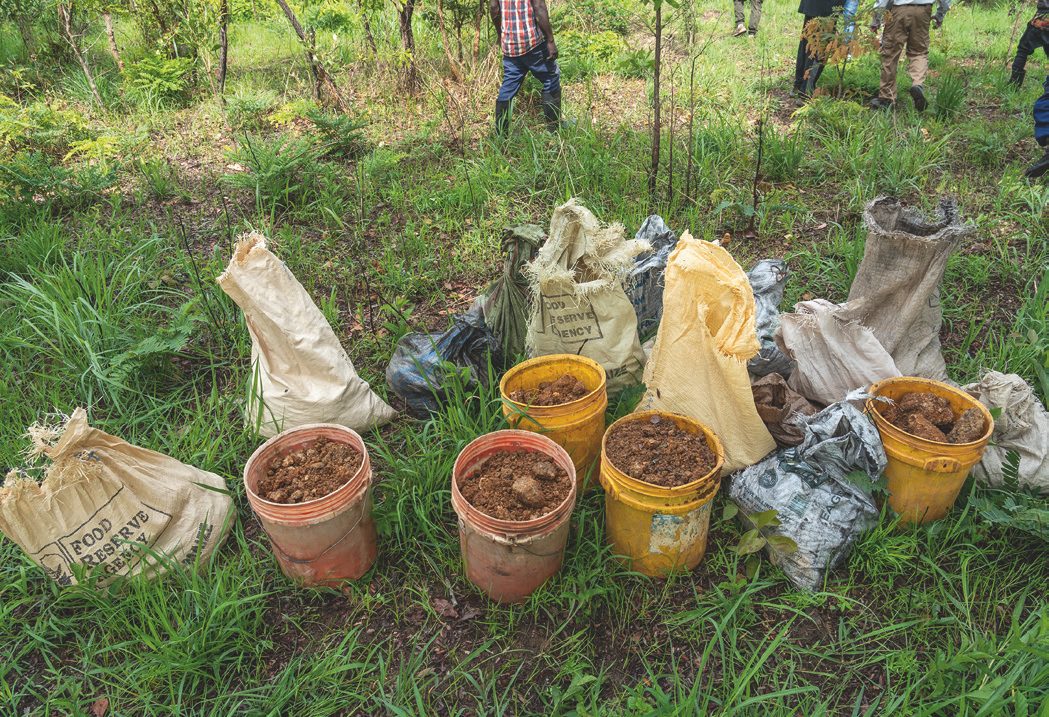
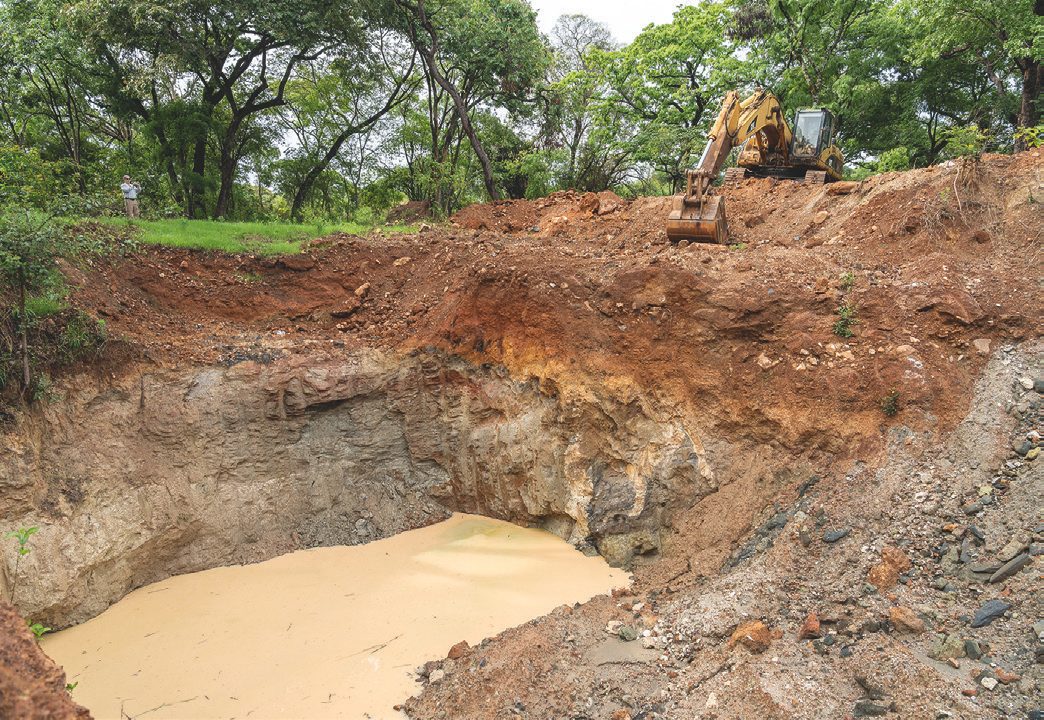
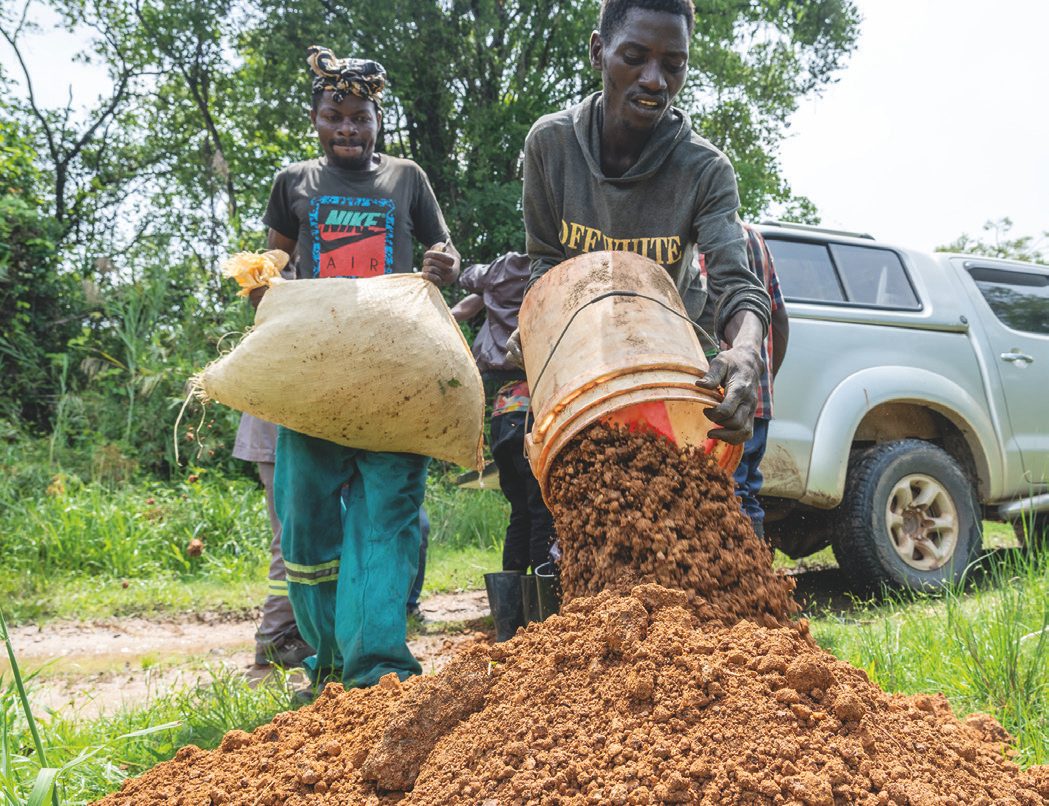
We visited Grace Gem Mine and met with the Mine Manager David while we were in the emerald producing area near Kitwe. The Chinese owners of the mining concession for Grace Gem Mine have held it for nine years. During that time, they have been core drilling and collecting samples studying the commercial mining potential of the entire concession. The core sampling has reached depths of 150 meters. Much of the reaction zone is estimated to be 80 to 120 meters but the depth varies with some areas being less than 50 meters.
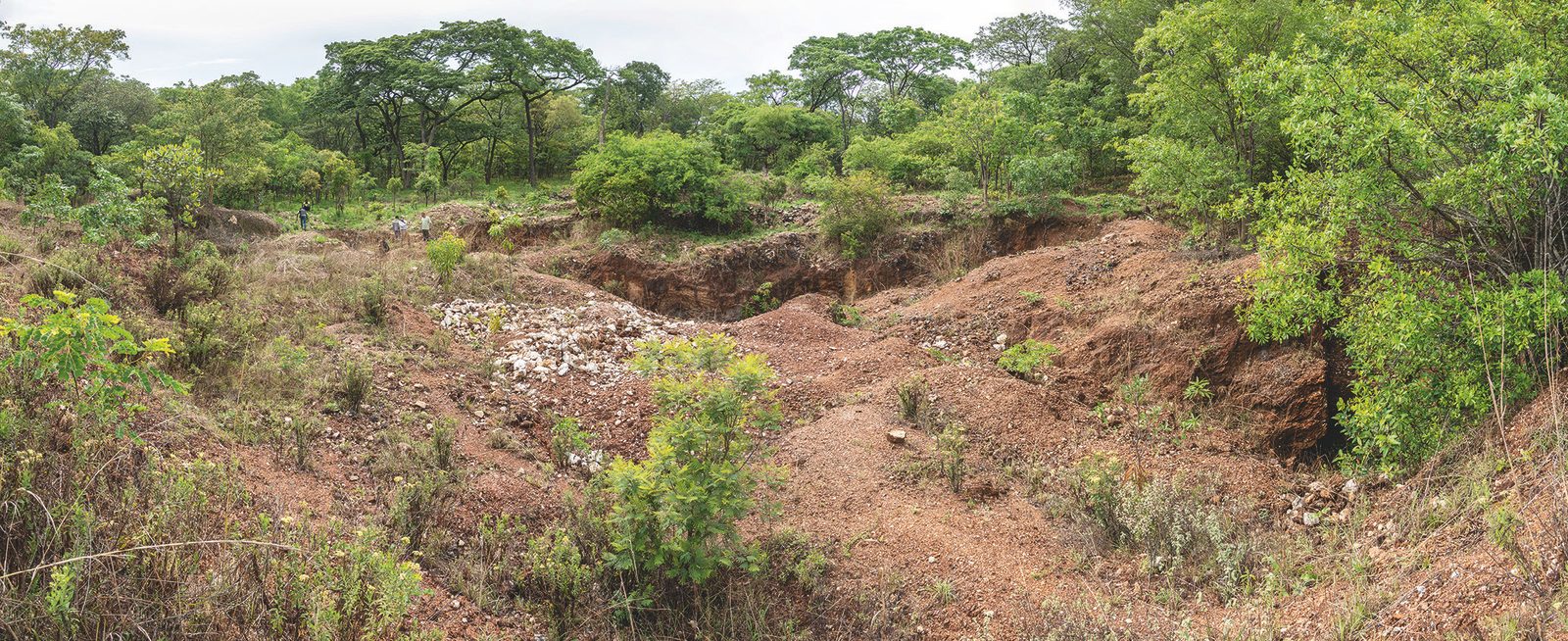
Artisanal mining by local Zambians is only allowed on a case-by-case basis by the concession owners. When an agreement is reached, artisanal miners will be allowed on the property. The profits are agreed upon to be shared by the concession owners and the artisanal miners. This is a difficult arrangement to make as a great deal of trust is involved.
It is well known that much of the emerald production for sale on the secondary market in Zambia is black market material. The backroads leading to access to these smaller mining concessions and artisanal mining areas are full of villages where locals approach the vehicle with rough emeralds for sale with very limited chain of custody, to say the least.
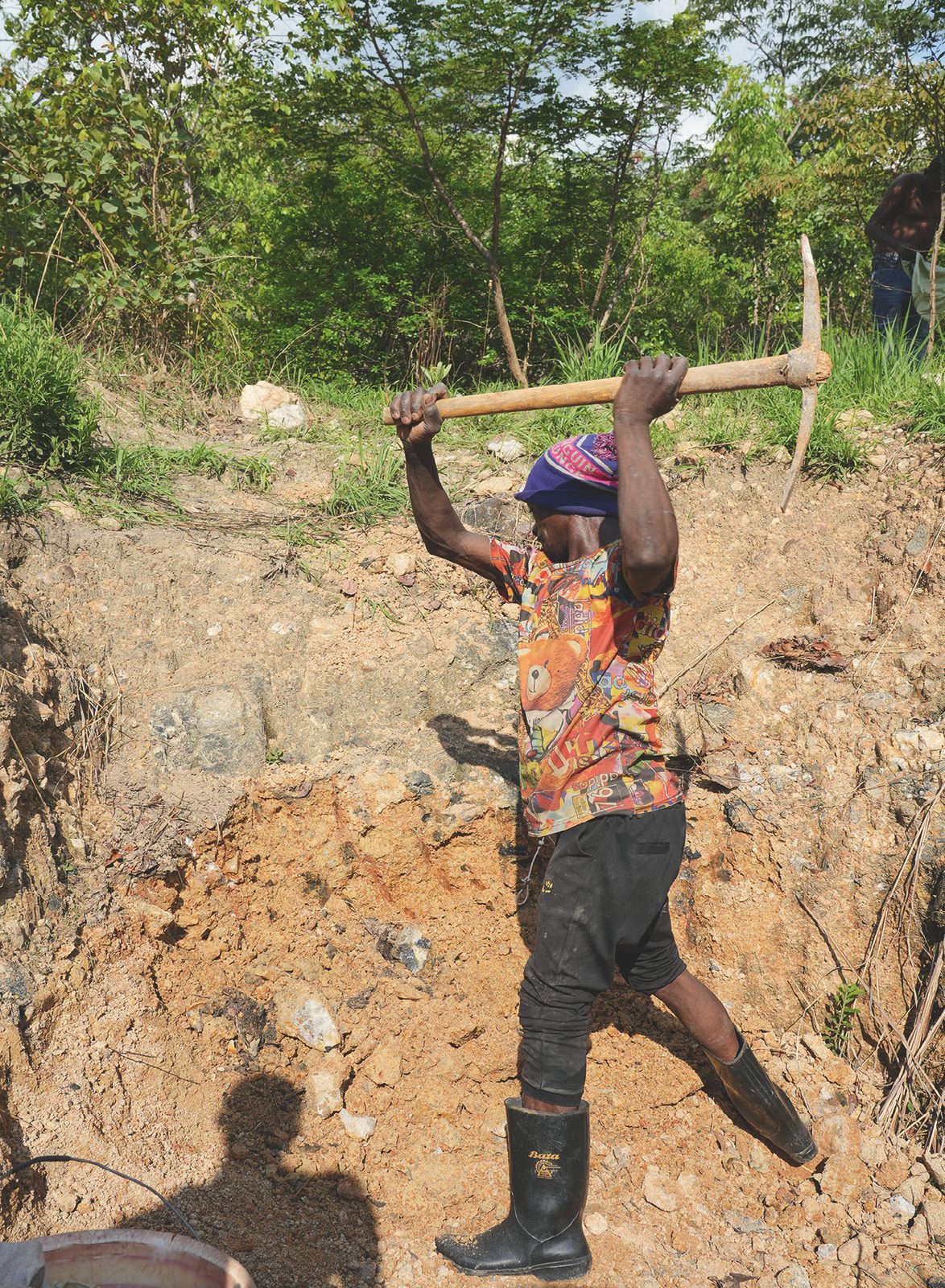
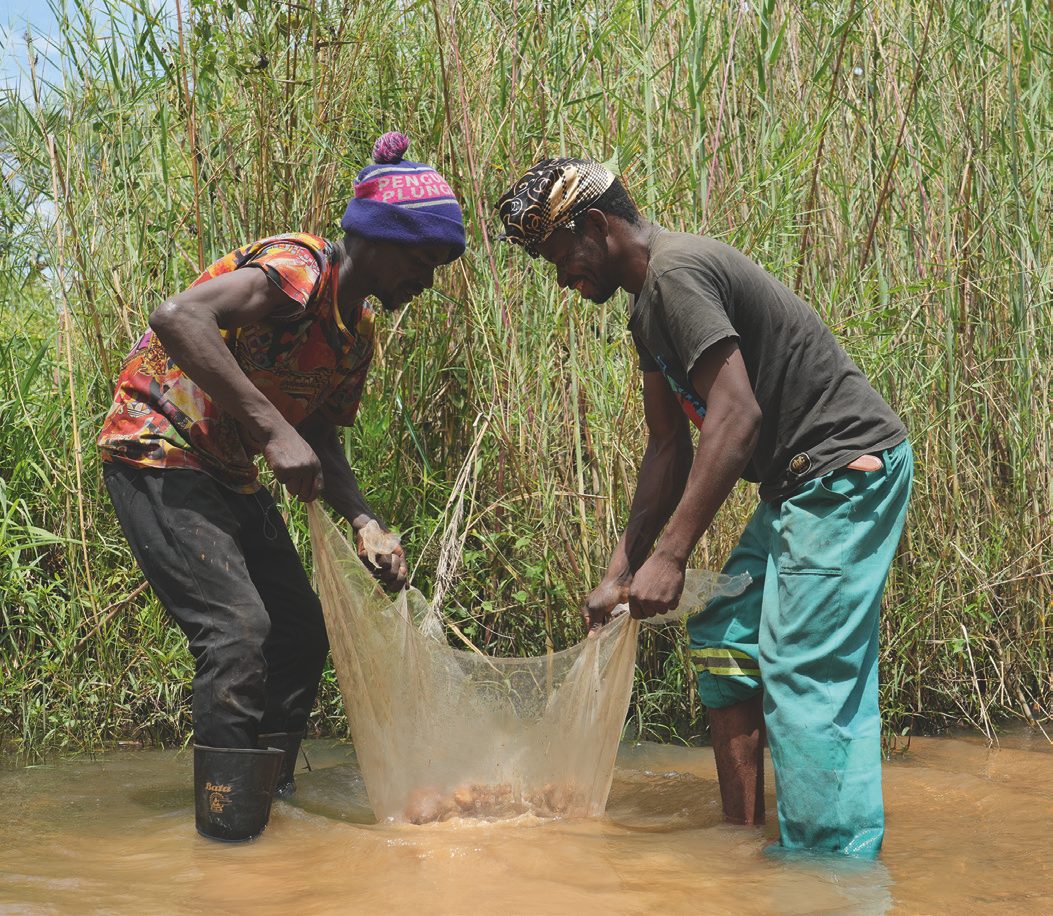
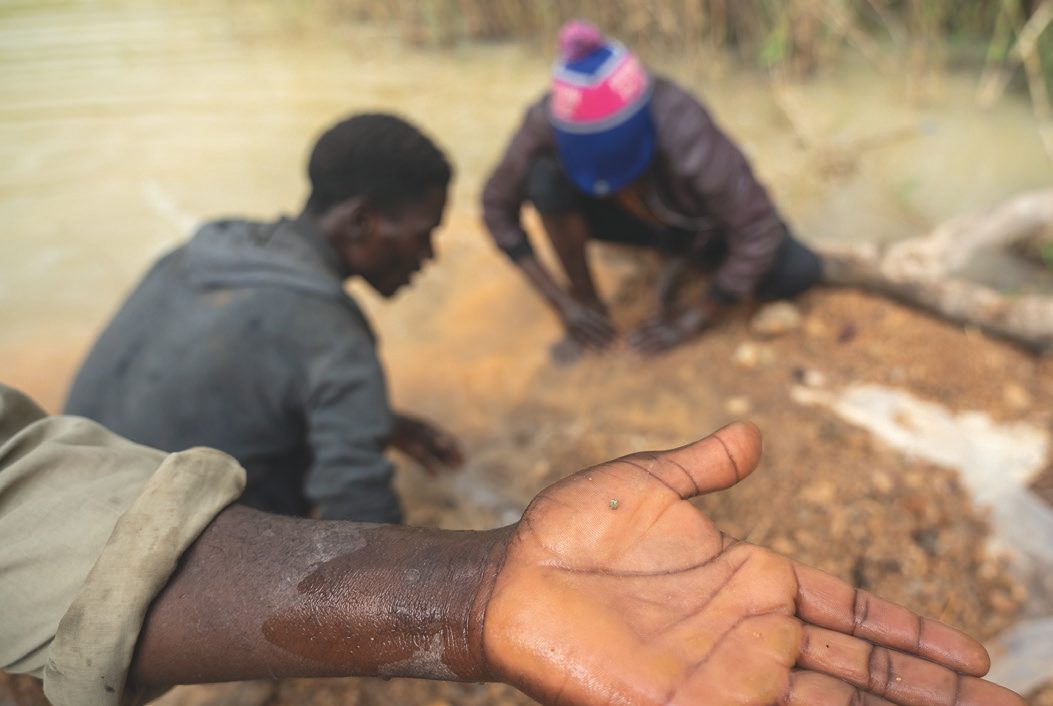
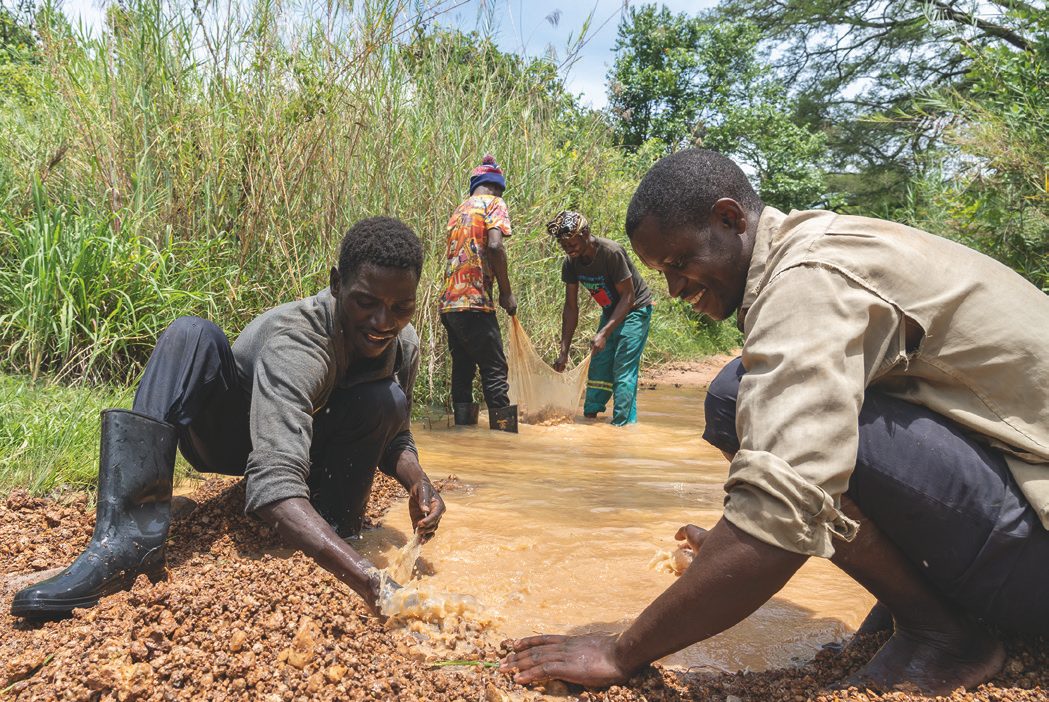
Mining by the artisanal miners is done using only hand tools and hand washing. This is very disadvantageous for mining emerald as it is mostly a hard-rock mining effort with very little production in weathered softer rock. Without blasting and mechanization, digging with hand tools is much slower and it is difficult to move enough rock to produce the quantity of emerald to generate enough income even for artisanal miners. Larger and well-funded companies like Grizzly have been buying smaller less well-funded mining concessions.
If the mining concession owners can raise investment capital, they will develop a fully mechanized open-pit operation in an area where the core drilling shows good potential. Then they will develop that pit and see how the returns direct the development. Most of the smaller resource mining concessions do not have the ability to take extensive core drilling samples of the property. Rather, they will drill, here and there, relying on luck and to some extent experience.
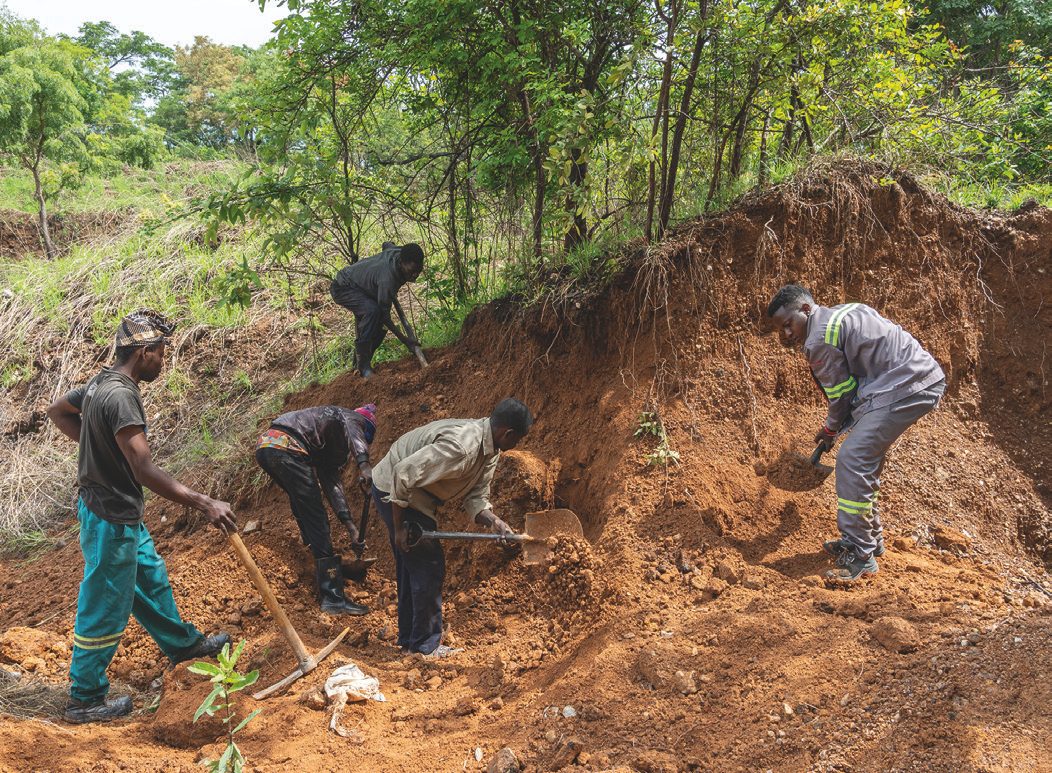
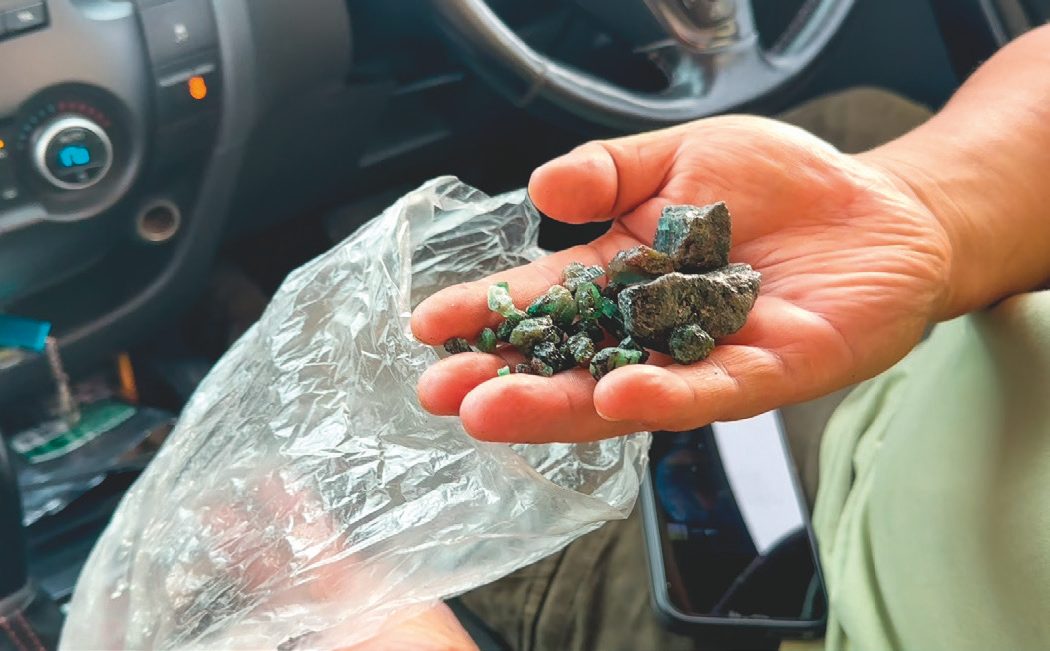
Also, the reaction zone where emeralds are formed is often greater than 50 meters making it very difficult for miners with hand tools to reach. Much of the mining by the artisanal miners on the Grace Gem Mine concession follows outcrops where the TMS and pegmatite reaction zone breaks the surface, and the emeralds can be removed at relatively shallow depths. This is how the Grizzly Mine started.
Washing is also done by hand along small streams with simple nets. One or two mining teams take a net and load it with gravel from the hand digging. They wash the gravel in the small stream and then spread the rocks out to search for emerald. While we were there, an exciting episode happened when a large Black Mamba swam a few meters behind them and crossed the small stream. Known for the snake's deadly and extremely fast acting poison as well as its aggressive nature, this caused a great deal of commotion as miners yelled at it and threw rocks to drive it away. The more seasoned miners went on washing without concern, but a younger miner kept nervously looking over his shoulder. This situation proved entertaining to everyone, but highlighted the real concerns with mining in the African bush.

Kitwe Pride Gems Low to Medium-Grade Auction
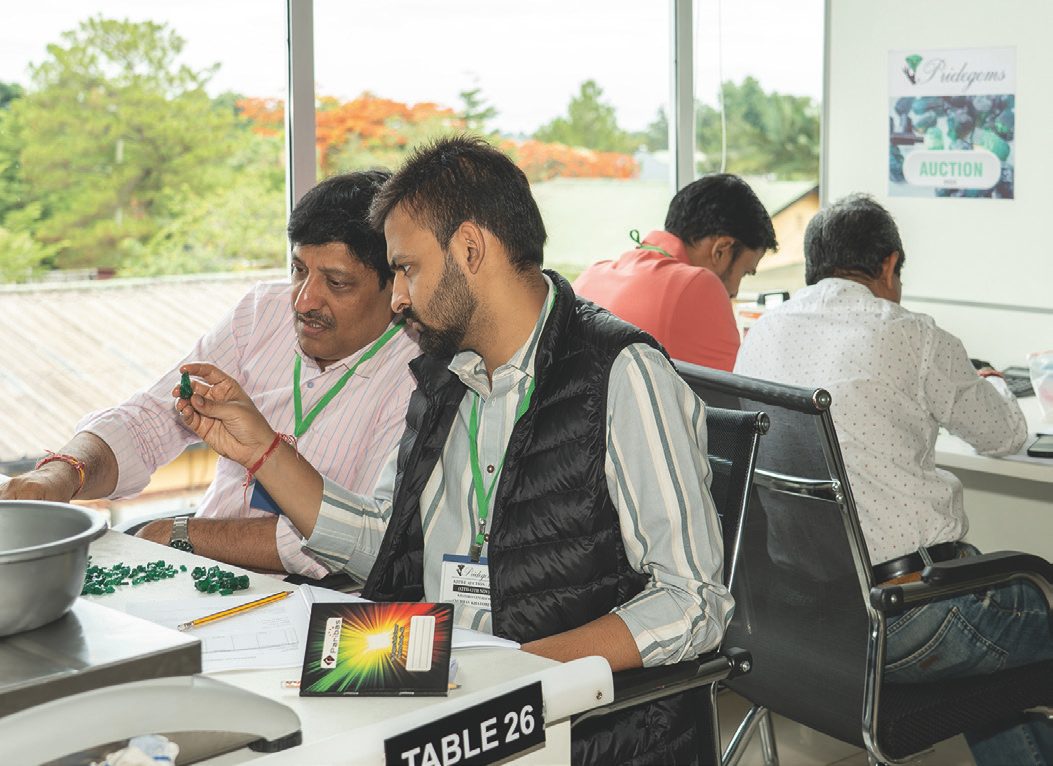
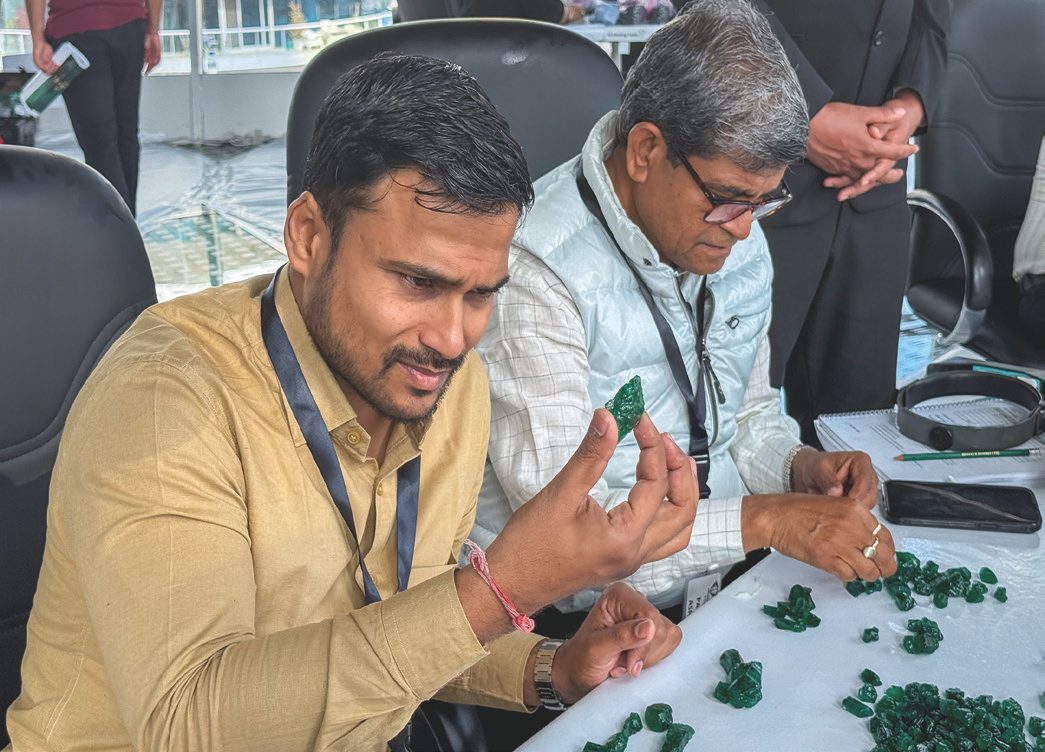
The low to medium-grade rough is auctioned in Kitwe as at the auction we attended by Pridegems. Medium to high-grade rough is auctioned in Dubai. Grizzly has an aggressive auction target with two low to medium-grade auctions a year in Kitwe and three to four medium to high-grade auctions every quarter in Dubai. The Kitwe auction that we attended had over one ton of emerald and beryl rough. By having the auction in Kitwe, it saves tremendously on shipping costs based on the weight and price of the lower-grade material. Dubai auctions target 300 to 400 kilograms.
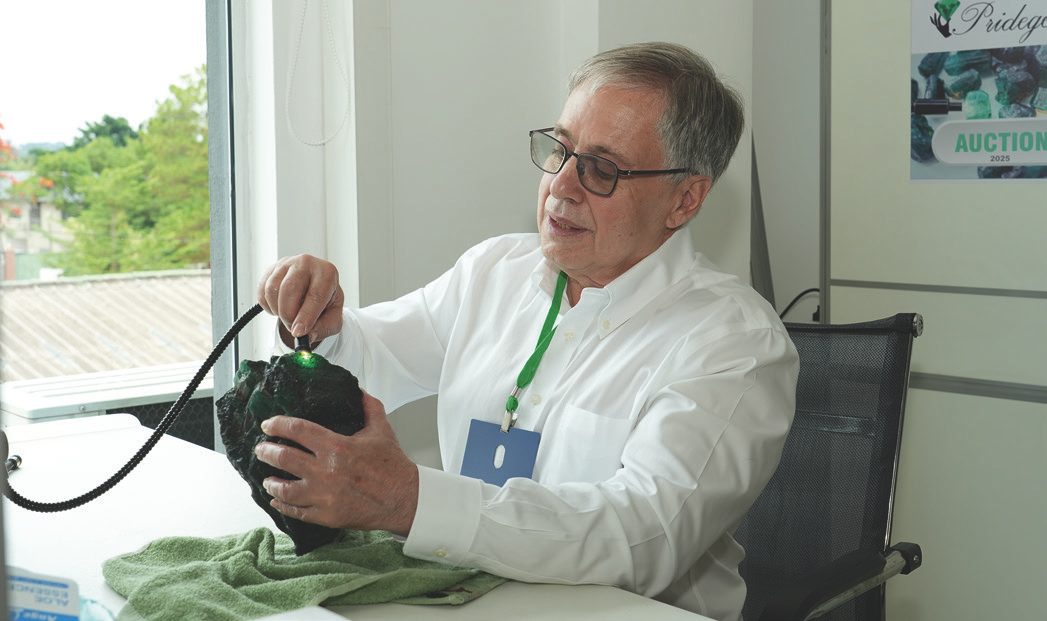
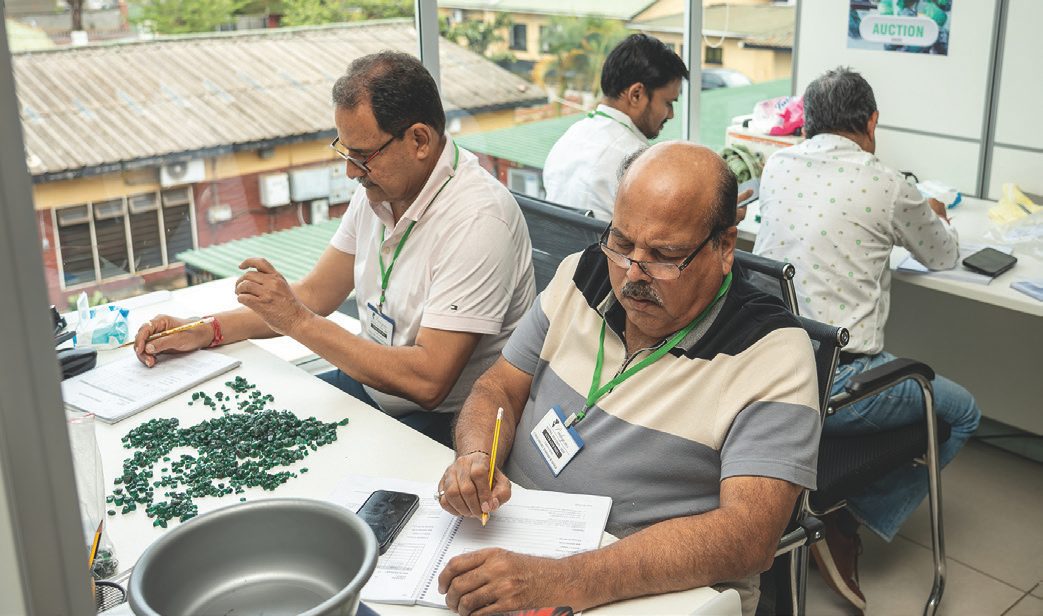
Some of the Jaipur customers at the auction we attended have been doing business with Grizzly for 40 years and are in the third and even fourth generation of buying from the mine. Roughly 95% of the customers for the rough emeralds are from Jaipur. It is difficult to compete with Jaipur bidders who have decades of experience, and often family members come together and combine their expertise and experience in evaluation. They know the material and the market.
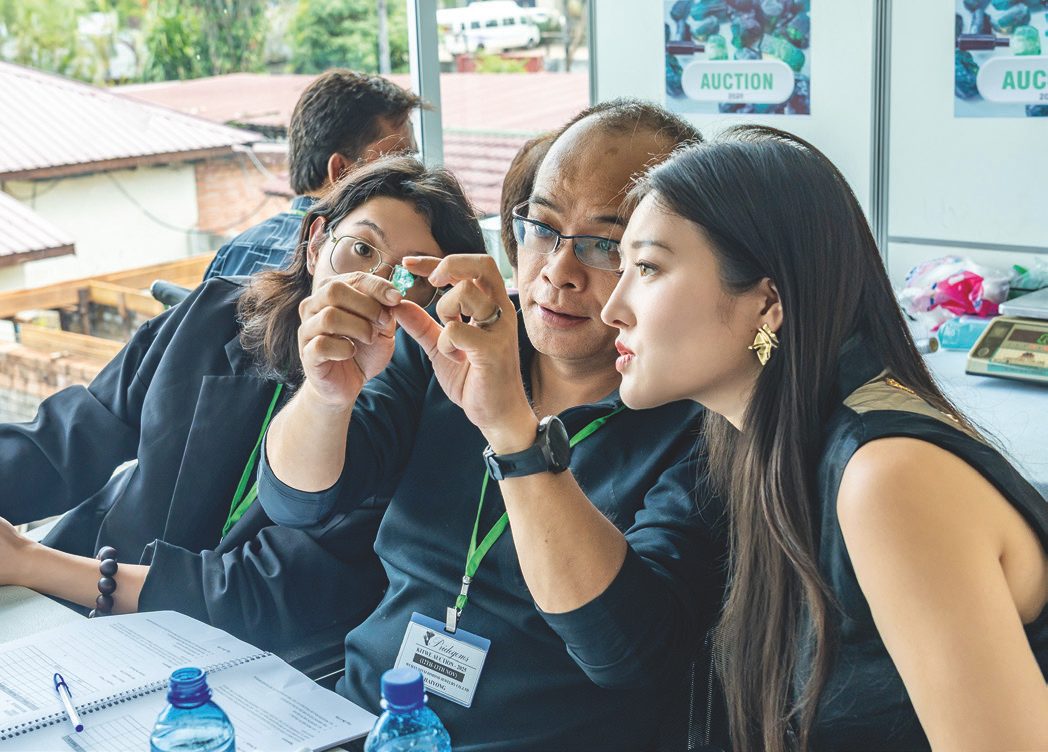
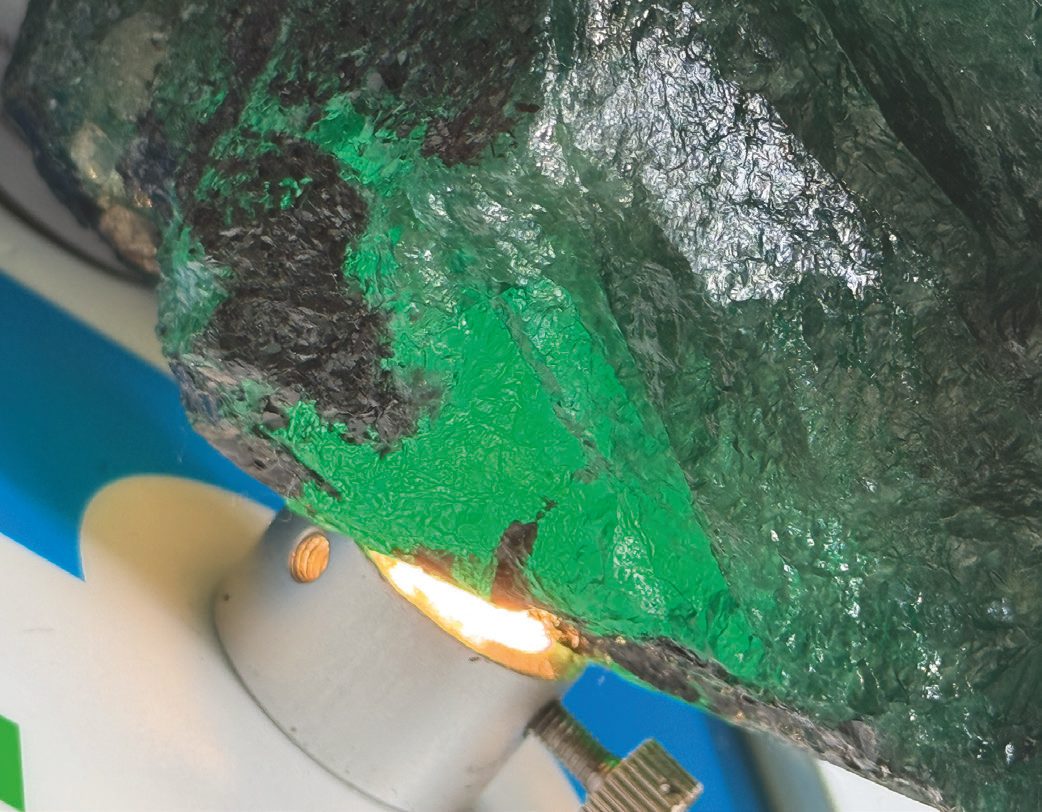
At the Kitwe auction, we also saw some local Chinese buyers who were bidding. Most of the Chinese buyers usually come every other auction as it takes longer for them to offload the material in China compared to the Jaipur buyers with their global customer base. The Chinese at the Kitwe auctions usually live locally and work in other industries but act as buying agents for cutters in China. We witnessed Chinese using their cell phones with high-end cameras discussing the rough and bidding price with their customers in China. This was not seen by the Jaipur buyers who almost always want to see the rough themselves to examine it closely. Mr. Tidiane Ndiaye said the Chinese buyers were becoming increasingly expert at evaluating the rough.


Dubai Medium to High Grade Auction
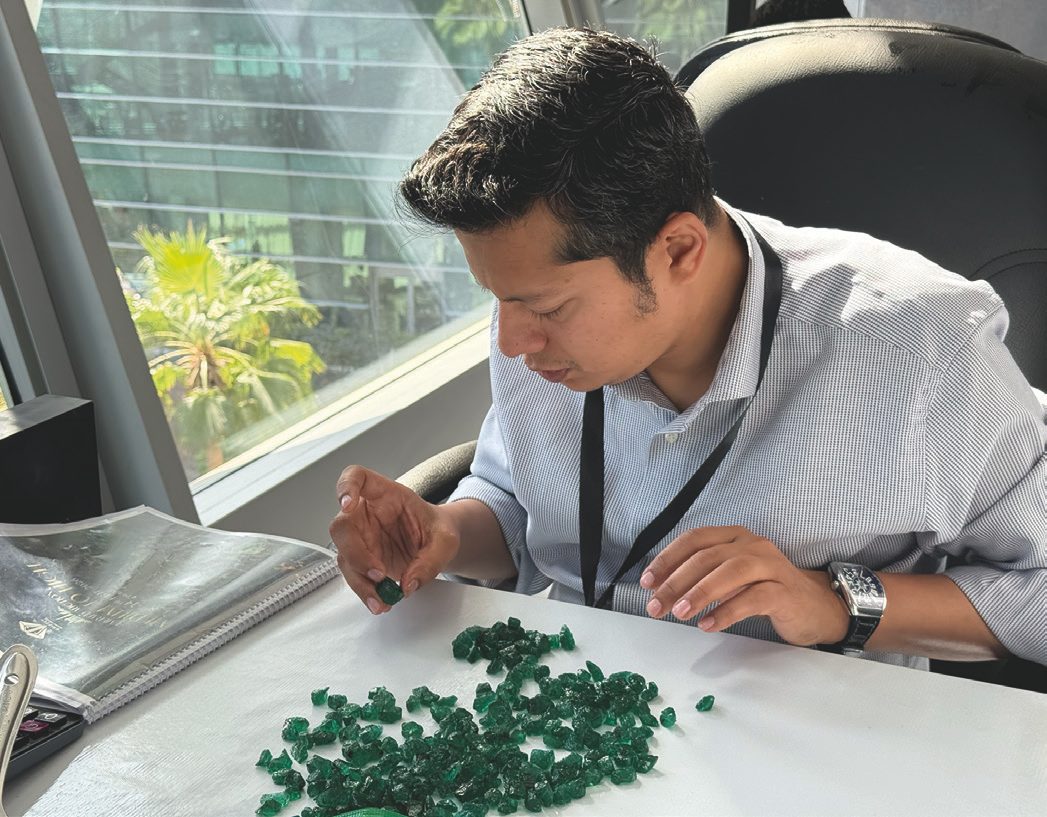
Right after visiting the 2026 Tucson Gem Show, I flew from Tucson to Dubai to attend the Grizzly Mining Limited Medium to High-Grade Auction at the Dubai Multi Commodities Center (DMCC), held February 8 to 14. The first medium to high-grade auction of the year for Grizzly, they brought 283 kilograms of emerald that was graded and organized into 150 bid schedules.
The Kitwe low to medium-grade auction's highest qualities were mostly entry-level facet grade commercial material. At the Dubai auction, qualities started at the better commercial facet grade (the bread and butter of the industry as one buyer described) and included nice clarity material, higher cabochon grades, some finer quality, and some larger size crystals.
As with the Kitwe auction, over 95% of the buyers were from Jaipur, India. Many were also at the Kitwe auction while some only came for the higher-end auctions, while some focus on the lower grades. There was one Chinese group looking for higher-quality material and they used high-end cell phone cameras to discuss the material and bid prices with buyers in China.
Both the lower-grade auction and the higher-grade auction saw very competitive bidding. Each auction has its own unique characteristics. The lower-grade auction has a huge amount of material to be examined, which requires careful examination, especially the larger crystals. This creates a fast almost frantic pace by the buyers. You can feel the energy and frenzy-like atmosphere.
At the higher-grade auction, it is more of a controlled intensity by the buyers—more methodical as they seek the schedules that fit their market sector needs, and evaluate the rough. Both auctions, as with all mine rough tenders and auctions, are exciting as well as informative and educational.
The Future
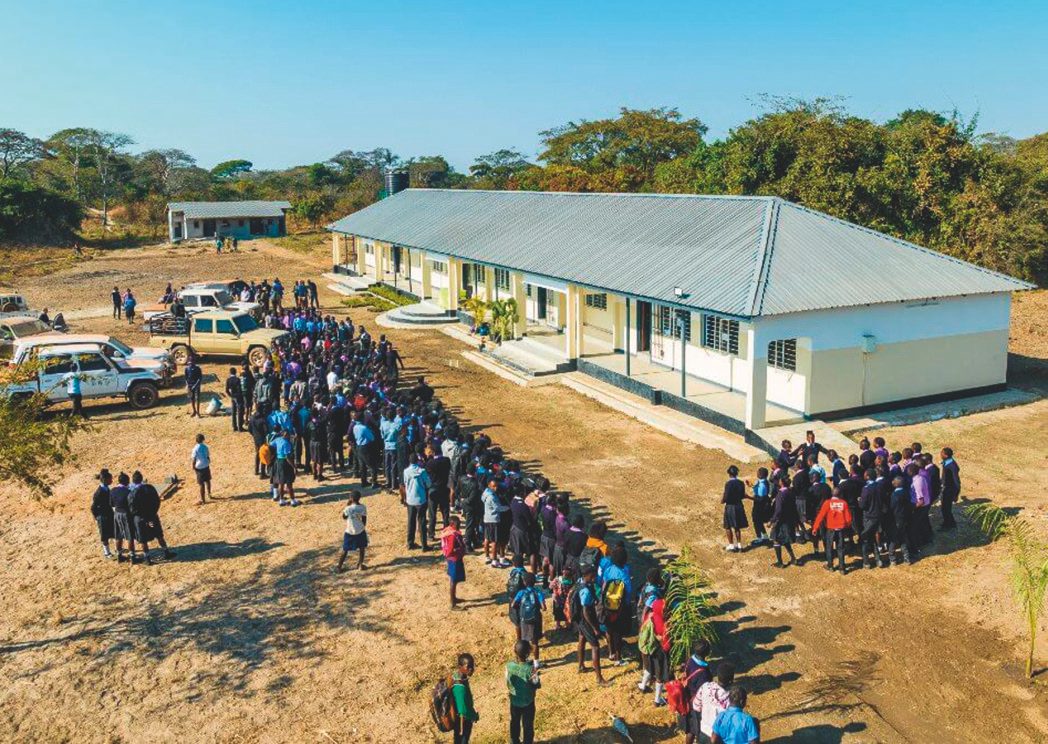
Grizzly is focused on expanding their open-pit operation in both east and west directions, potentially opening up new pits, and increasing processing capacity, thereby increasing production over the next few years.
Plans also include buying smaller emerald mine operations and expanding into other gemstones and minerals, such as copper and products like aggregates and cement.
Acknowledgements
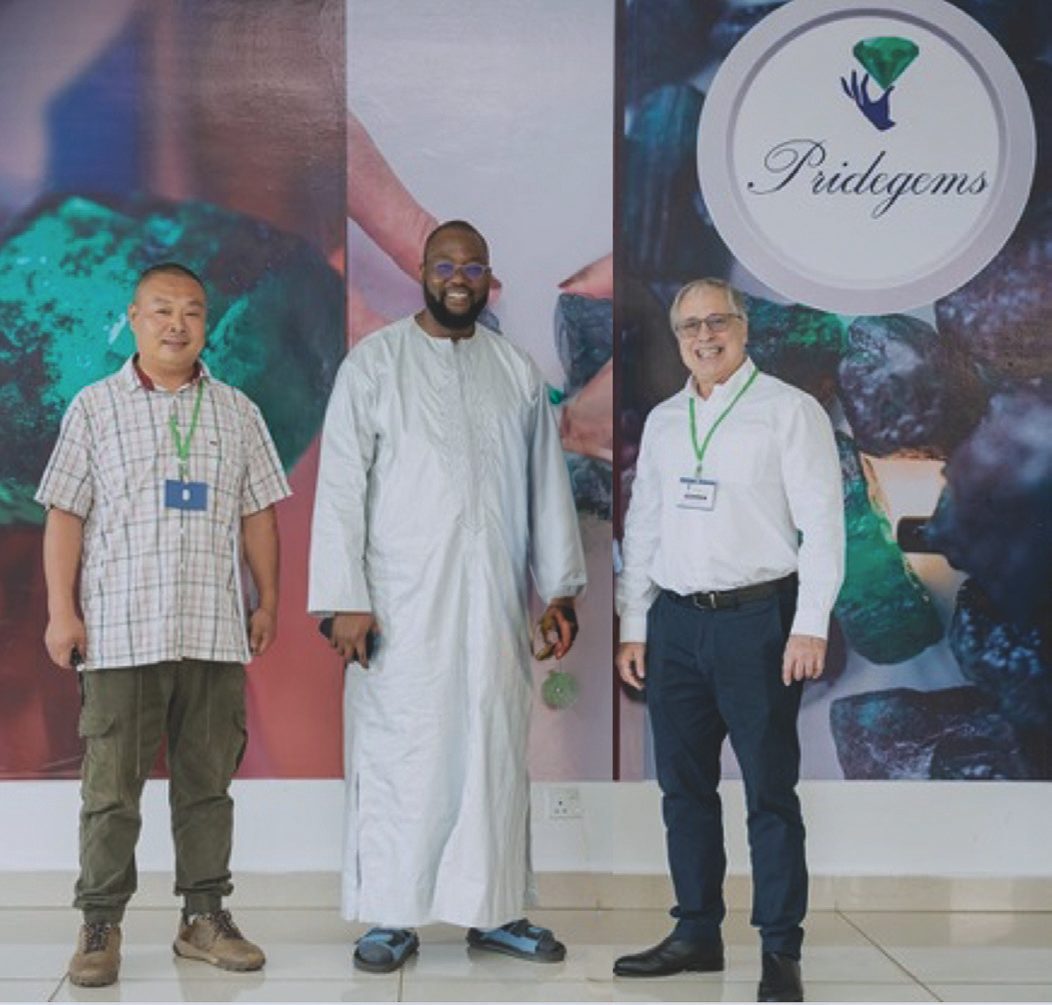
The author would like to thank Mr. Tidiane Ndiaye, Mr. Langson Mukuma, Mr. Stanley Chasauka, Mr. Niu Hu, the Grizzly Mine, Pridegems, and Grace Gem Mine and Manager David, for their assistance and kindness during our trip to Zambia.
About the Author
Andrew Lucas is President of Guild Institute of Gemology and Senior Vice President Guild Gem Laboratories.