The Turning Point: Jewelry at the Moment of Transition
A new event on the European calendar of contemporary jewelry, Gdańsk Jewellery Week (GLW) made its debut in September 2025, centered around the AMBERIF International Amber and Jewellery Fair. GLW brings together creators, designers, and trendsetters for exhibitions, workshops, and…
A new event on the European calendar of contemporary jewelry, Gdańsk Jewellery Week (GLW) made its debut in September 2025, centered around the AMBERIF International Amber and Jewellery Fair. GLW brings together creators, designers, and trendsetters for exhibitions, workshops, and discussions. One of its key highlights is the curated TURNING POINT exhibition, which showcases avant-garde designers. The result clearly demonstrates that contemporary art jewelry is a medium that not only adorns, but also—and perhaps above all—reflects change in the present.
TURNING POINT opened the door for artists from around the world to showcase bold, surprising, provocative, and sometimes even painful works of art, becoming a sort of powerful collective manifesto. In selecting the pieces to exhibit, TURNING POINT’S curator Ruudt Peters—a master of thinking about jewelry as a tool of transformation—sought diverse perspectives about pivotal moments in human life. The result was a polyphonic, emotionally charged, and formally diverse exhibition; a multilayered narrative about turning points—personal, collective, and social.
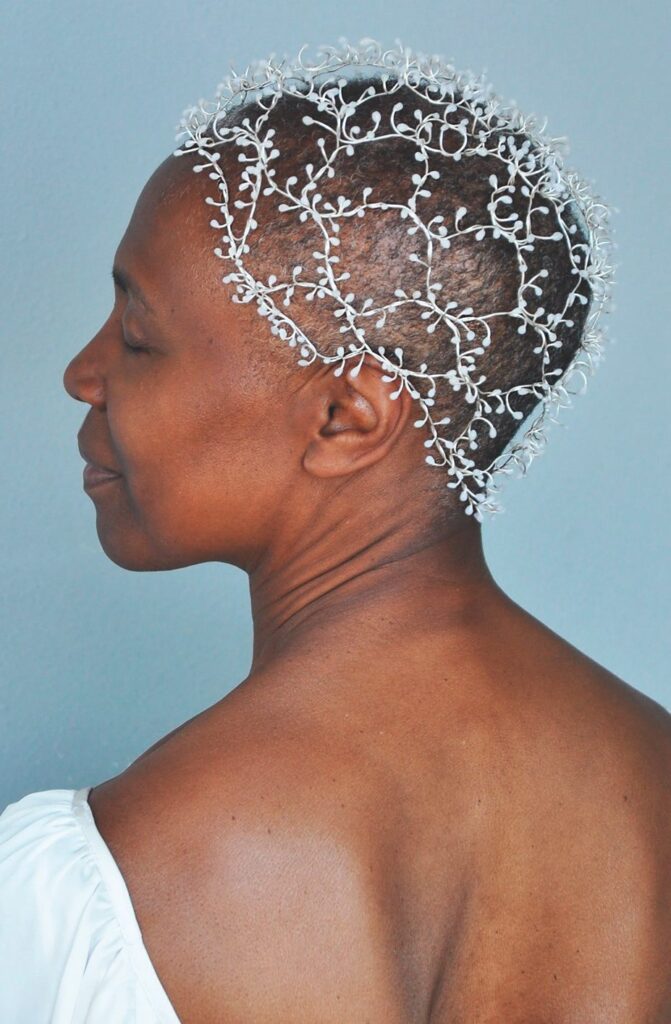
(1) This head ornament in silver wire, silk, and clay by Olga van Doorn was inspired by the myth of the Amazons – Atalanta and Penthesilea – evoking, at once, a story of childhood experiences of illness and hair loss, and of reclaiming strength through accepting one’s own history.
Among the more than 140 works presented by 85 artists from 28 countries, several overlapping thematic fields can be distinguished. These are not closed categories, but rather fluid interpretative zones. A few are shown below.
(1) The Body as a Field of Transformation: Pain, Pressure, Illness, Identity
The largest group focuses on the body as a catalyst for change. The body is not a neutral carrier of jewelry, rather it becomes a site of pain, reconfiguration, pressure, and emancipation. It absorbs social expectations and experiences, such as illness, ageing, loss, and the regaining of control.
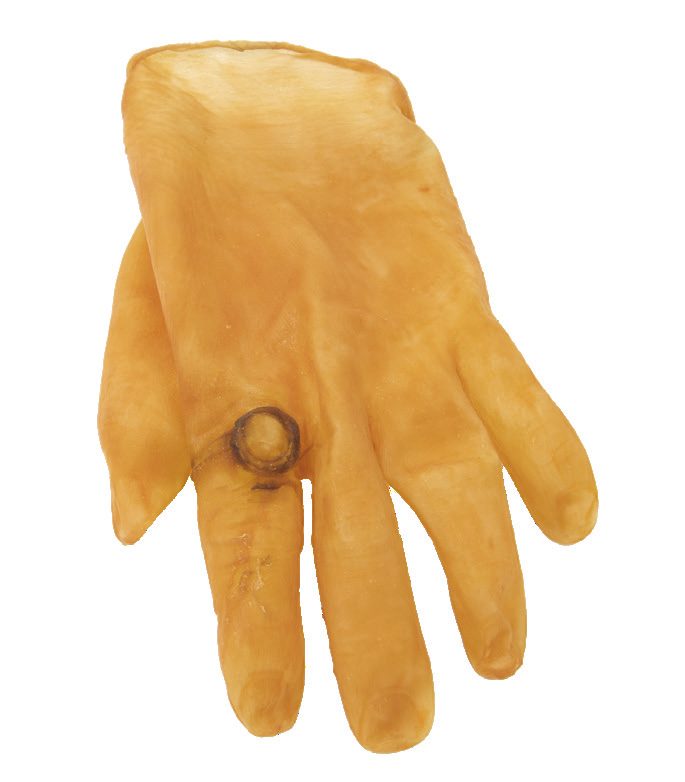
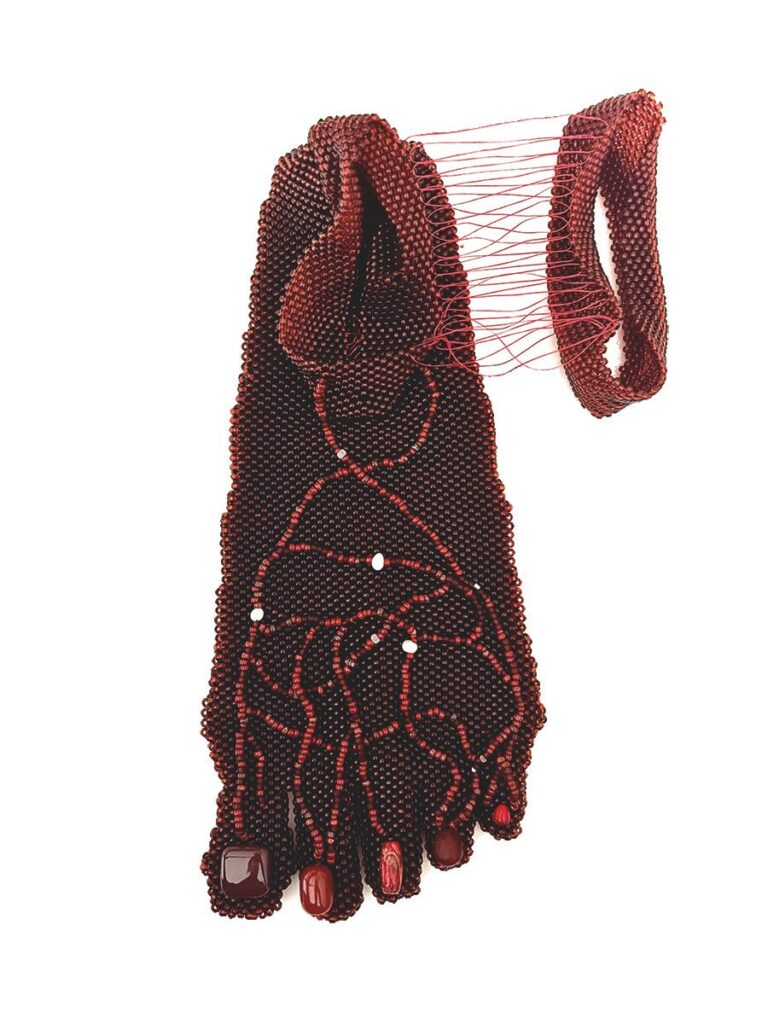
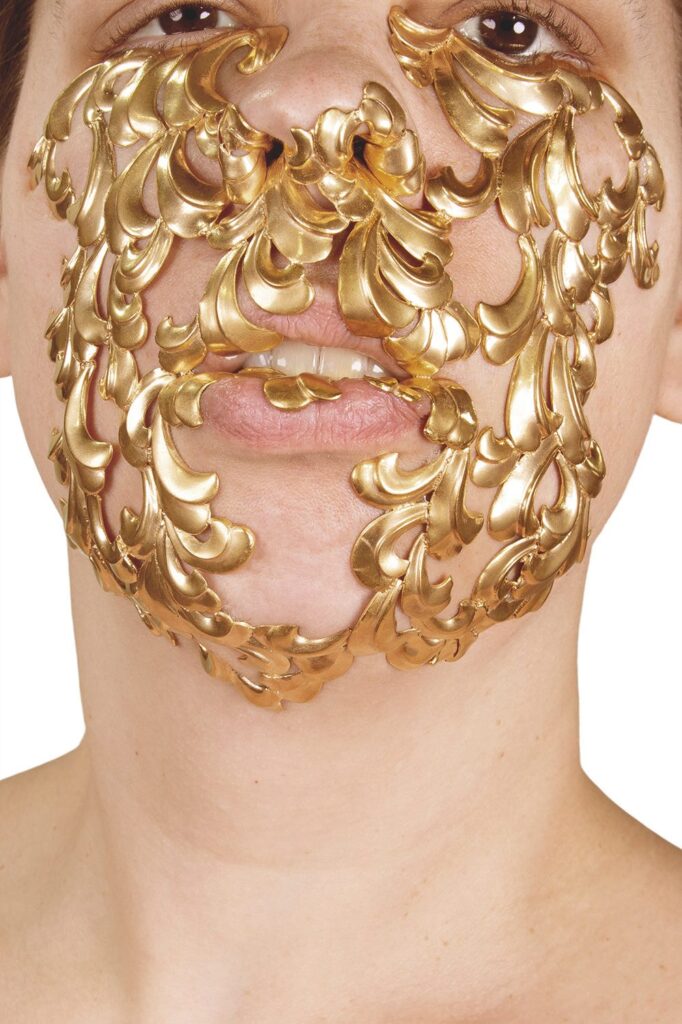
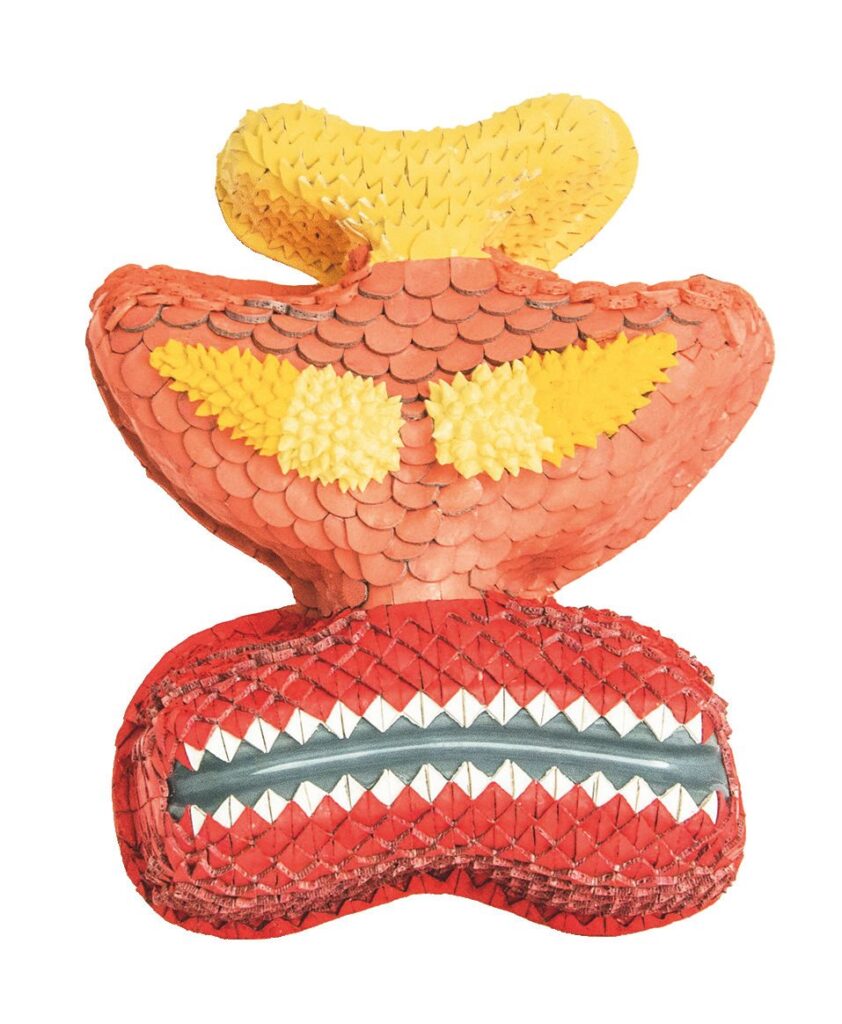
(1) ’Another Skin’ by Minjeong Kim shows the dual nature of protection. A second skin – a latex glove – both protects and restricts. It explores the moment of disturbed sensory perception when familiar tactile sensations are suddenly altered by latex, causing discomfort and emotional unease.(1) This glass-beaded object by Mo Mengjie constitutes an intimate record of emerging from internalized shame to resist patriarchal norms that regulate female sexuality.(1) In the series ’Flourish’ by American artist Lauren Kalman, gilded ornaments wrap around the face in a way that balances on the edge between decoration and violence. Subtle forms chafe, suffocate, and restrict, becoming a metaphor for the emotional, sexual, and cultural pressure exerted on the body.(2) This expressive brooch, in silver, acrylic paint, PVC, and stainless steel, by Yajie Hu from the series ’My Emotions’ are a visual record of violent, complex, and contradictory emotions. Acrylic spikes in aggressive colors pierce the surface of the brooch like suppressed feelings that finally demand visibility.
(2) Inner Turning Points: Emotions, Breakdowns, and Returns
The second group focuses on psychological transformations—moments when emotions reach a critical point and the inner landscape shifts.
(3) Memory, Loss, and the Silence that Transforms
In this part of the exhibition, jewelry becomes a tool for working with memory, mourning and time to heal.
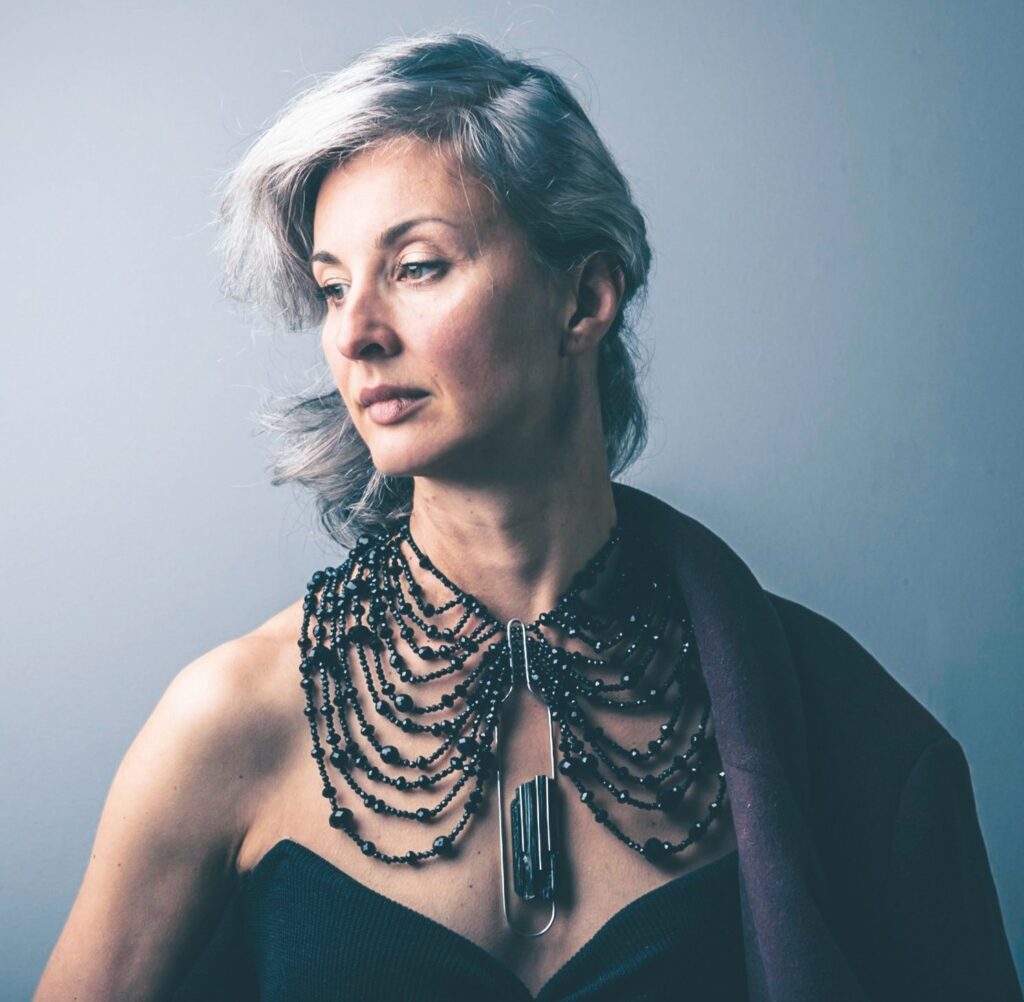
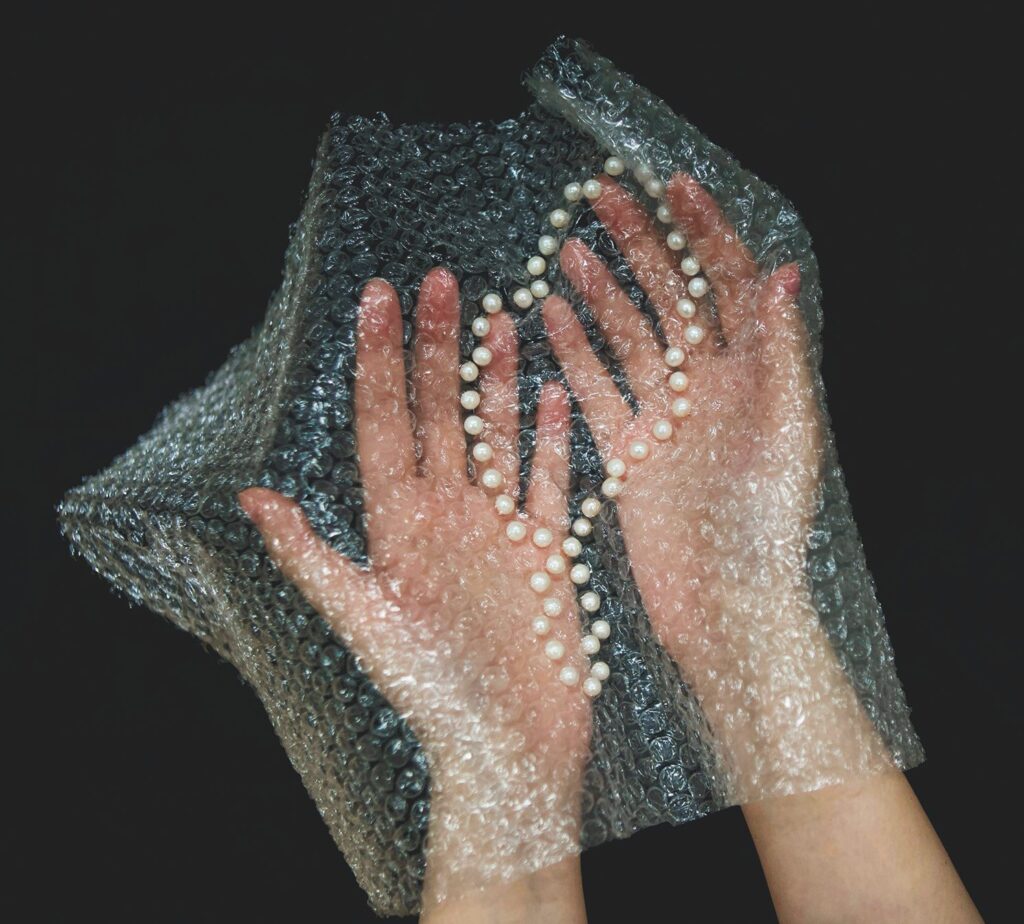
(3) ’Necklace in Memoriam’ by Alain Roggeman is a restrained, elegant object in which black tourmaline, black glass beads, and silver form a talismanlike shape, a quiet companion to grief and to the decision to continue.(2) A more subdued and reflective tone characterizes the work ’For Your Safety’ by Yaning Liu, in which pearls wrapped in bubble wrap become a metaphor for overprotection – care that simultaneously suffocates.
(5) Archetypes, Myths, and Cultural Memory
In this section, the turning point is understood as a shift in the way the world is perceived, a moment when myth, archetype, and cultural memory become active tools for interpreting the present. Jewelry functions here as a carrier of knowledge deeply rooted in human history.
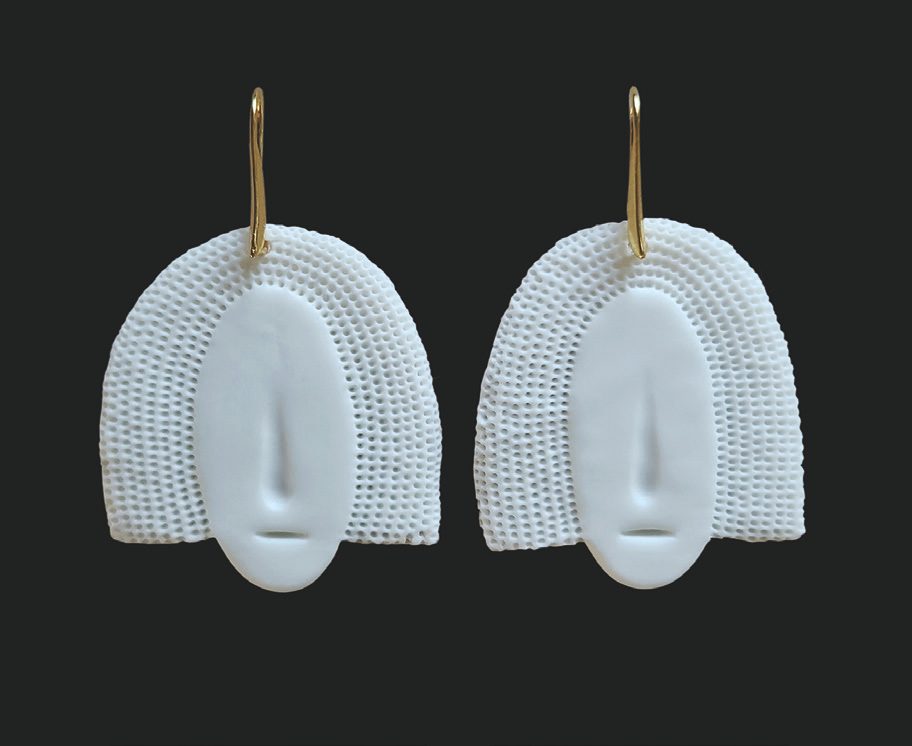
(3) Reflection on silence as a form of expression is proposed in ’Silent Muse’ by Sheny Boehlert. Earrings made of translucent Chinese porcelain in the form of minimalist, featureless white faces challenge conventional ways of expressing emotion, pointing instead to the significance of what is not shown and not spoken.
(4) The Creative Gesture as a Turning Point
Some artists showcased their turning points not in the external world, but in the very act of creation, as exemplified by the artist below.
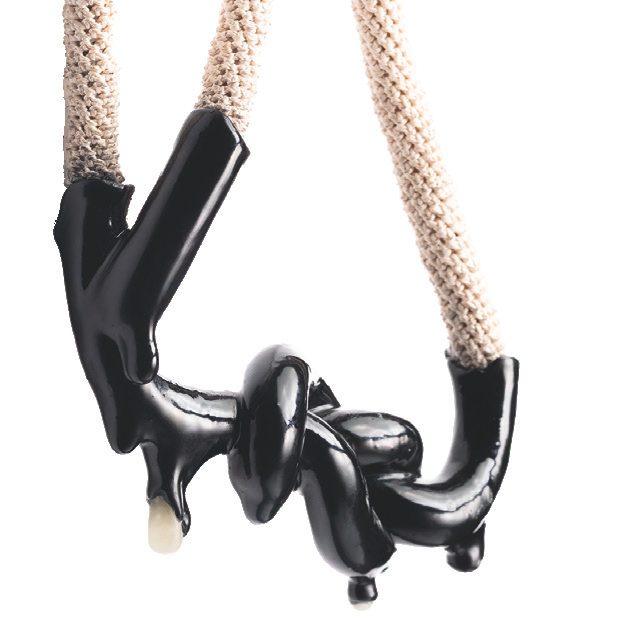
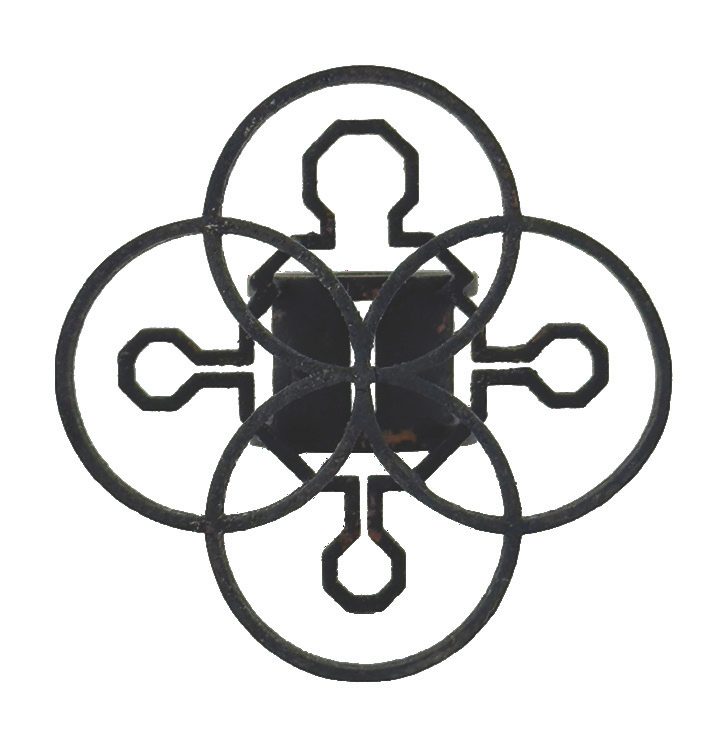
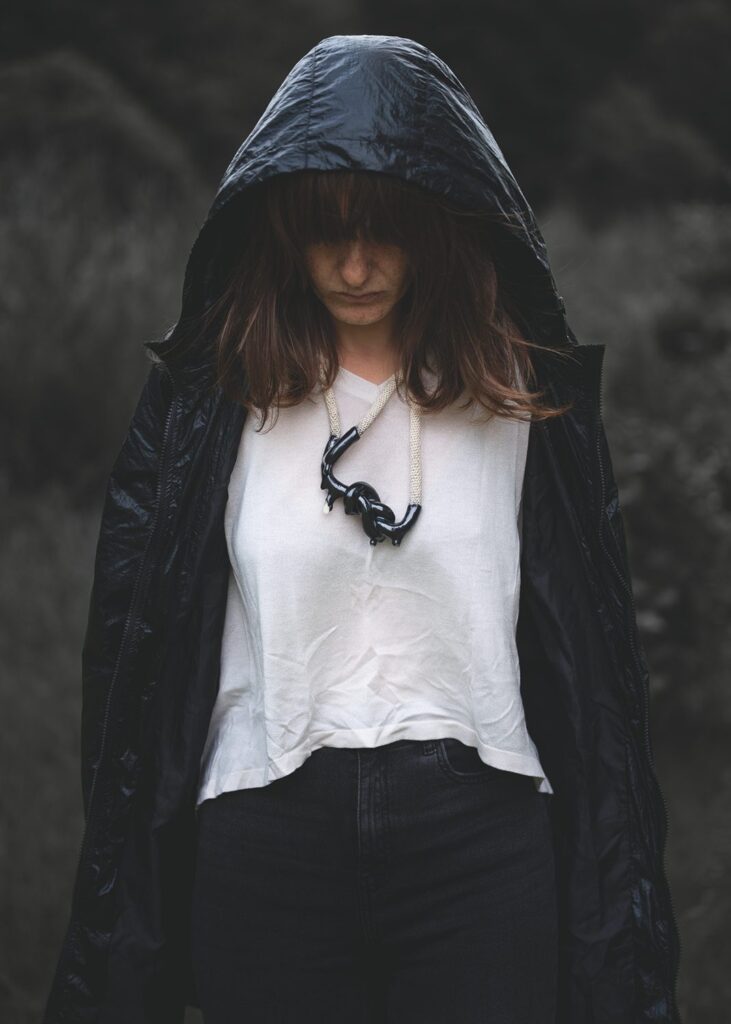
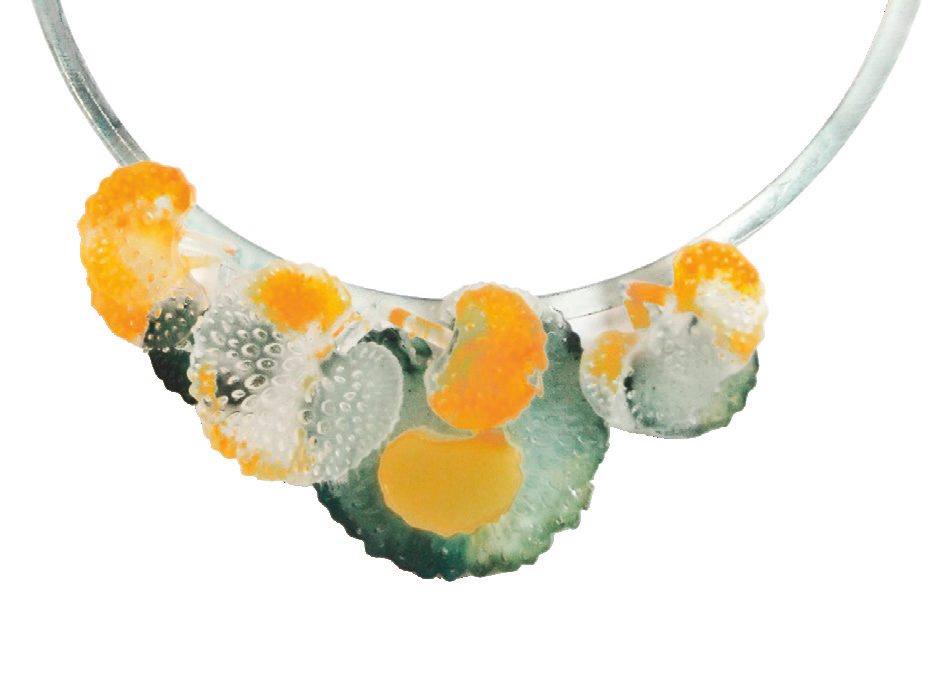
(5) Yusi Wang, in ’Tide,’ examines the dynamics of memory. Using silver, copper, silk thread, and fabric, she creates an object in which traces of body heat contrast with the cool durability of metal. Memory appears here as a process of constant transformation rather than a fixed record.(5) In ’The Missing Axon,’ Frederic Frenay shows the link between an individual’s turning point and other individuals and the community. Transformation does not arise in isolation, but in co-presence. We do not come into being alone. Just as neurons need axons to connect, personal development is inseparable from others. The octagonal pendant form, in bronze, is incomplete, inviting connection.(4) Michalina Owczarek visualizes the experience of creative paralysis in her necklace ’In Black Out.’ Its spiral form – made of amber, resin, and cotton – resembles a mental loop from which new ideas slowly begin to emerge. It is a work close to every creator, i.e. honest, self-ironic, and emotionally charged.(6) In ’Favolaschia Calocera,’ Agata Nartowska draws on the metaphor of mycelium as a model of relationships and interdependence. Crafted in Baltic amber and resin, her objects resemble organisms in states of growth, decay and regeneration. In the context of ecological crisis, fungi – organisms of survival – become symbolic carriers of hope.(5) Martina Dempf goes back into the Paleolithic with her ’Origin 3.’ Made of ebony and sterling silver, it reinterprets the earliest tools and symbols, reminding us that one of the most important turning points in human history was the emergence of symbolic thinking – the moment when an object ceased to be purely functional and became a bearer of meaning.
(6) Nature as a Matrix of Transformation
For many artists, the relationship with Nature becomes a key reference point in reflecting on turning points. Nature is not a backdrop, but an active force—a teacher, a warning, and an archive of processes that exceed the human scale of time.
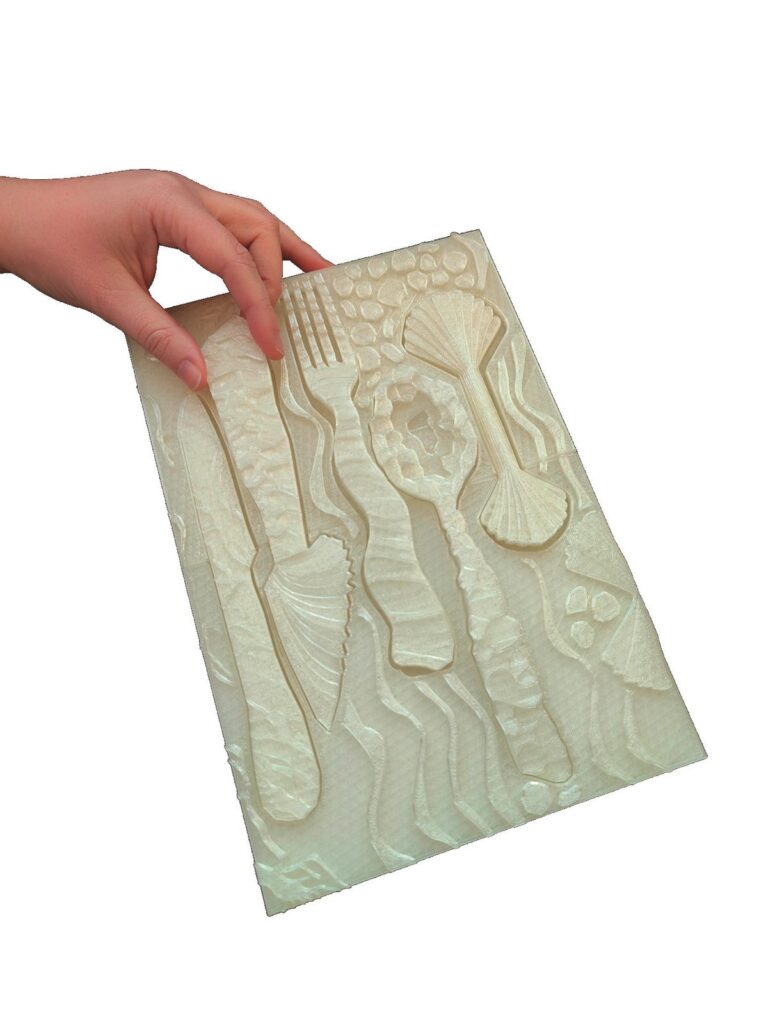
(6) In ’Sea-tlery,’ Barbara Babic uses PLA, a plant-based material (polylactic acid), to transform cutlery into tools for ecological contemplation rather than consumption.
(6) Ecological anxiety pulses in ’Nature’s Trial’ by Kinga Krupa, in wood, resin, and Swarovski crystals, where a ring evokes a bleeding Earth put to the test by human activity.
(7) Amber – A Material of Time and Transformation
In the context of Gdańsk, amber becomes more than a local material. It is a carrier of time, processes, and arrested moments, making it an ideal medium for narratives about transformation.
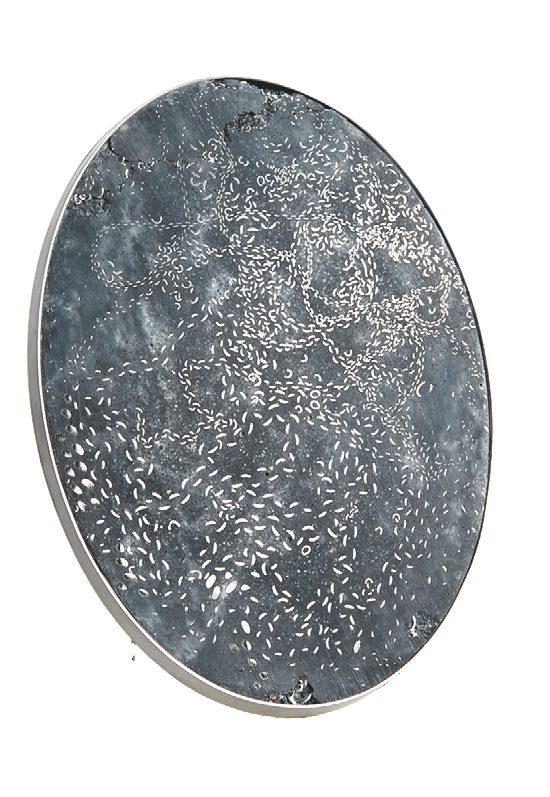
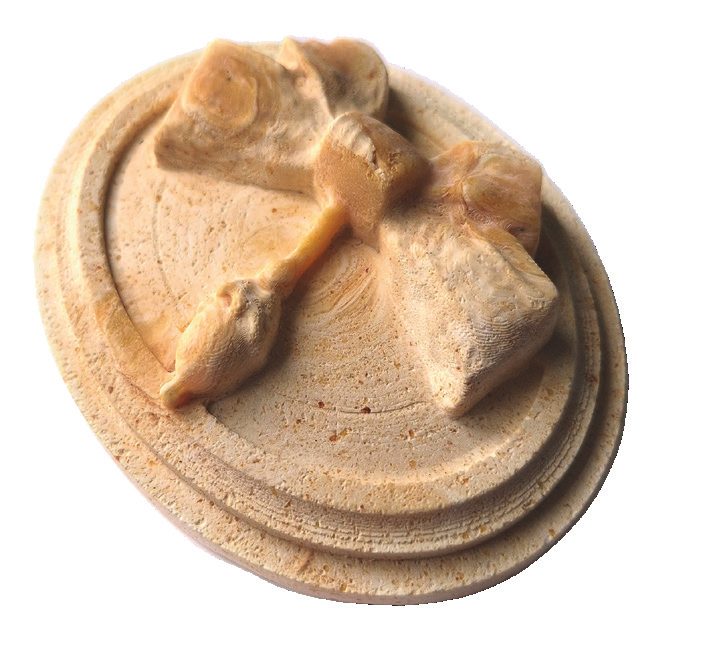
(6) Jaewon Paek in ’Bury’ works with UHPC concrete, stainless steel, and traditional Korean ink to reveal subtle material changes only in movement – the turning point in this piece is quiet, almost imperceptible.(7) In ’Cycles,’ Gabriela Kozłowska treats amber as a moment of suspension between beginning and end in her ring in amber and synthetic resin. This homologous ring, without origin or termination, becomes an allegory of continuous existence, inherently without an end. Amber symbolizes the turning point of the cycle, in which an inhibitor becomes an initiator, one form decays and another is reborn.(7) Marta Hryc’s creative starting points lie in the collision of orders, the confrontation between digital control and autonomous material formation. In ’Stratification,’ she combines an algorithmically generated Baroque bow motif (text–to–3D) with a mosaic-like, partially unpredictable structure of reconstructed amber, giving rise to a hybrid form – fully aware of its duality.
(9) When the World Cracks: Social And Political Turning Points
In this part of the exhibition, TURNING POINT takes on a collective dimension. Jewelry becomes a medium of protest, resistance, and diagnosis of contemporary ills and crises.
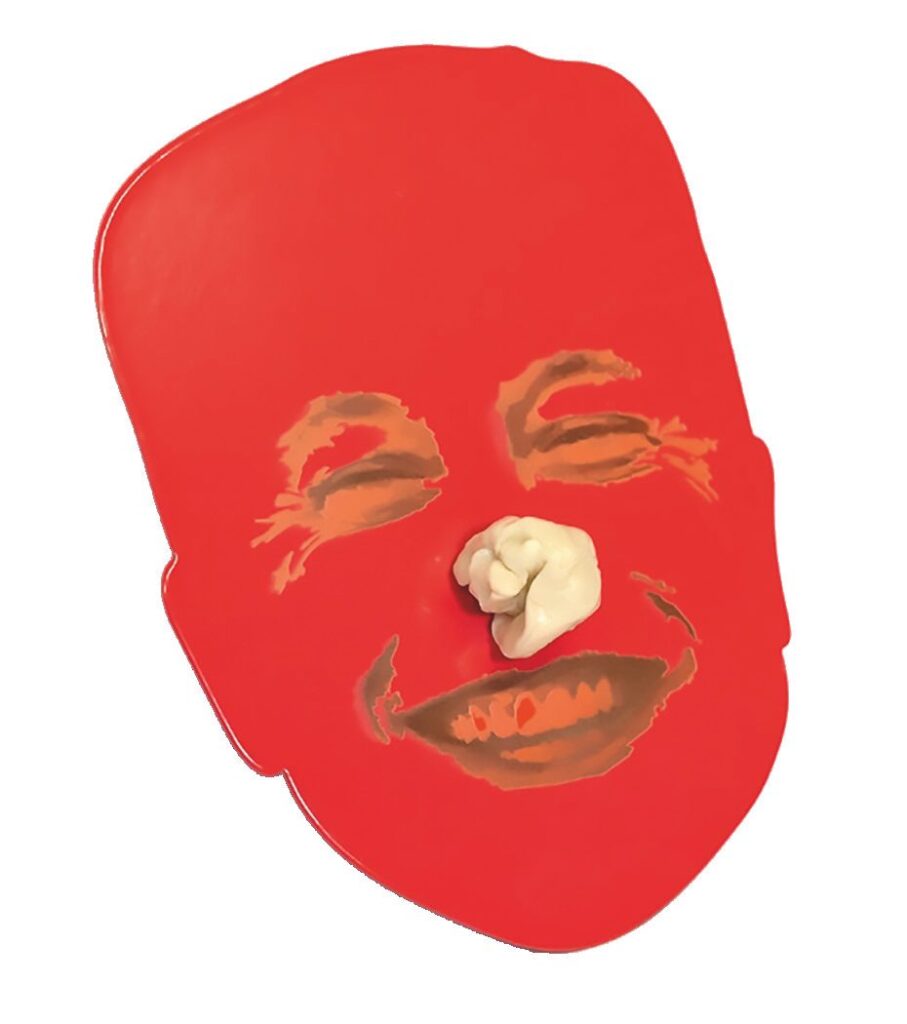
(9) In his ’Stick it to the Man’ brooch in powder-coated and engraved stainless steel, brass, and chewing gum, Konstanze Prechtl proposes jewelry as an activating gesture: the faces of politicians transformed into clowns become objects of direct resistance.
(8) When Thought Becomes Form
In this group, jewelry functions as a tool of philosophical and critical reflection.
Jewelry as a Sensitive Barometer of Our Times
The works mentioned above, along with many others whose sheer number prevents a fully detailed account, create a portrait of contemporary jewelry as a medium that is exceptionally sensitive to the tremors of the world. Endowed with remarkable communicative power, a small object worn on the body can simultaneously be a manifesto, an intimate diary, a means of resistance, and a tool of reflection.
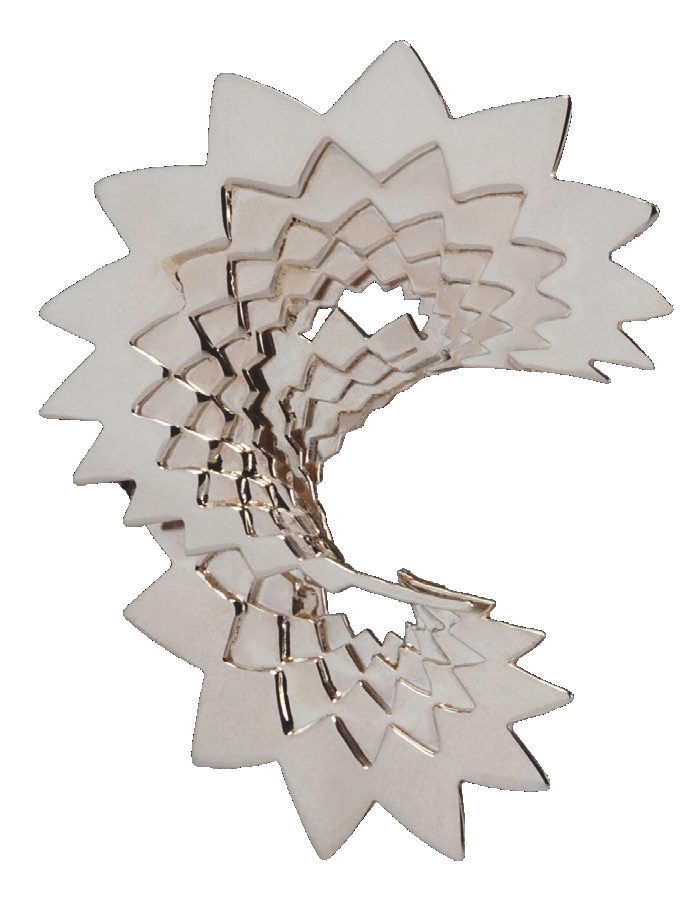
(8) In ’Trace of Absence,’ Banafsheh Hemmati deconstructs Islamic geometry, in silver, creating “traces of absence” instead of reconstructing form. Truth ceases to be absolute; it becomes a multiplicity of perspectives.
The TURNING POINT exhibition clearly demonstrates that the jewelry shown is not merely an accessory, but rather an instrument for observing reality. It is not meant to decorate, but to analyze. It is not an object, but a commentary. Although the turning points presented by these artists are dispersed across the body, memory, politics, ecology, everyday gestures, and creative processes, when brought together, they form a coherent map of the contemporaneity of human crises, collapses, breakthroughs, and resurgences.
The strength of this exhibition lies in the diversity of techniques and attitudes, as well as in the artists’ organic approach to the theme, treated not as an imposed slogan, but as an impulse to tell their own stories. Interwoven, these stories create a multilayered, multidimensional portrait of the contemporary world; one gripped by crises, striving to survive, to change, and to understand itself. Gdańsk, with its history marked by dramatic transformations and turning points, along with new beginnings, provides a natural and meaningful stage for these narratives. All images are courtesy of TURNING POINT.
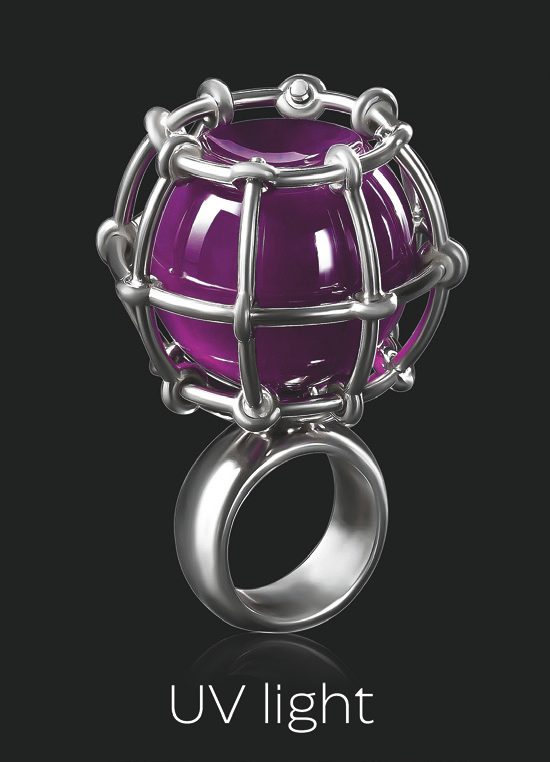
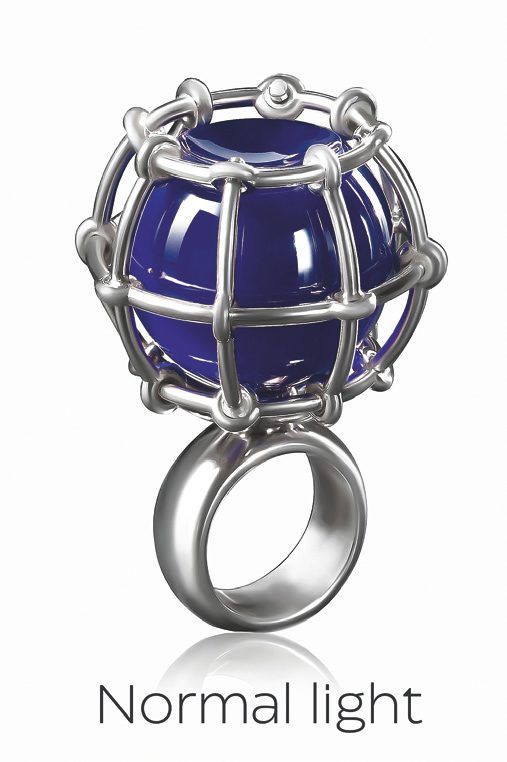
(8) Formal and technological experimentation appears in the ’Prison of Light’ by Kostin’s Lab & Emilio Narducci. A caged-ring in silver and nanosital, reacting to UV light, becomes a cyber-poetic metaphor of truth and emotion.
Ewa Wagner-Wysiecka, Małgorzata Siudak and Zofia Kaczorowska 1 Department of Chemistry and Technology of Functional Materials, Faculty of Chemistry, Gdańsk University of…