
Re-visiting a gemstone that has been in the jewelry world for hundreds of years—and written about many thousands of times—can be a daunting task. But, even if amethyst has been studied, cut, and faceted brilliantly in all its aspects, it still has surprises to offer.
Throughout history, amethyst has been engraved, sculpted, faceted, tumbled, and even eaten! (Not recommending that, though.) Once associated with royalty, this purple wonder was considered a high value gem due to its purity and beautiful color, even having, at one time, the same value as ruby and sapphire. Traces of its use in jewelry date back as early as 3000 BCE in ancient Egypt.
The Gemstone
Amethyst is the purple/violet variety of the quartz family. Its color ranges from pale lilac (called Rose de France in the market) to a deep saturated purple. It’s a 7 on the MOH’s hardness scale and is considered a gem with good tenacity and durability in general.
Its name comes from the Greek word amethystos meaning not drunken. The humorous name originates from what people believed to be one of its powers, i.e. that the stone could ward off intoxication! Interestingly, Greek legends associated amethyst with Dionysus, the god of wine and pleasure.
Its crystalline structure is rhombohedral, generally an elongated asymmetrical prism with twin pyramids on each side if unbroken in the rough. It can also be seen as a hexagonal prism or with hexagonal angular color zonings.
Amethyst is a gemstone with pleochroism, meaning that, depending on the viewing angle, the gem can display different hues/colors. In displaying two colors (dichroic), one hue can be more reddish, while the other can be more bluish.


The gem owes its stunning purple/violet-ish hues to trace amounts of iron and natural radiation within the Earth. Most of the citrines and prasiolites sold today are, in fact, heated amethyst. Whether this heating is natural or caused by man, the difference is generally indistinguishable. It doesn’t take a very high temperature, only about 470-750o Celsius is needed to change its color. And, if so desired, it can then get its purple color back with irradiation.


Ametrine a gemstone that is half citrine (yellow) and half amethyst (purple) and is the result of natural heating. Its color may fade over time with prolonged exposure to light and heat, causing it to be not as stable as we might think.


Amethyst can be found in large sizes and in plentiful quantities in many countries, namely, Brazil, Uruguay, Canada, Morocco, India, Mexico, Namibia, Siberia, Russia, and Sri Lanka. In Canada, the gem is sourced mainly in Thunder Bay, Ontario, but can be found in smaller quantities all over Canada.
The most desired qualities today are those gems with deep saturated purples in different hues. Siberian amethysts imbued with a deep purple color, with red and blue flashes, were among the most prized and expensive varieties. Alas, the Siberian stock ran out decades ago, making these gems so rare that the only ones to surface are from old stock.
A relatively new source of amethysts that showed up a few years ago in Tucson is Morocco. These gems have red hair-like inclusions of hematite, and hourglass-shaped color zonings. Moroccan amethysts are considered a breath of fresh air for those who want something a little more out of the ordinary for their birthstones.


Depending on its origins (Africa or Uruguay, for example) amethyst can have slightly different hues, i.e. a more purplish color or a more violet-ish color.


Imitations, Synthetics, and Confusion
Even though it’s considered a very affordable gem-stone in the jewelry market, amethyst has many impersonators. Glass and plastic are the most well-known. Some confusion also occurs with natural gemstones such as faceted purple fluorite, scapolite, spinel, sapphire, tanzanite, and iolite, to name just a few.
Lab-grown (synthetic) amethyst quartz is also widely used and is hard to differentiate from natural amethyst.
Synthetic quartz is used not only in jewelry but is an important part of everyday life. It is used to make lenses, prisms, timekeepers, UV windows, semiconductors, medical devices, tools for harnessing solar energy and detecting radiation, and in myriad aspects of scientific and aerospace research due to its piezoelectric properties.
While it might not be the bright amethyst we see in jewelry, it’s still impressive to see what can be done with quartz in general, not only the purple variety.
Differentiating synthetic amethyst from natural amethyst when it is cut (faceted or cabochon) is a complicated and costly task. Therefore, it is important to trust the supplier and their sources.
If the stone has a few inclusions, it may become easier for gemologists to differentiate it under the microscope. Otherwise, it’s almost impossible to discern. Inclusions are like a fingerprint.
Treatments and Care
There are few treatments used on amethyst since it’s an inexpensive gemstone, although, as stated above, it can be heated, irradiated, and dyed (rarely) to change its color.
Under artificial light, amethyst can appear darker than reality. Prolonged exposure to heat can also alter the color of the stone, so it’s unwise to solder or repair a piece of jewelry with the amethyst still set in it.
GIA suggests avoiding thermal shocks, as it can fracture and stress the gem. But ultrasonic and steamer procedures are generally safe, if we avoid high heat and then ice water right after. Important historical pieces are worth repairing with a lapidary artist, but smaller ones are often not worth the cost of repair.


February’s Birthstone
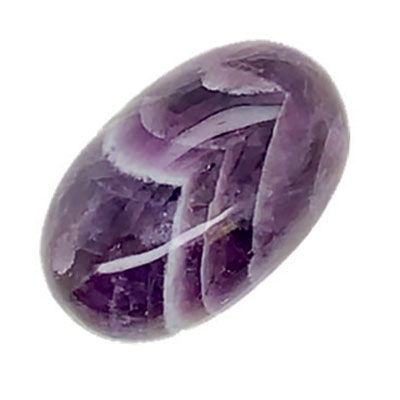
Not only is amethyst the birthstone for February, but it is also the gem of choice for the sixth wedding anniversary! It was officially added as February’s birthstone in 1912, when the American National Retail Jewelers Association (now known as Jewelers of America) created a standardized list of birthstones.
Before 1912, the assignment of gemstones to specific months varied widely by culture and region. Amethyst became the official choice for February likely due to its prominence and appreciation in history.
Amethyst jewelry is a popular gift for babies born in February as well as for women of any age to celebrate their birthdays.
Mining Amethyst
Brazil is the world’s leading source of mined amethyst and amethyst geodes. Some of the most significant deposits were found in Marabá and Pau d’Arco at the end of the 19th century.


Today, Minas Gerais is an important source of amethyst geodes, but the biggest production of the purple gem is in the state of Rio Grande do Sul in southern Brazil. This area is especially known for both its gem-quality crystals and decorative geodes.
Each of these areas represents a distinct geological setting, which results in different mining techniques being used. A large portion of the amethyst from these areas is heat-treated to produce citrine.

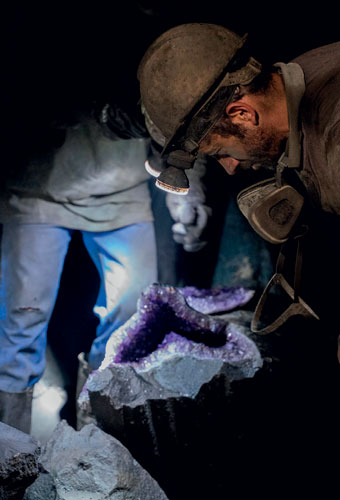

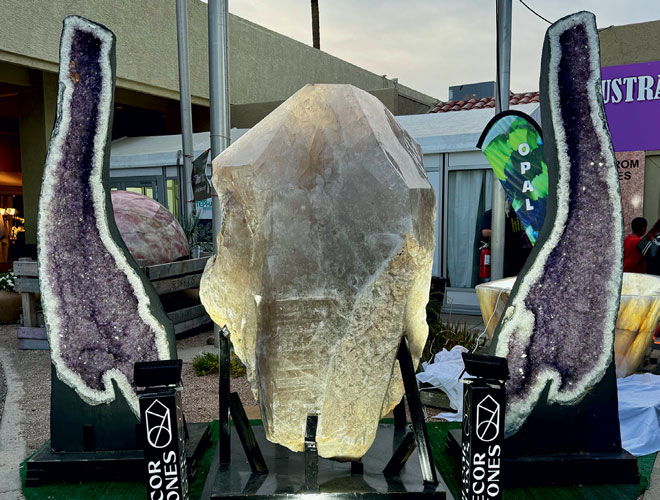
Buyers typically purchase amethyst directly from tunnel owners and then cob the material—in other words, they remove unwanted matrix and damaged portions—either at the mining site or at another location to prepare the gem as rough.
In Rio Grande do Sul, the amethyst occurs in vugs or geodes, which are cavities lined with mineral crystals within basalt. Sometimes the amethyst completely fills the cavity; other times it simply lines the inner surface.

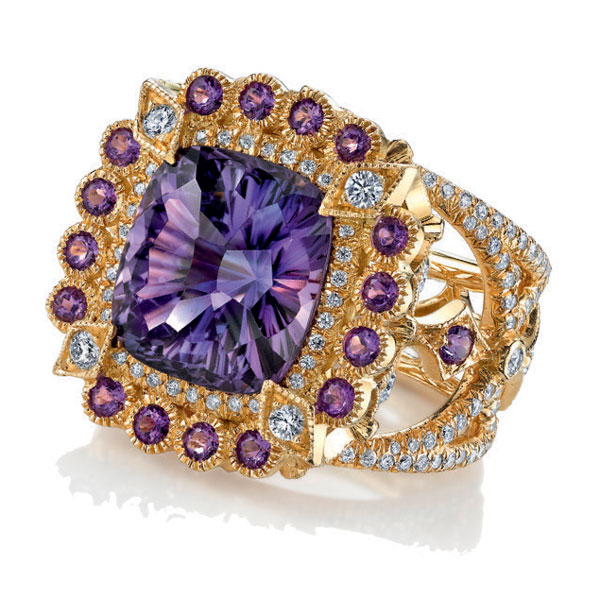
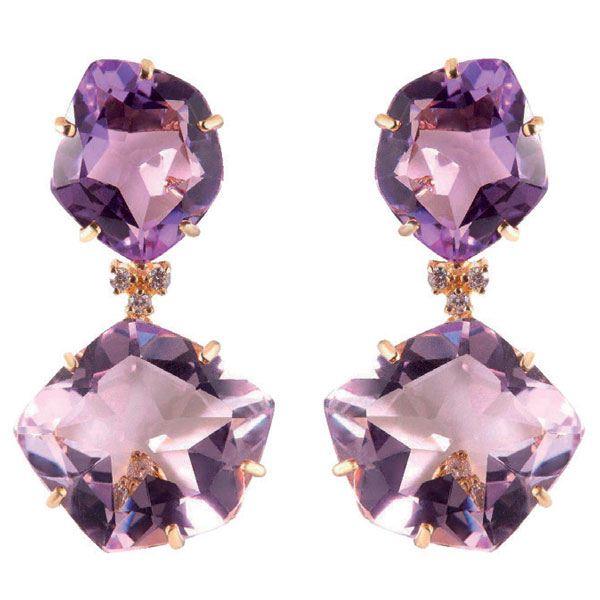
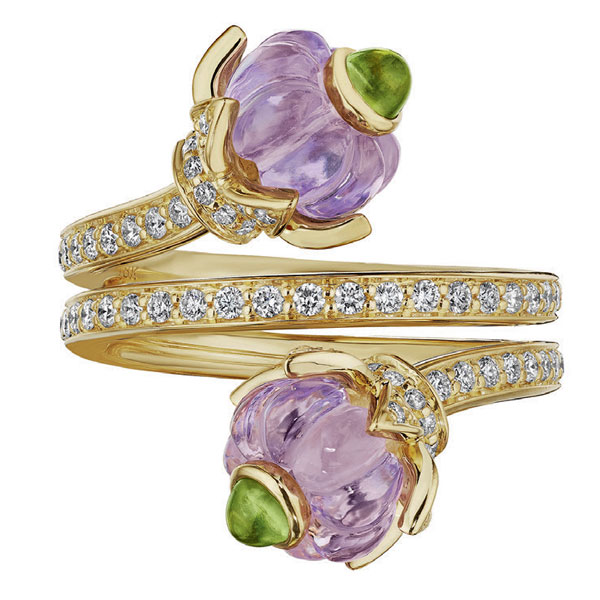


from the rough gemstone.
This helps the mine owners and dealers decide whether to keep their discovery as a geode specimen or whether to remove the crystals for cutting for the jewelry market. The crystal quality, color and shape also play a role in their decision.
Purple Glory

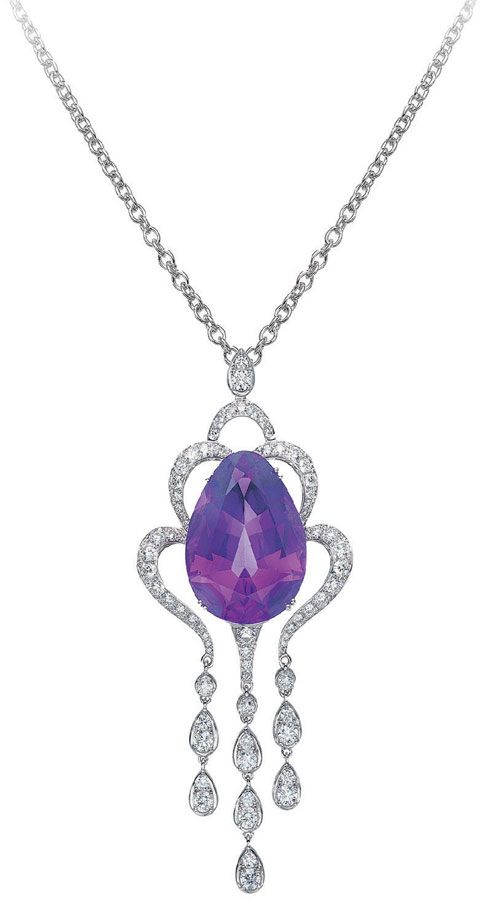
With its rich history, amethyst continues to captivate the jewelry world even after centuries of admiration. From its origins as a gem of royalty and spiritual significance to its modern role as a February birthstone, this quartz variety remains timeless. Its accessibility, durability, and unique qualities ensure that amethyst retains a special place in the hearts of gem enthusiasts, gemologists, and artisans alike.
Its ongoing appeal demonstrates that even in a world of ever-changing trends, classic gemstones like amethyst can still surprise and inspire. For those who seek elegance, history, and a touch of mysticism in their jewelry, amethyst remains a gemstone with a regal allure.


Lauriane Lognay FGA AJP GIA is a gemologist with the Fellowship of the Gemmological Association of Great Britain who also has a diploma in jewelry. She founded Rippana Inc. in 2012 in Montréal, Canada, when she was 21. She offers lapidary and appraisal services in addition to selling gemstones. Lauriane travels to mines and gem markets in numerous countries during the year, such as Tanzania, Vietnam and Myanmar to buy the best rough and cut gemstones the field has to offer.
- Lauriane Lognay