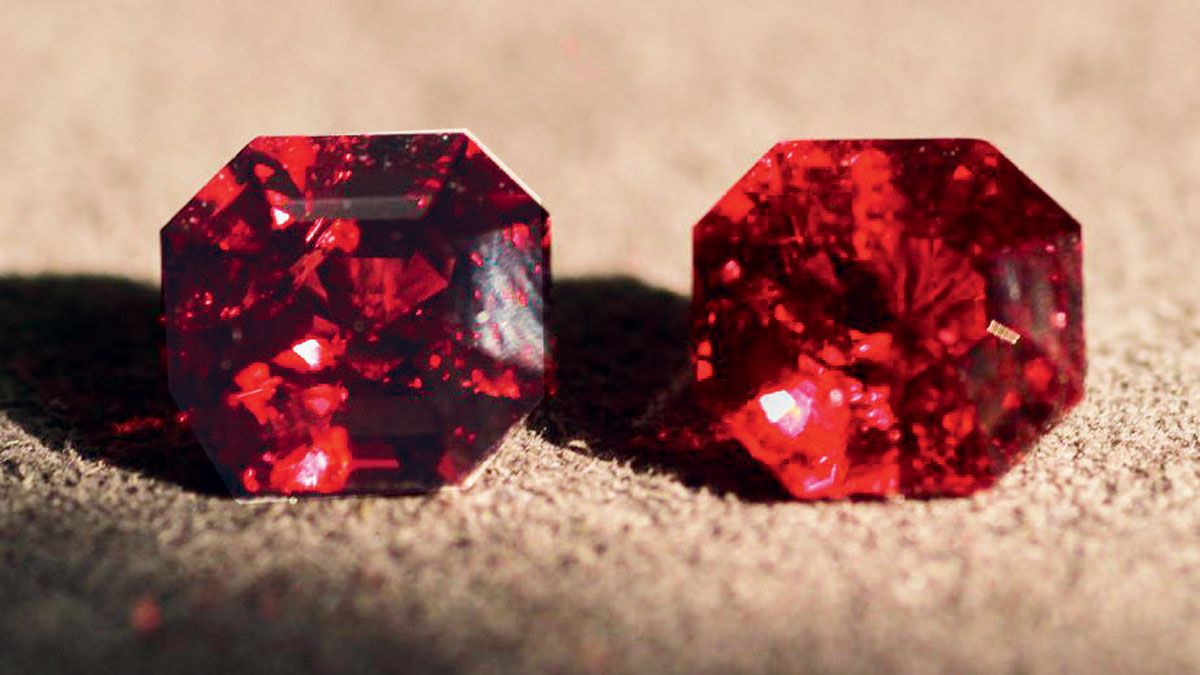

Precious corals have been coveted across different continents and are some of the oldest gems used by humans. Historically, they were found in the Mediterranean, the source of the famous Sardinian coral from Corallium rubrum. The first record of precious coral harvests in Japan was in 1812. Precious corals were highly valued throughout history, particularly in Europe during the Victorian era and the Art Deco period. There has been an active international trade of Mediterranean coral for many centuries, which stretched all the way to Asia (e.g., Tibet) and West Africa (e.g., Nigeria). An excellent overview of precious corals was authored by Rui Galopim de Carvalho in Volume 38 of Incolor, published in 2018.
As the demand for precious corals continues to grow, particularly in markets like Asia, so too do conservation concerns for precious corals. Since 2008 (at the request of China), imports and exports of several precious coral species, including Corallium elatius, Pleurocorallium japonicum, Pleurocorallium konojoi, and Pleurocorallium secundum, require CITES Appendix-III documentation.
Appendix III coverage is applied at the request of a specific country (in this case, China). Significantly, Corallium rubrum, the Mediterranean coral which is the oldest and most commonly known variety of coral used in jewelry, is the only major precious coral species not covered by CITES.
In 2015, CIBJO (the World Jewellery Confederation) established a coral com-mission and released the first coral Blue Book covering the terminology and education on precious corals.
These precious corals embody a millennial tradition. Often fished at great depths, there are many scientific secrets still to be unravelled about them.
With the current advancements in genetic techniques and gemological testing, it now seems a good time to examine the progress being made by science to accurately identify these precious gems.


The Biology of Precious Coral
Corals are formed by compact colonies of many individual polyps. These polyps secrete calcium carbonate to create a hard skeletal structure that offers them shelter and structure. The material utilized in jewelry is, in fact, the hard coral skeleton itself. Similarly to pearls, precious coral is thus a product of biomineralization. Unlike reef corals that live in shallow depths, precious corals are found in much greater depths (generally 50-1500m) in the Mediterranean, Asia, and the Pacific.
While Corallium rubrum (Mediterranean red coral) was historically found at shallower depths, overfishing in recent centuries has led to a reduction in these shallow populations.
Efforts to protect these remaining communities have been incorporated into recent GFCM (General Fisheries Com-mission for the Mediterranean) rules, which now prohibit coral harvesting at depths of less than 50 meters.
The deep-sea environment of most precious corals dictates an extremely slow rate of growth for these species. Due to this exceptionally slow growth, it is challenging to cultivate precious corals in a way that is commercially feasible.

Species and the Spectrum of Trade
Of the thousands of coral species existing in the ocean, only a very small number can and have been used in jewelry. These are the ones called precious corals and varieties include red, pink, orange, and white types, all belonging to the family Coralliidae.
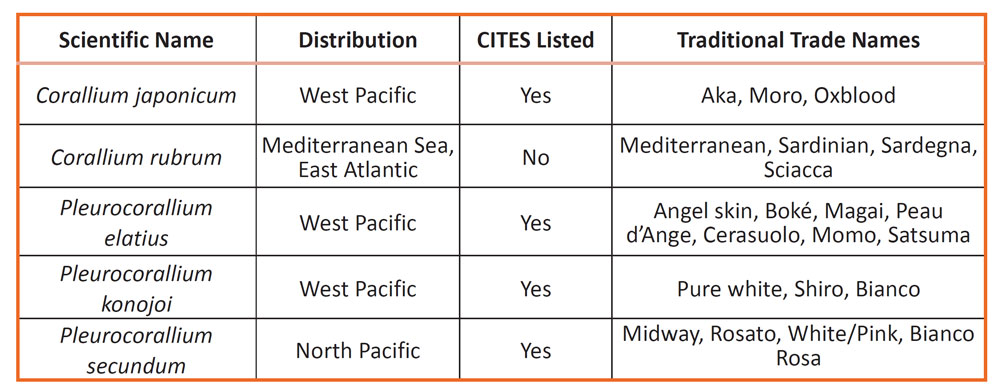
The main species found in the jewelry trade, alongside their distribution and traditional market names, demonstrate the complex taxonomy of these gems.
The Importance of Regulations and CITES
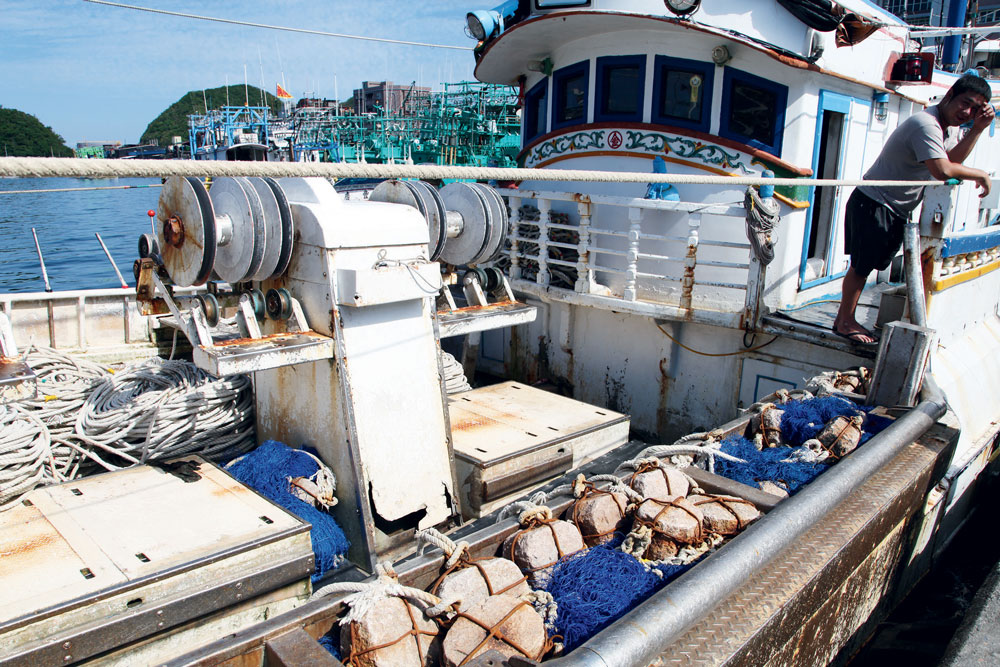
Protecting precious coral species involves two primary levels of regulation. The first involves regulating fishing practices within the source regions, including the Mediterranean, Japan, Taiwan, and China.
The second level is regulation at the trading stage through the Convention on International Trade in Endangered Species of Wild Fauna and Flora (CITES), which entered into force in 1975 to address concerns that global trade was endangering numerous species.
Because only certain species are listed by CITES, it is imperative that species are identified correctly. This has traditionally been done on a visual basis by dealers and customs agents, but visual identification has its limitations.
Because many precious coral species share very similar characteristics and colors, traditional gemological techniques often fail to tell them apart. However, by reading their genetic fingerprints, it is possible to identify different species unambiguously. This allows for greater transparency and enables the further documentation of the provenance of both historic and modern precious coral jewels.


DNA Testing: A New Era of Identification
A significant step forward in coral species identification occurred in May 2020 with the publication of a study in the journal Scientific Reports. The paper, entitled “DNA fingerprinting: an effective tool for taxonomic identification of precious corals in jewellery,” detailed a methodology to conclusively identify a precious coral species.
This 2020 research marked the first major scientific study to describe a technique capable of using minute amounts of DNA recovered from precious coral used in jewelry to accurately identify the species. Crucially, the technique is considered quasi non-destructive and requires significantly less sample material than other analytical methods, with testable DNA successfully recovered from as little as 2.3 milligrams (0.0115 carats) of material.
One of the main findings was the discovery of a new species, Pleurocorallium niveum (originating in the Pacific), which had never previously been reported in the jewelry industry but was identified in several submitted coral cabochons. This finding underscored that there is still much to learn scientifically about precious corals.

In 2022, another study (published in Forensic Science International: Genetics) presented the Coral-ID method that was tested on a real-world set of samples, comprised of 20 coral-set items seized between 2009 and 2017 by the Swiss customs authorities, because they lacked valid CITES documentation.
Three of the 20 tested samples were shown to be from species that have not previously been associated with precious coral in the jewelry trade. This further underscored the need for additional scientific research.
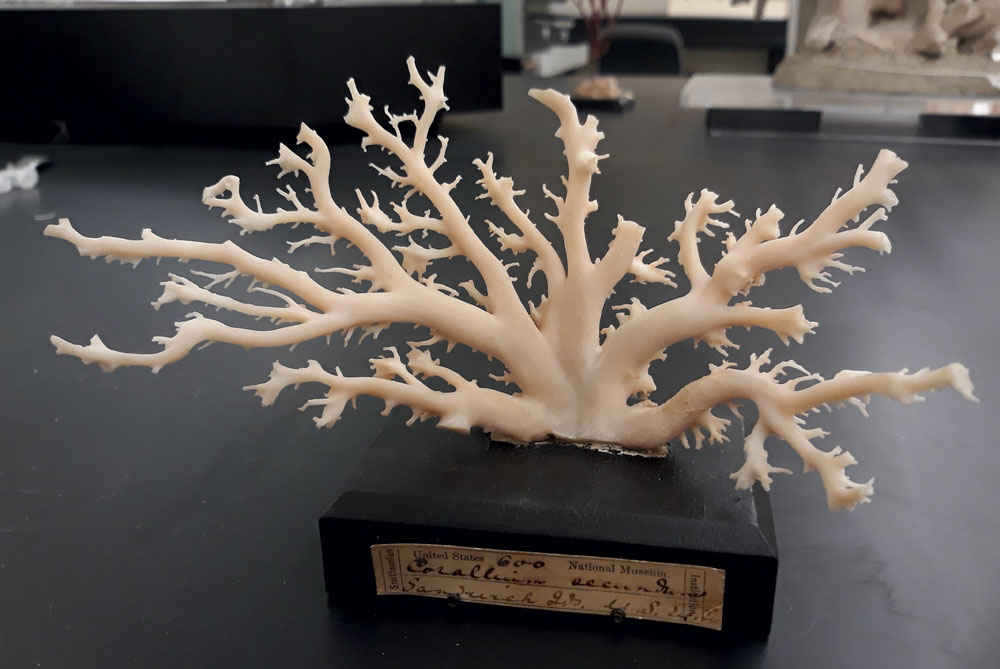
This led to the latest research published earlier this year in two peer-reviewed journals—one in Coral Reefs and one in Diversity. The Coral Reefs study ad-dressed existing taxonomic uncertainties, specifically regarding the CITES-listed species Pleurocorallium secundum. We revisited the 1840s holotype of this species (a holotype is the official “reference specimen” for a species), which is housed at the Smithsonian National Museum of Natural History in Washington D.C.. By employing low-copy DNA analysis, the study provided genetic transparency and confirmed that the
original and subsequently identified specimens are indeed the same species.
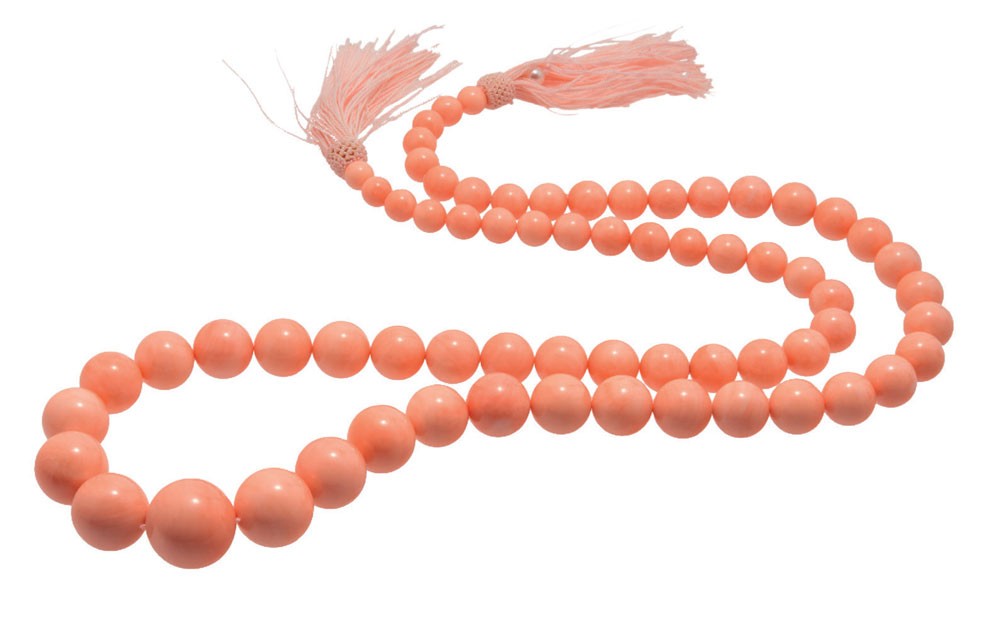
The second paper, published in Diversity, focused on a rare angel’s skin (see image above) necklace that was submitted to the SSEF lab. Angel’s skin precious coral material is highly valued for its delicate light-pink hue and can command top-market prices.
DNA fingerprinting conclusively demonstrated that the material did not match either of the two species that might have been visually assumed to match with this type of material (Pleurocorallium elatius or Pleurocorallium secundum).
Instead, the material matched a newly identified precious coral species hitherto unknown both in the precious coral trade and to gemmologists. It was identified as belonging to the Pleurocorallium norfolkicum species complex. The material matched colony fragments that have been traced to Vietnam.

Implications for the Trade
The discovery has some practical implications for the precious coral trade, particularly concerning regulation. The described angel’s skin coral necklace analyzed had initially been considered as being CITES listed because it was presumed to be Pleurocorallium elatius.
However, since the material was identified as the Pleurocorallium norfolkicum species complex, and a species never before considered by CITES, the CITES listing is no longer relevant for that specific material. What began as a forensic challenge in species identification has now become a valuable doorway to discovering new species within the precious coral trade.
In the 13th century, Marco Polo famously spoke of coral in Tibet saying “coral is in great demand in this country and fetches a high price, for they delight to hang it round the necks of their women and of their idols.”
As demand for high-quality precious coral material continues to increase, the regulation of the trade (e.g., through CITES) will remain important, as will ongoing efforts for marine conservation in producing regions such as the Mediterranean, Japan, Taiwan, and China. Education for consumers, alongside continued research into coral species, colors, treatments, and sources, is equally vital.
The cultural and historic importance of precious corals through the ages is evident, and through these continuous scientific advancements, the ability to trace and document these magnificent treasures of Nature provides greater transparency for the coral trade and ensures their important place in the world of jewelry.
Acknowledgements
We highly recommend Basilio Liverino’s book Red Coral─Jewel of the Sea to readers interested in learning more about the diverse history and world of precious corals. And we are grateful to Enzo Liverino and other members of the CIBJO Coral Commission for sharing their expertise with us.
References
- CIBJO, 2024. Coral Blue Book, 39 pp. https://cibjo.org/wp-content/uploads/2024/11/November-2024-Coral-Blue-Book.pdf
- Galopim de Carvalho, R., 2018., Precious corals, InColor, Vol. 38, pp. 70-78
Lendvay, B., Cartier, L.E., Gysi, M., Meyer, J.B., Krzemnicki, M.S., Kratzer, A. and Morf, N.V., 2020. DNA fingerprinting: an effective tool for taxonomic identification of precious corals in jewelry. Scientific Reports, 10(1), p.8287. - Lendvay, B., Cartier, L.E., Costantini, F., Iwasaki, N., Everett, M.V., Krzemnicki, M.S., Kratzer, A. and Morf, N.V., 2022. Coral-ID: A forensically validated genetic test to identify precious coral material and its application to objects seized from illegal traffic. Forensic Science International: Genetics, 58, p.102663.
- Lendvay, B., Morf, N.V., Cartier, L.E., Krzemnicki, M.S. and Nonaka, M., 2025. Trace DNA from a century-old holotype specimen resolves taxonomic uncertainties: the case of the Hawaiian pink precious coral (Pleurocorallium secundum), a CITES-listed species used in jewelry. Coral Reefs, 44, pp. 1211–1225.
- Lendvay, B., Cartier, L.E., Sato, A., Krzemnicki, M.S., Nonaka, M., Yasuda, N., Takata, K., Hayashibara, T., Morf, N.V., Iwasaki, N., 2025. Genetic testing of a high-end ‘Angel skin’ precious coral necklace identifies a species new to the precious coral trade and potentially new to science. Diversity, 17(6), p.395.
- Lendvay, B., Cartier, L.E., Sato, A., Krzemnicki, M.S., Morf, N.V., 2025. Species identification of coral jewellery by genetic testing: case studies, experiences and prospects. Journal of Gemmology, 39(7), pp.688-696.
- Liverino, B., 1989. Red Coral─Jewel of the Sea. Bologna, Italy. ◊


Laurent joined SSEF in 2010 and is Head of Special Initiatives at SSEF. He holds a Masters in Earth Sciences from Basel University and completed his FGA Diploma in 2008. He holds a PhD from Basel University that focused on pearl farming and pearl traceability issues. He is a lecturer for Gemmology at the University of Lausanne (UNIL) and an affiliated associate professor at the University of Delaware (USA). He is a co-founder of the Sustainable Pearls project and also a co-founder of the Gemstones & Sustainable Development Knowledge Hub. He is actively involved in the Swiss Gemmological Society (SGG) and the International Gemmological Conference (IGC). He is involved in different project management, research, and teaching activities at the SSEF.

Bertalan is a research associate with SSEF. He holds an MSc in Biology and a Ph.D. in Horticultural Sciences. He has worked on genetic analysis of low copy number DNA samples originating from subfossil plant remains, tropical wood, and herbarium specimens at the Hungarian Academy of Sciences, the Swiss Federal Institute of Technology in Zurich (ETHZ) and the Swiss Federal Institute of Forest, Snow, and Landscape Research (WSL). At the forensic genetics research group of the Institute of Legal Medicine at the University of Zurich, his aim is to develop and validate quasi non-destructive genetic analysis methods to determine the species identity of pearls and corals processed for jewelry. These methods will be novel tools to enhance traceability and ultimately the conservation of vulnerable and valuable marine resources.

Akitsugu joined SSEF in 2023. He is currently responsible for the management of the SSEF Collections. He holds a Ph.D. in Molecular Biology from University of Tsukuba (Japan), MBA from University of Michigan (USA) and completed his FGA Diploma in 2022.

Michael has been with SSEF since February 1998. Following his tenure as director of education, he became director of the SSEF laboratory in June 2009. He is involved in gemstone testing, education, and management of the laboratory. Dr Krzemnicki holds a Master’s degree in Mineralogy and received his PhD in 1996 from Basel University (Switzerland). He received his FGA Diploma in January 1998. For many years he has been lecturing in gemmology at the University of Basel, where he is a Privatdozent (PD). He is a fellow of the Gemmological Association of Great Britain and member of the scientific board of the Swiss Gemmological Society SGG. He is also on the executive committee of the International Gemmological Conference (IGC). A selection of his publications can be found here.
-
Dr. Michael S. Krzemnicki