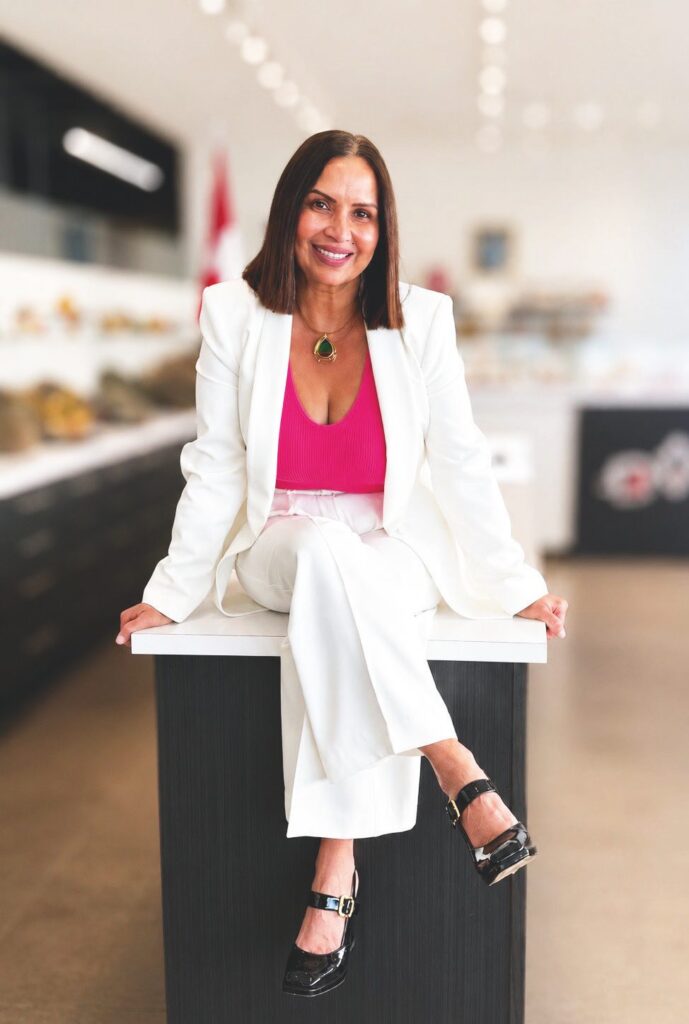
The new generation of buyers isn’t just asking about inclusions and price.
They’re asking about ethics, origin, process, and responsibility.
From mine to market, it’s time we evolve with them.
The change is here, and we’re all part of it. Whether you’ve inherited a family legacy in the trade or are just starting out, there’s no escaping the shift in expectations. Today’s clients are informed, thoughtful, and often come armed with questions:
Where exactly did this gem come from?
How was it mined, and by whom?
What were the working conditions?
What about the welfare of the community?
What is the environmental impact?
And what has been done to rectify any harm?
We are no longer merely selling color that “tickles the heart” or “romances the stone.” Storytelling isn’t just a nice-to-have or an afterthought. It’s a core part of a gem’s value. Especially among Gen Z and younger collectors, there’s an insistence that beauty must be backed by ethics and transparency. If a seller/jeweler knows the provenance and process, they are expected to share it. It’s in everyone’s interest to provide traceability. The backstory is a part of the gem.
This isn’t just about client preferences. This is the new baseline reflecting the evolution of our industry.
The recent ICA Congress and mine tours in Brazil demonstrated this evolution. For years, the industry spoke of traceability and mine-to-market as ideals, with the term blockchain glibly rolling off tongues. No more. During this global event, I saw a collective vision materialize. Presentation after presentation echoed the same theme: the industry is no longer just talking. It’s doing.
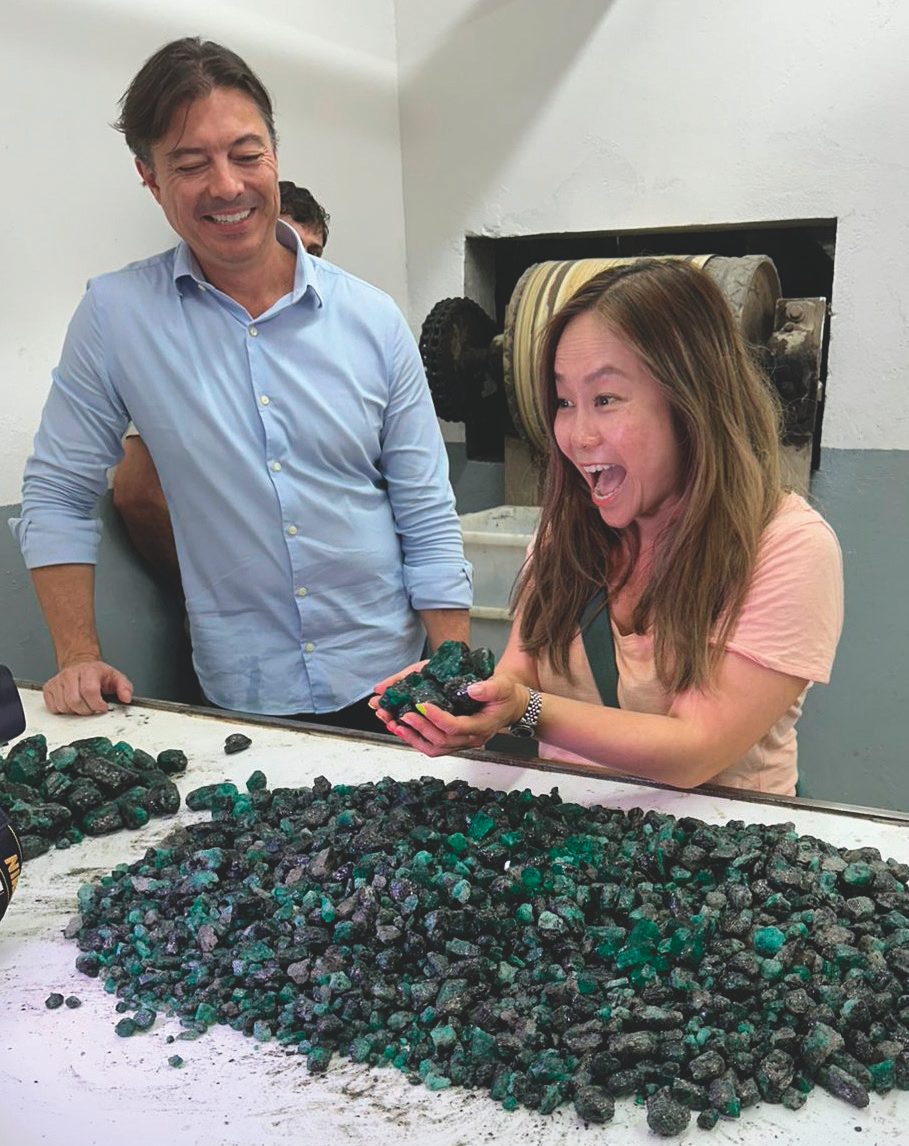
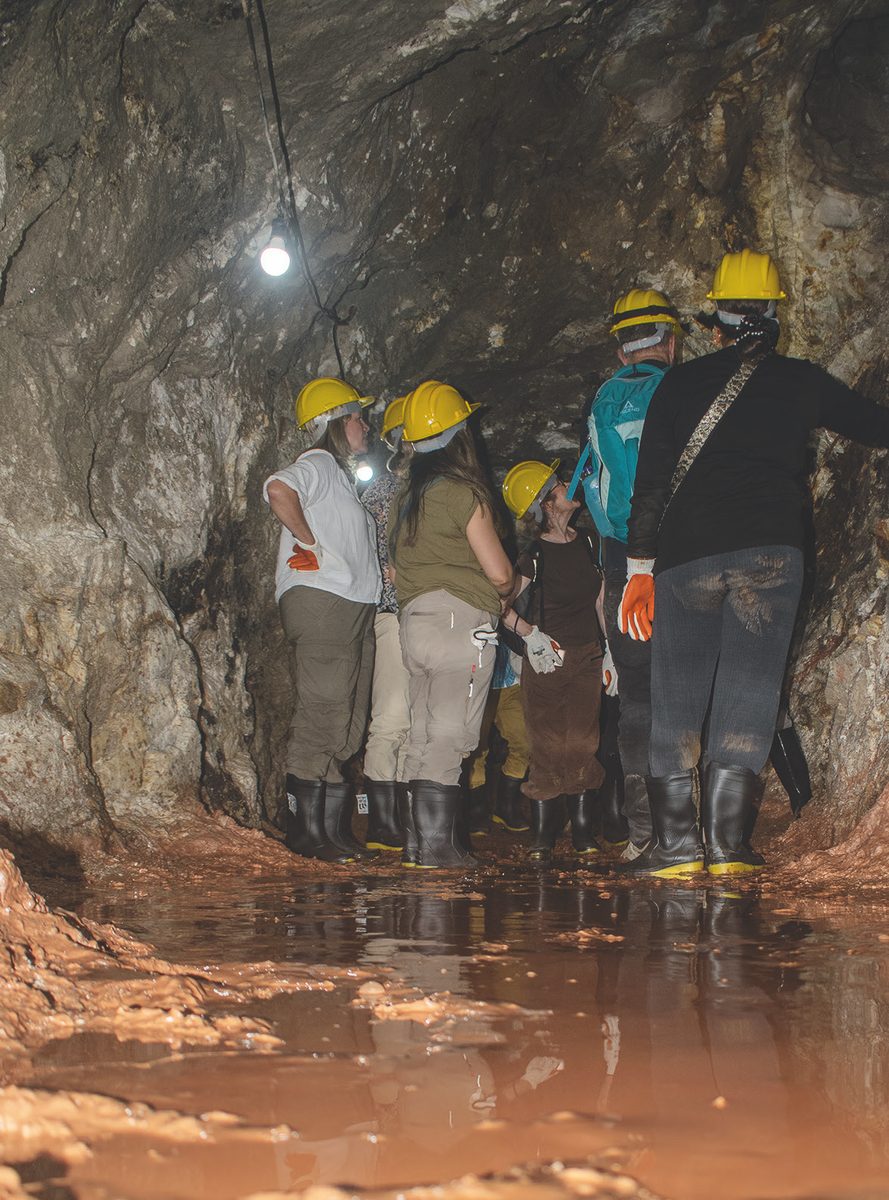
We’ve entered an era of conscious buying and sourcing, and the mines have responded. Visiting three mines after the Congress made me realize that mine visits confirm the importance of being there first hand.
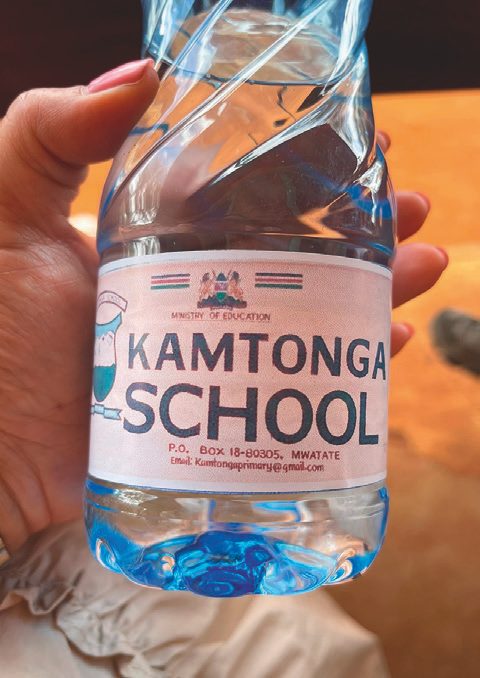
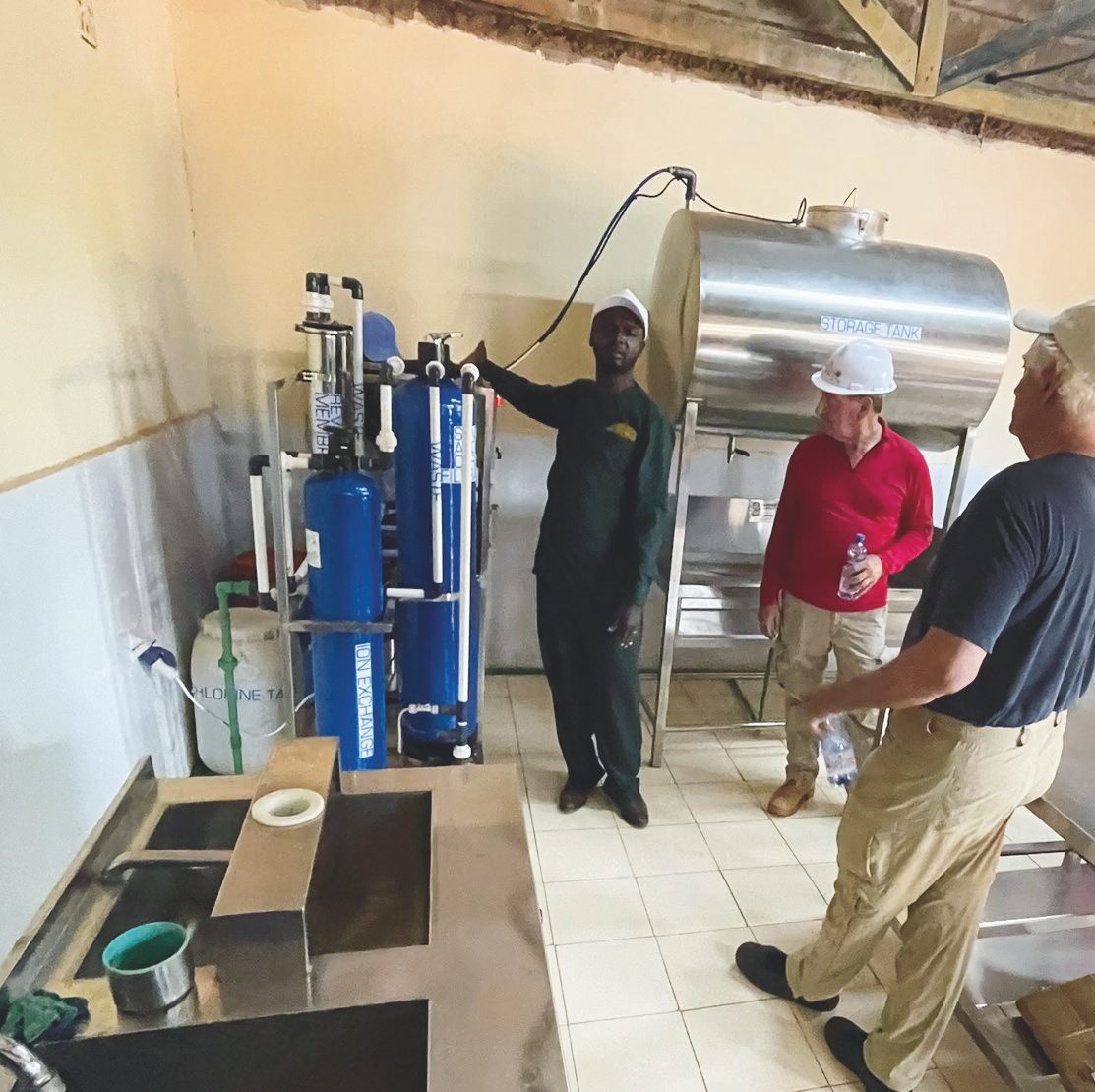
Take something as vital as water, for example. Clean water is not everywhere. And mines and mining communities are stepping up. For example, Belmont Emeralds has installed state-of-the-art systems to purify deep underground water, supplying not only miners but foreign visitors and others. In Kenya, with funding from the industry-supported Gems Keep Giving© charity, a well was dug and a purified water system was put into place at a school where the miners’ children attend, turning necessity into social infrastructure for the mining community. The project also allows for water to be bottled and used by others in the area.
Water is a small but potent symbol of progress. Today’s mines are more mindful, and are investing in safety, transport, education, and technology. What was once a niche movement to do better, now feels like a collective shift. Clients are demanding full-circle context, and our industry is finally ready, providing documentation, transparency, and above all truth. Selling gemstones today is about transmitting knowledge, intention, and responsibility. The progress that is happening today is something that we all can be proud of.
Jewelry’s Quiet Renaissance
Much like farm-to-table in the food movement, mine-to-market now implies a certain mode of operations. We have entered an age of conscious consumption.
In a world rocked by political instability, tariffs, and war, luxury sectors have fluctuated and many have faltered. Yet mid- to high-end jewelry, particularly with colored gems is experiencing a quiet renaissance.
Being an alternative to diamond engagement rings (in a world of lab-grown confusion), curiosity around rare, meaningful, one-of-a-kind pieces is surging. So, too, is the increasing demand for an ethical product with full disclosure.
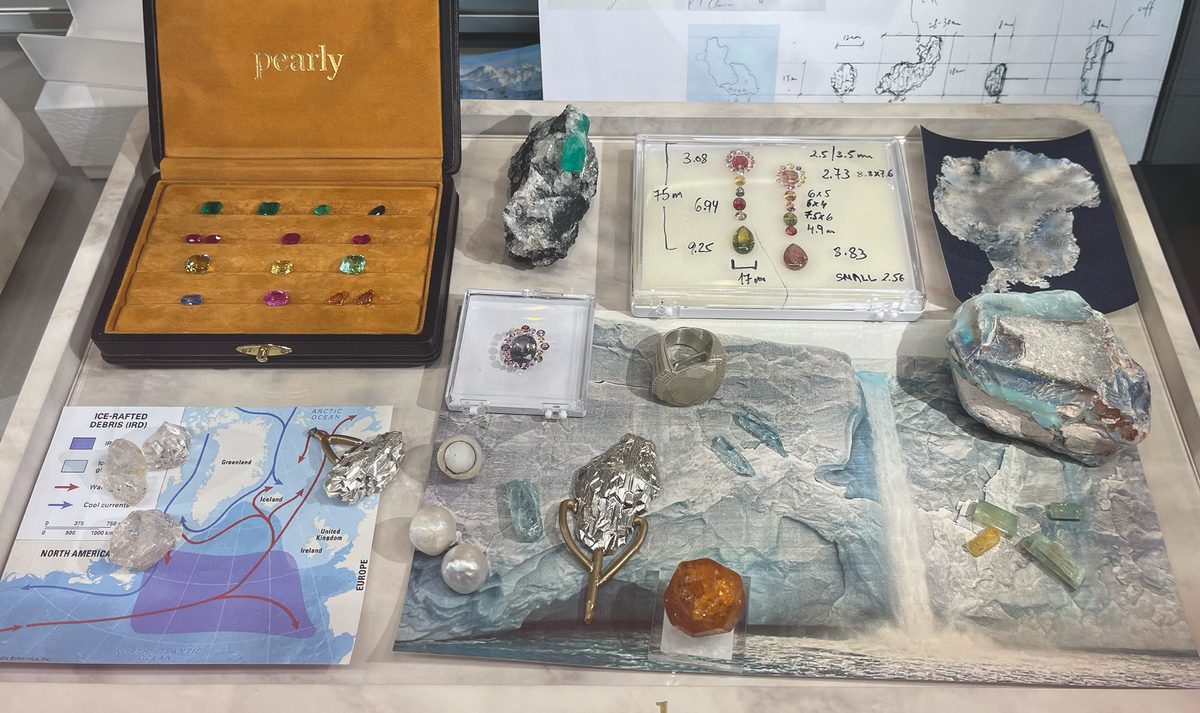
At the Goldsmiths’ Fair 2024, I relaunched my brand, Pearly, with a focus on process, from origins of colored gems, design concept, to making. My display included design process visuals, gemstone rough, and proposed layouts intentionally left unset. It stirred curiosity.
With veteran visitors used to seeing finished products, showing them the entire process created deep and meaningful conversations on mine-to-market, which many said they were delighted to learn.
Why? Most jewelers don’t know the gems’ back story. At the booth, curious clients zoomed in on Google Maps to see the mining areas; they lit up when learning about pegmatites and geology; they wanted to be taken step-by-step from the gem’s origin right up to the showcase. Suddenly, the gem was no longer just a gem. It had a reason for being (and for its price tag).
Sales weren’t record-breaking at the show, admittedly, but the head of security told me that my stand was one of the busiest. With that recent “retail experience,” I learned how it engages and empower our clients, who ultimately carry the stories for years to come when they wear their pieces.
It is not only customers who are excited to learn. On the recent visit to Brazilian mines (as well as to others around the world), I felt that familiar spark, an emotional high I call This is Christmas. It’s that childlike wonder of gem hunting, as deeply embedded in us as finding a ripe red apple on a tree. Grounding and electrifying. Sacred.
Each visit teaches me more, not just about gemology, but also about humanity. And this learning is a gift that I am eager to pass on to my clients and to my extended community.
A New Platform for Gem Conversations
For a long time, I have been compiling my conversations with bespoke clients – everything from what is the price of a one-carat ruby, to where do the gems come from, to natural vs. heat or other treatments, and more – into a public facing book that demystifies gemstone buying.
As the idea evolved, it turned into a digital platform, allowing for more behind-the-scenes explanations from the trade. This has now become the revival of the Pearlybespoke YouTube Channel. Some of the content filmed at the ICA Congress includes discussions with global gem professionals and mine access all in one place. The footage and interviews reflect not just my questions, but those of others who are interested in the gem and jewelry sector.
Beyond my bespoke jewelry business, my goal is to share knowledge from the experts with colored gemstone lovers. Through interviews, we ask important questions, give reliable and accurate information, along with expert insight and opinion. It’s a natural extension of my design work to take clients and the public behind the scenes for a better understanding and appreciation of colored gemstone jewelry.
Being in the trade, we all have a role to play in promoting an ethical and transparent industry, from the mine to the cutter’s table to the design studio, to the goldsmith to the retail associate. Ask yourself, what are some of the other ways to share this knowledge?
Is Certification Enough?
Gem certificates and reports matter. They tell us what a gem is. But they don’t tell us how it came to be or who mined it, how it was handled and by whom, or what its extraction means for communities and the environment. Those are the hidden values that shape a gem’s journey. If we don’t offer answers, someone else will, and not always accurately. The ethical questions are not easy to answer, but we can begin by learning ourselves and opening up these conversations.
A Call to Action
We are at a turning point in the gem and jewelry sector. Below are suggestions as to what I believe important actions can look like across our industry.
For Mine Operators and Local Partners
Keep the doors open. Transparency builds trust. Let your practices speak for themselves. Each of us in the chain votes with our purchases. Be ready to accept that vote with openness and pride.
For Gem Dealers
Know your source. Ask questions. Build respectful relationships. Offer more than certificates; offer background. Support small designers with information that trickles down to clients. Be truthful. There’s enough business for everyone.
For Buyers, Designers, and Retailers
Educate yourself. Choose suppliers who align with your values. Be ready to share information and go back to ask questions. Clients don’t know what they don’t know. Be a translator, not just a curator. Stay curious.
For CSR Leaders and Industry Bodies
Make frameworks accessible and scalable. Celebrate integrity, not just big gestures. Support the quiet changemakers. CSR isn’t just for Big Corporate. “C” can stand for Care, and that comes from the entire industry.
For All of Us in the Trade
Let fascination and curiosity guide you. Let responsibility ground you. Transparency isn’t a pitch. It’s a practice.
What we sell is not just a pretty gem. It is a legacy of love; it is proof of Earth’s magic that we can hold in our hands; it is filled with stories passed down generations.
We are not merely the custodian of these gems; we are part of their story.
A Personal Evolution from Curiosity to Practice
With a background in design, I entered gemology and jewelry as many outsiders do – curious, captivated, and initially lost. It was the early 2000s in New York; I had no idea where to even begin learning how to set gemstones. Although reliable and helpful information was scarce in the beginning, a move to Hong Kong and visits to the city’s gem and jewelry fairs, along with attending Sotheby’s and Christie’s auctions, helped open up this world.
Yet, even after a decade in the jewelry industry focusing on colored stones, I was still naively hammering my way forward. I wanted to know more. Then, an introduction to GIA opened the door, and I was able to obtain a proper gemology education, and real-world opportunities soon followed. Knowing more about gemstones allowed me to build my business and a point of view in terms of design. The desire to understand a gem’s properties, origin, and backstory became the foundation of my bespoke work.
While this may have been my journey as a passionate young jewelry designer, the journey of customers is somewhat different, although it is still rooted in the same curiosity. What begins as surface-level interest in a piece turns into something deeper when a meaningful purchase is on the table. Clients often search online for information. This encourages them to ask us better – and sometimes tougher – questions. The customer wants to know the designer, the stone’s origin and its trajectory from mine to market. They want to know a gem’s story, and how it reached them.
And I wanted my jewelry to tell this story, from its Earth origins to its final owner, with everything in between. This meant dealing with trusted vendors who, in turn, wanted to know me as well. Building long-term relationships with them became foundational, not just for me, but for any credible business.
What started out as curiosity for me resulted in studying gemology, visiting mines, talking to experts, and literally touching each stage of the supply chain so I could tell the story. This knowledge allowed me, two decades later, to move from Hong Kong to rebuild my business in the UK.
The love of gemstones is what I imbue into my business: the nuance of locality, the inherent geo signature, the dignity of every hand the gem passes through before it reaches me, my goldsmiths, and its final wearer.
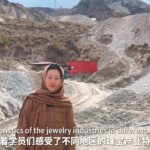
I began to document and film those moments, from climbing down steep tunnels and listening to gemologists, to visiting sorting rooms with state-of-the-art equipment, to working with cutters and craftspeople who bring the jewel to life. Stories like these, when they depict an ethical journey, are part of the changing landscape in the gem and jewelry industry.
For more information, visit YouTube.com/@pearlybespoke, with new weekly episodes.