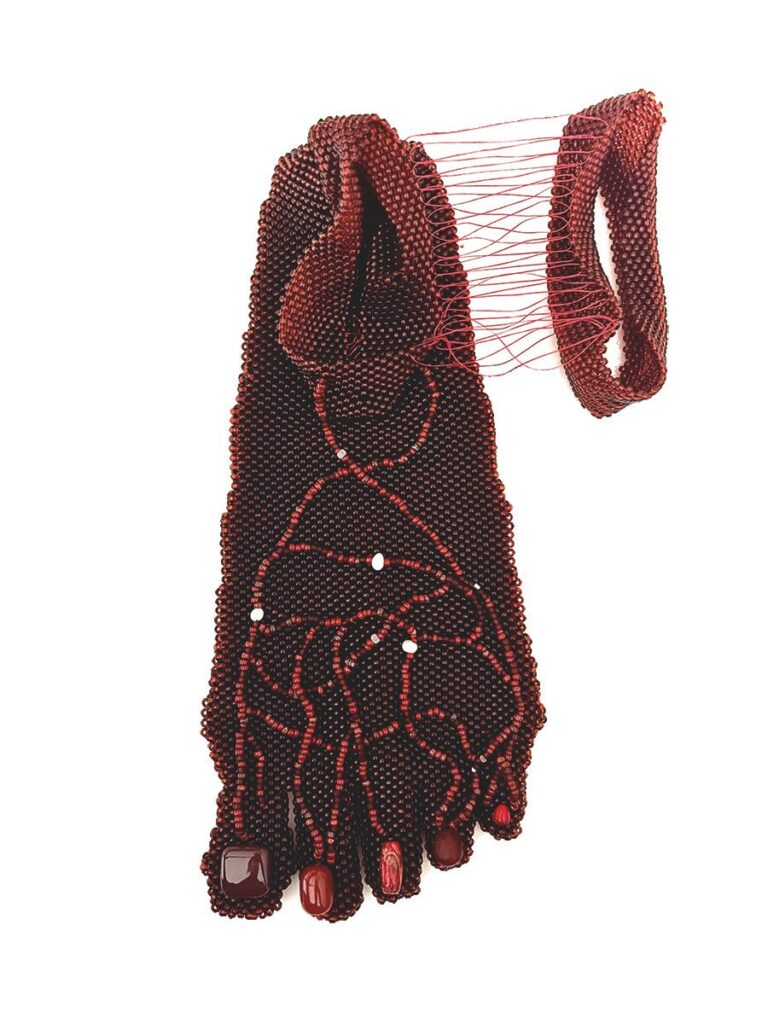
Brazil is recognized worldwide for the beauty of its gemstones, responsible practices, and creative designs that showcase the country’s extraordinary natural resources. As the world’s third-largest gemstone producer, Brazil relies on a vast ecosystem of professionals, many of whom have earned international recognition. Below is a look at some of the “gems behind the gems” shaping Brazil’s gem or jewelry landscape—and the inspirations that guide them both at home and abroad.
The Legends
These four artists have all left their mark internationally while maintaining a strong sense of brasilidade—a uniquely Brazilian spirit in their work. Though each followed a different path to success, they hold two things in common: none planned to work in jewelry, and each has decades of experience.
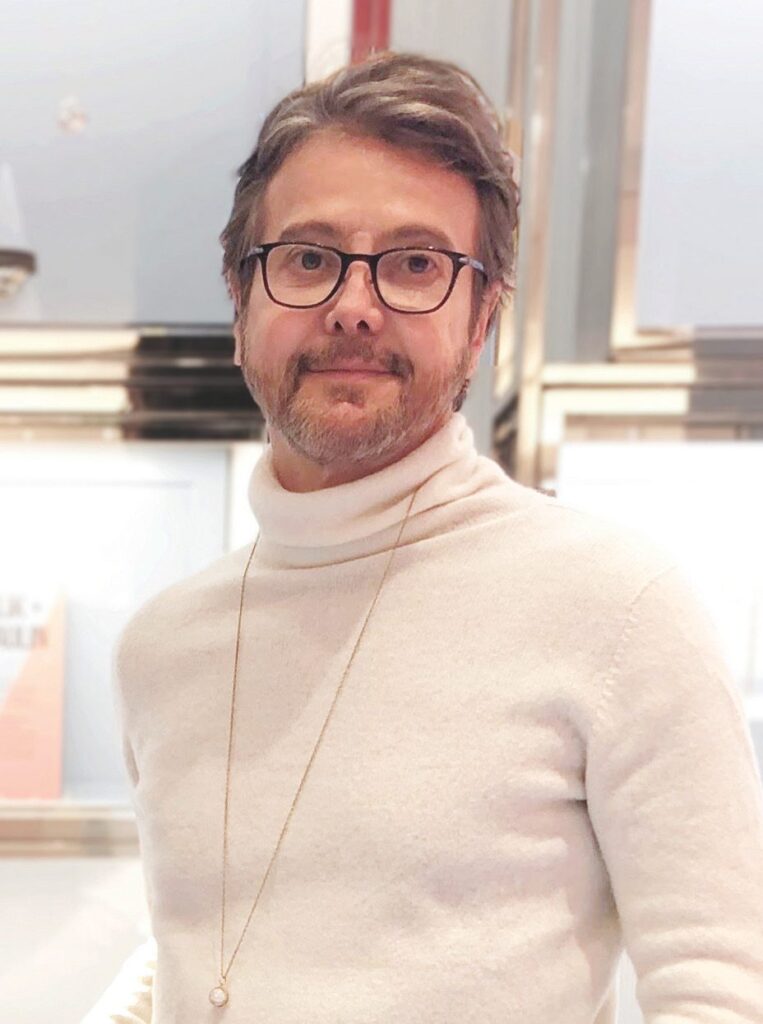
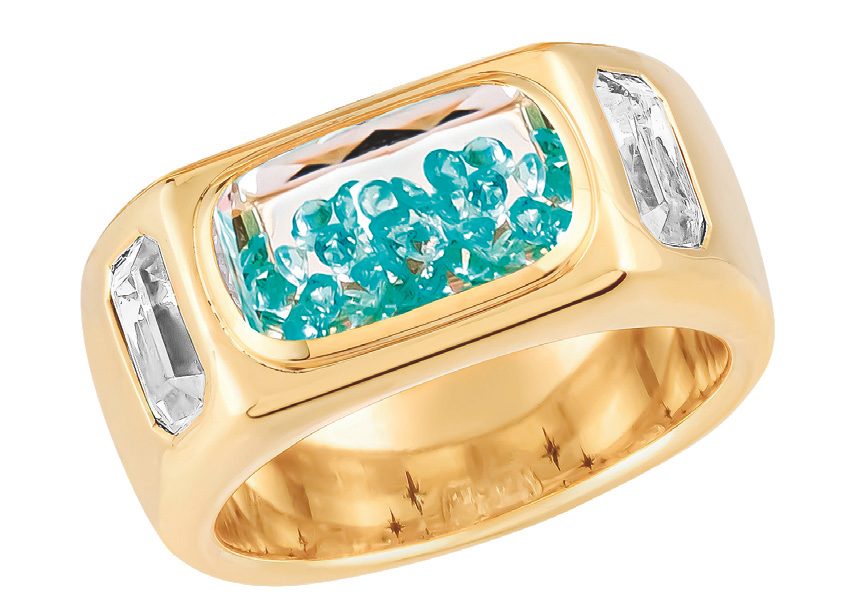
Moritz Glik, a native of Minas Gerais, moved to the U.S. more than 30 years ago, ostensibly to work as a shoe designer but later turning to jewelry. He is best known for his signature Shaker pieces— ingenious designs in which loose gemstones move freely in a transparent sapphire casing, creating a constantly shifting play of color and light.
“Growing up in Brazil, you’re surrounded by this incredible sensory richness—the colors, the music, the shapes of the mountains, the way people move. Brazilians have this innate creativity that I think comes from necessity. We learn from an early age to find solutions, to make something beautiful out of whatever we have,” Glik explains. “My mother was a gown seamstress, and I grew up watching her transform raw fabric into something extraordinary. That early exposure to handcrafting shaped everything. And then there’s the Brazilian relationship with joy and movement. That’s very present in my Shakers. The stones are never static. They dance. That’s very Brazilian to me.”
Another Minas Gerais native, Cris Porto, began entering (and winning) several international jewelry competitions in the 1990s, gaining recognition that soon led to global invitations and exhibitions, particularly after Brazil Year in France in 2005 when she exhibited at the Louvre. Today, her high jewelry can be found at some of the world’s most prestigious venues, including the Ritz in Paris, where she has been since 2022.

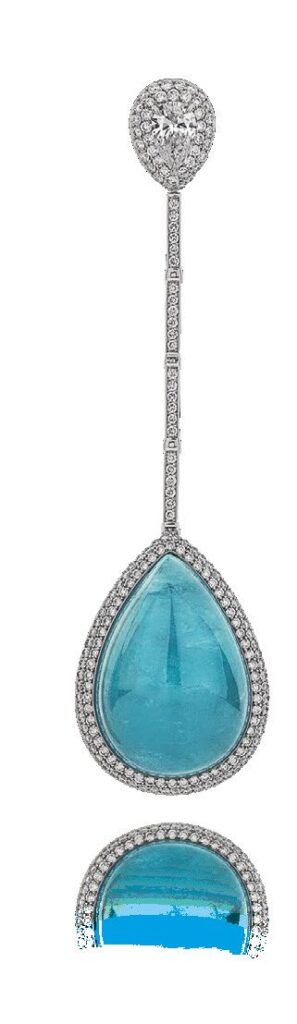
“I am from Minas Gerais, truly the rainbow of Brazil,” notes Cris Porto, who entered the field by chance after studying art. “After 40 years in this business, your clients have a great deal of confidence in you and you can instruct them, show them the best of Brazil. For example, I love Imperial topaz, rubellites, and of course Brazilian emeralds, which deserve more attention, as their bluish tone is just beautiful.”
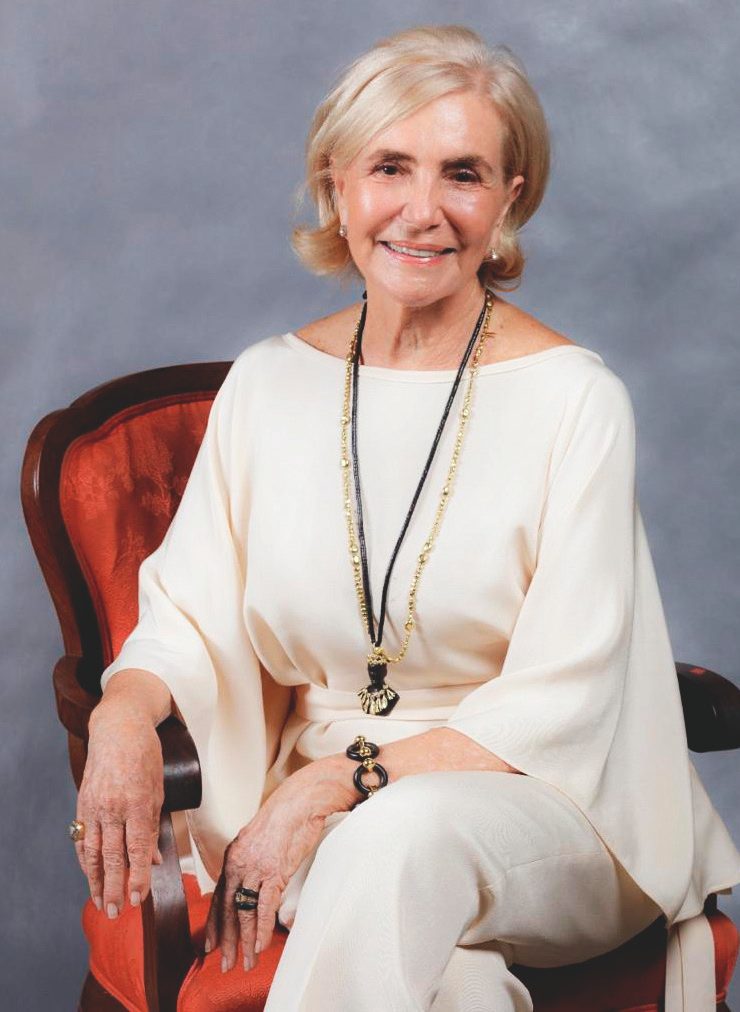
In São Paulo, Ruth Grieco has been in business for more than 50 years and hosts clients at the city’s most elegant atelier. Collaborating with her two daughters and now being joined by her grandson, she brings a distinctive feminine sensitivity to her designs, imagining the woman who will wear each piece, and creating versatile, oftentimes convertible jewelry. Her name started to spread beyond Brazilian borders after catching the eye of international journalists in the 2000s, eventually landing in French and Italian Vogue among other publications, and working with French journalist Didier Brodbeck on the book Ruth Grieco — Poetizing Jewelry.
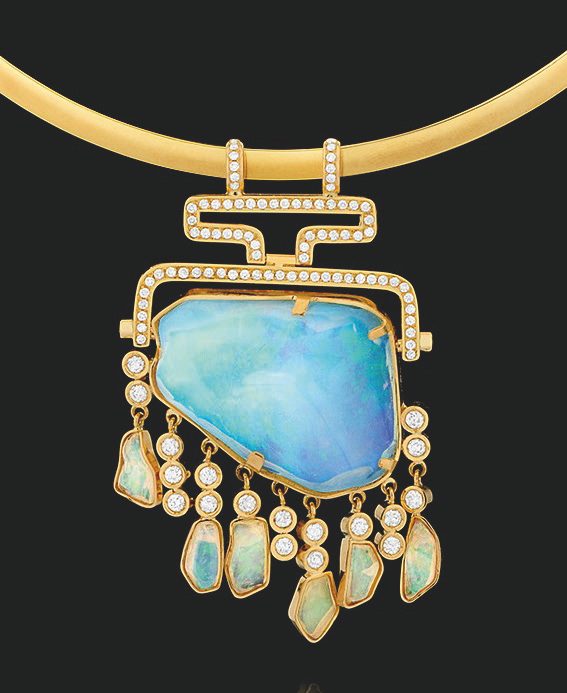
“I have always had a very personal aesthetic. I have never been influenced by fashion, but approach everything from an artistic lens,” says Grieco, who also has amassed an impressive collection of contemporary and historical Brazilian art, some of it displayed at her atelier. Ruth is perhaps the most influential designer of Piauí opal jewelry and was one of the first to make the stone center stage. Over the years, she has brought these remarkable stones to the attention of international collectors, who now regard them as on par with—if not superior to—Australian opals.
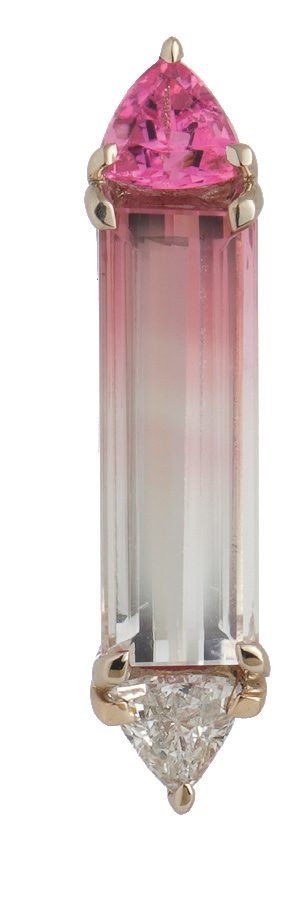
Another São Paulo-based jeweler, Richard Fiszman has drawn increasing attention in recent years for his striking use of Brazilian bicolor rubellite. His work, which blends Art Deco influences with meticulous curation and arrangement of ombre stones from the Cruzeiro Mine, has appeared at top retailers in the U.S. A former chef in New York, he began designing after inheriting his grandfather’s collection of gemstones.
“I like to design extraordinary pieces, with very fine Brazilian stones, like emeralds and Paraibas,” Fiszman states. “The bicolor rubellite pieces elicited the same reaction abroad, many were rendered speechless by the uniqueness of the design and the stone. That is the beauty of being a Brazilian designer. We have not only the most exuberant natural materials but also a rich, inspiring culture that nourishes anyone working in the design field.”

The Naturalists: Inspired by Brazil’s Culture and Landscape
For another group of designers, Brazil itself—be it the landscapes, flora, or cultural symbols—serves as the main source of inspiration.
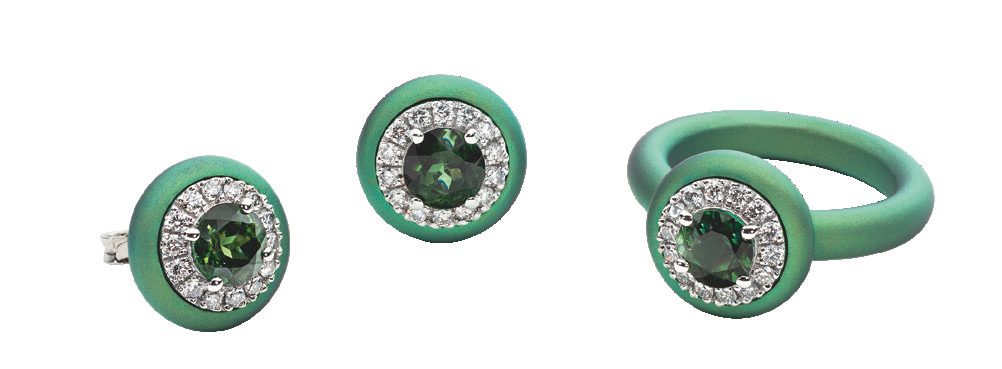
Cristina Rotondaro of Rio de Janeiro explores Brazilian gemstones in unconventional ways, pairing materials like green Brazilian tourmaline with titanium. Many of her designs draw inspiration from Espírito Santo, often translated into dove symbols in Brazilian jewelry, as well as iconic Brazilian symbols like Christ the Redeemer, which can be seen from her atelier. “Rio is a spiritual place, with a rich culture; any artist of any kind can feel this immediately,” she notes.
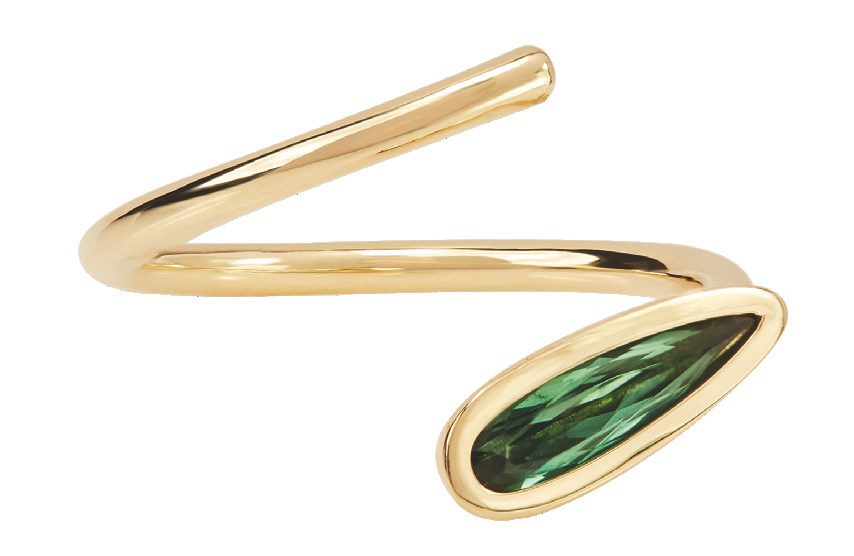
Daslan, by Daniela Moreira Salles, takes a more pared-down approach. Her totally distinctive, instantly recognizable modernist designs reflect a minimalist sensibility, and even her São Paulo atelier—crafted in distinctive Brazilian freijo wood—echoes this restrained aesthetic. While not explicitly tied to Brazilian modernism, her work reflects a modernist design language that is deeply present in the country. Her Bibemus ring is illustrative of her work, executed in recycled gold and responsibly sourced green tourmaline.
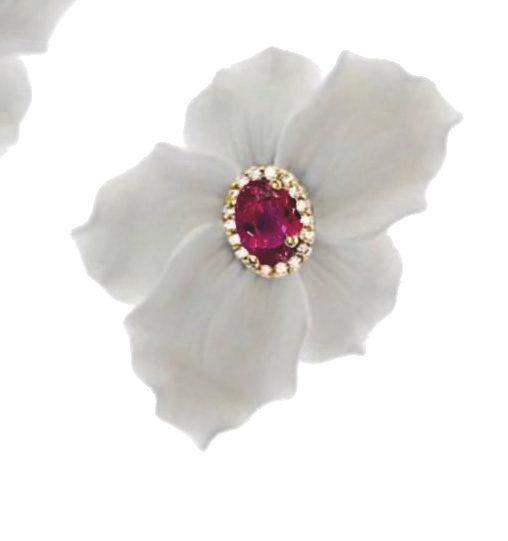
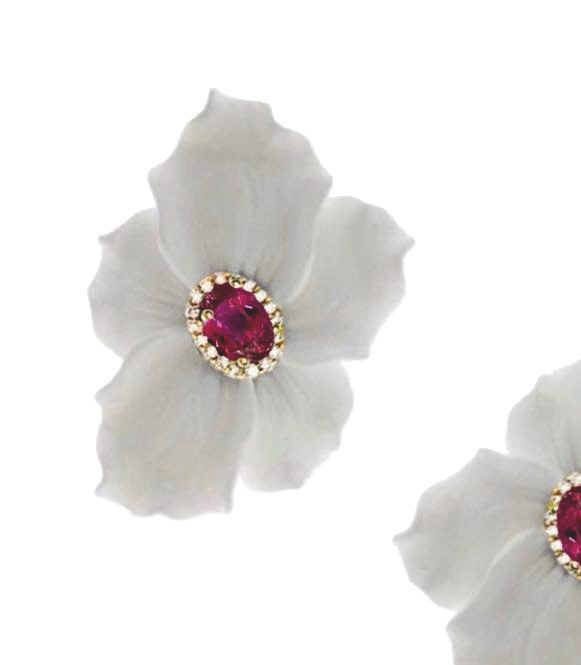
Casa Castro, a third-generation jewelry house, embraces an exuberant aesthetic rooted in tropical imagery. Their designs feature lush floral forms and vibrant colors that echo Brazil’s rich biodiversity, often using Brazilian stones. “We are first and foremost a Brazilian brand. It is our essence and our creative capital. Being able to translate our designs into pieces that reflect our tropical nature and bring it to the world is an honor,” says Vivi Castro, who runs the company with her sister, Kika.
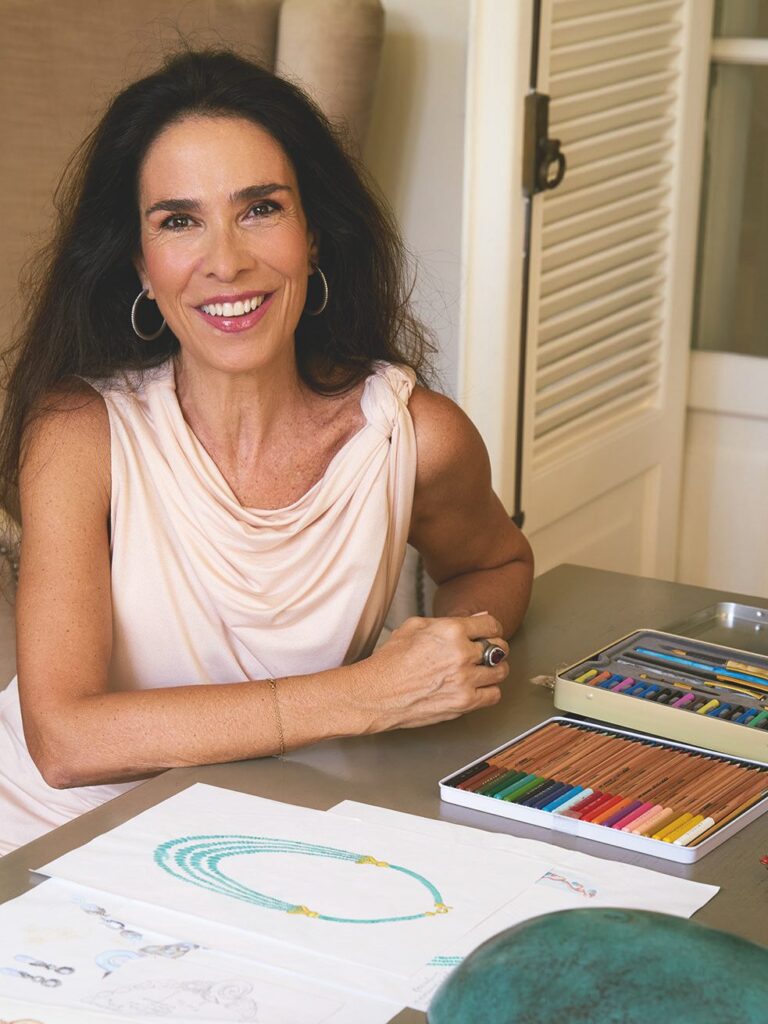


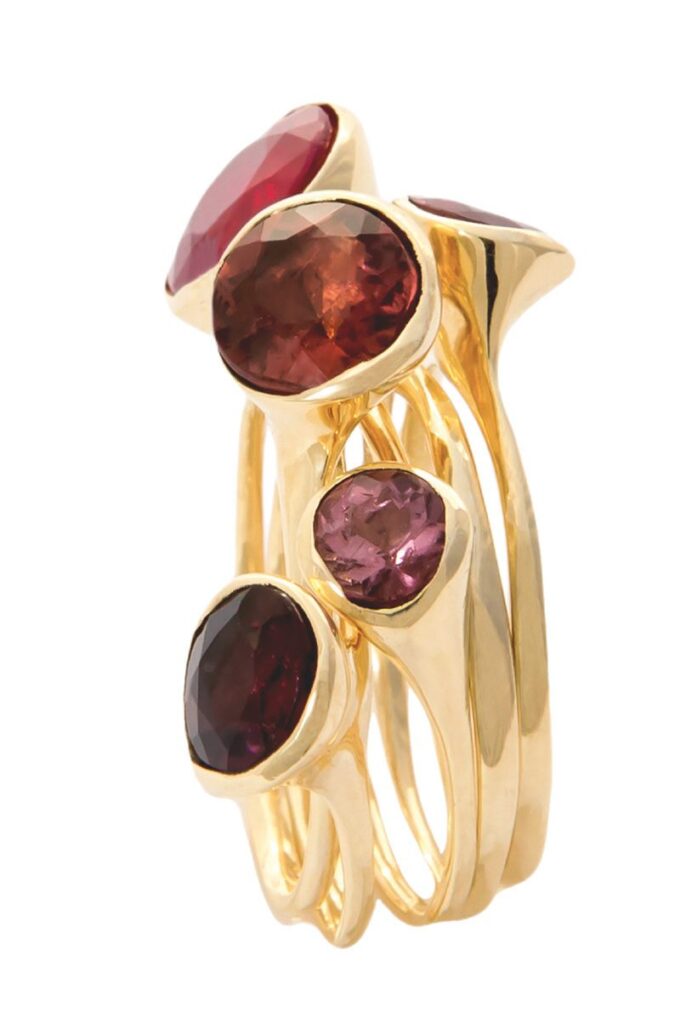
Kika Alvarenga is the only one of this group to hail from the epicenter of Brazilian gems: Minas Gerais. Living and working in Belo Horizonte, the gem-rich region has greatly influenced her work, the foundation of which features locally and ethically mined green and pink tourmaline, aquamarine, and muted shades of quartz. Her design philosophy focuses on the beauty of imperfection. She creates sculptural pieces that highlight the natural beauty and imperfections of gemstones. “For me, jewelry is sculpture, inspired by the body and how it moves and how the jewels move with it,” she explains.
Her references to Brazilian motifs are unmistakable. For example, she named two collections after a traditional Brazilian indigenous feathered headdress, known as a cocar. Specifically, the overlay of feathers on these pieces inspired her work, exemplified by her well-known Cocar earrings, which feature layered tones of pink tourmaline. Another design inspiration and a base for her non-gem collections is tucum rope, used in indigenous Brazil to create hammocks and even jewelry.
Behind the Scenes
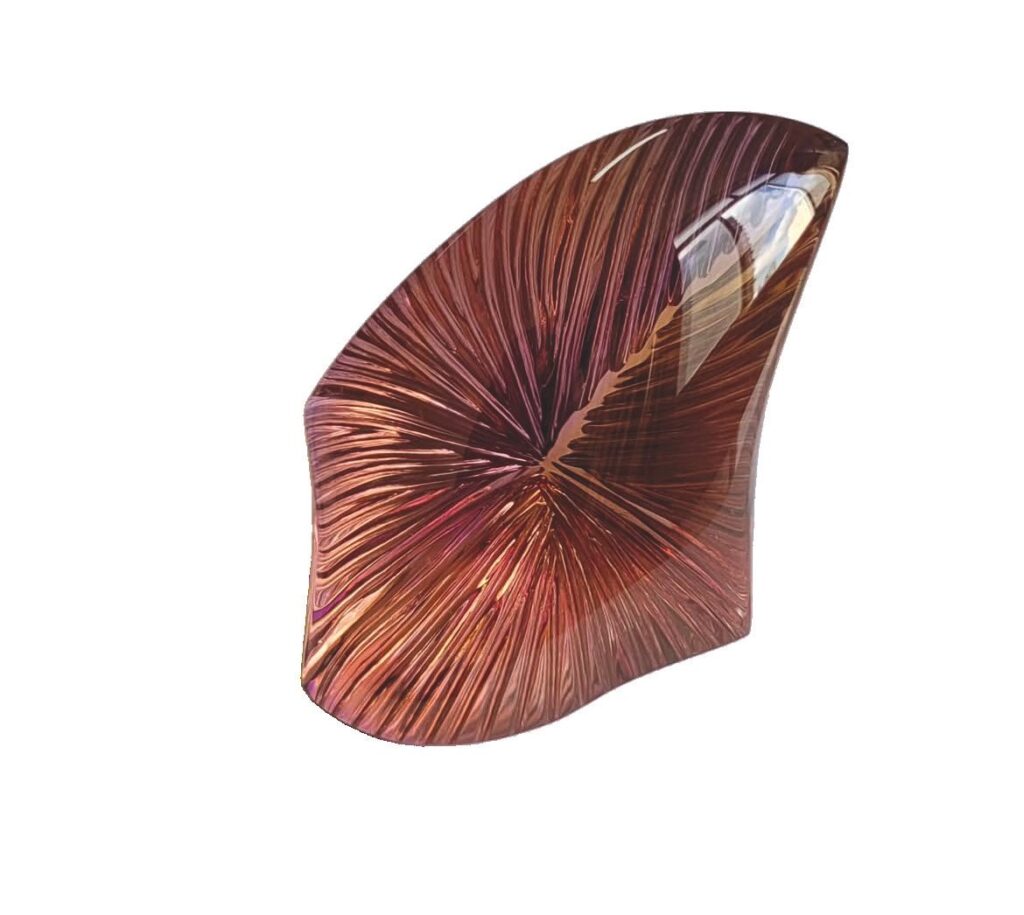
The road from raw material to jewelry is a long one, with many players working along the supply chain. When it comes to the beauty of a piece, perhaps most important of all is the cut. Many of the above designers rely on the expertise of the legendary master lapidary and gem artist, Walter Lopes of Belo Horizonte. Through his company, Arte em Gemas, Lopes has become one of Brazil’s most respected gem artists, having worked with generations of designers and international collectors for more than 50 years.
Dr. Adriano Mol, of the University of Minas Gerais State, is a frequent speaker on Brazilian mining and minerals at events such as the Chicago Responsible Jewelry Conference, Vicenzaoro, JCK, and the Gold & Diamond Conference in New York. “Brazil’s gemstone sector is a mix of extraordinary geological wealth with a highly structured regulatory framework,” he explains. “These days, the story and provenance of the gem is an integral part of its value, and Brazil increasingly is a model for the industry, not only in innovation, traceability, and responsible mining, but also for the quality of the output and the creativity of our designers.”


Another authority figure is Julio Landmann, one of Brazil’s best-known mineral collectors and experts. He is a contributor to the monumental bilingual volumes Mineral Collections of Brazil and Mineral and Precious Stones of Brazil edited by Carlos Conejo, which are considered by the international community the most comprehensive English-language materials on the topic. Offering both essays and photography, he has also contributed to both of these as well as other key Portuguese reference materials.
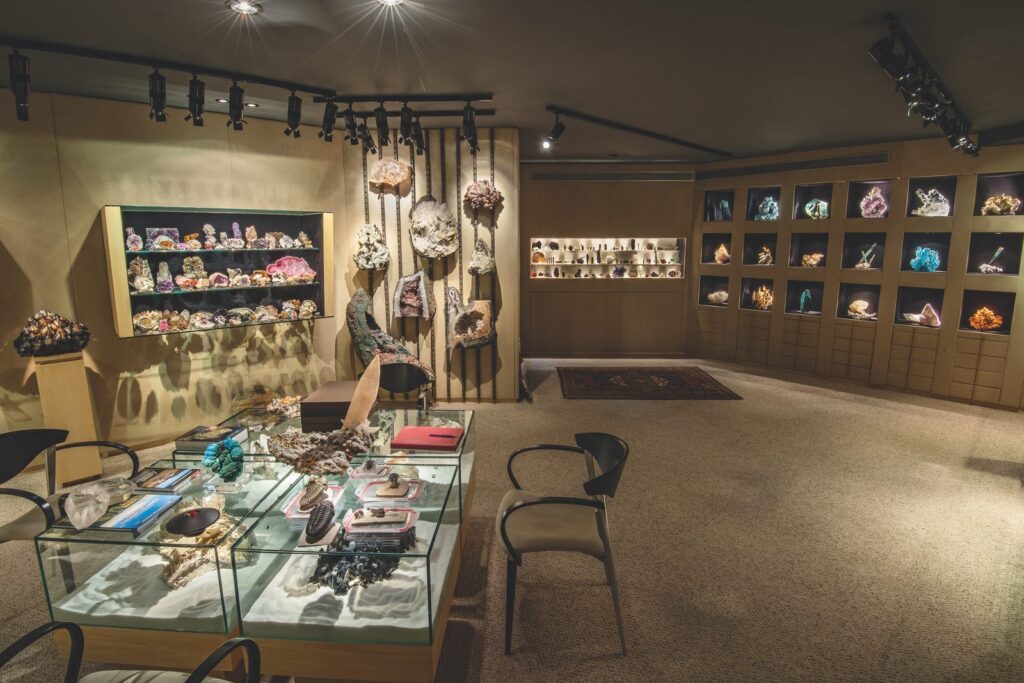
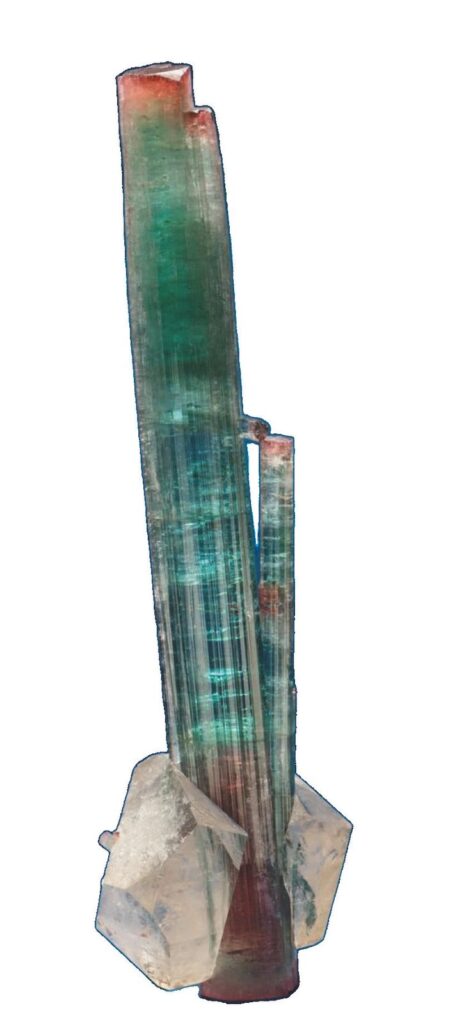
Landmann also maintains an extraordinary private mineral collection in São Paulo, which features nearly 1,000 specimens, about 70% being Brazilian. Landmann notes that despite Brazil’s mineral riches, the country lacks a natural history museum or similar institution, especially in São Paulo, and that his private collection serves as a repository for information and a means to maintain Brazil’s mineral patrimony locally. “My most-treasured piece is not the valuable piece, not the largest, but is a biterminated bicolor tourmaline specimen, from the Lavra da Pederneira in São Jose da Safira. It is a gemological rarity and emblematic of the best of Brazil,” Landmann muses.
From classic designers who have elevated Brazilian gemstones to newer creators inspired by the nation’s landscapes, culture, and biodiversity, Brazil is home to all, alongside other experts who contribute their expertise to maintain the quality, traceability, and preservation of Brazil’s rich mineral heritage. Together, they represent the true “gems behind the gems.”
Photos are courtesy of the company/designer cited.