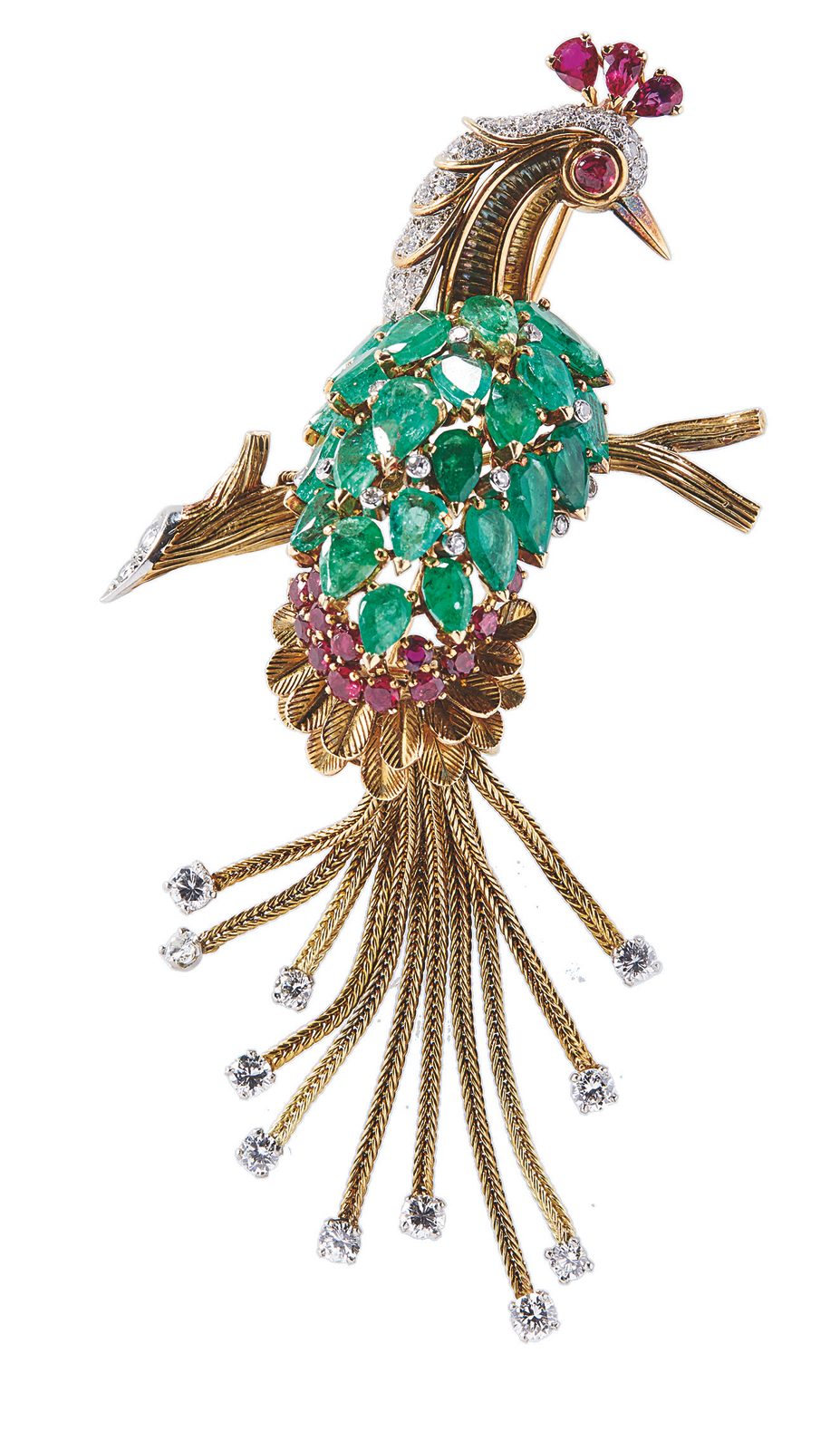
There is a moment in the architectural traditions of the Middle East when the gaze comes to rest. Standing beneath a dome, one experiences the sacred, not through movement, but through stillness. The dome is a static form that directs vision upward, embodying a cosmic order and mediating between earth and sky through structure and geometry.
Yet, in Persian Islamic poetry, mysticism, and visual culture, this same connection is articulated differently. Here, mediation does not occur through architectural stability, but through a living, fluid being—the bird. Meaning is carried not by stasis, but by motion; not by structure, but by flight.
The Poetry of Birds exhibition, held in Dubai and organized by L’ECOLE, School of Jewelry Arts (supported by Van Cleef & Arpels), unfolds precisely at this conceptual threshold. The bird is not presented merely as an ornamental motif, but as a mediator between the material world and the realm of meaning. What architecture expresses through form, the exhibition translates into movement. It proposes a shift from structure to fluidity, from matter to transcendence, allowing the visitor to read the exhibition across multiple layers of interpretation.
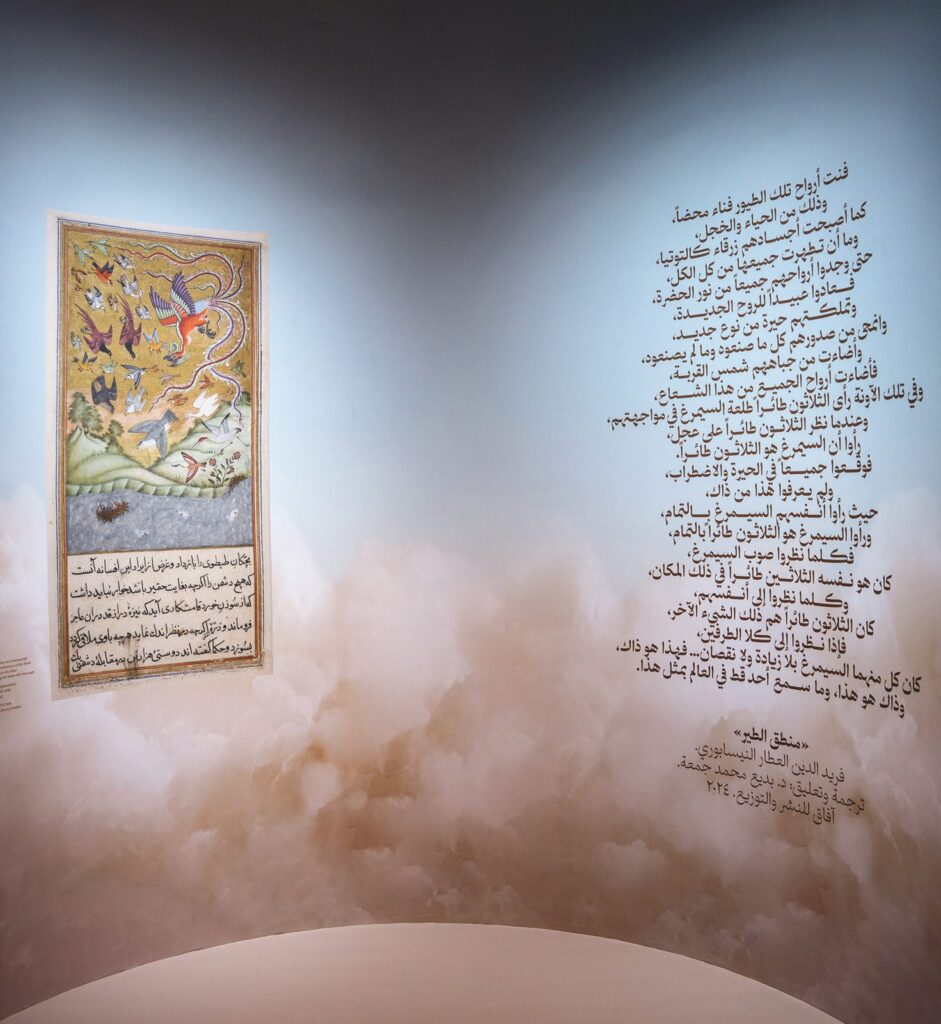
Within Islamic mystical and philosophical traditions (often associated with Sufism), the bird is an allegory of the soul, rising from the material world in search of truth. In Attar of Nishapur’s Conference of the Birds, birds represent seekers on the path to enlightenment, journeying through seven valleys to reach the Simurgh. This vertical ascent of the soul mirrors the metaphysical relationship between earth and heaven—a relationship that architecture renders through the dome, while mysticism expresses through flight.
In Persian miniature painting, birds appear in paradisiacal gardens, alongside the Tree of Life, or within the margins of tiles and manuscripts, symbolizing ascension, spiritual delicacy, and the presence of meaning beyond the visible world.
In the exhibition, this concept is reimagined in a contemporary language. My experience unfolded exactly as Sophie Claudel, the school’s director, wished for in the catalogue: first the beauty of forms, then the quiet harmony of space, and finally an overwhelming sense of wonder.
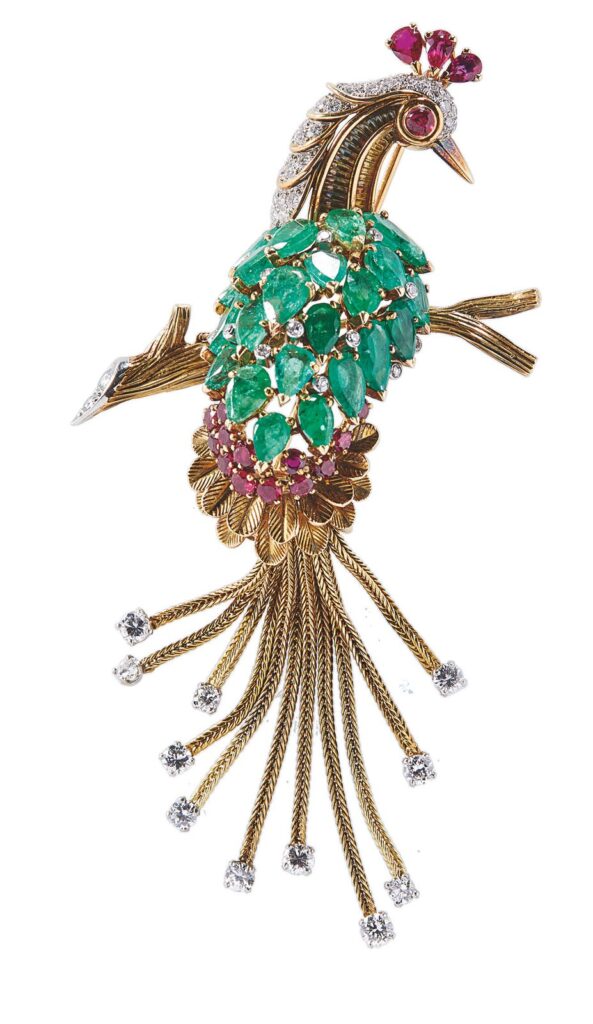
On the opening day, I left the gallery several times only to return again, unable to detach myself. A sentence formed in my mind: the static dome, the fluid bird. What architecture expresses through structure, the exhibition expresses through movement, through the metaphysics of flight.
Throughout the exhibition, the precision of the curatorial vision devised by Marie-Laure Cassius-Duranton [Senior Exhibition Content Manager at L’ÉCOLE, School of Jewelry Arts, in Paris] was evident and deeply impressive. Everywhere, one could sense a curatorial mind trained in both art history and the material culture of jewelry.
Carpets hung on the walls became platforms for imagined departures. The jeweled birds appeared to rise directly from their woven surfaces, as if the two-dimensional motifs of the rug had awakened, taken breath, and moved into space.
This passage from motif to motion, from ornament to presence, dissolved the boundary between painting and sculpture. One felt not merely in the presence of the works but within the very moment of flight. Every aspect, from stone selection and cutting to the slightest inclination of gold or silver, was executed with astonishing refinement, a level of precision closer to poetry than to craft.
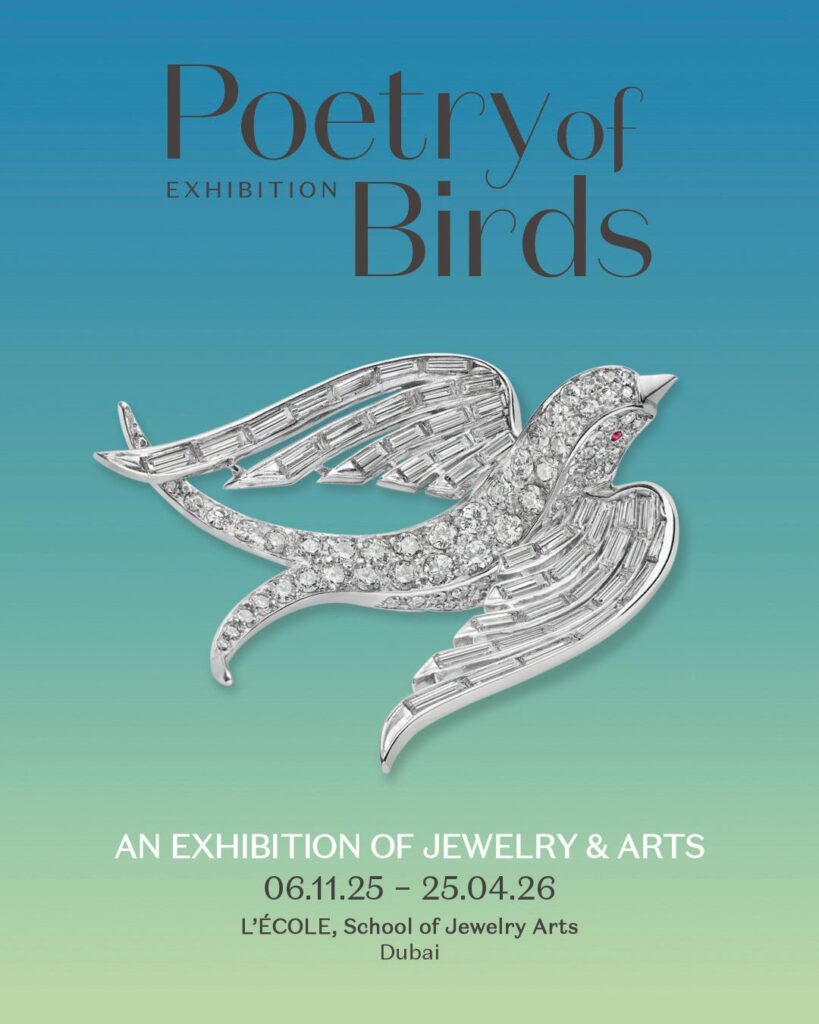
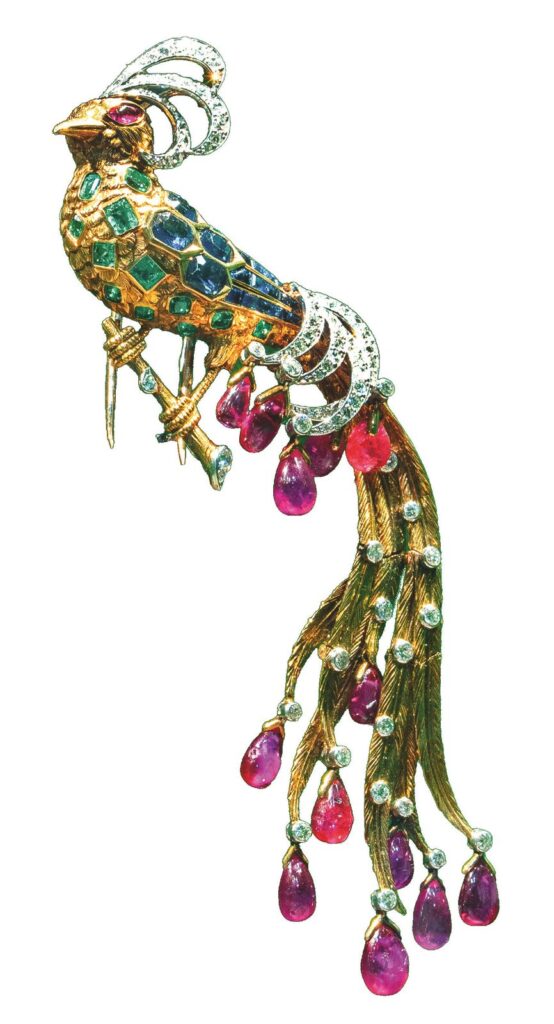
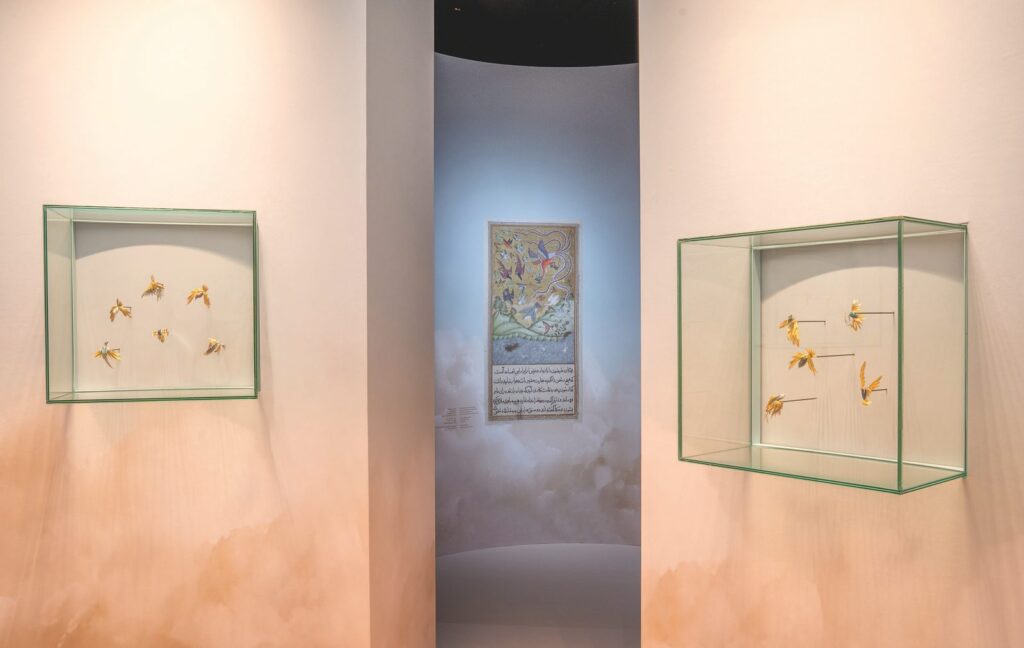
The exhibition staged a dialogue among disciplines: image, text, and object. Jewelry pieces, miniatures, tiles, photographs, and the textual excerpts on the walls formed new constellations of meaning. The open, floorless birdcages, suspended from above, symbolized release rather than confinement, as if imaginary birds had left the cages behind and settled in the vitrines instead. This sense of liberation echoed the same spiritual release central to mysticism.
One of the most intellectually compelling aspects of the exhibition was its research-based approach to display. Placing a Safavid ceramic bowl painted with birds beside a 20th- or 21st-century bird-shaped jewel was not a simple aesthetic decision but a form of visual research. It demonstrated how a single motif travels across media and centuries, from pottery to miniature painting, from manuscript to jewelry, from East to West.
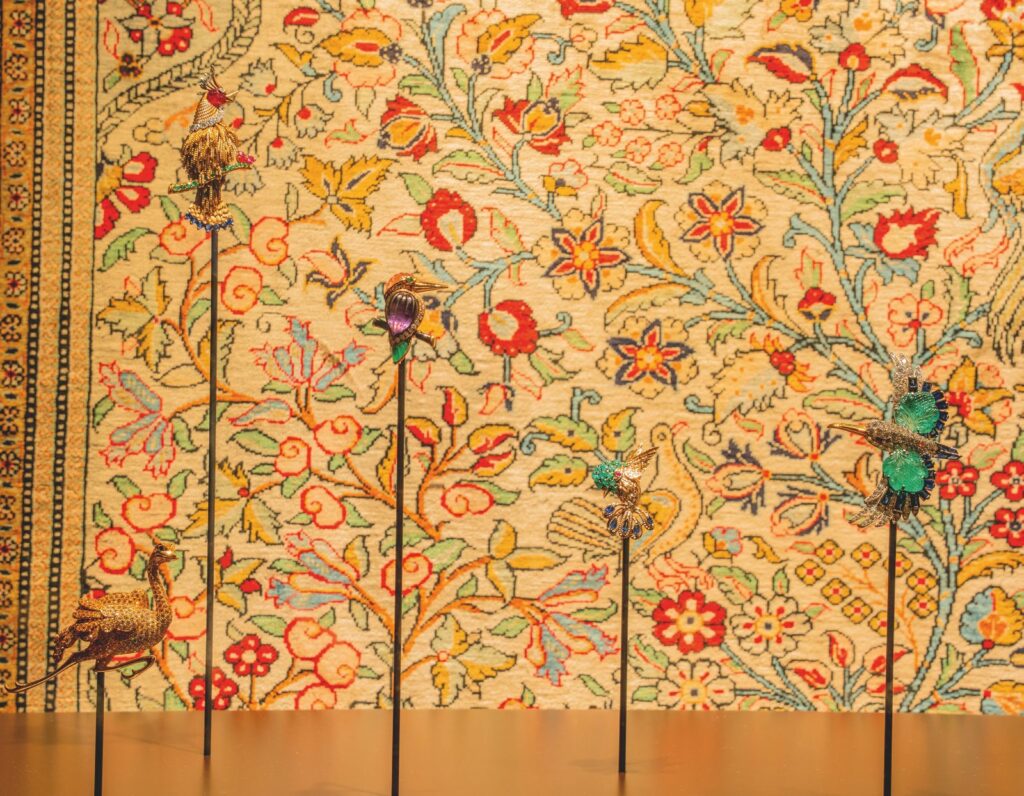
View with bird brooches from Mauboussin, Marchak, Van Cleef & Arpels, and Cartier positioned in front of a Persian rug depicting the ’Tree of Life.’
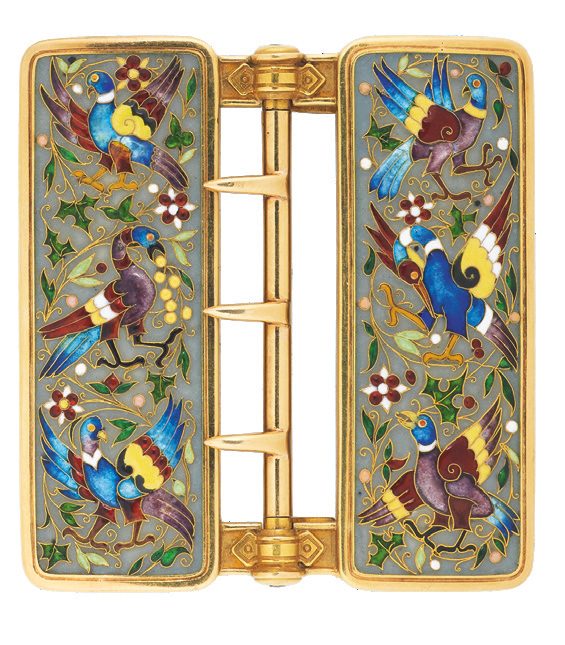
This dialogue appeared repeatedly—a Qajar tile beside a French Art Nouveau peacock belt, a Persian miniature beside enamel pendants by Piel Frères or Boucheron. Each juxtaposition allowed viewers to trace processes of transformation, translation, and reinterpretation over time.
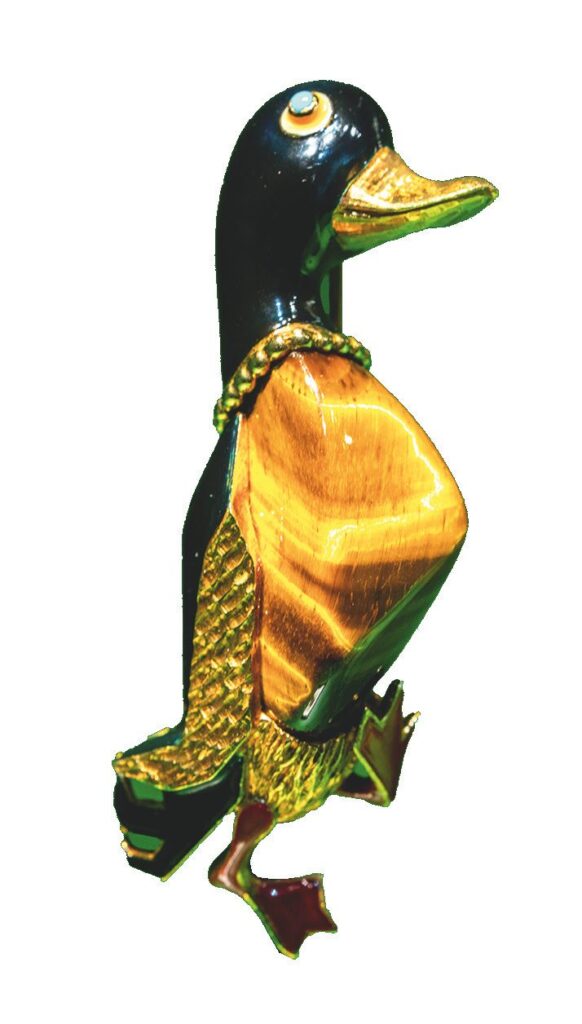
A striking moment in the exhibition was the placement of a 1970s bird jewel crafted in silver, gold, and citrine beside a contemporary work. This pairing did not produce a linear historical narrative but revealed something more profound: a dialogue of temporalities. Past, present, and future stood side by side not for comparison but to reveal metamorphosis. One could observe the progression from ornate detail to minimal line, from the weight of material to the lightness of form, from naturalistic representation to poetic abstraction.
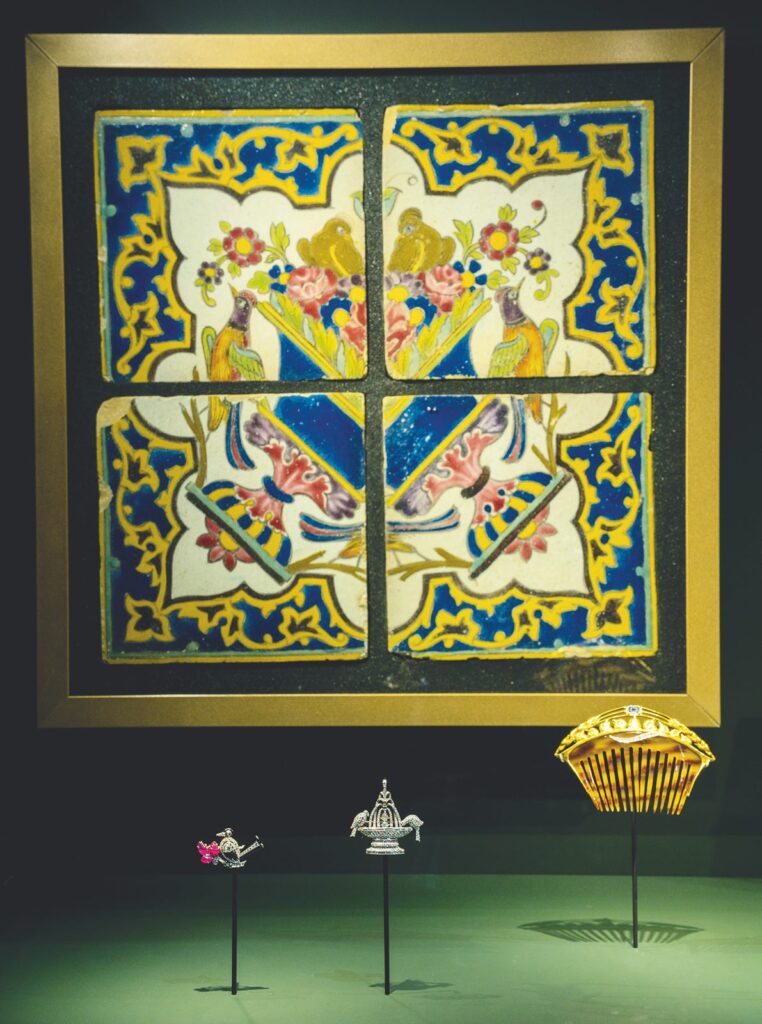
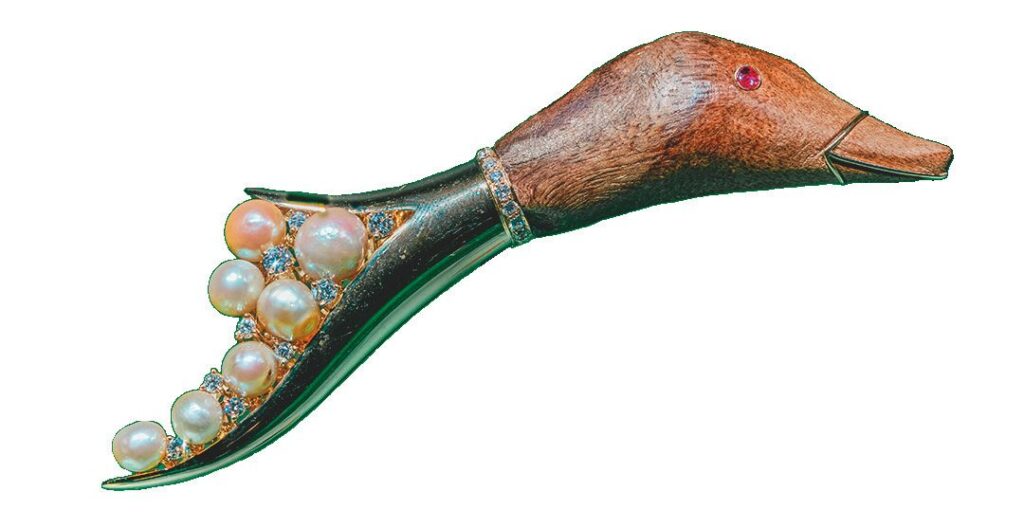
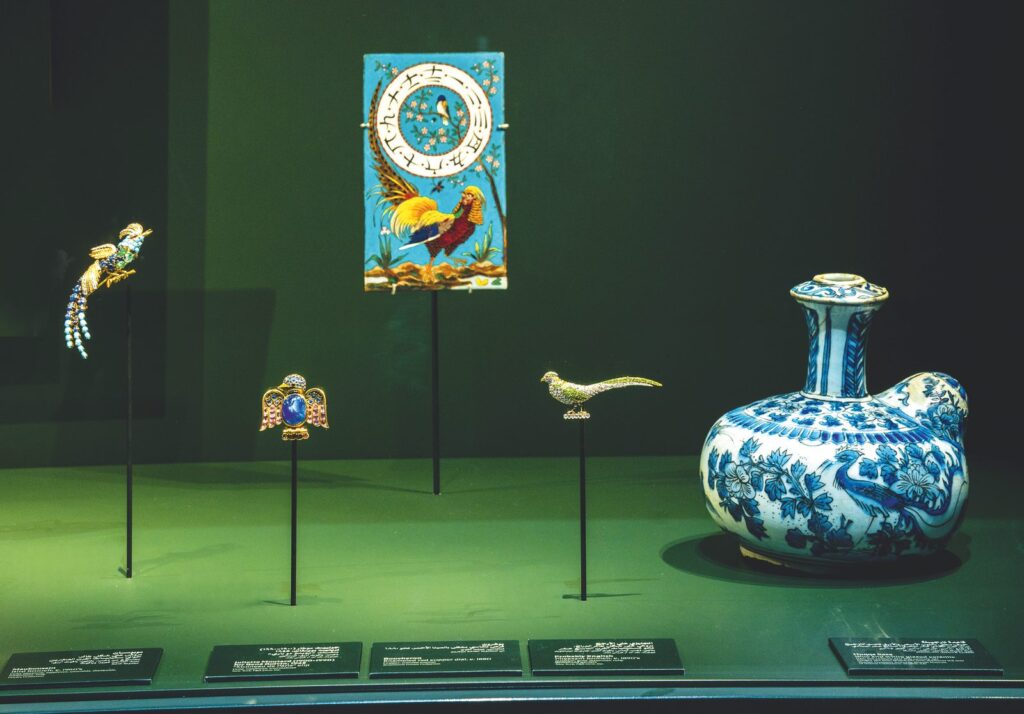
The enameling section presented the meeting point of Iran and Europe with remarkable clarity. Enamel work, perfected in Safavid and Qajar Iran, became a source of inspiration for European jewelers in the late 19th century. Colors, bird motifs, rhythmic lines, and compositional structures migrated from Persian ceramics and miniatures into French enamels, reshaped by the demands of industry and the aesthetic language of the Western luxury market. This was the moment when reproduction transformed into creative adaptation.
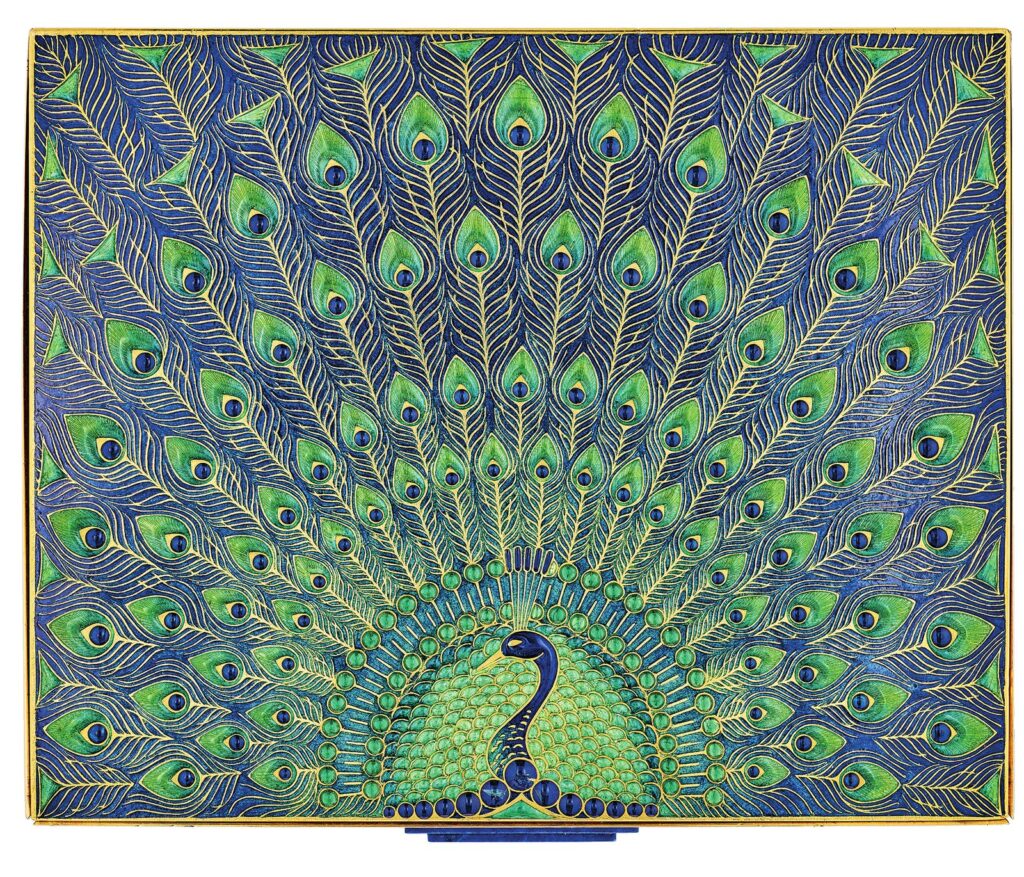
The peacock held a special position in the exhibition, whether in early 12th century French belts or mid-century cigarette cases. The expanding geometry of its feathers revealed a fractal logic—a movement from center to periphery, self similarity and rhythmic repetition. In Iranian tradition, the peacock symbolizes paradise, beauty, multiplicity, and in mystical literature, the fragmented self. The exhibition placed these symbolic and geometric worlds in dialogue, bringing together Iranian geometry and modern aesthetics.
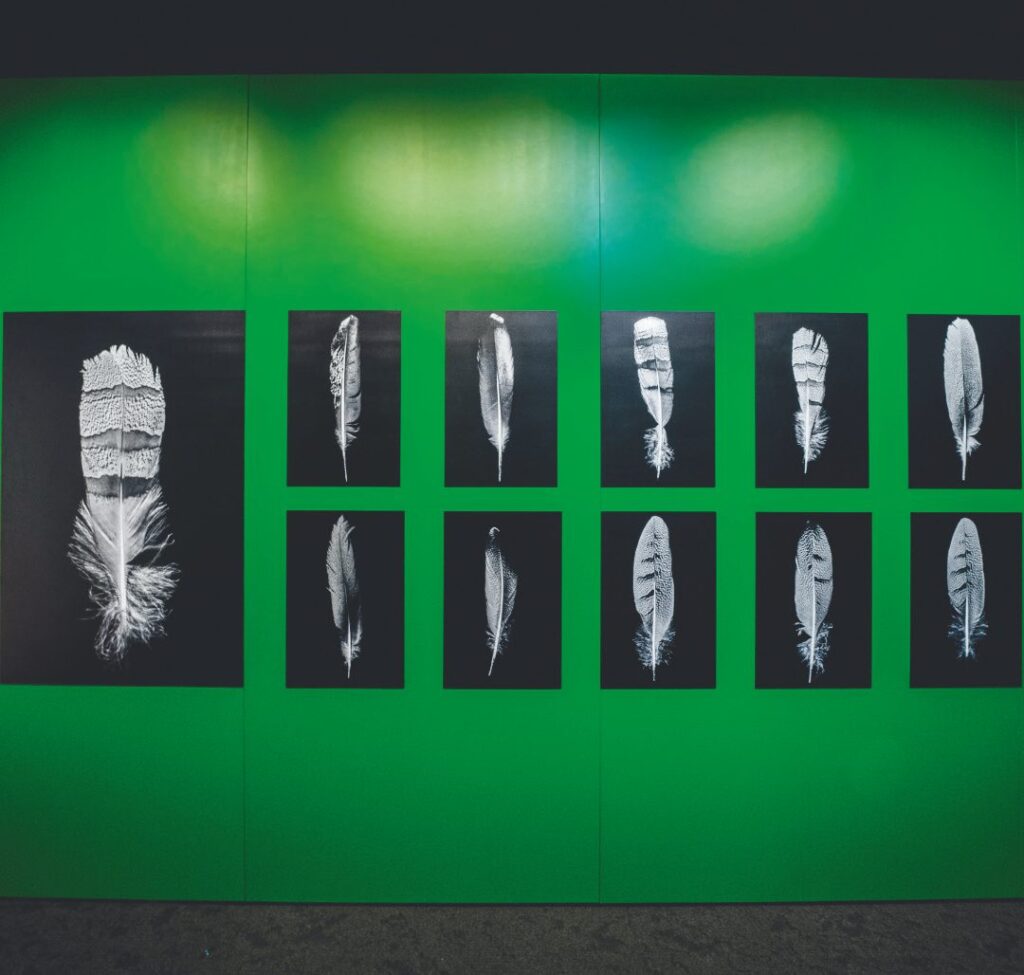
The final section dedicated to environmental concerns, featuring Faisal Alrais’s photographs, formed an ethical conclusion. The endangered Houbara Bustard created a bridge between beauty and responsibility, echoing both the melting wings of Icarus and the mystical idea that ascent is impossible without confronting the self.

Poetry of Birds was not merely an exhibition of jewelry, but a multilayered journey, moving from beauty to reflection, from history to the present, from matter to meaning, and from stillness to flight. It offered an experience in which form, technique, poetry, philosophy, and history converged and moved together, tracing the bird’s path from ornamental motif to metaphysical ascent.
About the Author
Banafsheh Hemmati is an Iranian designer-artist whose practice operates at the intersection of art, design, and philosophy. Holding a PhD in Philosophy of Art and a Master’s degree in Industrial Design, her work explores Islamic geometry as a contemporary visual language. Through jewelry, sculpture, and site-specific installations, she investigates the body as a spatial and conceptual site. Her work has been exhibited internationally, including at DIFC Sculpture Park, and published in platforms such as Art Jewelry Forum.