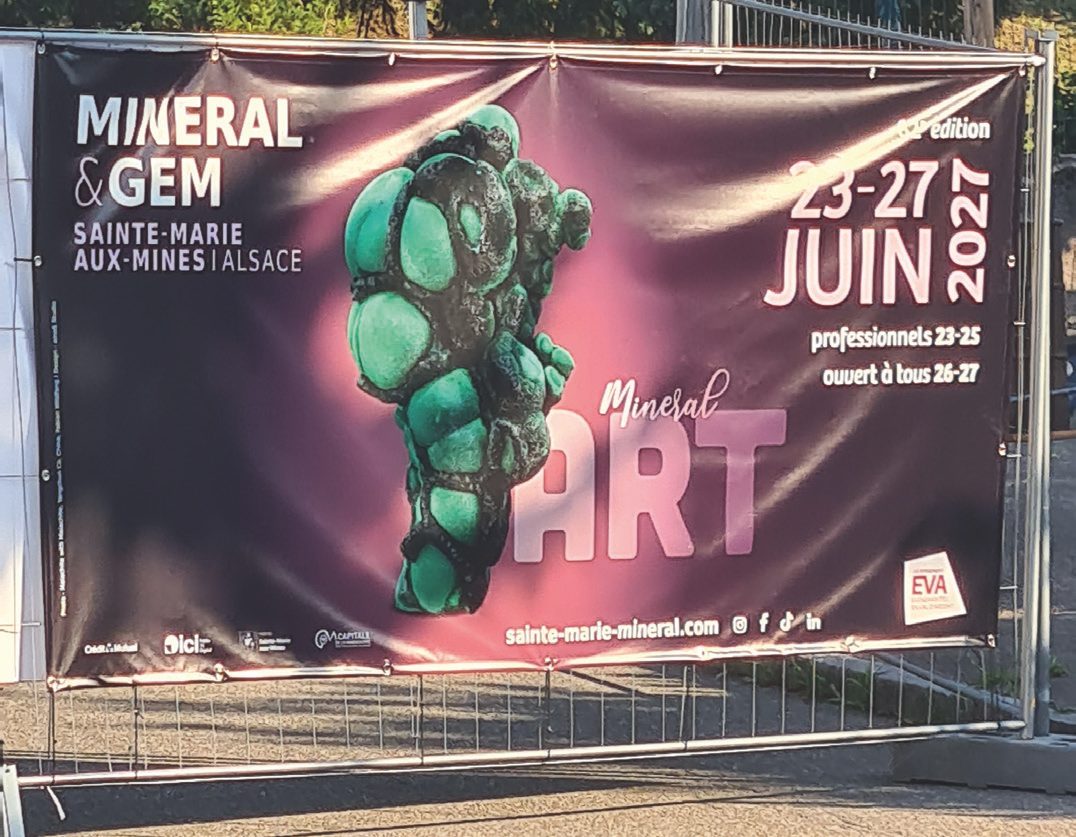
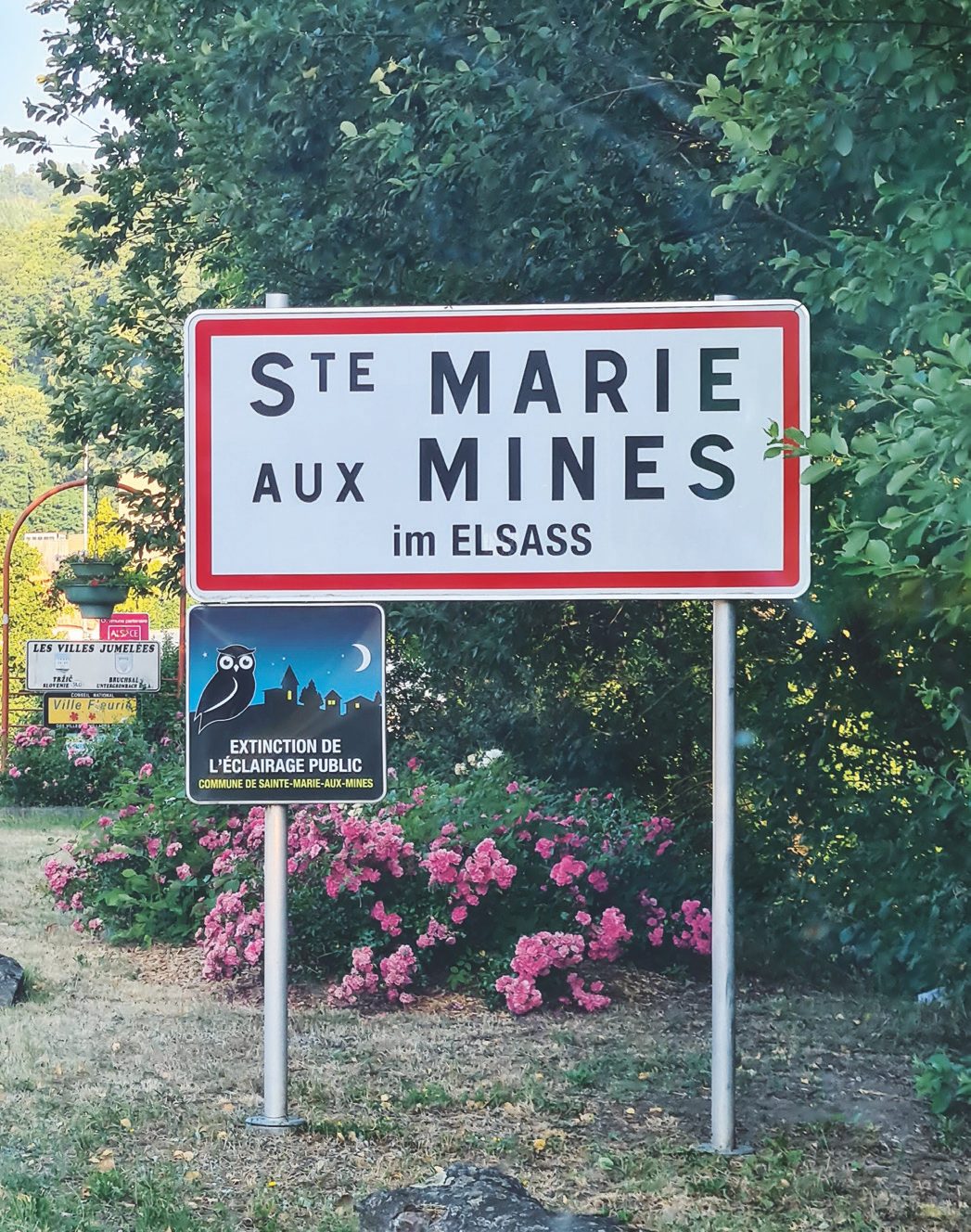
The "Edition 2026 du Salon International de Sainte-Marie-aux-Mines," commonly referred to as simply "Sainte-Marie-aux-Mines," is more than a simple show. It is a global meeting place, where the gem trade comes together to celebrate a shared passion for gems and minerals. Second only to the Tucson event, thousands of visitors travel to this small town of 5000 people, located in the Vosges mountains of the Alsace Region, once known for its medieval silver mining and heritage. Held from June 24-28, the theme of the 61st edition was "Nuances de Fer" (Shades of Iron).
A Bit of History
Archaeologists believe that the first mining attempts in this region date back to the Iron Age. In the 10th century, taxes on mainly silver ore were well documented. The 16th century marked the golden age of the area, or perhaps better described as the silver age, as this was the begining of the silver rush, mostly made up of German miners, and about 500 active mines were reported. In 1900, the population peak was 12,372.
The 2026 Show
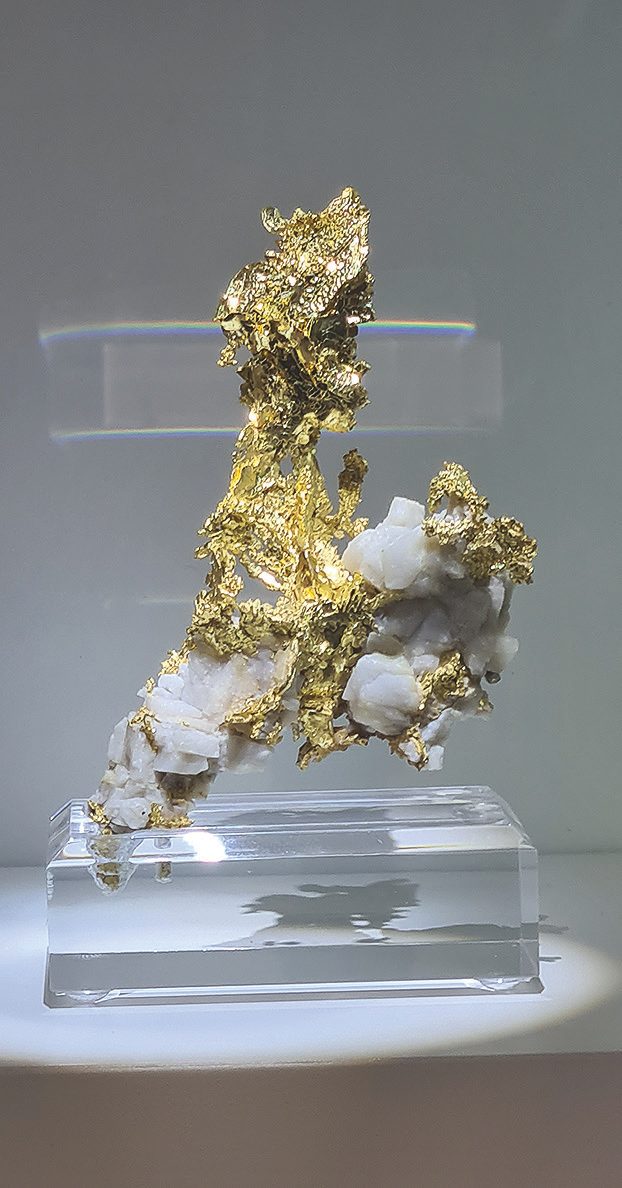
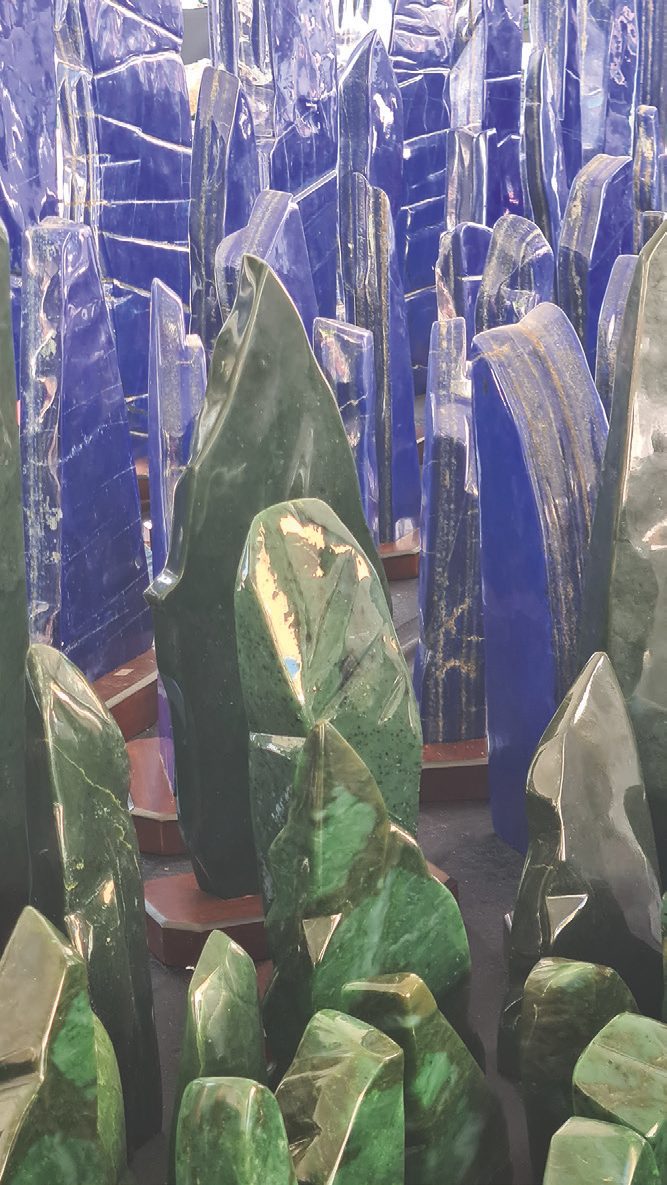
This year's event welcomed around 30,000 to 40,000 visitors who came to see the products of more than 1000 exhibitors from 58 countries. Held over 170,000 square feet, the small town turned into one gigantic show area. Booths were set up in local schools, in the streets, in the local theatre, and even alongside the swimming pool. The event was divided into two zones: Mineral Zone with about 700 exhibitors and Gem Zone with about 300 exhibitors, and also included free conferences. The faceted gemstone area was mostly merchandise from India. Prices, compared to last year, seemed stable, probably due to the competition. With hard bargaining, however, it was possible to get good prices.
In 1962, local historian François Lehmann organized a small Mine Day for a technical club to revive and celebrate the town's mining heritage. This evolved into the first mineral show in 1965 and ultimately led to the world-renowned Mineral & Gem event.
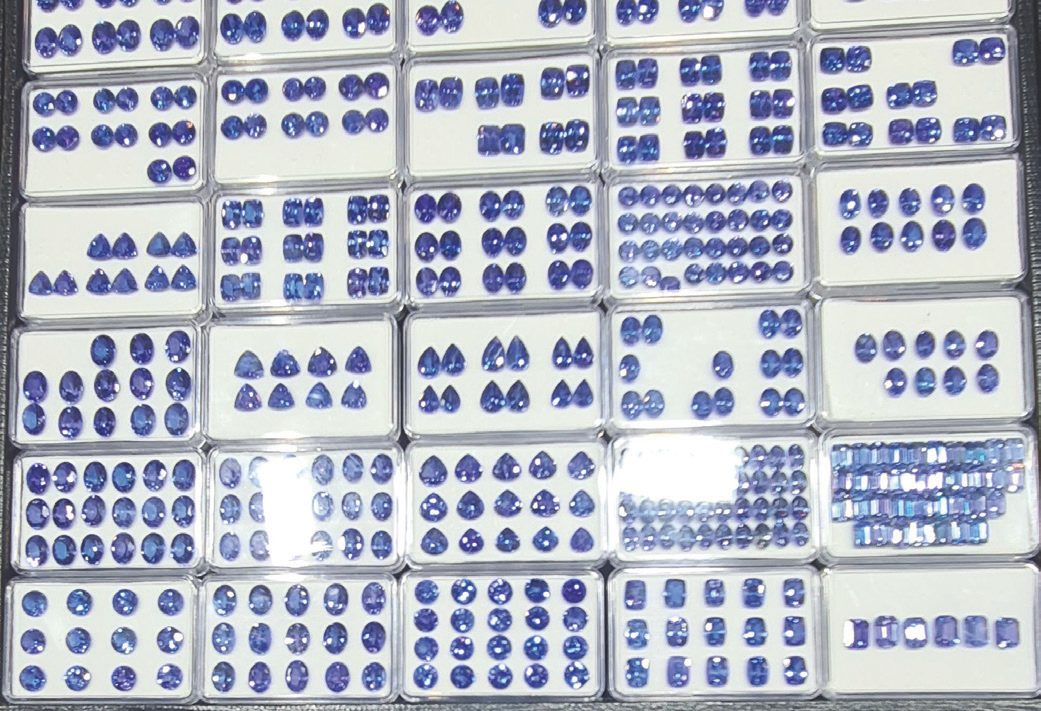
Tanzanite, heated and unheated, was still going strong, as seen at the booths of Paris Precious and Himayat Gems from Jaipur. I also saw some rough Greenland rubies. Denis Gravier, the sphalerite king, carried a lot of Spanish cut sphalerites, while a large selection of Sri Lankan sapphire crystals were available.
Many dealers offered amethyst and citrine, large and clean stones, but, in my opinion, they were mostly hydrothermal manufactured quartz from Russia. Fine natural stones over 20 carats, with best color for €5 per carat doesn't seem possible. It is definitely a case of buyer beware! For assurance that they are natural stones would require sophisticated lab testing.
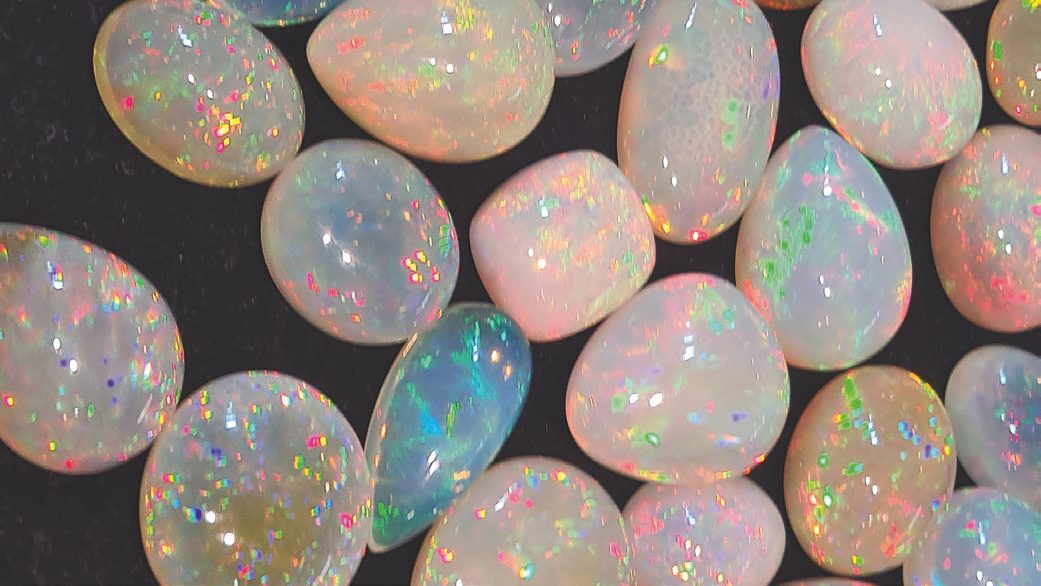
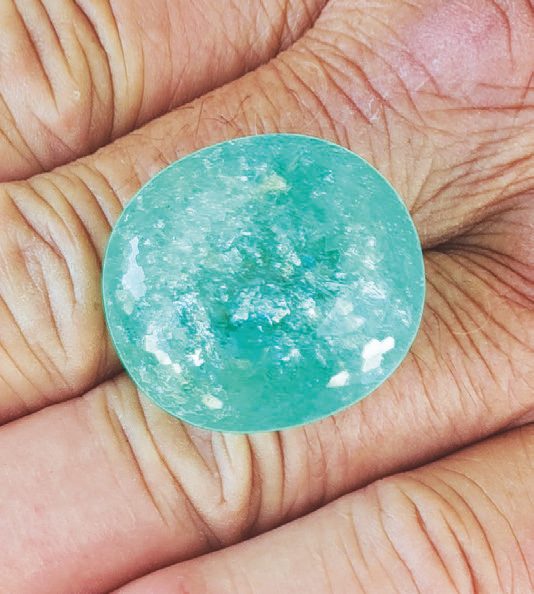
Larimar (pectolite) was offered by a Madagascan company and by the popular German dealer Marco Schreier. Opals were also strong this year. I counted at least six opal dealers. Untreated Welo opals from Ethiopia in good qualities started at a few euros a carat.
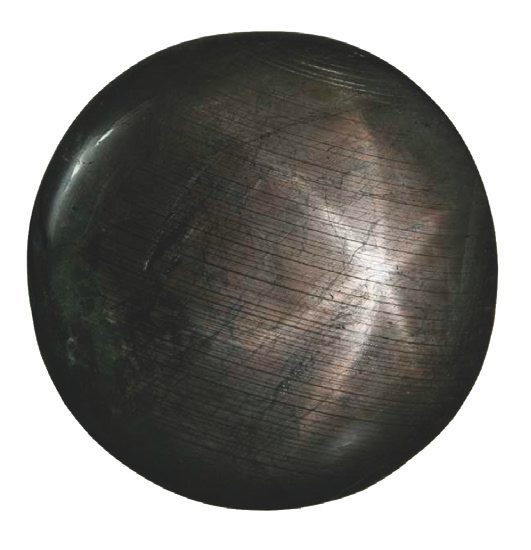
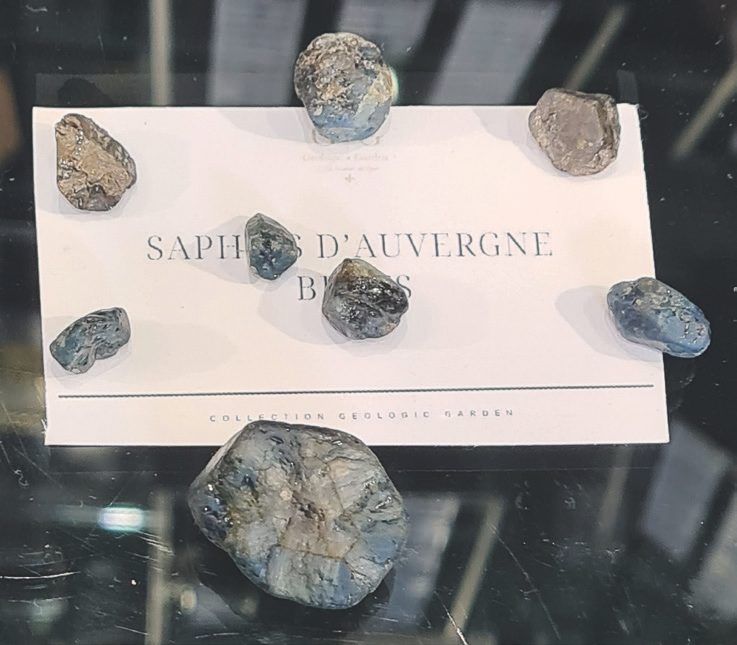
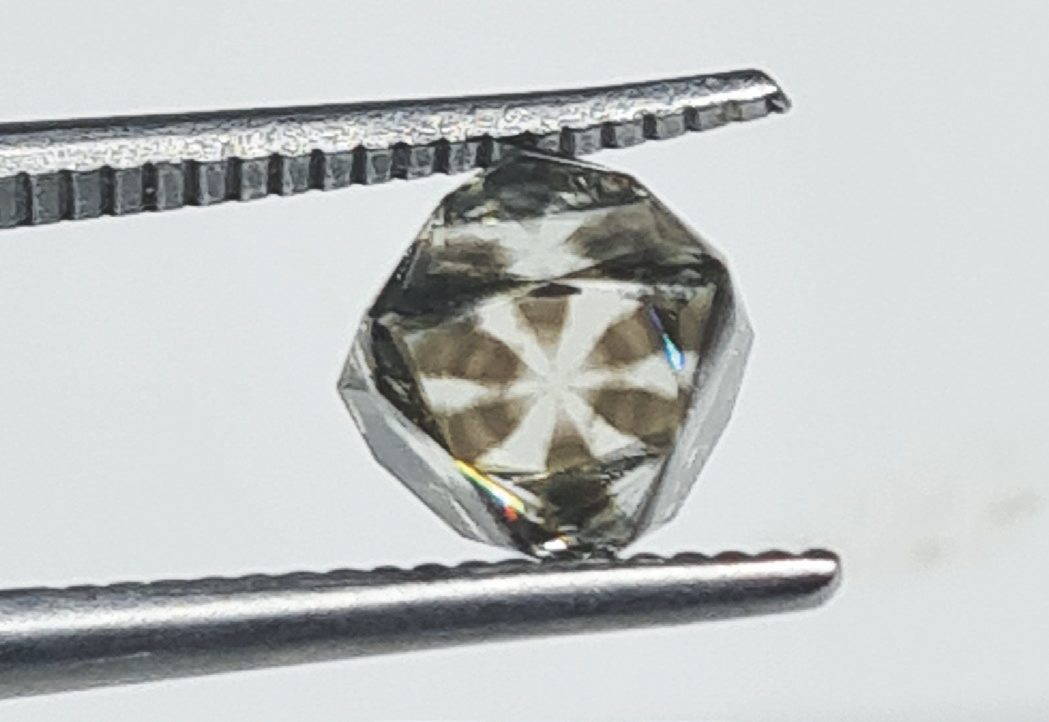
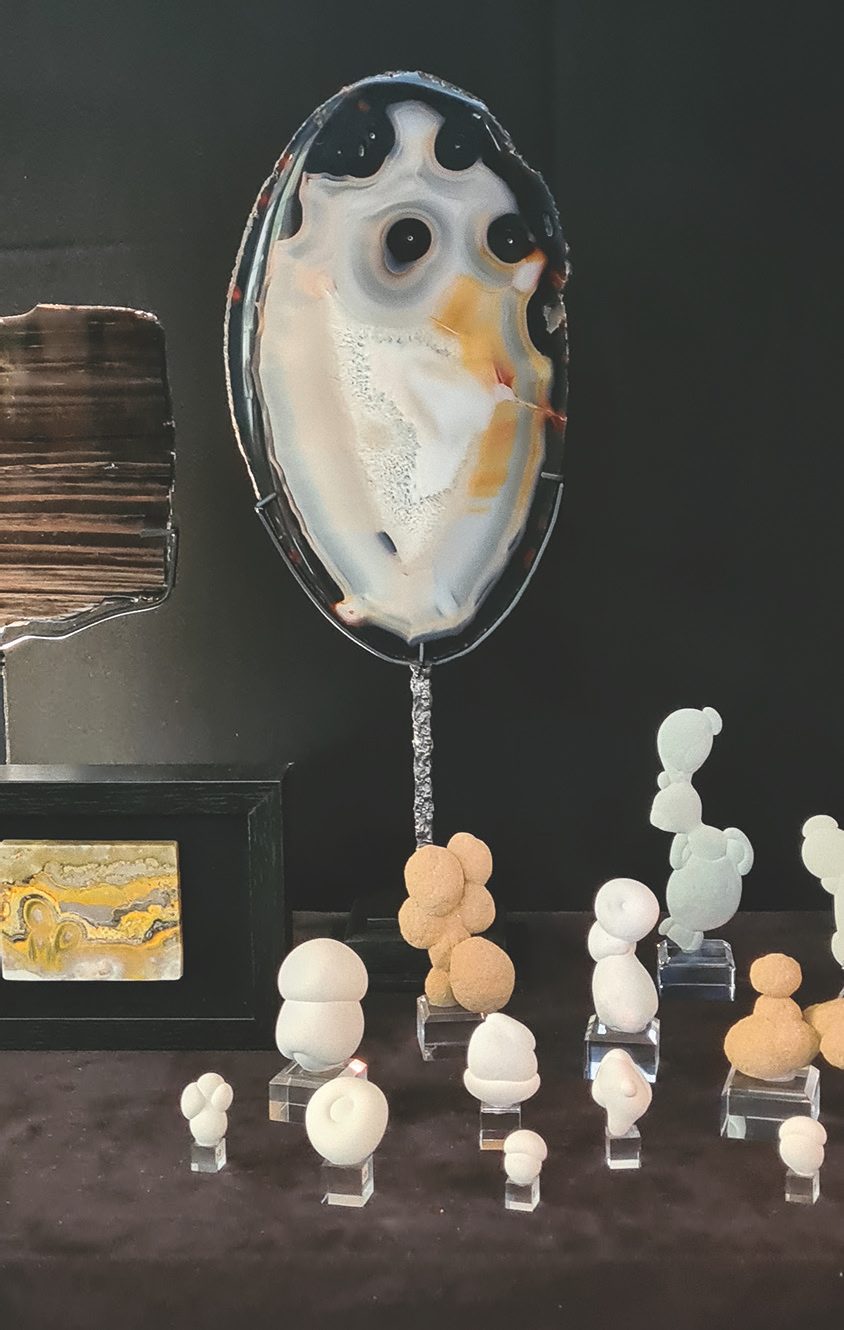
Tourmaline was offered in all cuts, forms, and shapes, as well as in pairs, sets, carved—all typical of Jaipur work. Emeralds were plenty, cut and in beautiful matrix. Natural diamonds were a good buy these days because of their price drop. I also saw some nice fluorite, as well as some trapiche gems, and even some star sapphires from Auvergne (France).
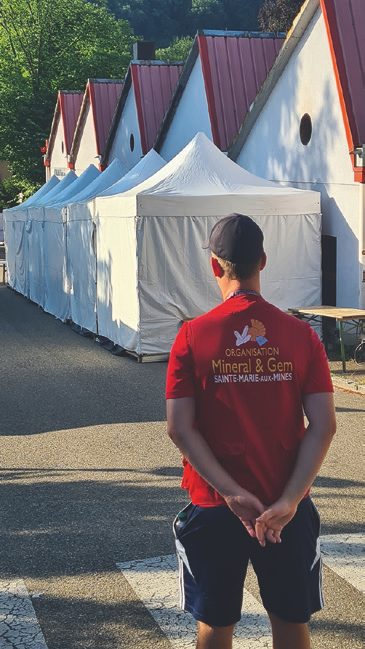
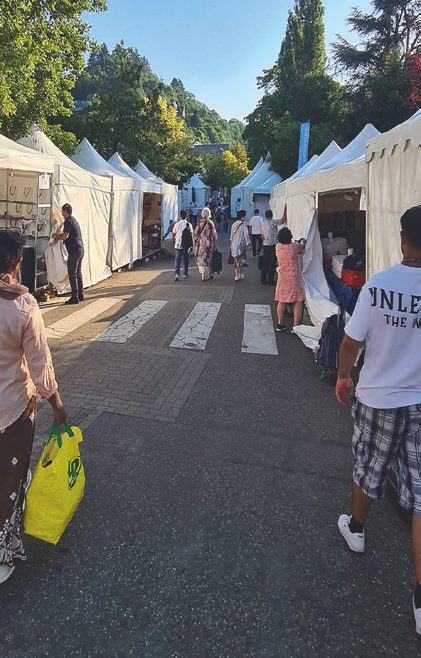
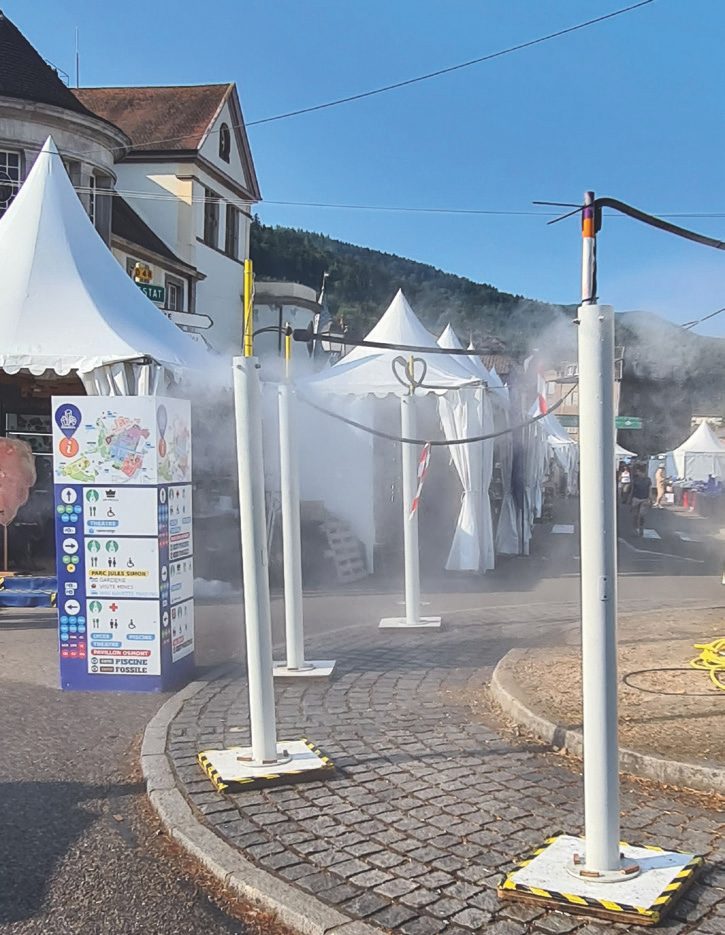
And yes, like the rest of Europe and other places, it was so very HOT this year—blue sky, no clouds, and the sun blazed without mercy.
In the Salle Prestige, huge fans were installed to cool down exhibitors and guests. As you might imagine, the weather was the Number One topic at the show this year. Watering poles and fountains were set up to refill water bottles while misters spread refreshing showers around the booths. All because of climate change.
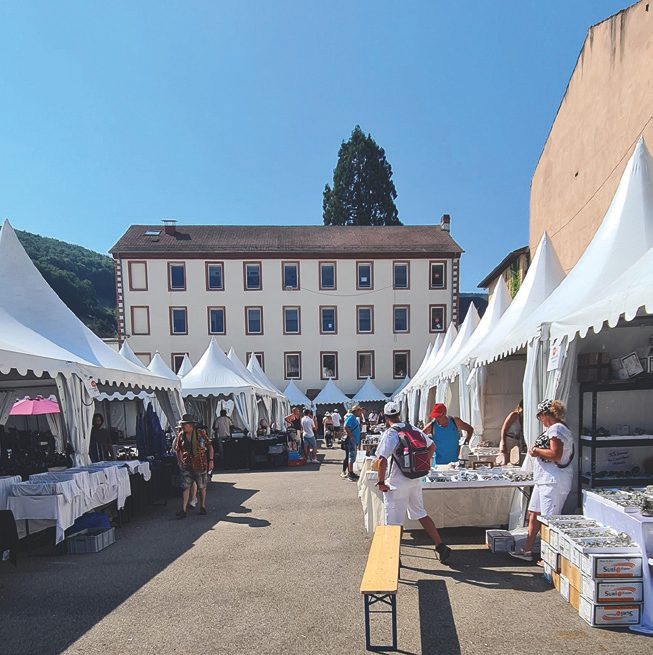
To understand what exhibitors thought of the show, I spoke with several colleagues.
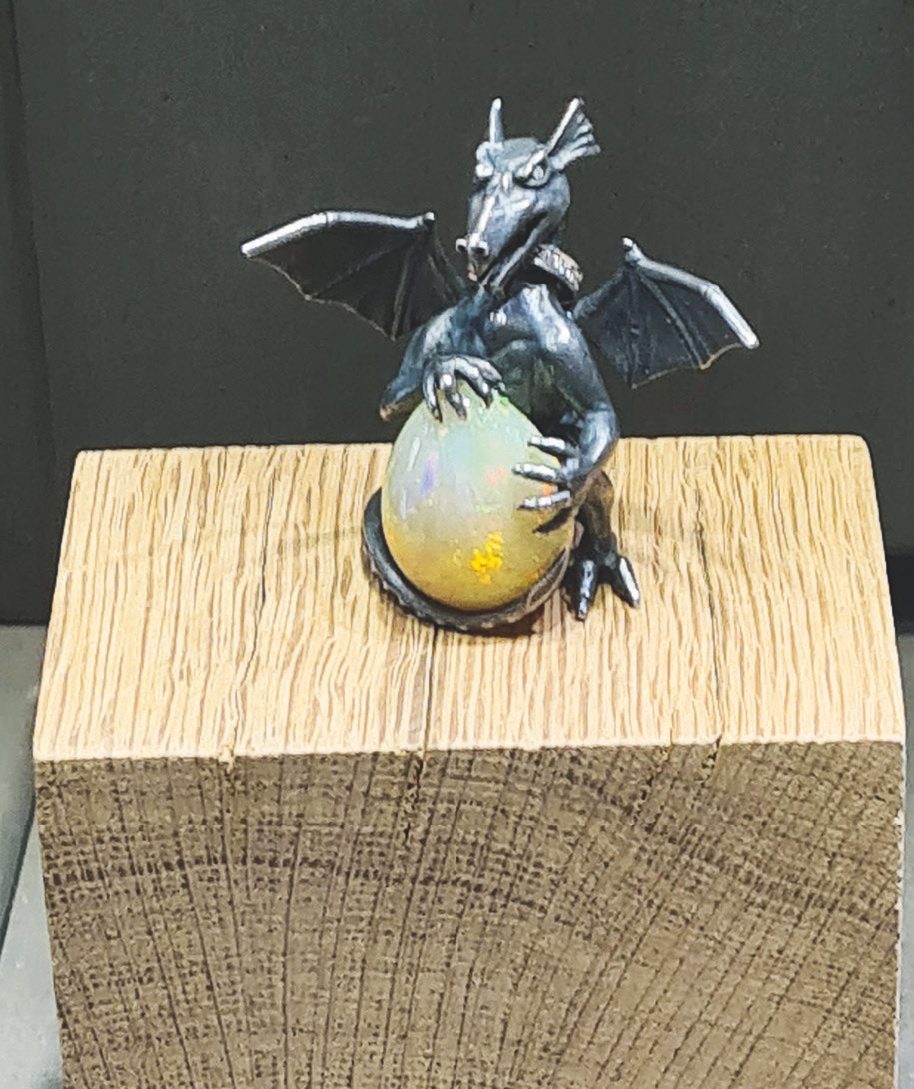
Harald Mühlinghaus, of Opal Imperium, who has been exhibiting at the show for 35 years, stated that this year's sales were similar to 2025, but that he missed some regular customers. For him, the unique atmosphere, the particular charm, and the fact that buyers from all over the world come here make the Ste Marie show special. He offered the whole range of Australian opals and even mined himself for a couple of years. His favorites are opal fossils, with prices ranging up to US$ 40,000 per piece.
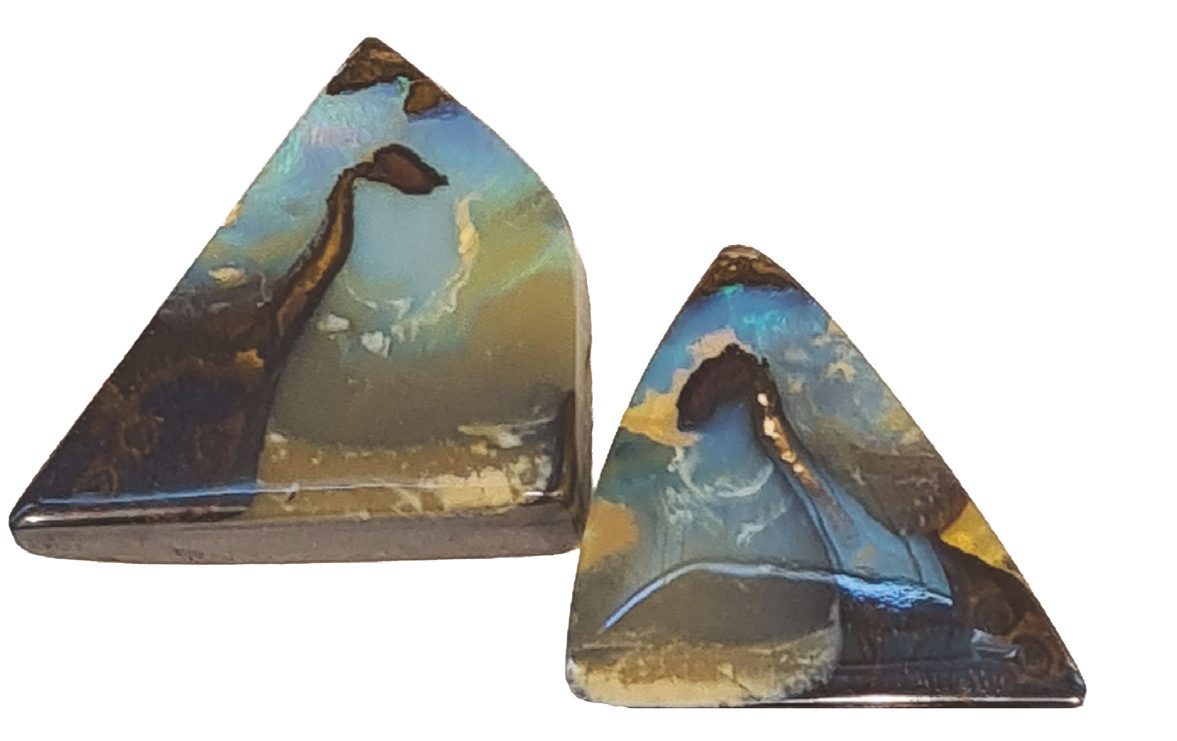
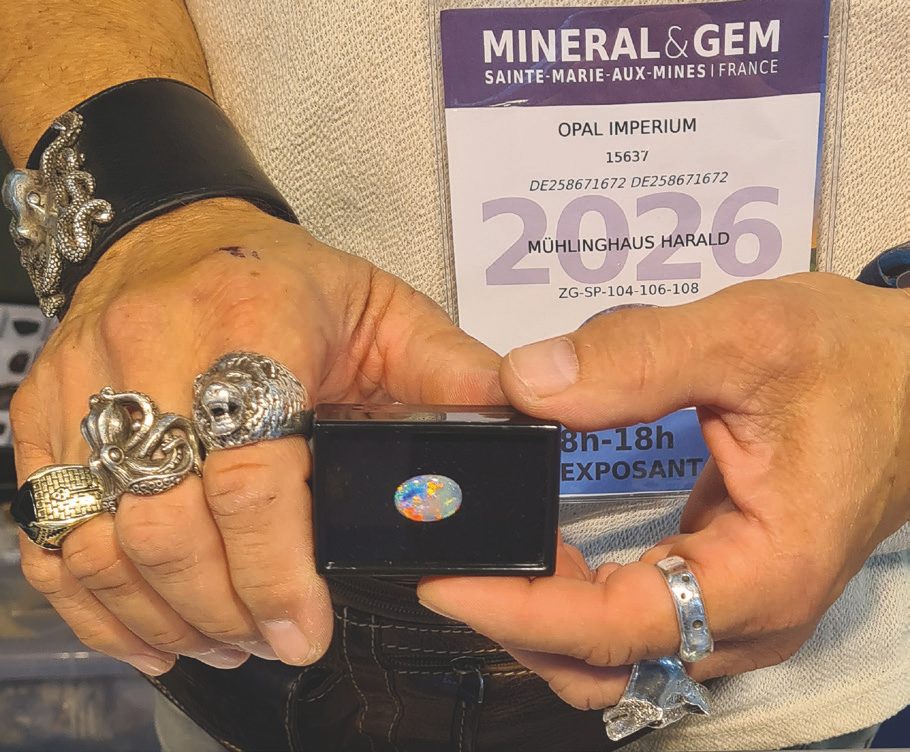
Private collection of Harald Mühlinghaus.
Mr. Sabry Lafir, whose company The Choice deals in rare gem from Sri Lanka, has been exhibiting at the show for 20 years. He calls it a Mini Tucson in Europe, adding that the enviroment creates a good atmosphere. His specialties are collector pieces, sapphire cuts and crystals and rare phenomenal gems. He commented that for the 2027 edition, the show needs to have more shade for people walking around and improvements in the cooling situation, saying that "for the last 20 years, it has been getting hotter every year, and might even get worse next year with continued climate change." Mr. Hayaa, of Hayaa Gems, a diamond dealer from Hamburg, Germany, has been coming to the show for the last 10 years, and enjoys the beautiful area. His diamonds are cut in Surat, India, in a factory that he partners with. He said sales were slow but still ok.
Mr. Axel Kalb, from Kalbath Gems, a colored stone specialist, has had a booth for the last five years. He appreciates it because it is a meeting point of the whole world—not a sterile exhibiton hall, but in a wonderful historic mining village, where people not only buy and sell but exchange ideas and experiences. He noted that sales were stable, and that he will come back every year.
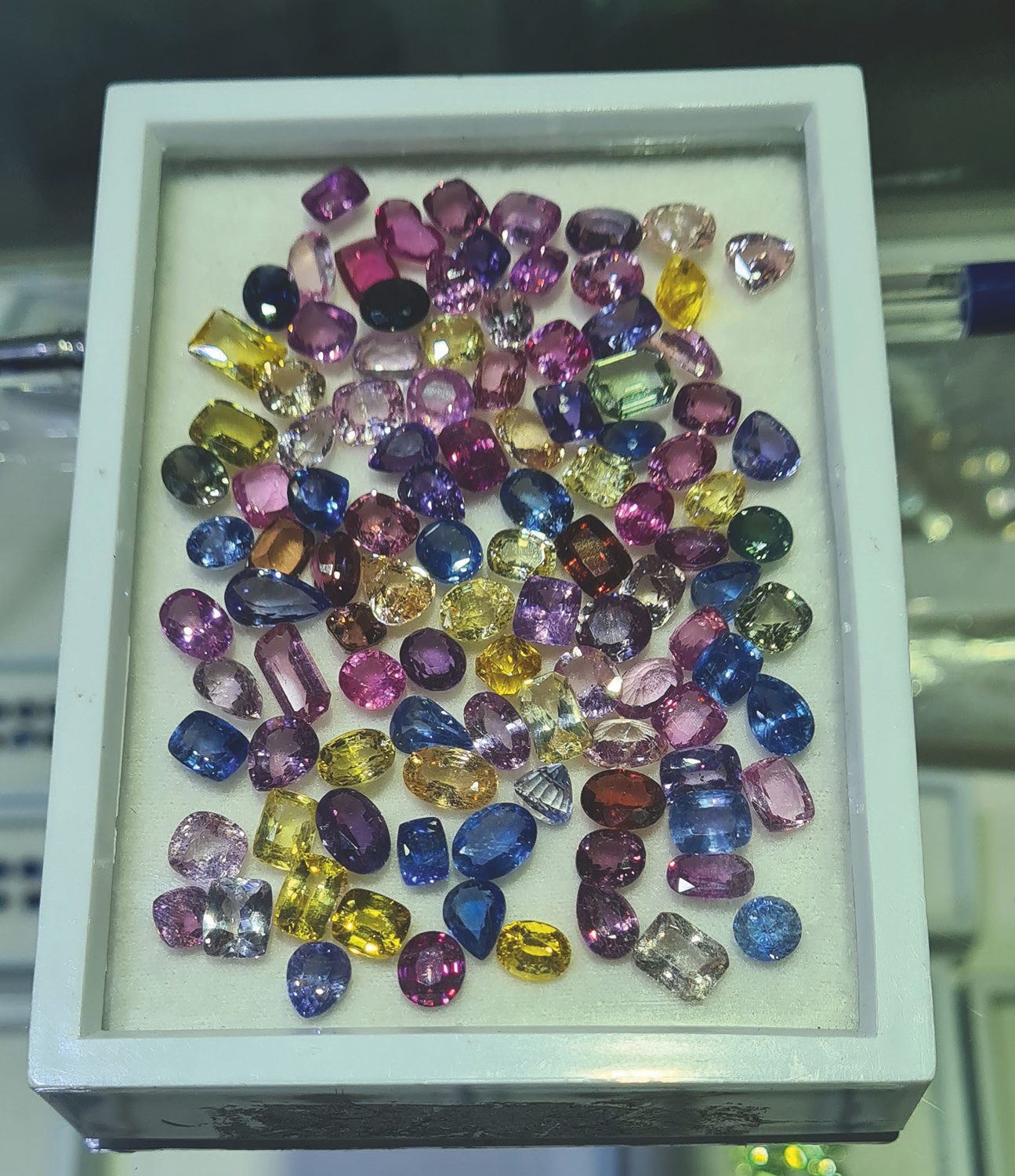
I spoke with Mr. Kapil Muni Sharma, of Payoja Gems International, an Indian carving dealer (with Hindi music in the background) and learned that his small to medium to (very) big carvings are all handcarved in Jaipur. Shiva and Ganesha are his best selling figurines. Because of the hot weather, he suggested to the show organizers that they shift the fair from June to May. He was the second dealer who mentioned this to me.
Like in prior years, exhibitors and visitors had the possibility, for a small fee, to get their gems tested by the LFG. And, for the first ime, the scientific institutions of LFG (Laboratoire Français de Gemmologie), formed in 1929, and AFG (L´Association Française de Gemmologie), formed in 1961, exhibited together in one tent. Aurelien Delaunay, Director of LFG, and his team tested quite a lot of gems and some treated minerals.
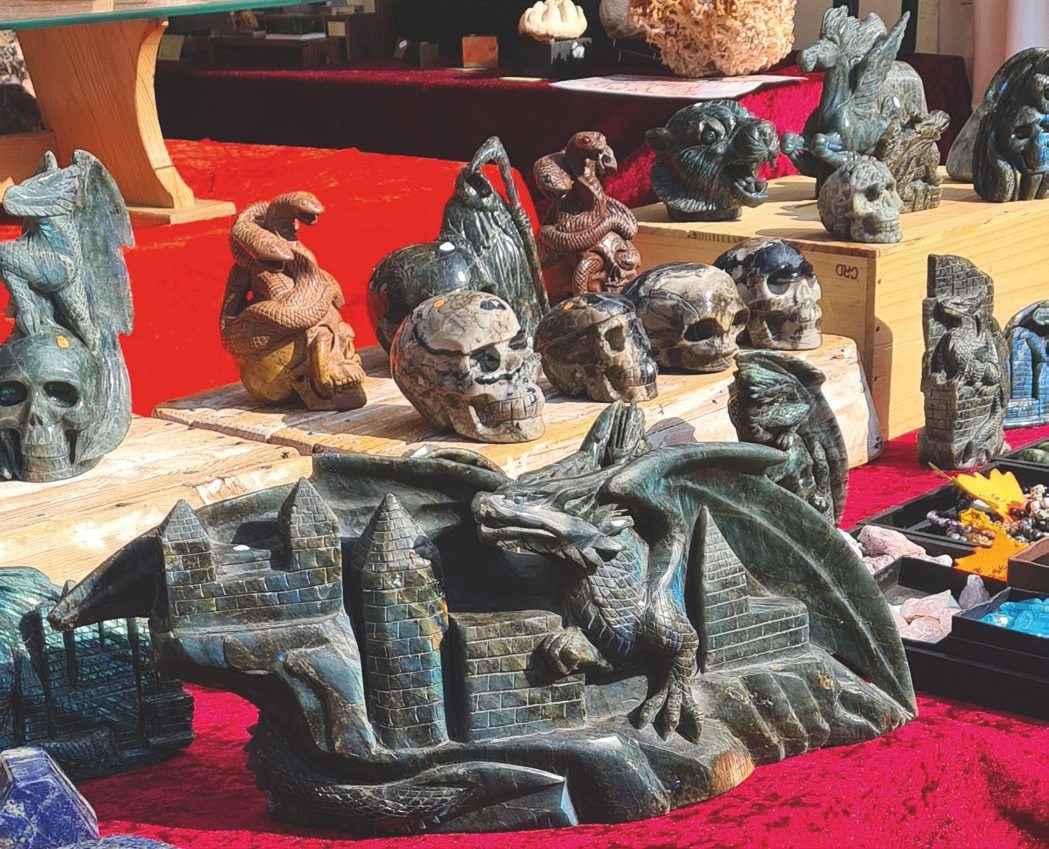
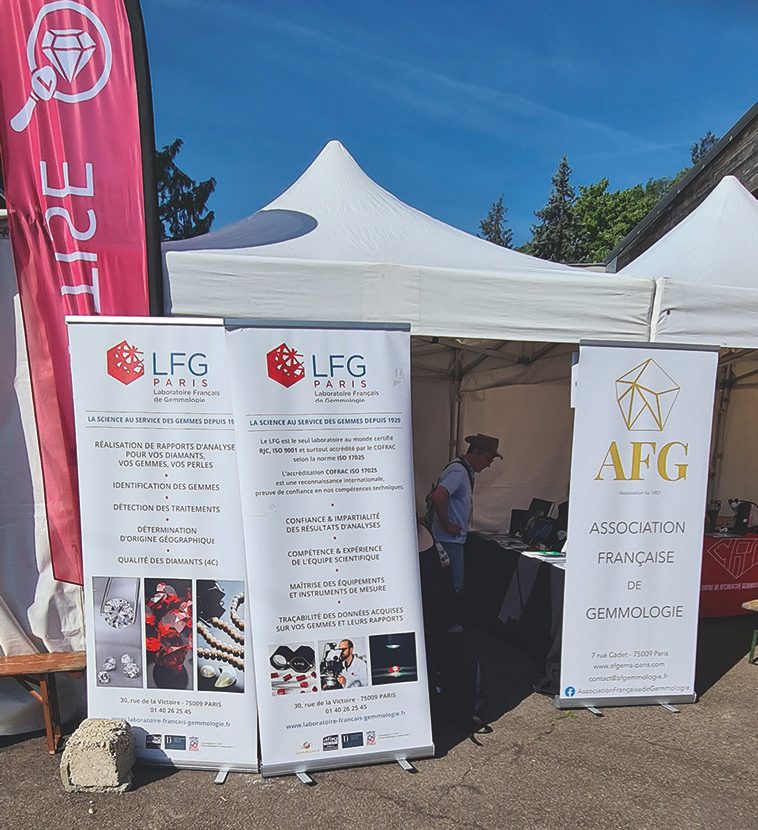
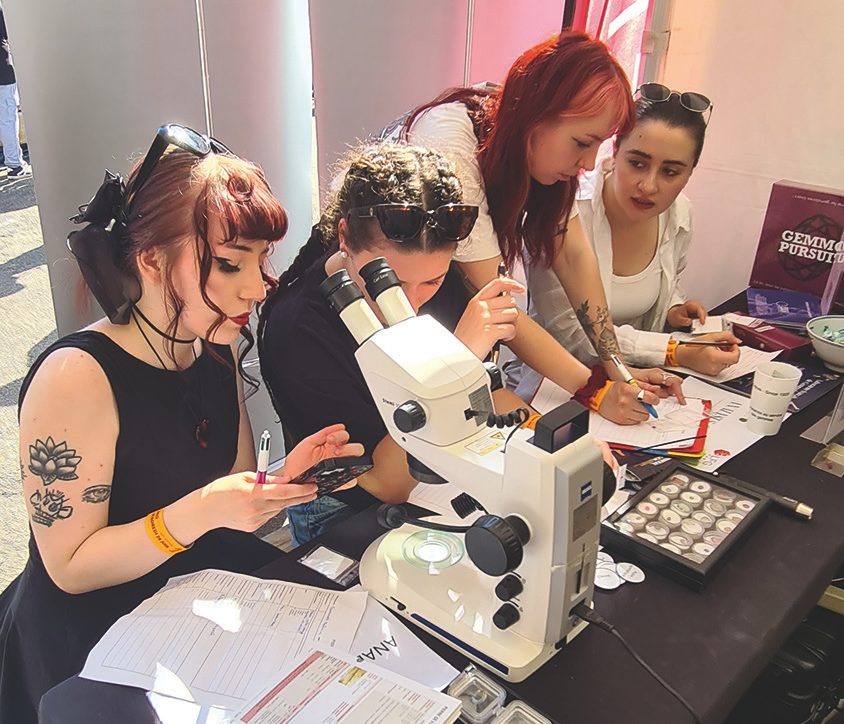
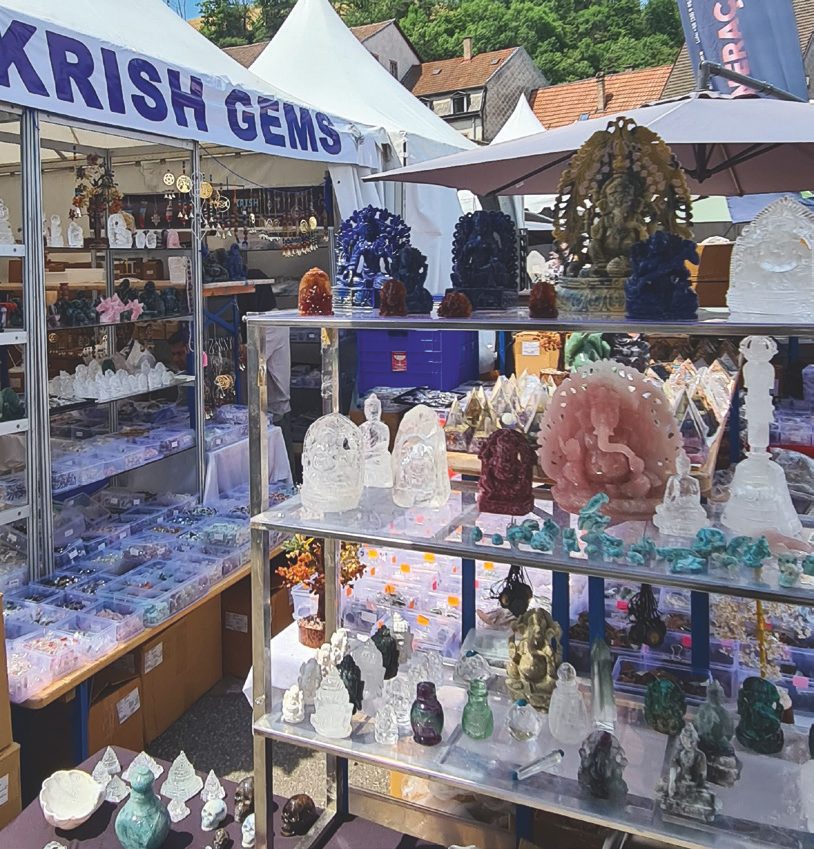
Right: Carvings from Jaipur, from Indian Krish Gems.
In the jewelry area, Parisian designer Muriel Beigbeder has been exibiting at the show for 10 years. This year, she stated that visitors were fewer because the French authorities had predicted the weather would "be too hot," so many people stayed home. Still, she had some great customers and good talks. Her specialty is "creating something special, something other jewelers don´t do."
German exhibitor, Konstantin Stavridis, whose brand Pink City from Berlin, manufactures silver jewelry for wholesale in his own factory in Jaipur and has been exhibiting at the show for the last 20 years. He describes Ste Marie as the only European open-air fair, with a touch of a folk festival. "You have plenty of time to sit down and discuss with a potential customer," he says, adding, "The disadvantage is the total dependency on the weather." At the 2026 show, he had fewer customers but sales were similar to 2025.
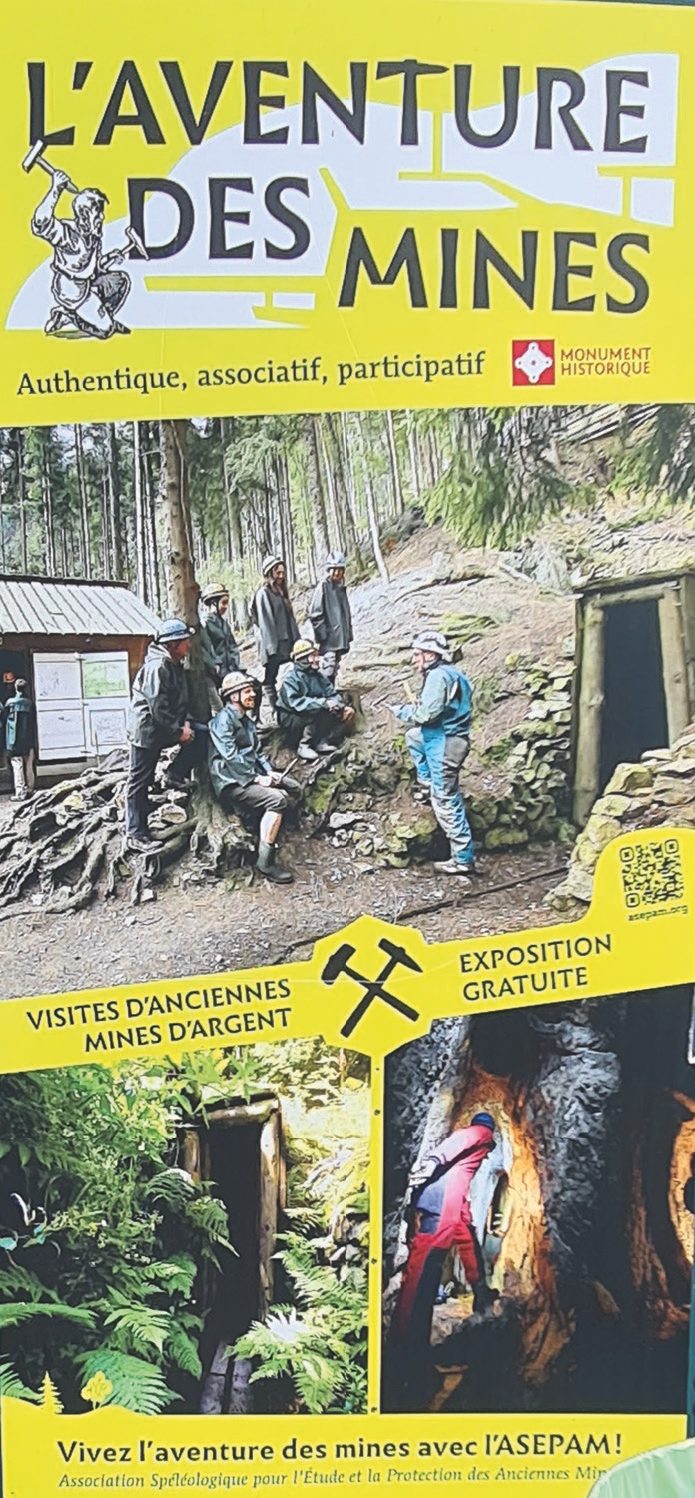
The local organizers offered visitors the opportunity to visit the "Gabe Gottes Mine," a silver and arsenic ore mine in the valley of Rauenthal that has operated since the 11th century. Also included on the tour was the "Saint-Louis Mine," a completely preserved silver mine that dates back to 1549.
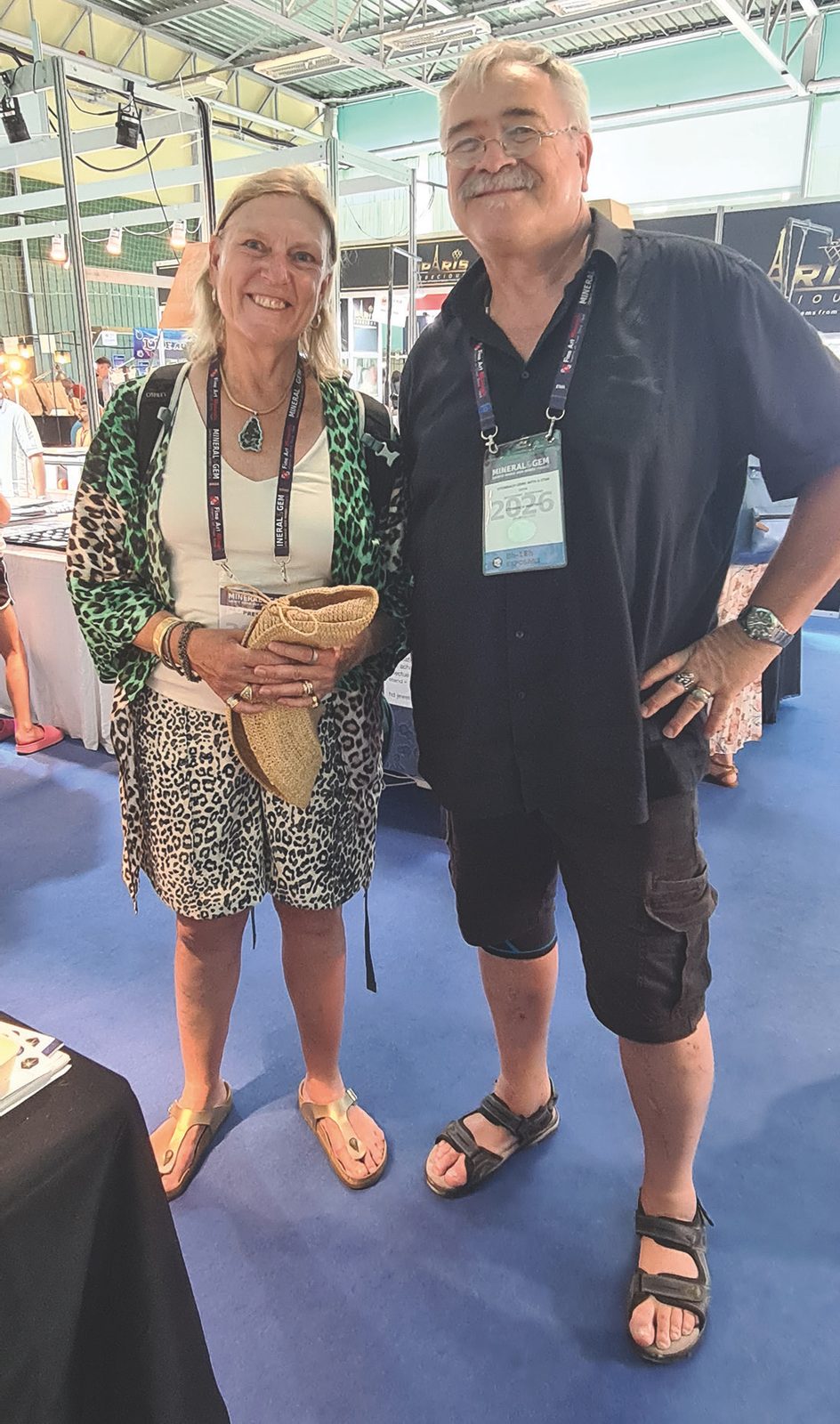
Like every year, there were too many things to see, too much of everything. You need time and good physical condition. I remember well, when hunting my star gems for the last 30 years, the show was exciting but also very exhausting. This event is a paradise for buyers, although it did not seem this year that it was necessarily one for sellers, given the high level of competition. The times also now seem to be a bit bleak for business given the global crises and economic conditions. We all hope for a better edition in 2027.
About the Author
Martin P. Steinbach AG, FGG, ASG has authored two books on star gemstones: Asterism ‒ Gems with a Star and Stargems ‒ A Fascinating World. After 40 years of collecting, he is now selling his private collection, one of the largest and most complete star gem collections in the world. It comprises 1204 single stars, from A to Z (Star Almandine to Star Zircon), and ranges from commercial stars such as star sapphires to rare and one-of-a-kind stars, including many museum pieces, for a total weight of about 37 kg. For enquiries, please contact: gstargems@aol.com or call mobile/whatsapp at +49.172.6856042.