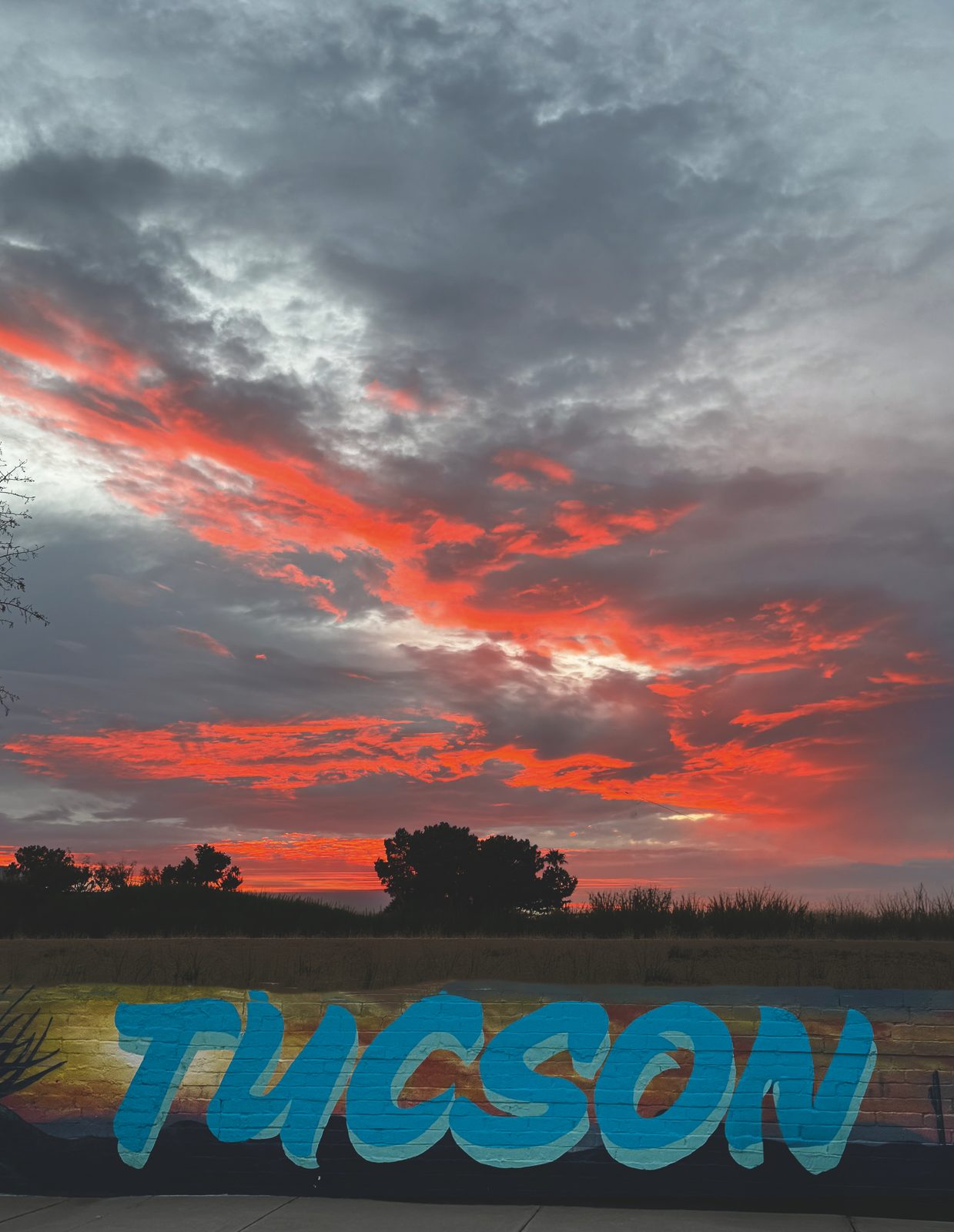
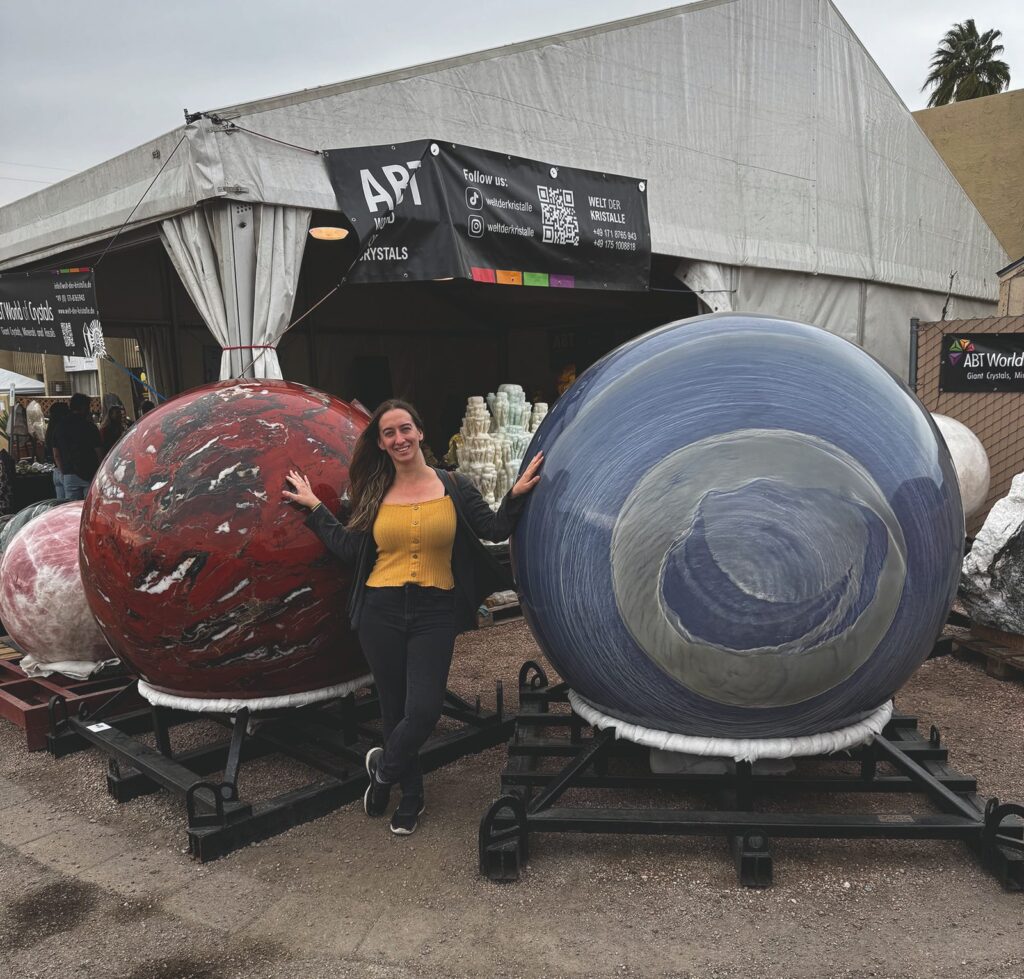
Gemstones, rocks, fossils, beads, lapidary supplies, mining equipment—basically anything related to the gem world can be found in Tucson. It is also one of the best places in the world to secure good deals on nearly anything you would like to buy or source.
Since entering the gemology and jewelry business, I held one certainty: I viewed the Tucson Gem Show as an immovable, timeless event where, year after year, the same shows featured, for the most part, the same vendors, each bringing new and exciting products to market. Shows such as AGTA, GJX, Hotel Tucson City Center, Pueblo, 22nd Street, JOGS, Holidome, Mineral City, and many others felt like permanent fixtures that would always exist.
And they still do… in part.
Happening once a year, usually in late January to mid-February, the Tucson Gem Show is actually made up of more than 50 distinct gem, mineral, fossil, and jewelry shows scattered throughout the small Arizona city of Tucson. People from across the globe gather there to buy and sell as well as to socialize with colleagues, attend important conferences, and meet amazing professionals from every corner of the gem and jewelry industry. (Trade secret: it’s also a great place to party with friends.)
“Foreigners”
Over the past few years, however, the planet has experienced rapid changes: pandemics, soaring prices, price drops, fluctuating supply chains, tense political climates, and, this past year, the institution of tariffs. Against this backdrop, some shows in Tucson have changed, vendors have disappeared, and new ones have emerged to replace them. Other shows no longer exist, while new tentative ones have started up.
Tucson is a condensed reflection of our industry. Shifts in the market are deeply felt there, sometimes hidden behind polite smiles that mask harsher realities. Over the last ten years of writing about gems, I have strived to present both the positive and the negative aspects of what I see at the gem shows. I thought for hours on the direction I wanted this article to take, and I think truthfulness is very important. So, when I returned from Tucson and curious colleagues asked how the show was, I found myself coming up with only one word: Weird.

As a Canadian—and like many of my fellow “foreign” colleagues—I was apprehensive about what to expect this year. It’s certainly no secret that the relationship of the United States with countries around the world is very tense. Many of my colleagues outside of the USA chose not to attend this year, due both to uncertainty about the market and to their hesitation about the country itself. Although I have been an exhibitor at AGTA in Tucson for many years, this year, I attended only as an observer, approaching the event with an open mind, curious, and ready to see what lay ahead.
Attending Tucson effectively began even before boarding the plane in Canada. A statement from the Tucson Police Department announced that federal immigration enforcement operations were being conducted in the area. Questions quickly circulated about the presence of ICE and whether tourists should carry their passports at all times…just in case of being stopped and questioned.
Rumors quickly began to circulate that border officials might request access to social media accounts and/or phones upon entry. Thankfully, none of that happened to me or to others whom I know. Still, it left an uneasy and unwelcome feeling at the start of a show that I normally have always anticipated with the excitement of Christmas morning. The situation painted a worrisome backdrop.
The overseas visitors I met in Tucson had, for the most part, one thing in common: they all had offices and or companies in the United States, which helped make it easier to navigate transports, tariffs, accounts, and more. However, shows like AGTA decided that, for next year, they would only accept U.S.-based sellers, refusing even to let their Canadian members have the opportunity to exhibit. It would seem that this might make it difficult to attract new exhibitors to the show.
Prices
In general, there were no major surprises regarding surging prices in gold or gemstones. On the other hand, tariffs, as many had feared, created challenges for many buyers and vendors. But, tariffs aside—which some exhibitors stated were not a major obstacle for them— good deals could be found, although increasingly scarce if you did not know where to look or if you did not have established relationships with sellers.
These issues did not, however, deter everyone nor dampen the shows overall. Serious buyers were still lined up at the doors on opening day at the major shows. The first two days were busy, with many exhibitors reporting good to excellent sales. The remainder of the week saw fewer buyers with each passing day.
The vendors that did well stated that their buyers were more committed. They saw fewer browsers waiting to purchase later at the Las Vegas shows, or just casual window shoppers. At first glance, that might seem positive, even good news. But less enthusiastic buyers offered another perspective: it may also reflect greater caution, reduced willingness to experiment with new products, and a tendency to stick with familiar purchasing habits. Whether that represents a healthy trend for the industry in the long term remains to be seen.
Attempting to discuss these issues with American exhibitors directly proved somewhat delicate. Many were reluctant to speak openly, fearing conversations might become political in an already deeply divided environment. Most Americans I talked to (not wanting to be named) confessed to feeling divided about the current situation, while others painted themselves as prisoners of their own politics.
Even long-time friends lamented, “We just want to make jewelry and seek out gemstones.” For years, that was also my personal take, but I wonder if that is no longer a working model. Remaining neutral may be understandable in the current circumstances, but it may not be the best path forward if the goal is a stronger, more transparent industry.
It was quite clear that people were not forthcoming with their opinions. Rather, they were more inclined to say that nothing had changed, that all was good. But, if we want an industry based on trust and transparency, it must start at the root. Overseas vendors, from places like Madagascar, Thailand, France, and India, were more inclined to talk about the situation, and while some were quite positive, others had very few good words about the current climate.
The vendors with the most difficult situation regarding tariffs were those who brought goods into the country on a carnet, which meant they could show the products but not sell them directly to the buyers. Rather, they had to re-export their goods and then send them to the buyers, who would then have to pay the tariffs. For several American exhibitors, they stated that they simply paid the tariffs directly, and thus were allowed to sell and deliver the goods during the shows.
Attending this show as an exhibitor required both perseverance and hope to make it worthwhile. Missing booths were replaced by new ones, creating a false sense that everyone was there as usual—that nothing was amiss. Yet, some booths were simply left empty for reasons we can only speculate about. The AGTA show had only one vendor that was not U.S.-based, and that vendor was not there. It made me question what I had always thought—that the Tucson Gem Show was all about international transactions and relationships.
With the recent Supreme Court ruling in the United States determining the tariffs to be illegal, and then the administration’s re-institution of blanket 15% tariffs, the situation may take a while before it resumes some sense of normalcy.
Interesting Finds
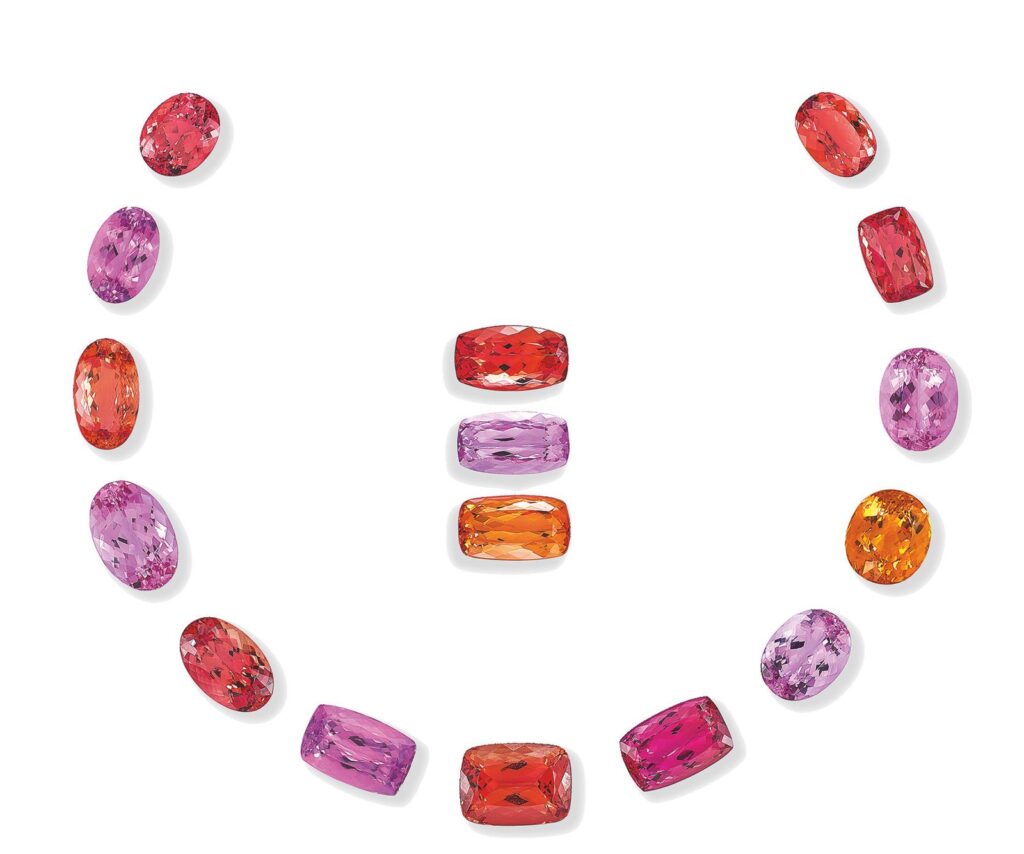
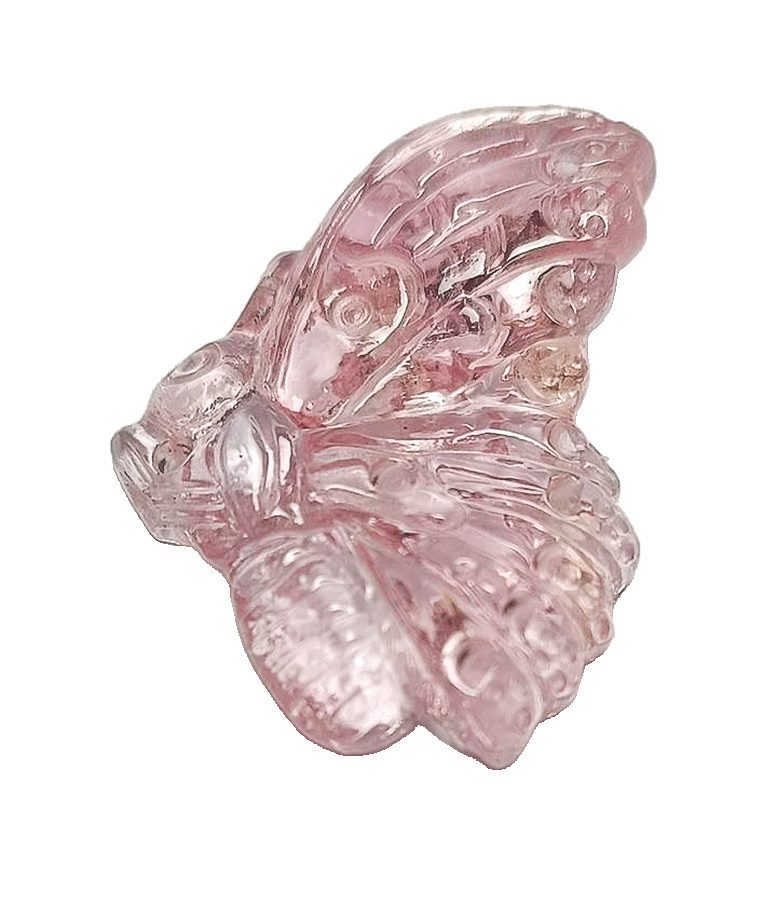
Every year, Tucson holds many interesting finds, and this year was no exception. From small treasures to larger discoveries, to mystery rough gems, to new treatments, to rainbows of color, there was something for everyone.
One of the more interesting finds was in Pueblo at the Chasing Gems booth. They always have amazing materials from Brazil and elsewhere, and they always greet you with passion and a smile.
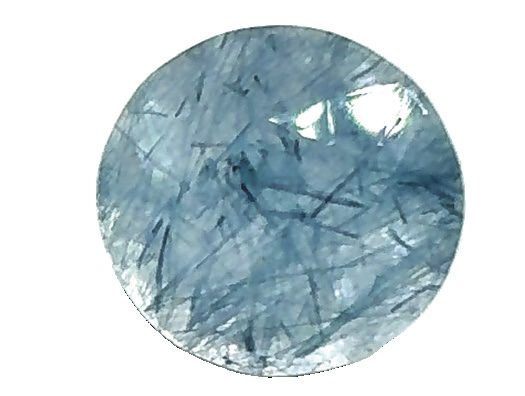
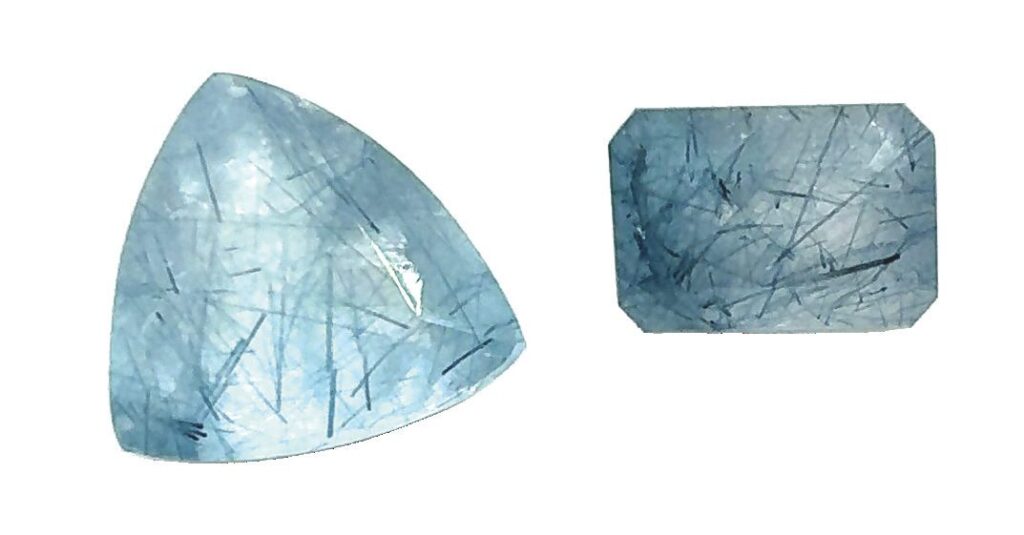
One thing that caught my attention were some very nice indicolite-included quartz samples. Normally, we see either rutile needles or black tourmaline in quartz, but their stones had blue tourmaline needles in it!
At another booth, I was intrigued to see glass-filled aquamarine rough on display that was marked as “not treated.” Normally, we would see these gems already cut, and the blue color would make it very difficult for the untrained eye to see the lead glass in the gem. It’s not a very common treatment for this gem but here it was out in the open.
Anyone wanting to see strange, rare, and crazy experiments, fun synthetics, and the highest quality of synthetic rough, the Gems of Science booth was a nice stop at the 22nd Street gem show.
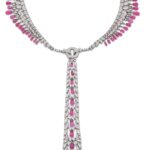
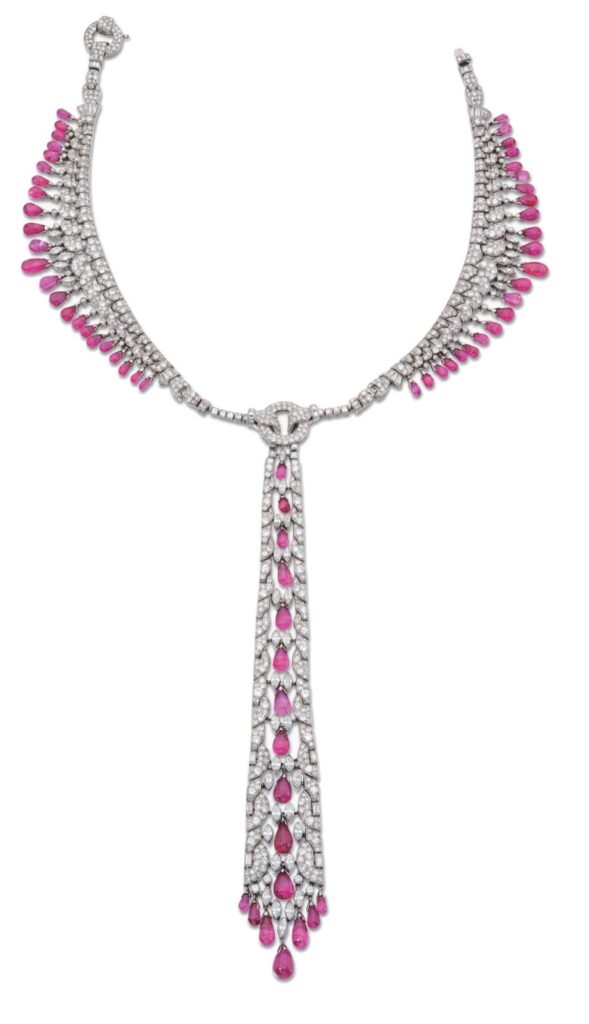
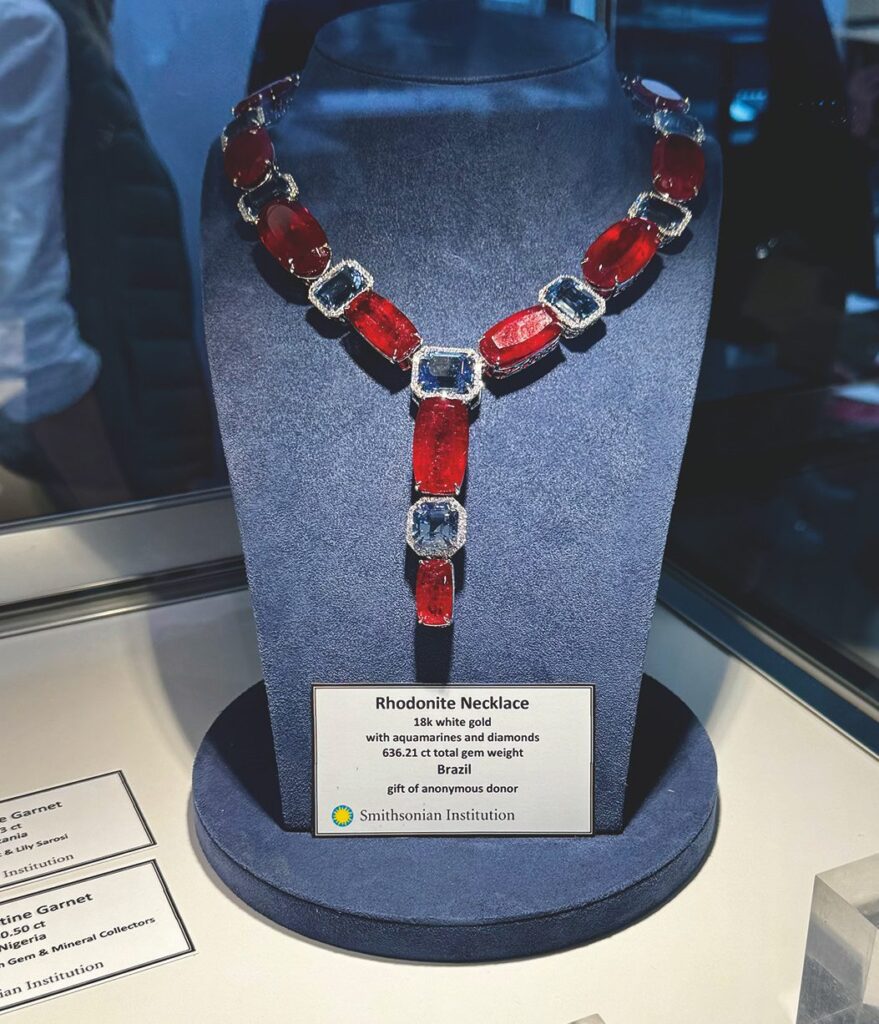
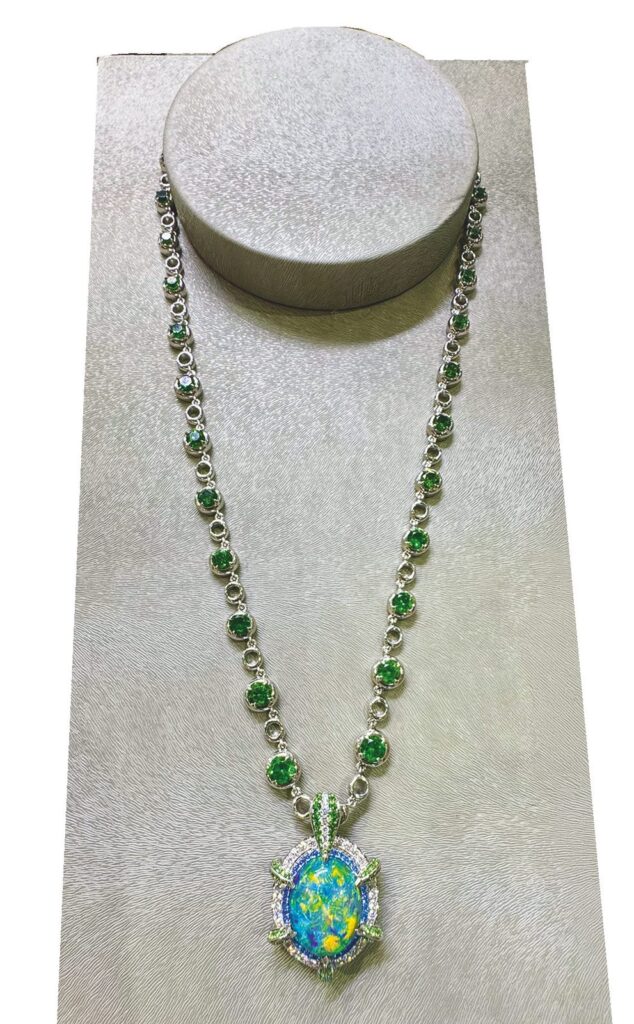
My favorite showstopper this year was an amazing necklace with Australian black opal, sapphires, tsavorite garnets, diamonds, and demantoid garnets from Omi Privé, exhibiting at AGTA. Also at AGTA, the Smithsonian booth was, as always, delightful with the extraordinary jewelry and carvings on display.
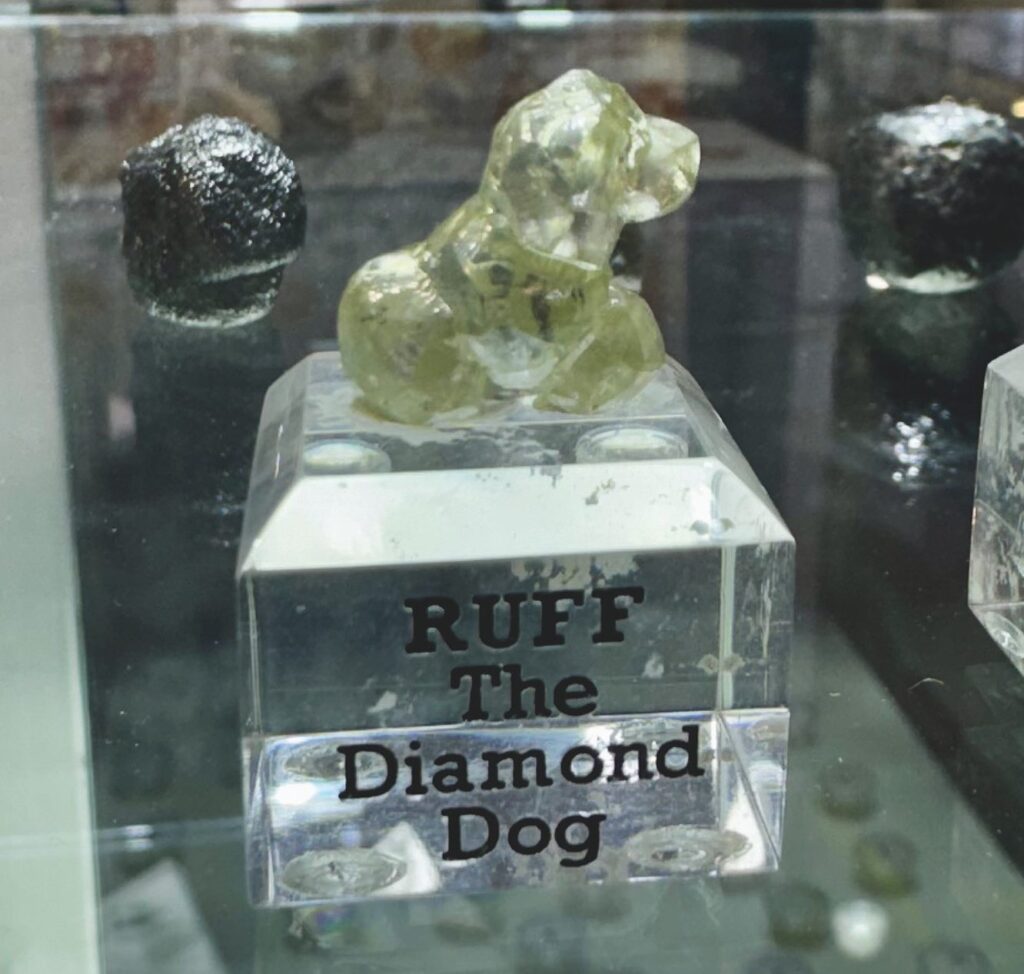
My favorite original gem was a rough diamond at the GJX show, in the natural shape of a sitting dog from RDW’s booth. GJX offered a panoply of other fine gems and jewels, with many dealers expressing their satisfaction with the turnout.
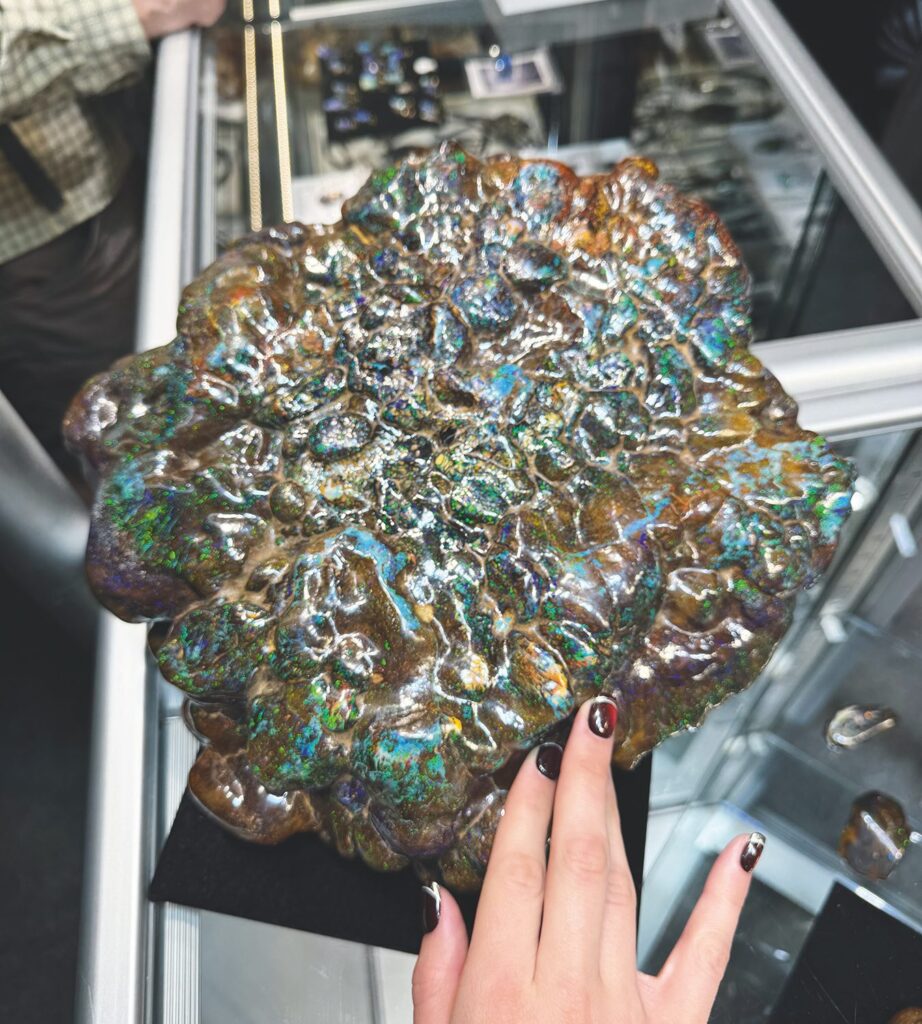
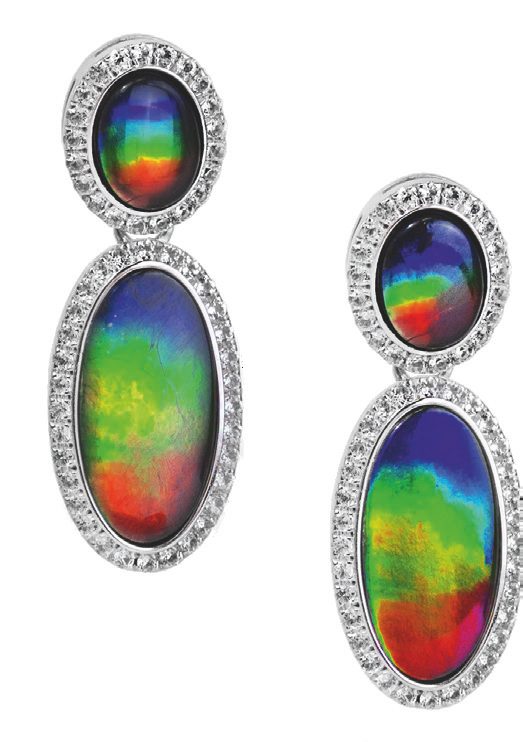
For those who love minerals, Mineral City was a must-visit show, as was the Mineral Fossil Marketplace, that also featured meteorites. Among the fossils were the lovely multi-colored ammolites at the Korite booth, a Canadian exhibitor who was pleased with the show.
Precious Tucson
Yet, despite the concerns, changes, and a few uneasy conversations, one truth was impossible to ignore – the magic of Tucson was still there in all its glory. Between the rows of showcases and jewelry displays, the real treasures are not only the stones themselves but the moments surrounding them, spontaneous reunions between colleagues who see each other only once a year, new friendships formed over a shared fascination with an unusual specimen, and the quiet thrill of discovering something truly extraordinary. The laughter, late-night discussions (and parties), the exchange of knowledge, and the shared passion for gems continue to transcend borders and circumstances.
The remarkable pieces encountered this year—among them rare inclusions, unusual treatments, experimental synthetics, and breathtaking finished jewelry—serve as reminders that our industry is built on curiosity and discovery. Even in uncertain times, the Earth continues to produce wonders, and the people who bring them to light continue to innovate, adapt, and persevere.
Tucson has never truly been about buildings, venues, or even sales figures. It’s about people: miners, jewelers, cutters, dealers, designers, gemologists, collectors—all connected by a deep appreciation for Earth’s treasures. That shared language of beauty and fascination is stronger than any temporary tension.
If anything, this year demonstrated not weakness but resilience. The show evolves because the industry evolves. New vendors step in when others leave, new markets emerge, and new generations arrive with fresh ideas and energy. Change, while sometimes uncomfortable, is also proof that the industry is alive.
For the international visitors, despite the world’s tensions, Tucson still offered something irreplaceable: perspective. It reminds us that we are part of a global community that, despite its differences, continues to trade, learn, collaborate, and create together.
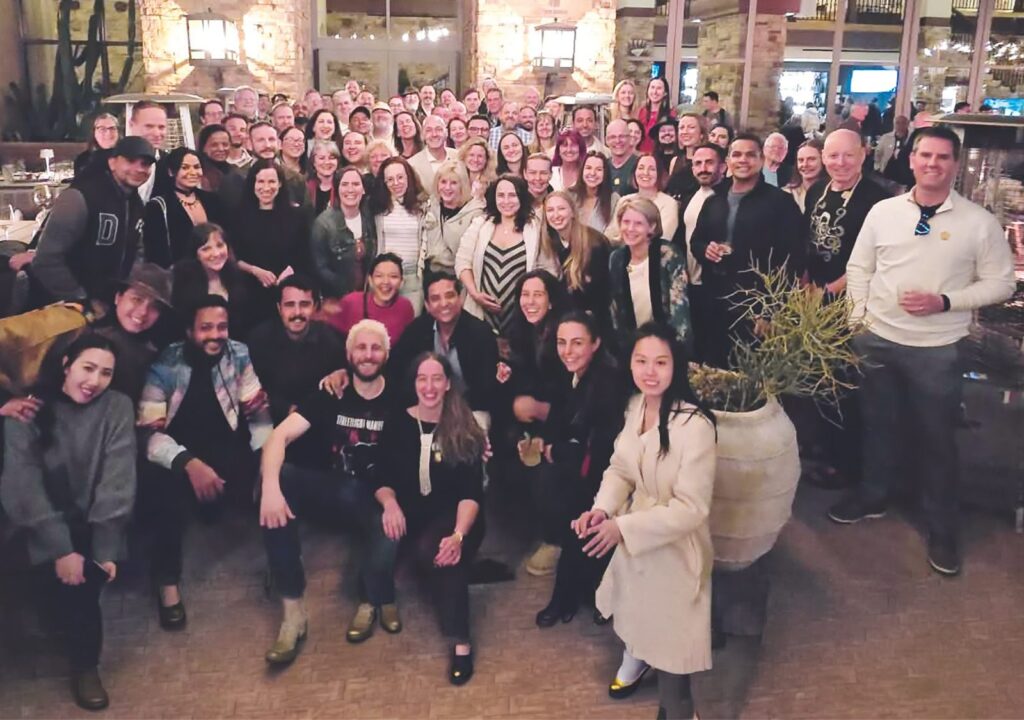
Above all, Tucson is about people – miners, jewelers, cutters, dealers, designers, gemologists, collectors – all connected by a deep appreciation of Earth’s treasures.
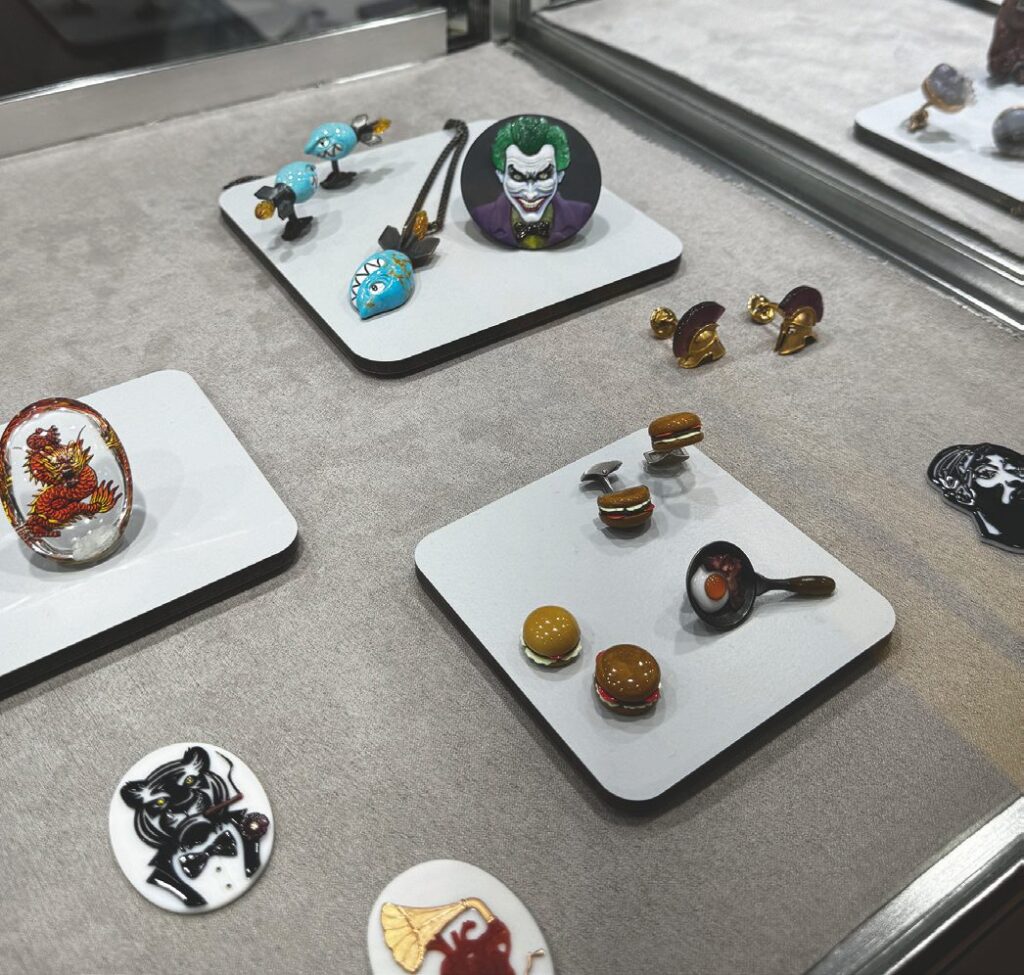
Yes, the show felt “weird” this year, but it also felt deeply human, dynamic, and so very much alive. As long as people continue to gather under the warm Arizona sun, with curiosity, passion, and a love for gems, Tucson will remain what it has always been—not just the world’s largest gem show, but one of the most important meeting points of our industry.
I am already wondering what colors Tucson will have for us next year.
Photos are courtesy of the author unless otherwise specified.