Ewa Wagner-Wysiecka, Małgorzata Siudak and Zofia Kaczorowska
1 Department of Chemistry and Technology of Functional Materials, Faculty of Chemistry, Gdańsk University of Technology, Narutowicza Street 11/12, 80-233 Gdańsk, Poland 2 Advanced Materials Center, Faculty of Chemistry, Gdańsk University of Technology, Narutowicza Street 11/12, 80- 233 Gdańsk, Poland 3 International Amber Association, Heweliusza 31 Street, 80-861 Gdańsk, Poland * Corresponding Author: ewa.wagner-wysiecka@pg.edu.pl
Across the gemstone industry, materials formed through geological processes are increasingly encountering technological modification. As methods of treatment, reconstruction, and processing advance, questions of classification, disclosure, and trust become more complex.
Baltic amber—succinite—offers a particularly clear example of this dynamic. Valued for millennia, succinite is deeply rooted in history and craftsmanship. Yet, today, it stands at the intersection of geological origin and advanced materials engineering. While this discussion focuses on Baltic amber, it also reflects broader questions that arise whenever long-established gem materials encounter new technological possibilities.
Cultural and Geological Significance of Baltic Amber
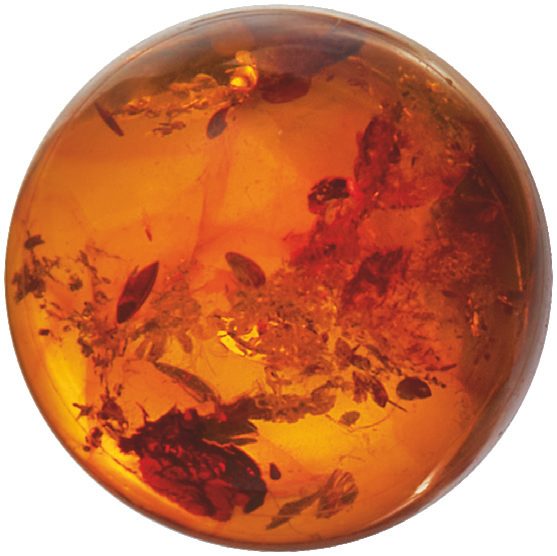
Baltic amber is widely recognized in the jewelry world. Formed millions of years ago, it reflects both geological processes and a long cultural history. From the Neolithic period onward, amber was collected, shaped into ornaments, and traded across Europe. In later centuries, Gdańsk (Poland) became an important center of amber craftsmanship, supplying royal courts and international markets. Today, Baltic amber remains closely associated with craftsmanship and historical continuity.
Material Diversity and Variability
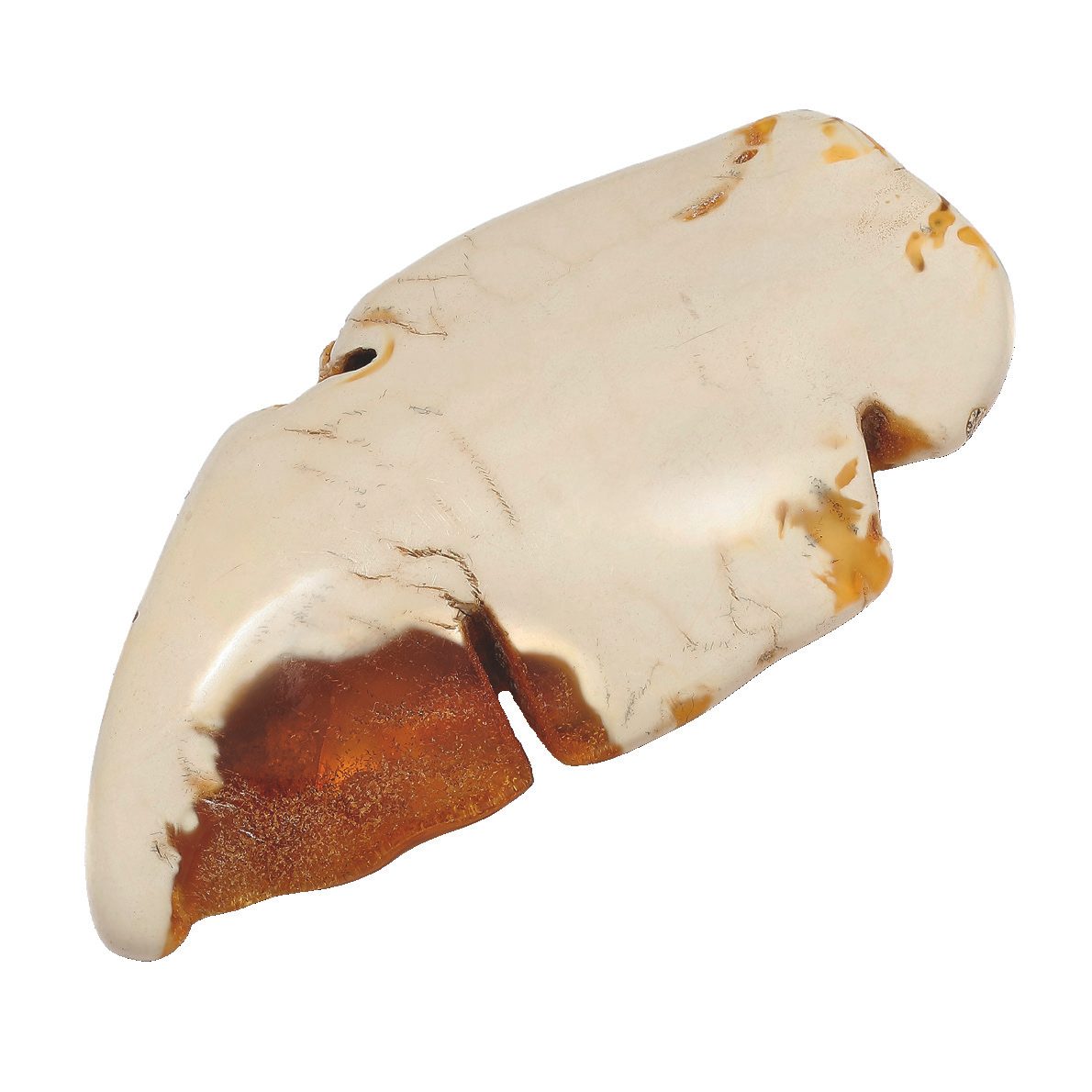
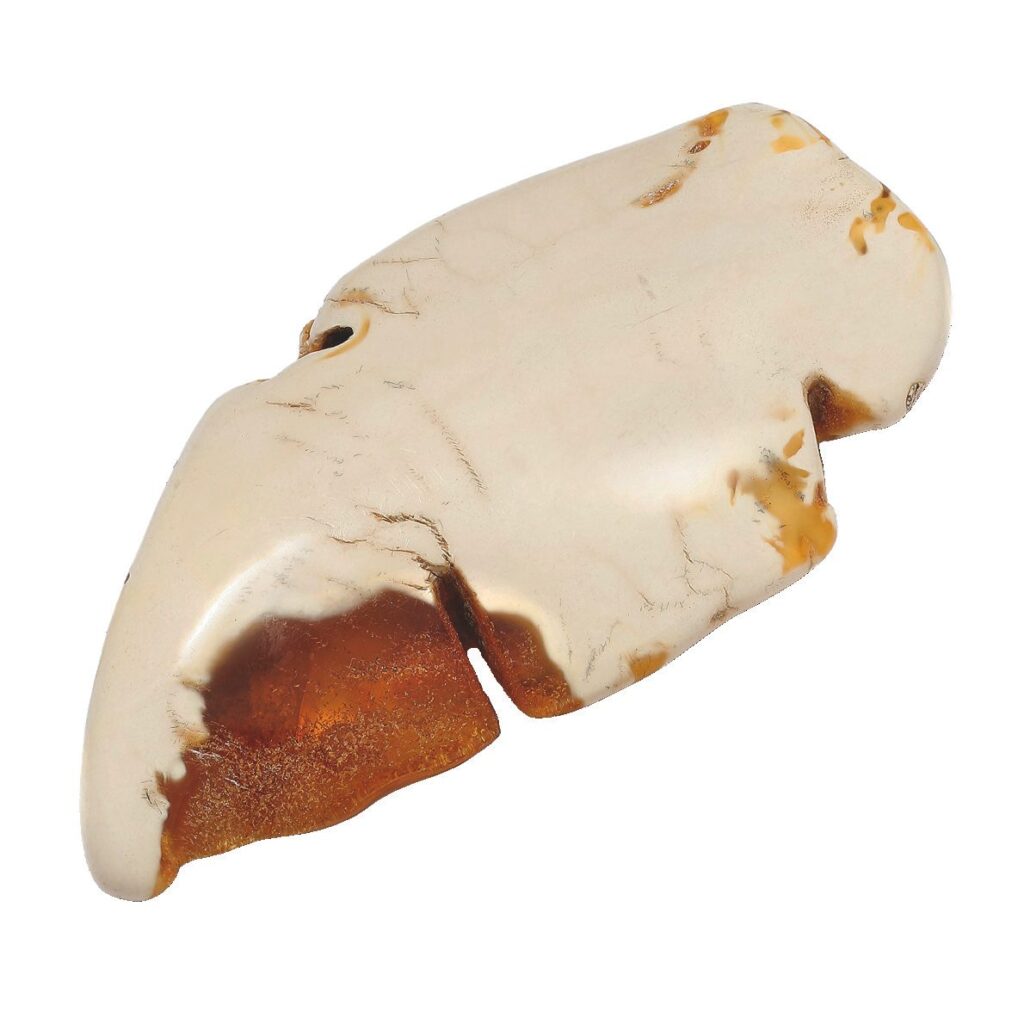
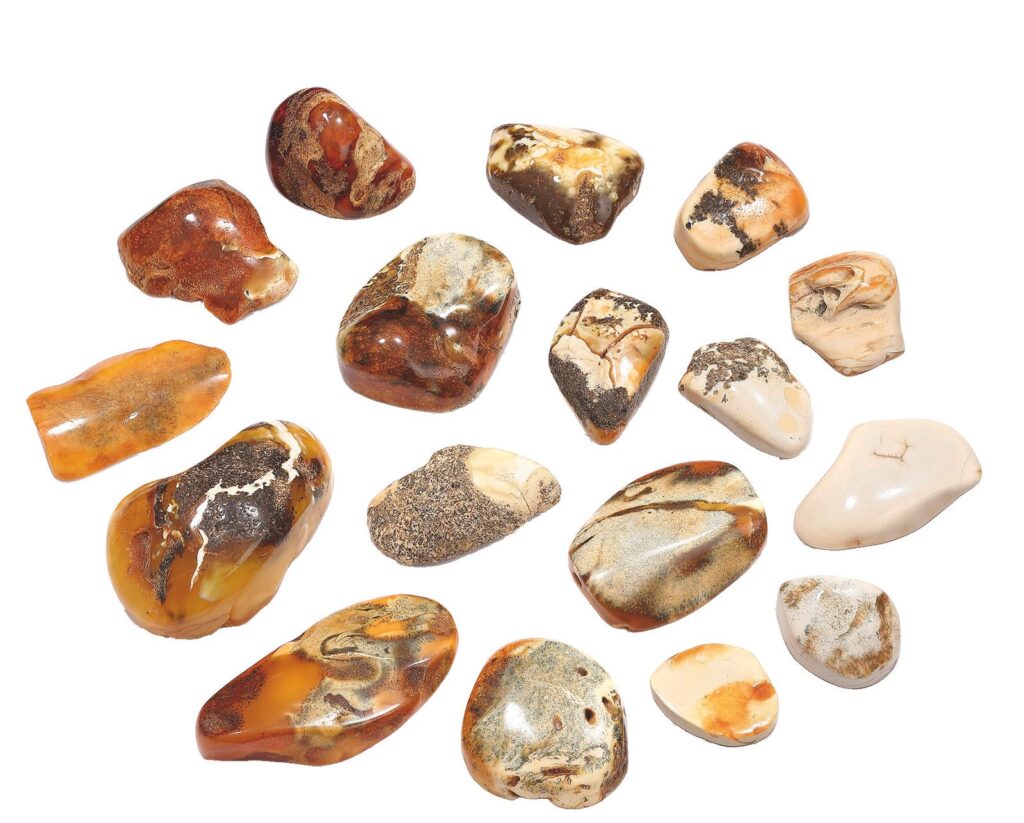
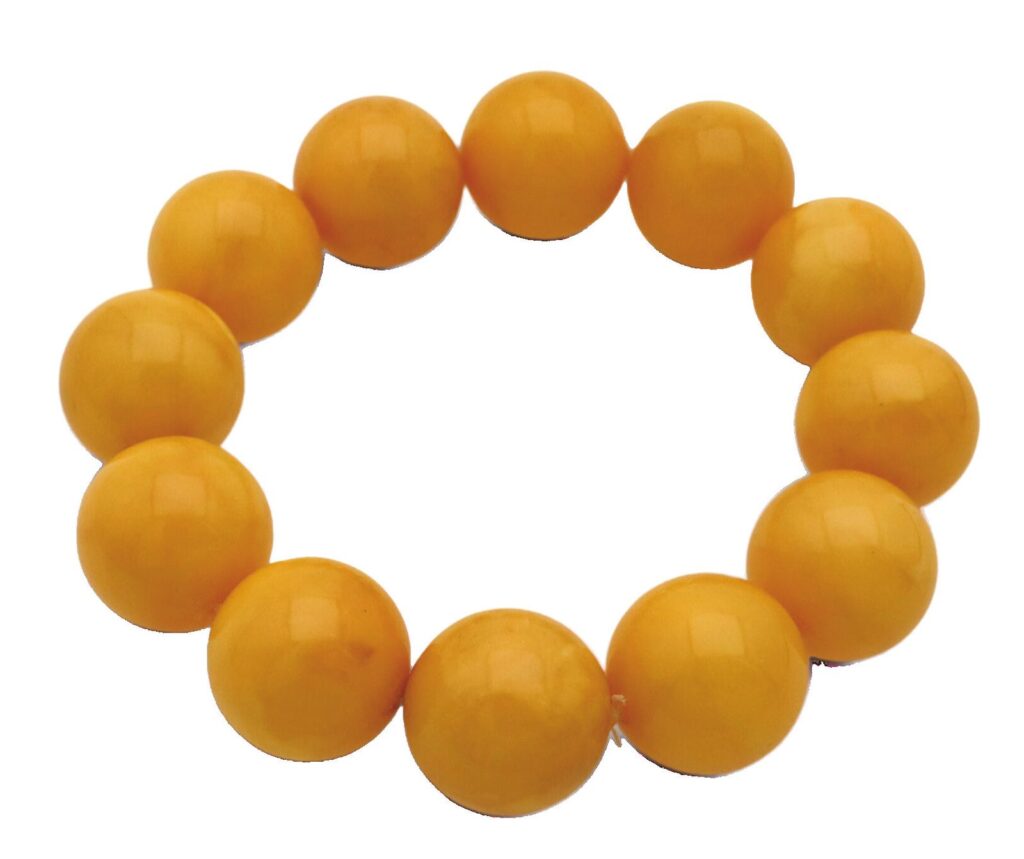
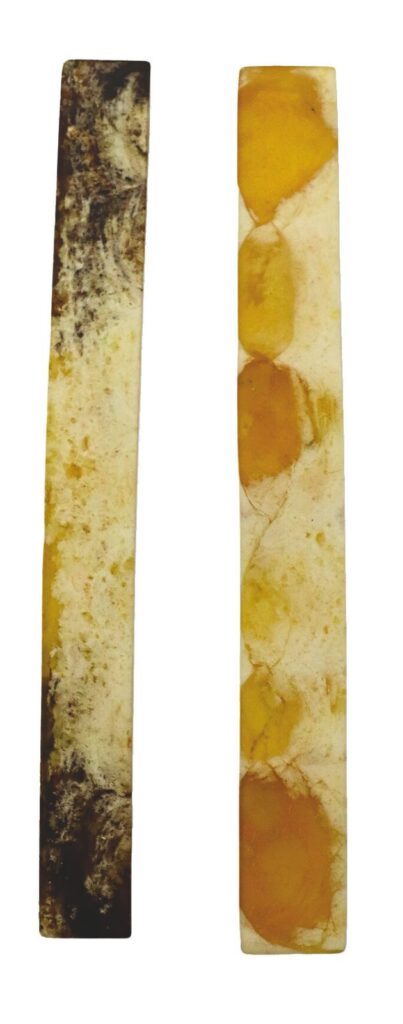
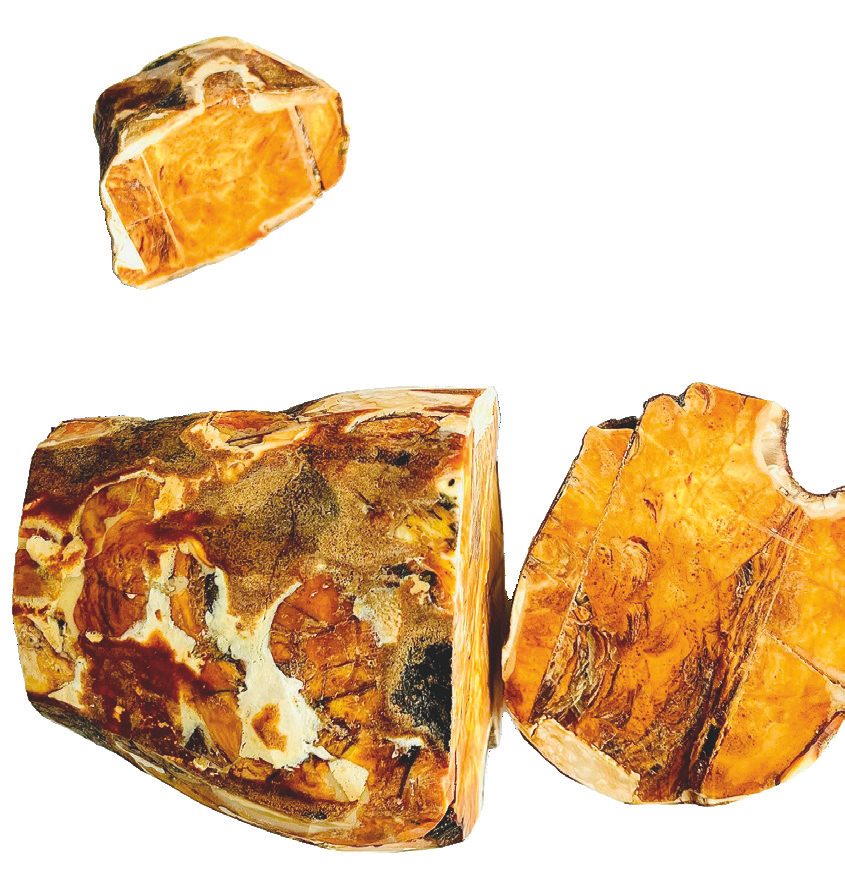
Few gem materials display the range of colors, transparency levels, and textures found in Baltic amber. This diversity reflects differences in geological and diagenetic history, which shape the material’s chemical structure, degree of cross-linking, and microstructural characteristics, ultimately influencing how light interacts with the amber. Certain varieties occur only in limited quantities and therefore command higher value, such as opaque white (“bone”) amber.
Technology now allows optical properties to be modified in controlled and repeatable ways, often on an industrial scale. Scalability reshapes market dynamics: when variation can be engineered, natural rarity requires more precise understanding.
Natural Changes vs. Technological Modifications
Baltic amber is chemically complex and structurally intricate. Its cross-linked molecular network determines how it responds to heat, pressure, and radiation.
Cross-linked organic systems such as succinite undergo measurable structural transitions under controlled temperature and pressure conditions, as documented in polymer chemistry and materials science research.
When these scientifically established behaviors are considered alongside advanced gemological evaluation, material classification becomes more consistent and transparent. Temperature and radiation can alter amber’s appearance. Thermal enhancement has been practiced for centuries, and today, autoclave processing under carefully controlled pressure and temperature enables more precise structural adjustment.
Under these conditions, internal stress relaxation and microstructural reorganization occur within the polymer network, resulting in structural modifications whose extent depends on processing parameters. Although these changes may resemble effects produced by natural geological processes, technologically-induced modifications do not imply identical transformation mechanisms.
Thermal Properties and Reconstruction Processes
Amber is an amorphous material and does not have a true melting point; instead, it softens over a temperature range. For Baltic amber, the softening range typically lies between 125–200°C, while higher temperatures may induce viscous flow and eventual decomposition. In commercial contexts, imprecise terminology can obscure these distinctions.
Understanding the material’s true physicochemical properties is crucial for accurate classification. Under defined temperature and pressure conditions, succinite behaves similarly to a thermoplastic polymer, though its cross-linked structure limits flow mechanisms. This property, however, makes the production of pressed amber possible through the consolidation of fragments under heat and pressure.
More advanced extrusion-like techniques, inspired by polymer engineering, can produce materials whose macroscopic—and in some cases spectroscopic— characteristics resemble natural amber. In such cases, reliable differentiation depends not on appearance alone, but on comprehensive analytical methodologies.
Instrumental techniques, including infrared spectroscopy (FTIR), are essential for distinguishing natural succinite from certain reconstructed materials. As processing technologies become more refined, visible structural indicators may diminish. Reliable classification therefore depends on understanding how a material was formed and subsequently processed.
Market Dynamics and Implications
Material transformation does not occur in isolation. It influences perception, pricing, and confidence. Consumers, particularly in international markets, may struggle to distinguish between natural and modified or reconstructed materials.
Where purchasing decisions depend on the perceived natural origin, incomplete disclosure can significantly affect perceived value. Similar dynamics emerge whenever technological intervention reshapes the structural characteristics of any gemstone material. The oversupply of processed material can recalibrate price benchmarks, especially in segments defined by rarity and geological continuity.
The Role of Large Specimens and Hydrobaric Techniques
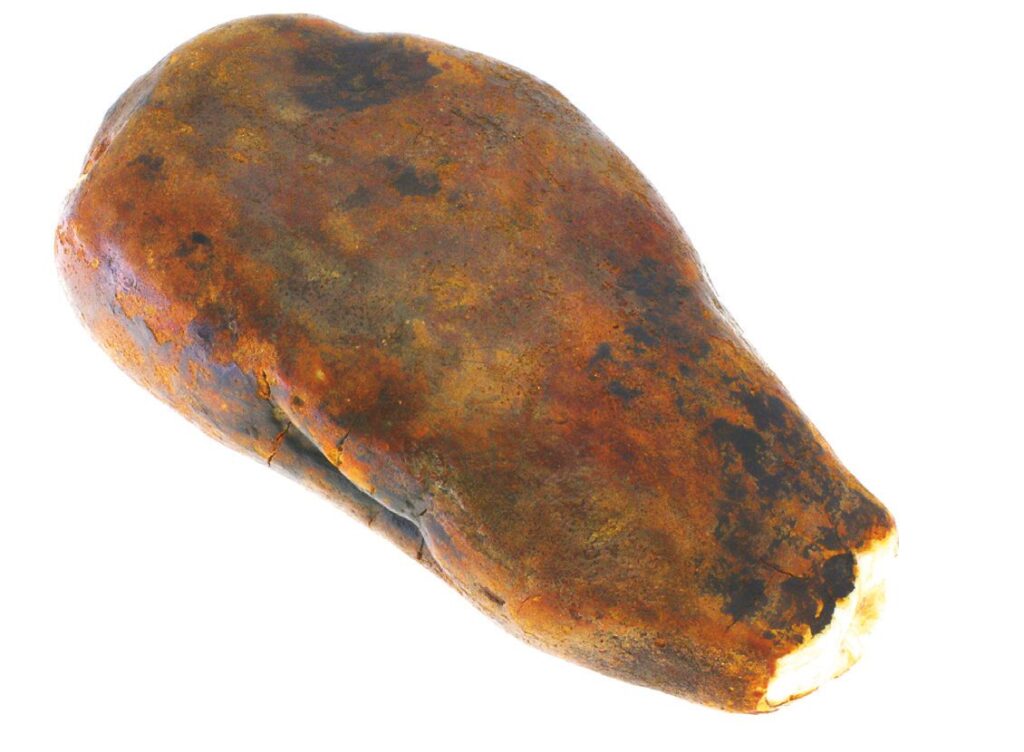
Large natural pieces of Baltic amber hold a distinct position in the market due to their uninterrupted geological continuity and relative rarity.
Hydrobaric techniques now enable the production of large amber pieces from smaller fragments under controlled pressure conditions, preserving many of the chemical characteristics of succinite. Yet, chemical consistency does not necessarily imply identical transformation mechanisms.
From a materials perspective, geological formation and technological consolidation represent fundamentally different structural histories. In some cases, amber produced through hydrobaric methods can be extremely difficult to identify using non-invasive gemological techniques. Its defining characteristics may only emerge during the jewelry crafting process, when the material undergoes further refinement. If these distinctions are not clearly communicated, perceptions of scarcity—a central component of value—may become misaligned.
Circular Economy in Amber: Sustainability and Material Recovery
The growing emphasis on circular production models has reshaped how secondary materials are perceived and utilized across industries. Within this evolving approach, the reuse of amber by-products offers a technically sound and environmentally responsible pathway for material recovery.
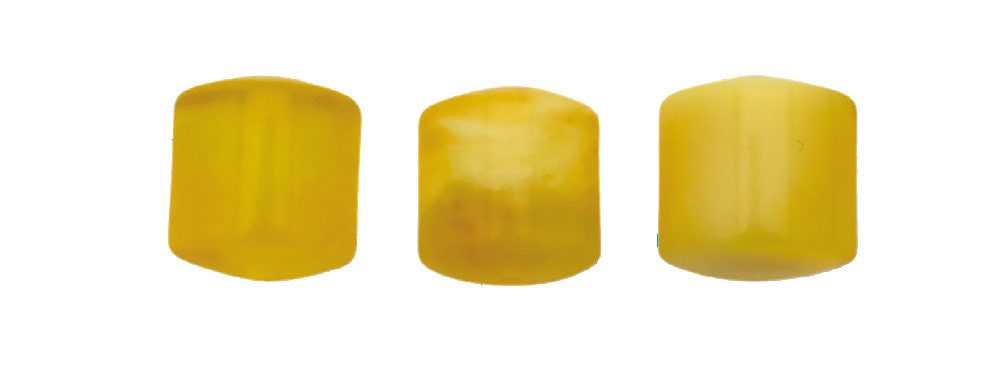
Amber by-products incorporated into polymer composites represent a rational use of secondary raw materials and reinforce principles of sustainable production.
When transparently categorized, such applications can strengthen sustainability narratives without blurring the distinction between natural geological material and technologically processed products.
Regulation, Terminology, and Standardization in Amber
Currently, no universally binding regulations govern the labeling of modified or reconstructed amber. In the absence of harmonized standards, terminology varies between laboratories and commercial entities, increasing the risk of inconsistent interpretation.
The International Amber Association, drawing on CIBJO recommendations, has developed a coherent classification framework. Even so, the coexistence of multiple systems continues to generate uncertainty. For more detailed information on the classification, visit International Amber Association Classification Framework.
Ultimately, scientific credibility depends on the alignment between nomenclature, analytical methodology, and transparent disclosure.
Material Understanding, Trust, and Market Stability
Modified or reconstructed amber is not inherently inferior and will likely remain part of the market. What matters is clarity.
Scientific integrity requires explicit categorization that distinguishes natural origin, treatment, reconstruction, and composite formation. As material technologies evolve, long-term value depends not only on tradition, but on methodological clarity and reliable analytical standards.
In research practice, classification of materials is inseparable from understanding formation mechanisms and processing history. In the amber market, the same principle applies.
As the market continues to evolve, clear classification and material understanding will determine the true value of amber—now and in the future.