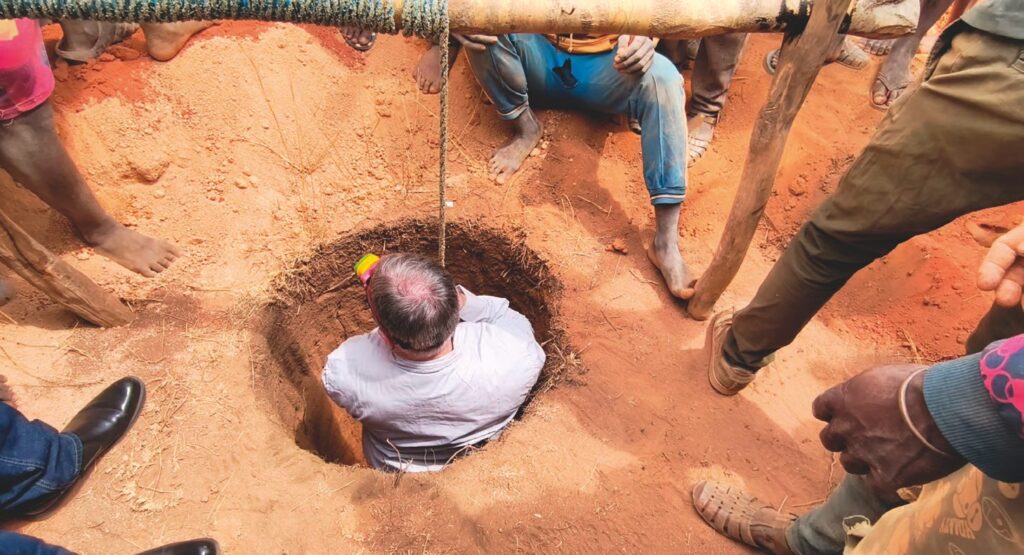
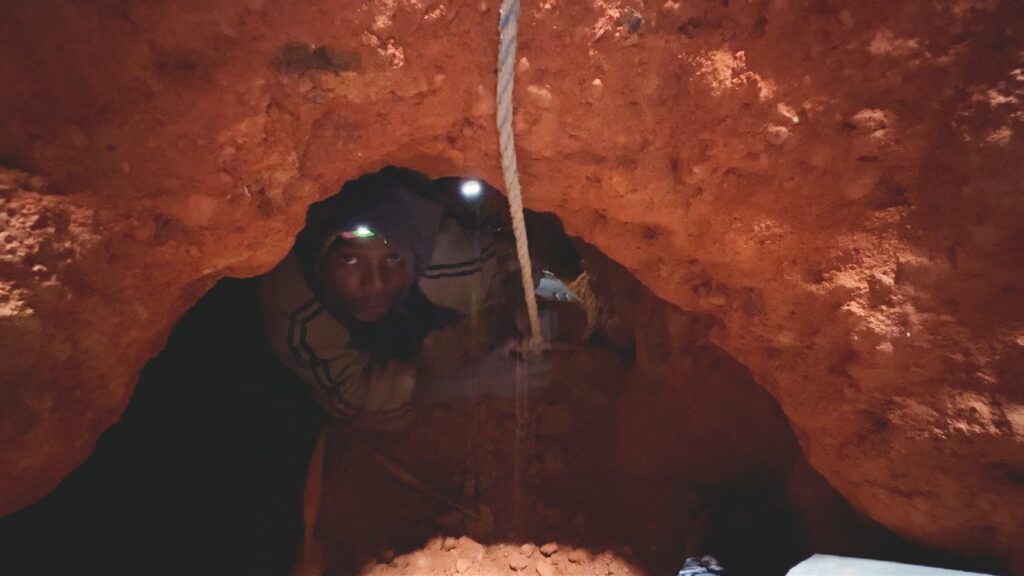
Above: A Malagasy miner in a narrow tunnel, digging out the gem-bearing gravel. (Photo: Ruby Liu. ©Guild Gemology Education)
Introduction
For a quarter of a century, Madagascar has been a leading sapphire producer for the global markets. Yet, production changes have been very evident in these markets over the last three years—from the China Fort trading in Beruwala, Sri Lanka to the Tucson Gem Show. The complaints about lack of production, especially for large sizes and fine quality, have echoed throughout the global market.
While production is dramatically lower in Madagascar, this island is most likely still the leading producer of metamorphic blue and pink sapphire in the world. Since 1998, the huge Ilakaka-Sakaraha area has dominated the production.
In October 2025, the Guild Field Gemology team visited Madagascar to collect research samples for further data in country-of-origin determination and low-temperature heat-treatment detection for pinks and blues. We also wanted to document the current state of mining, production, trading, and business models, as well as a glimpse of what might be coming in the future.

About Madagascar
The world’s fourth largest island is known for its biodiversity with estimates of 80% to 90% of its plant and animal species being endemic, including almost all the lemur species. Madagascar was landlocked in the Gondwana (or Gondwanaland) supercontinent. It broke up in stages starting about 180 million years ago, eventually leading to the continents and land masses of South America, Africa, Australia, Antarctica, India, and New Zealand.
It is believed that the Madagascar-India land mass separated about 150 million years ago while the island of Madagascar subsequently separated from India about 80 million years ago.
The quickly growing population is currently believed to be almost 33 million in late 2025, with a yearly increase of +2.43% (data from the United Nations Population Division). Madagascar has a very young population with the median age estimated to be around 19 with a high birthrate (currently estimated at 3.8 live births per woman, although it has been steadily declining since being over 7 in the 1950s). While infant mortality is still relatively high, it has decreased significantly over recent years, and estimations show that 60% of the population is under 20. Urban population has been increasing significantly since the 1950s with over 40% of the population being urban compared to rural. While the high percentage of young people translates into potential with a strong up-and-coming workforce, it also creates job problems, partially leading to the so-called Generation Z uprising against the government during our September to October 2025 expedition.
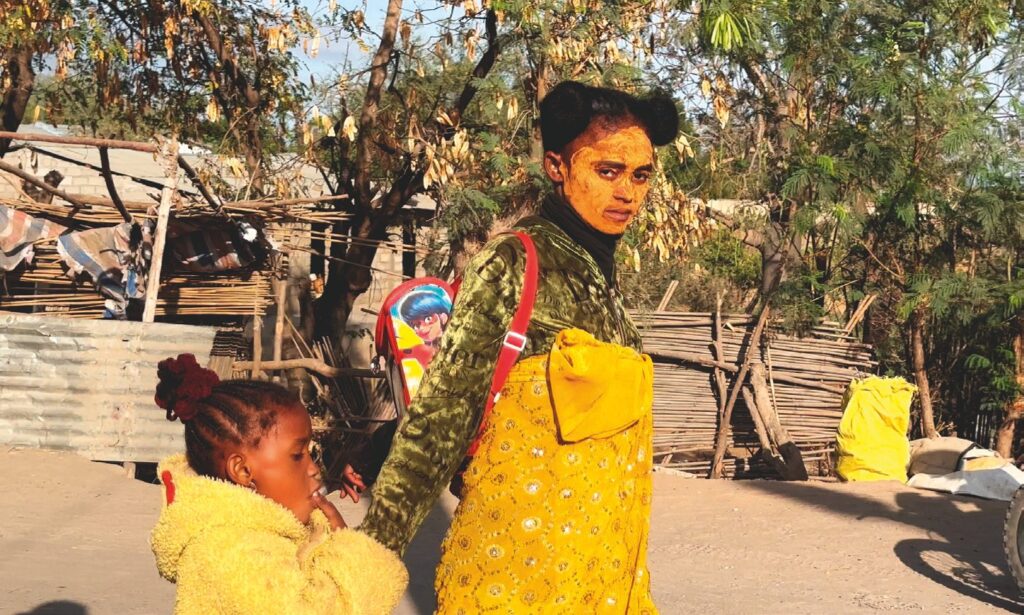
The Malagasy people are an amazing blend of African, Asian, and Arab ancestries. The major ethnic groups include the Merina, primarily located in the central highlands around the capital, Antananarivo. The Betsimisaraka are predominantly found along the eastern coast. The Betsileo mainly reside in the south-central region of the island.
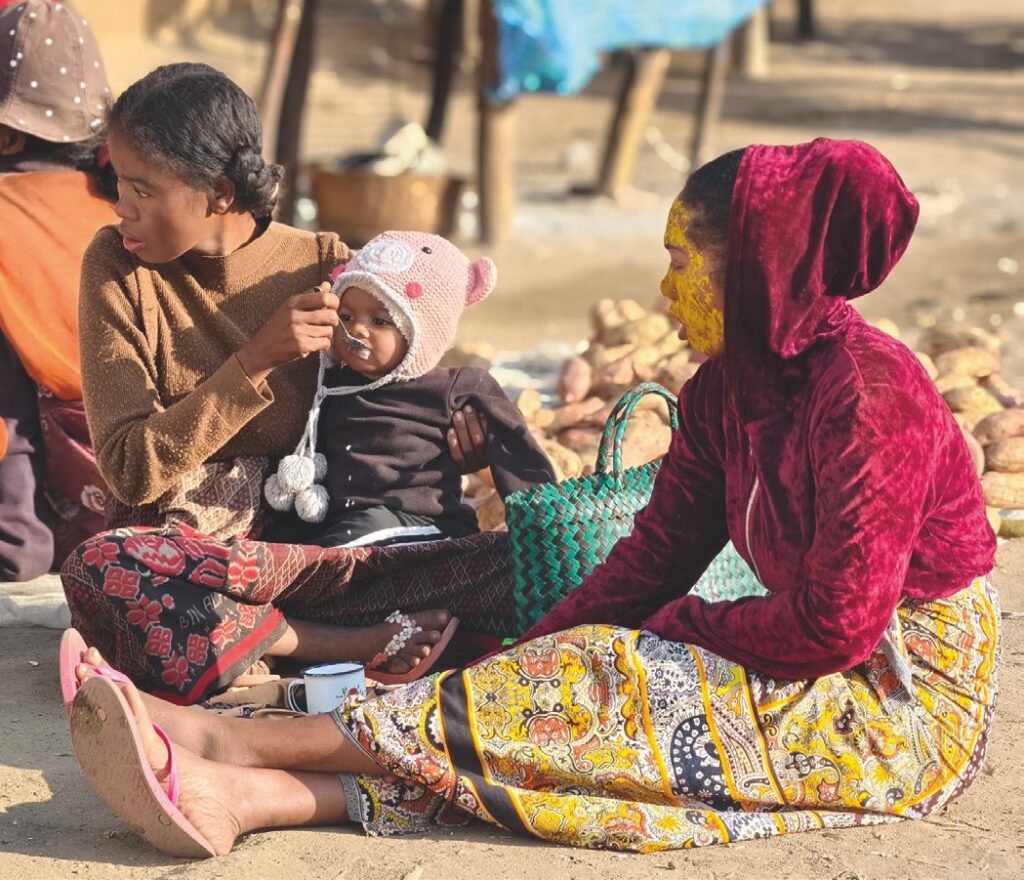
The settlement of Madagascar is often debated as to the time frame. Some estimates place it around 2,000 years ago by sea travelers from the Indonesia/Malaysia archipelago. Some attribute the settlement by these sea voyagers earlier, while others think it was later. Still others challenge this theory since markings were found on bones dating to 10,000 years ago.
Whatever the origin, the Malagasy people today are an amazing blend of those who came before, including Asian, African, Arab, and French, among others. Major foreign communities include French, Comorian, Indian, Pakistani, and Chinese, along with Sri Lankan and Thai gem buyers in the mining areas. The official languages are native Malagasy and French.
Over 40% of the population affiliate with traditional religious beliefs, primarily focused on ancestor worship. A higher percentage still practice ancestor worship to some degree, even Christians.
The most common of these practices, aside from burial, is the famadihana, in which the bones of the ancestors are removed from the family tomb, wrapped in new lamba woven especially for that purpose, and placed again in the tomb after the delivery of a kabary, a traditional “special occasion” speech. Almost half of the population is Christian, either Protestant or Catholic, with Sunni Muslims making up about 9%.
International trading started with Arab traders along the Northern Coast around 800 AD. In the 1500s, the Portuguese, English, French, and Dutch all tried to establish trading settlements on the island but were met with hostile resistance and failed.
In the 1800s, both England and France exerted influence over the island and introduced Christianity, with Britain helping Merina tribe King Radama I unify most of the Island.
Throughout the 1800s, uprisings and British-French control struggles occurred. In 1896, France annexed Madagascar as a colony and unified it under one government. The 1900s saw continued uprisings against the French with Madagascar gaining independence on June 26, 1960.
In 2024, the per capita GDP was estimated at US$561.41 (Statista). In 2024, Madagascar exported $2.56 billion worth of products (worldsexports.com). This was down 20.8% from the $3.23 billion in 2023, but up 30.7% from 2020. Available country-specific data show that 83.4% of products exported from Madagascar was bought by importers in: France (17.8% of the Malagasy total); United States of America (15.4%); China (10.5%); South Korea (7.2%); Japan (6.9%); India (6.3%); Netherlands (5.4%); Canada (3.7%); South Africa (3.69%); Germany (3%); Indonesia (2.2%); and Spain (1.4%).

The top 10 exports accounted for 80.7% of the total Malagasy exports, as follows:
- 1. Nickel: US$463.2 million (18.1% of total exports)
- 2. Coffee, tea, spices: $448.4 million (17.5%) (note: vanilla accounted for 9.1%)
- 3. Clothing, accessories (not knit or crochet): $273.5 million (10.7%)
- 4. Ore, slag, ash: $238 million (9.3%)
- 5. Knit or crochet clothing, accessories: $220.5 million (8.6%)
- 6. Fish: $104.2 million (4.1%)
- 7. Gems, precious metals: $88.2 million (3.4%)
- 8. Salt, Sulphur, stone, cement: $76.7 million (3%)
- 9. Perfumes, cosmetics: $75 million (2.9%)
- 10. Cocoa: $74.8 million (2.9%)
The leading year-on-year decline of any category in official figures was the gems and precious metals sector. This was primarily reflected in the decrease of gemstone exports, which also reflected our observations on production and trading.
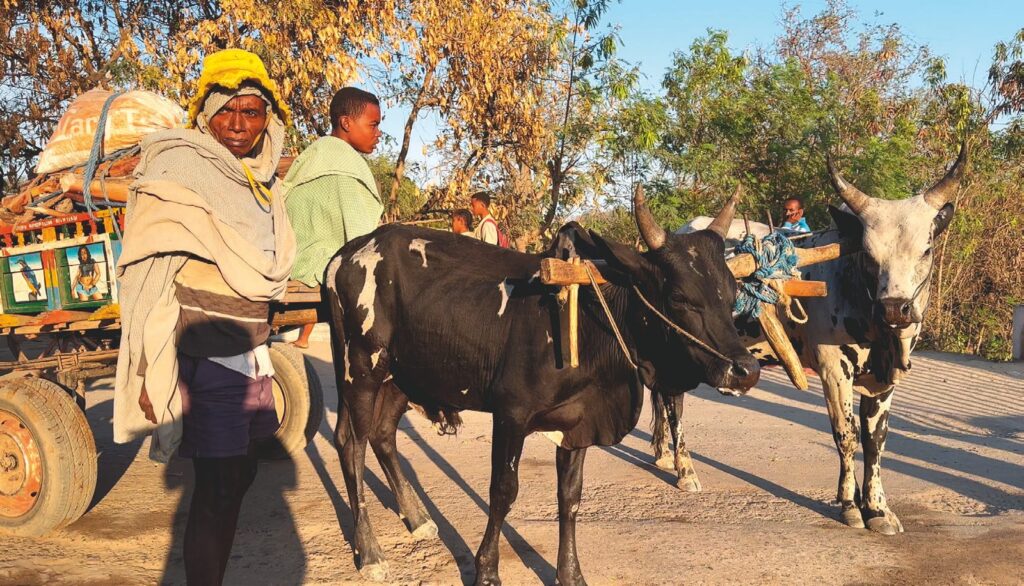
Madagascar’s Sapphire History
The first major commercially viable sapphire discovery was at Andranondambo in the Tranomaro area at the southern tip of Madagascar, in a hard rock skarn deposit related to crystalline limestone. Sapphires often occurred in thin veins in the metamorphic rock. In 1992, reports of blue sapphires offered for sale in the capital from a new area circulated.
By the end of 1994, Thai dealers reported around 100 kg a month coming into Bangkok with reports of 10,000 miners. As is often the case, the sapphires were most likely discovered on the surface with some mining done through shafts 20 to 30 meters deep.
While most stones were small and required heat treatment, some fine larger blue sizes were produced, even rivaling fine quality Kashmir gems, while overlapping in characteristics with blue sapphires from Kashmir, Sri Lanka, and Myanmar.
In 1996, magmatic blue sapphires from alkali-basalt paleochannels came into the market from the north of Madagascar at Ankarana (Ambondromifehy). As with most magmatic sapphire deposits around the world, the sapphires were mostly commercial quality of dark inky blue, yellow, green, color-zoned, and with strong pleochroism. This deposit promoted further interest in Madagascar as a significant sapphire producer.
But, everything changed in 1998. Madagascar went from an emerging important source to the leading producer of blue and pink metamorphic sapphire in a very short period. For the most part, it has remained so through today, even though production has fallen to a fraction of the early years. We are fortunate to have had interviews and conversations in Ilakaka with those that were there at the beginning.
Once it was realized that a significant deposit of sapphire was discovered, tens of thousands of miners rushed to the area to find their fortune. Being close to the main road, Malagasy, Thai, Sri Lankan, and other foreign buyers quickly set up shop along the small road stop, Ilakaka.
Mining expanded to numerous areas such as the famous Banque Suisse (Swiss Bank), a very large and productive pit entirely dug by artisanal means. Miners from around the country came to Ilakaka, almost ending production of gemstones in other areas, such as emeralds from Mananjary, which today are back in production due to the lower production of sapphire in Ilakaka.
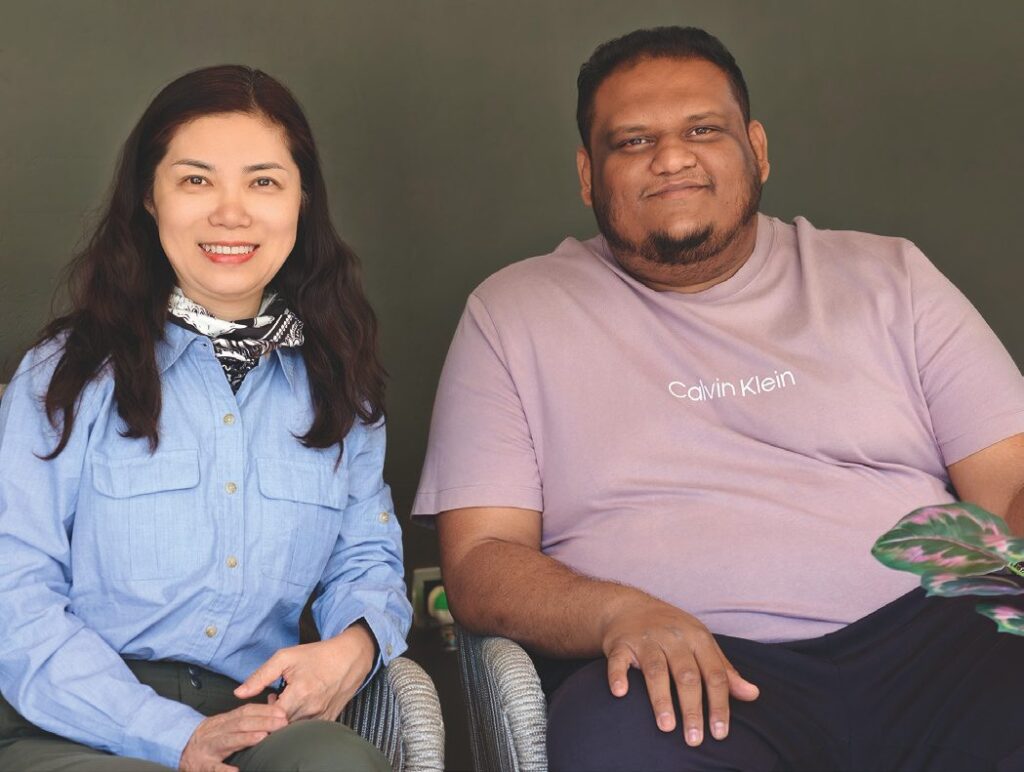
Expansion of the mining area in Ilakaka-Sakaraha continues today although the mining landscape has changed—from one of seeing thousands of artisanal miners packed tightly together working one area to one of fewer total numbers and more spread out across the huge expanse of the deposit.
Mr. Mohamed Sadakathulla Sarjoon of the well-known Madagascar/Sri Lankan company Masha Gems told us how his father went to Ilakaka in 1998 to buy sapphires and has lived there for 27 years. Mohamed has lived in Madagascar for 20 years.
At that time, he said around 700 to 1,000 Sri Lankans and 250 Thais were buying sapphire from tens of thousands of miners. Today, he estimates that, in the Ilakaka-Sakaraha area, buyers now number 350 to 500 Sri Lankans and about 50 Thais.
While in the beginning, it was like the Wild West gold boomtowns of America, today it is much safer for foreigners. We even saw a number of tourists with their guides visiting the Ilakaka market. While he said that today’s production is mostly smaller sizes, the golden years for large high-quality sapphires was from 2008 to 2010 and then 2012 to 2016. During 2016 to 2018, large fine stones were also mined and purchased by his company.
After a Covid pause from 2020 to 2022, the area produced fine large stones. But in the last two to three years, production of fine, large blue sapphires has dropped dramatically. This is what Guild has seen in the China, Thai, Sri Lankan, and global markets as well.
Mr. Mohamed Sadakathulla Sarjoon continued the interview with a description of the most memorable fine Royal Blue sapphires he remembers. It was a 155-carat loupe clean stone. They have kept the stone because, as he has said many times, “Today, you can always get money for stones, but not stones for money.”
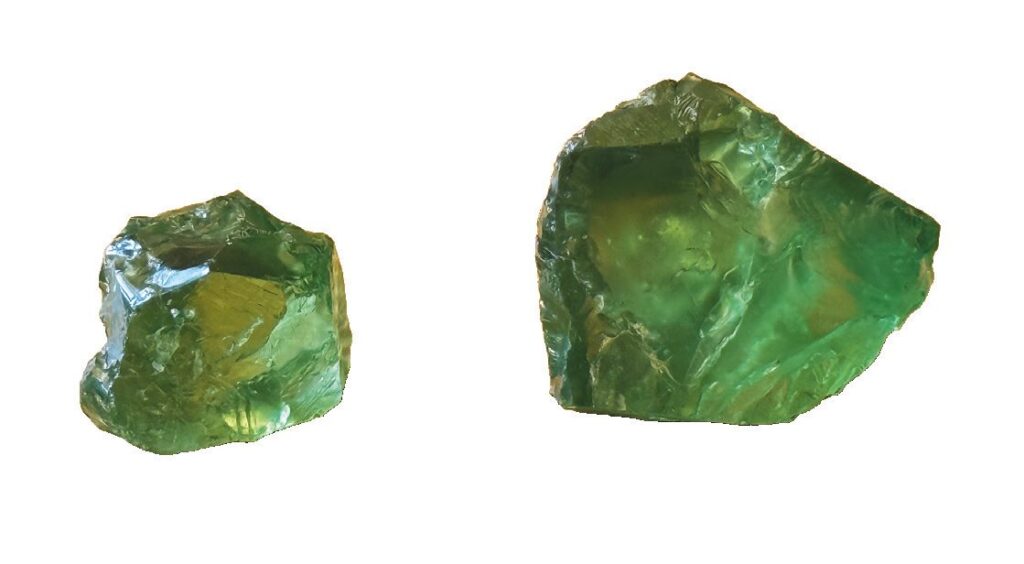
Even with the far lower production of large fine colored sapphires, they have still been able to purchase 50-carat, 60-carat, 80-carat, and 90-carat stones. Although, he sighs, nothing like the availability in the golden years. From the Sakaraha mining area, they work primarily the sea blue and pink stones, as well as large amounts of the Gueda sapphire for heating. Mr. Mohamed Sadakathulla Sarjoon also mentioned the new tsavorite gems that he bought from recent mining operations in Madagascar, adding how blessed this island is with the variety and quantity of gemstones that keep being discovered and coming to light.
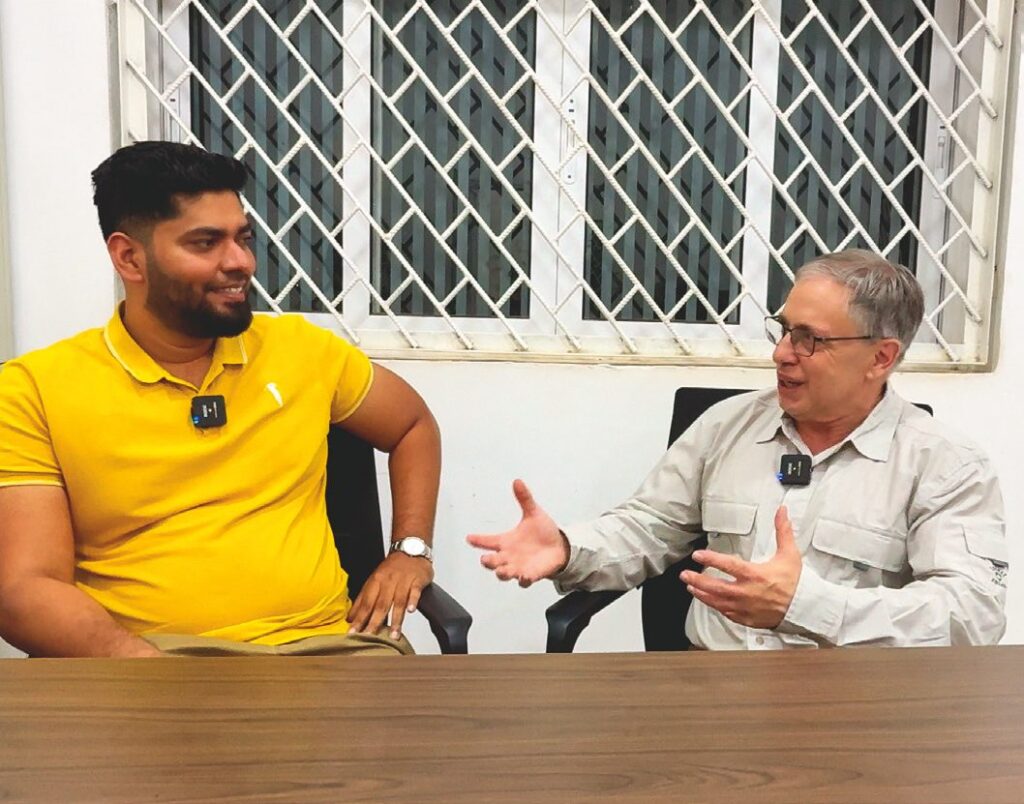
Mr. Asjad Faisal of Anas Gems is a new generation of Sri Lankan gem trader in Madagascar, based in Sakaraha. His father-in-law was one of the founders of World Gems and has been in Madagascar, buying sapphires since 1998. He started Anas Gems in 2021 in Sakaraha.
Mr. Asjad talked about how the success of Anas Gems and other Sri Lankan companies in the Ilakaka-Sakaraha area has a lot to do with the relationships built with miners over the years. His father-in-law formed many close relationships with miners that have continued into the next two generations. They provide food and support and are given the right of first viewing and first refusal for sapphires mined.
During times of low production—like the last couple of years—this has been a huge advantage for a company when selection and opportunity are of the highest importance. Mr. Faisal said he has noticed more Malagasy gem dealers adapting this system and also receiving a higher number of first viewing opportunities.
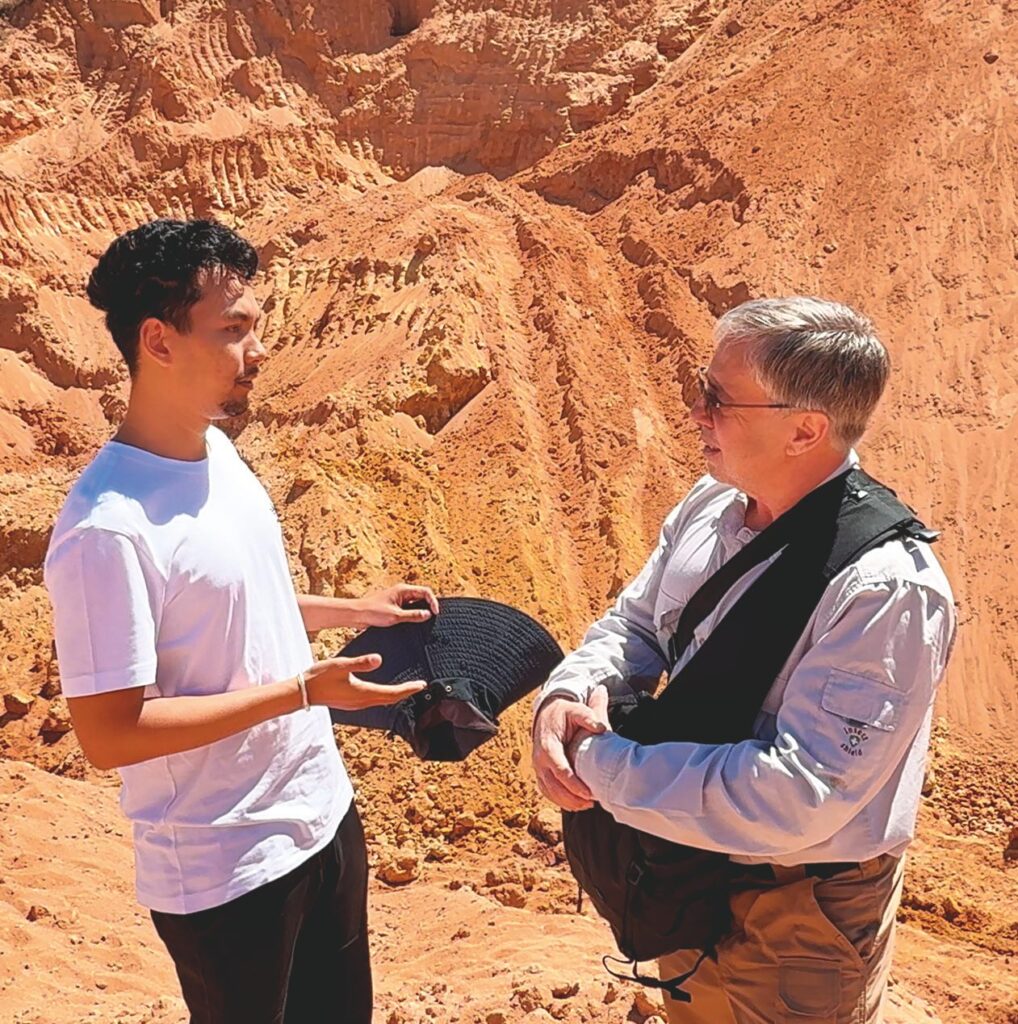
Mr. Jonathan’s family has been trading and mining since 1998 (the company’s name is Jonathan Mark Mines). His grandfather started the business and now Jonathan represents the third generation.
In keeping with the amazing mix of people in Madagascar, his grandfather came from China and married a Malagasy woman. While Jonathan’s father speaks fluent Mandarin, he does not.
They have been mining from almost the beginning and have a mining license which is almost impossible to get these days. Like everyone else we interviewed, he stated that sapphire production is far less than what it used to be.
The Guild Field Gemology Expedition
This Field Expedition saw a lot of logistics challenges, followed by great luck and doing what a field team should do best: Adapt, Improvise, Overcome.
The trip started with a frantic change of airline tickets to avoid the unprecedented Hong Kong Airport shutdown due to Super Typhoon Ragasa. Then, we left the Malagasy capital Antananarivo the day before the riots, curfews, and closing of the airport.
We managed to miss this tense civil disruption in Toliara by leaving by jeep the day before the demonstrations, which also brought curfews and restrictions.

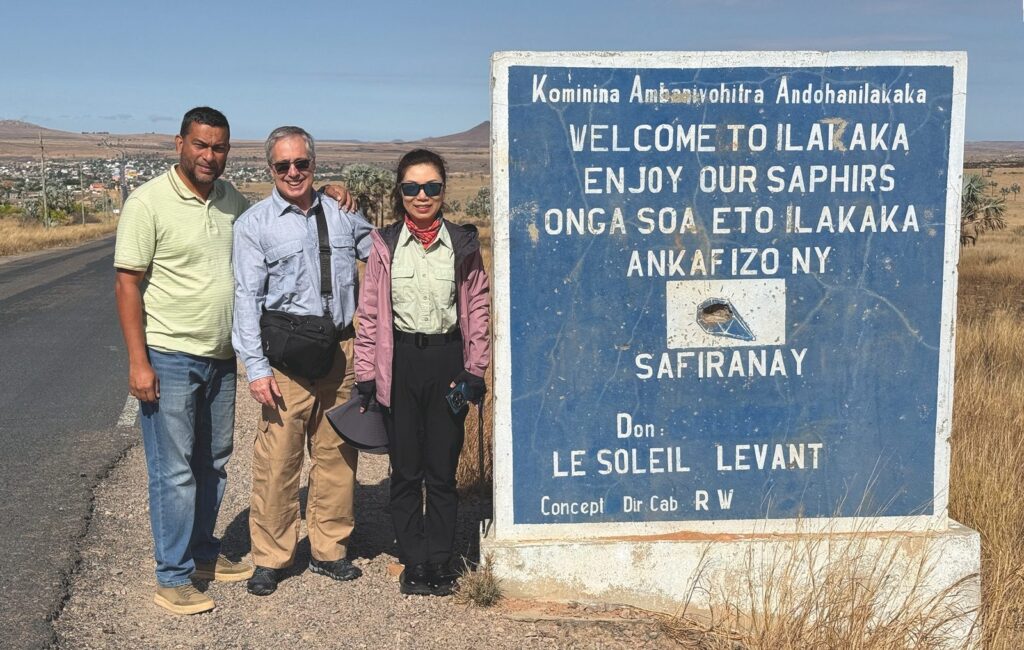
Once we reached Sakaraha, however, everything was calm, and we were able to begin our field research delving into the current state of the immense Ilakaka-Sakaraha sapphire mining and market areas.
Overall, even with the situations that arose, we had a tremendously successful expedition in research sample collection and in documentation of the current mining, production, trading, and market state of Madagascar sapphire.

The Ilakaka-Sakaraha Deposit
This huge gem-bearing expanse covers many locations and villages, with estimates of the total area being 4,000 square kilometers or more. Over the years, new discoveries have increased the scope of the deposit.
The town of Ilakaka is right off Route Nationale 7 (RN7) that links Antananarivo to the port of Toliara. The sapphires were originally found near Ilakaka Be. The sapphire-bearing areas are associated with sandstone and are alluvial deposits, most likely containing sapphires from different primary deposits and several distinct geological formations, which possibly explains the range of features shown by these metamorphic sapphires.
Madagascar metamorphic sapphires in general have a wider range of characteristics and inclusions than other metamorphic areas in the world, and sometimes there is significant overlap with Kashmiri, Burmese, or Sri Lankan blue sapphire characteristics, which leads to complicated country-of-origin determination.
In the Ilakaka area, there are two main alluvial terraces deposited on sandstone. These can be further broken down into three gem-bearing gravel levels. The terraces are not tightly consolidated but still relate to paleochannels (Garnier et al., 2004).
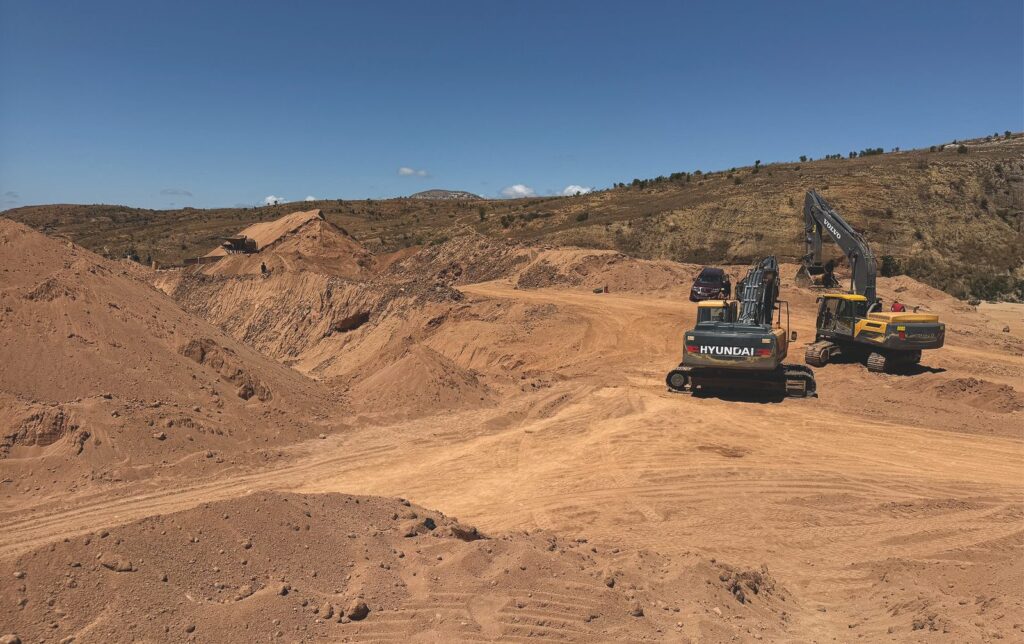
The nature of these alluvial deposits and the situation in the area lend themselves well to artisanal mining by locals. There are also mechanized and partially mechanized operations, but most don’t last, especially foreign ventures. The vast majority of production is by artisanal mining with a few mechanized operations.
Mr. Jonathan had one fully mechanized operation that we visited, and his uncle had a different one. He knew of only one other fully mechanized sapphire mining operation that uses excavators to reach the gem gravel, extract it, and then transport the stones to a jig for washing. He also knew of five partially mechanized operations where they use excavators to reach the gem-bearing gravel but then extract and wash it by hand, at the time of our visit.
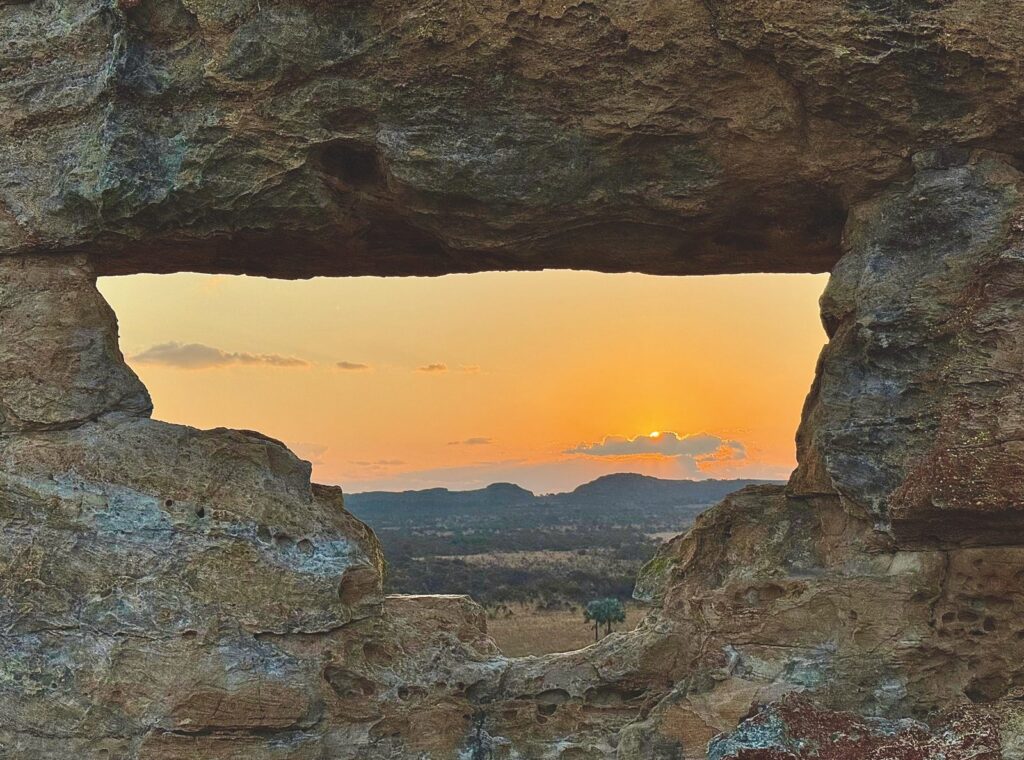
The Ilakaka deposit is right by the beautiful Isalo National Park with amazing rock formations and very nice French Resort Hotels like the very hospitable Isalo Rock Lodge with amazing views of the rock formations in the national park. They are filled with tourists from Europe, America, South America, and China. The sapphire deposit extends into the National Park causing occasional issues.
The Mining
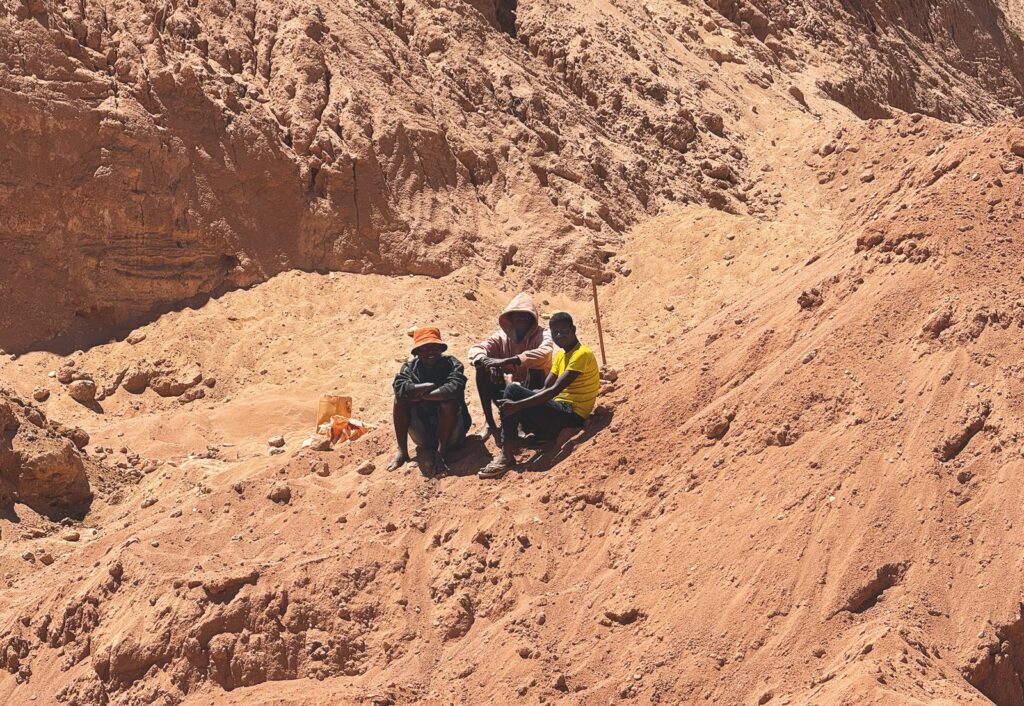
All the mining in the Ilakaka-Sakaraha area that we witnessed was alluvial. While in some areas the gem-bearing gravel was over 50 meters, most of the pits were 20 to 30 meters and some even shallower than 5 meters. Once the overburden soil was removed, the gravels were a mixture of soil, rocks, heavier minerals, and a variety of gemstones.
Roughly, the mining operations could be broken down into three broad categories:
Artisanal mining, where the pit was dug by hand using simple tools with the mining processes all carried out with hand tools, including hand washing with the occasional water pump to remove ground water in some areas. This was, by far, most of the mining operations.
Partial mechanization, where an excavator was used to dig the pit, then the gravels were removed by hand tools and usually washed by hand. These tended to be larger open-pit operations and water pumps more commonly incorporated.
Full mechanization was at three open-pit mining operations with excavators digging the pit, reaching and removing the gem gravels, and transporting them to washing, and the use of a mechanized jig.
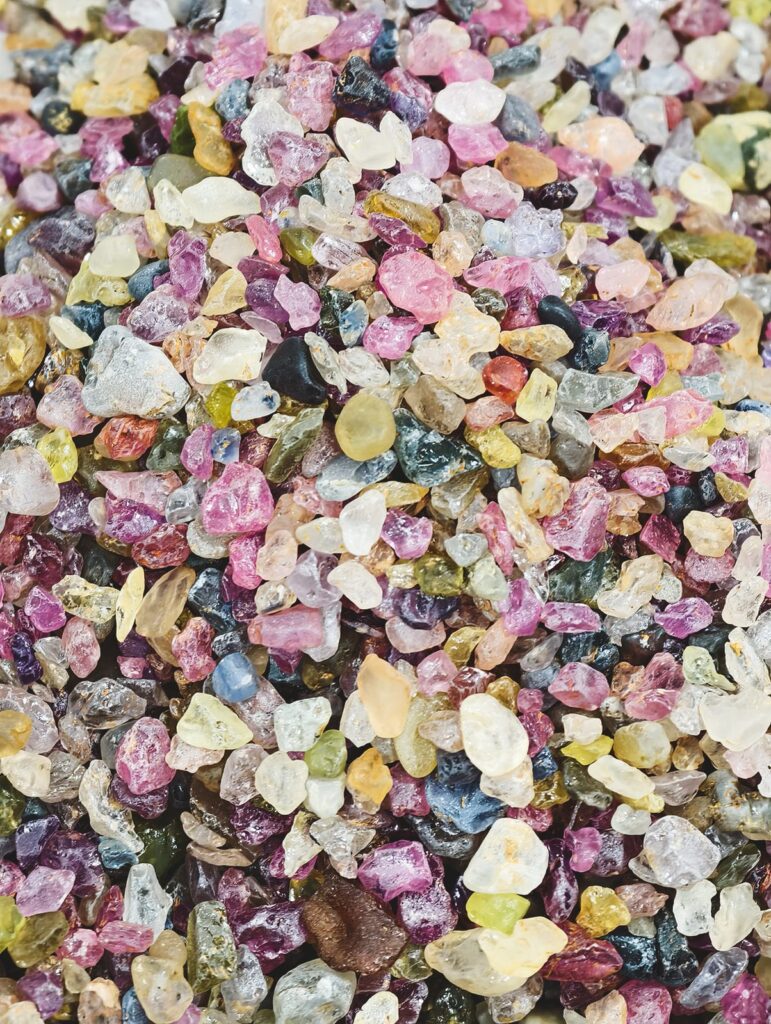
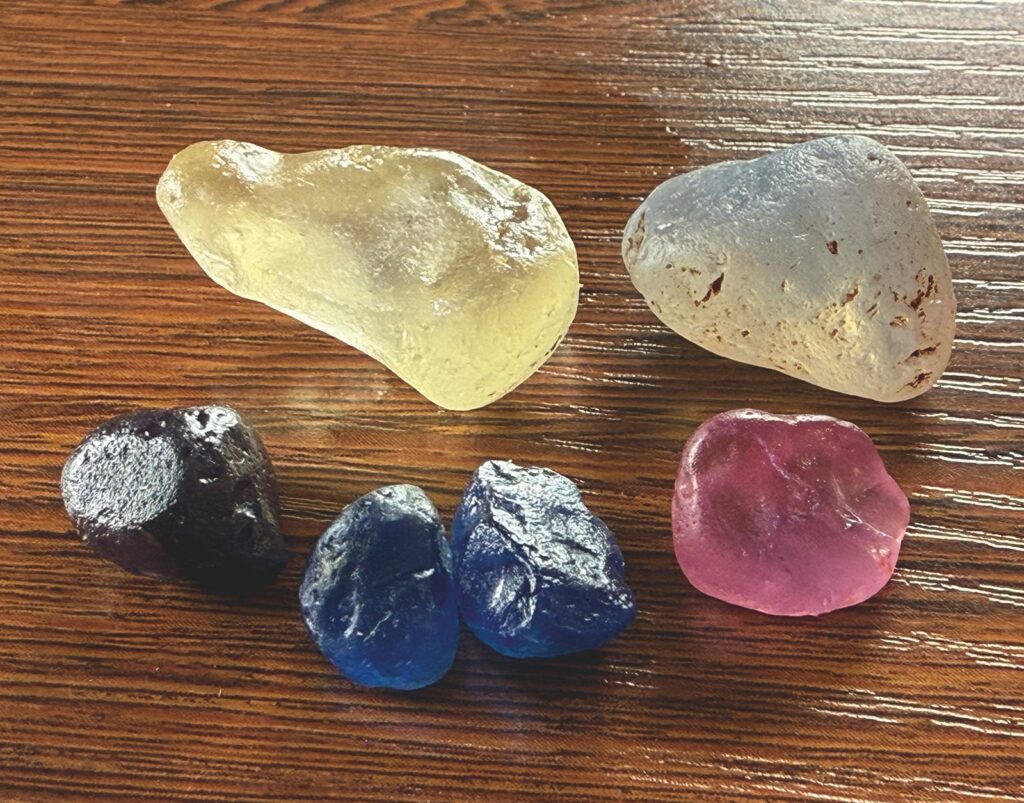
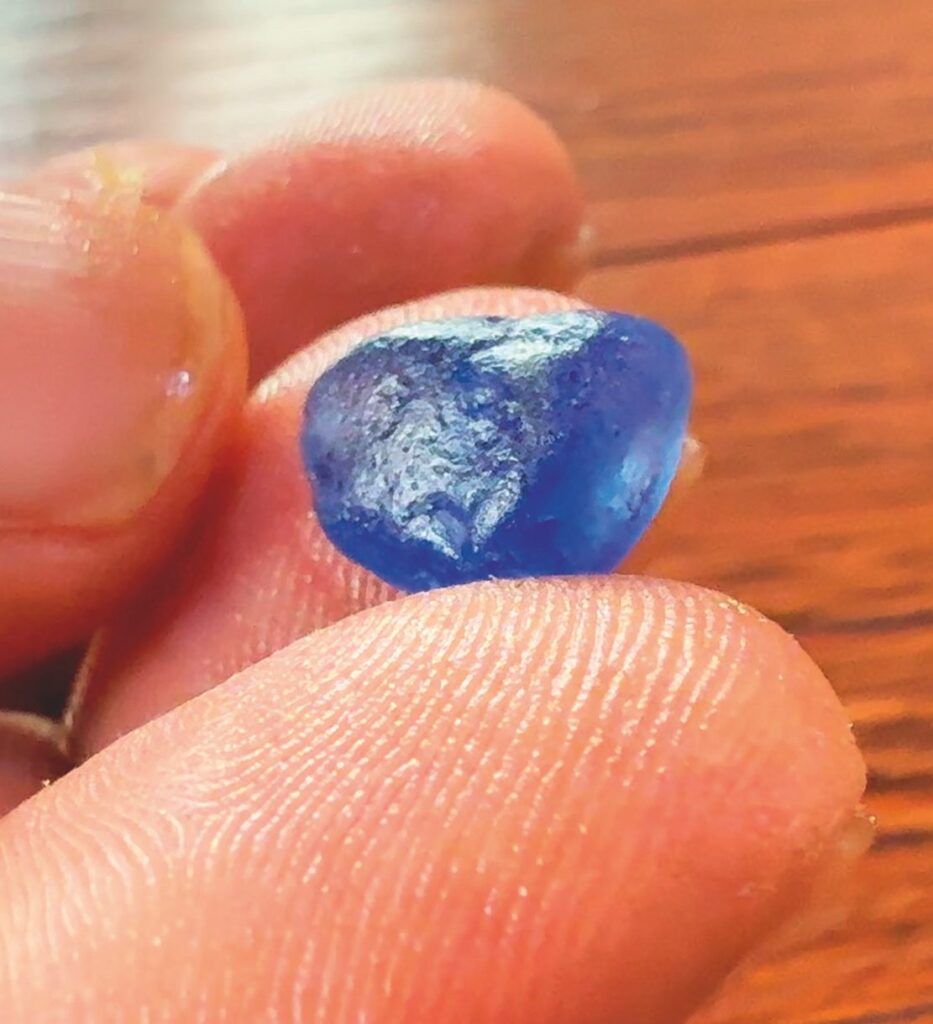
From the gravels we mined or observed mined, there were sapphires in a variety of colors, along with spinel, chrysoberyl, garnet, and other gems. Most of the corundum was well worn placer pebbles.
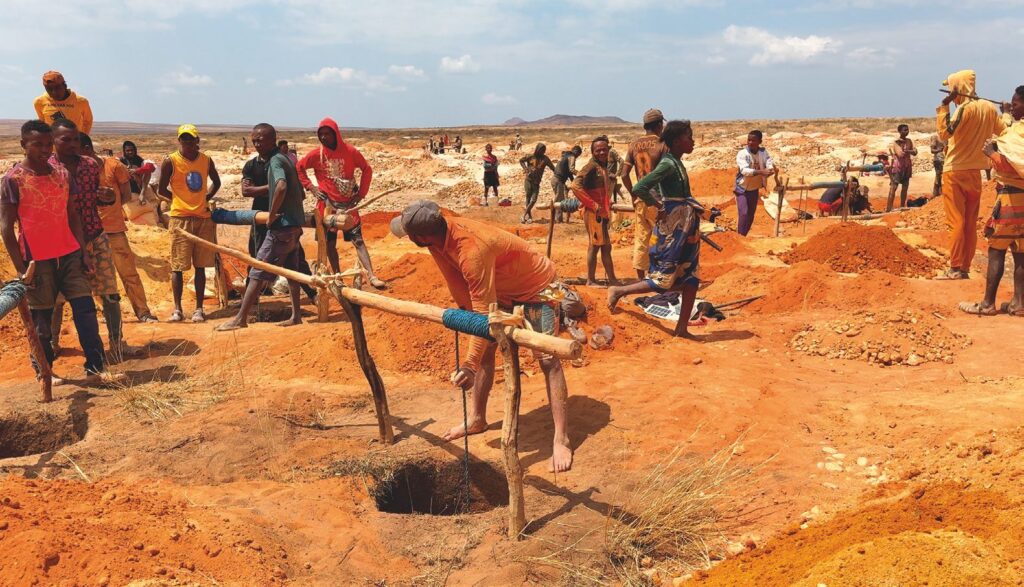
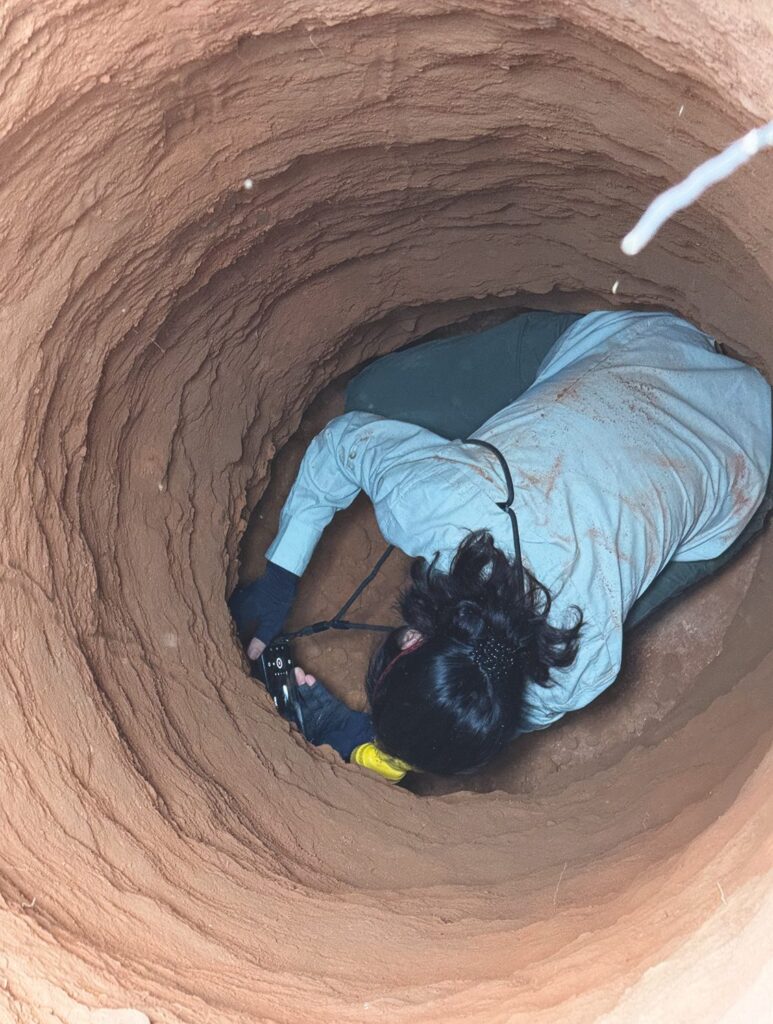
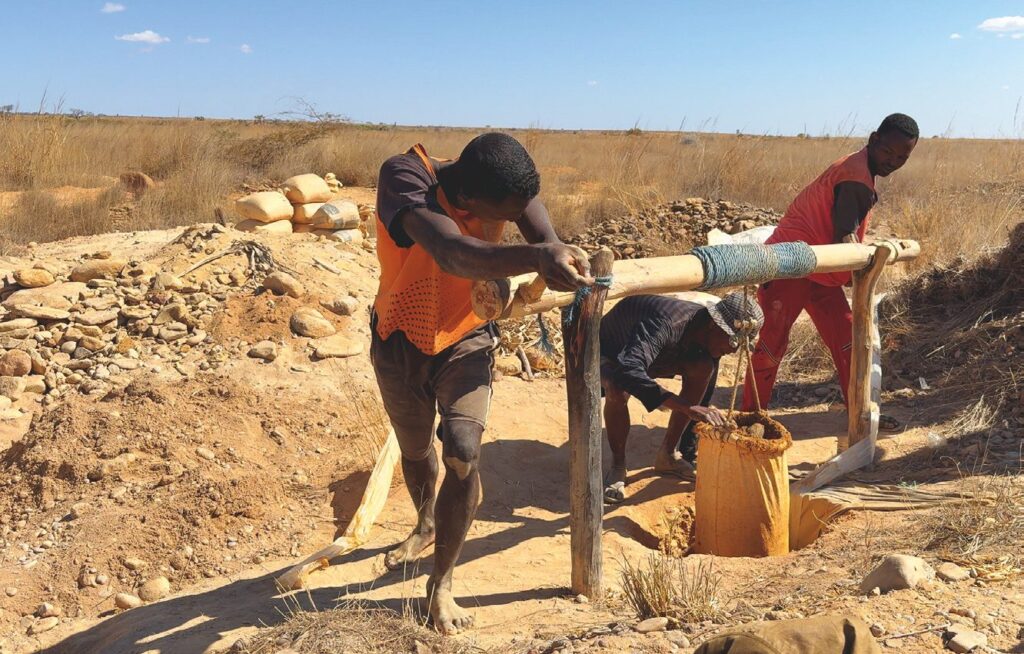
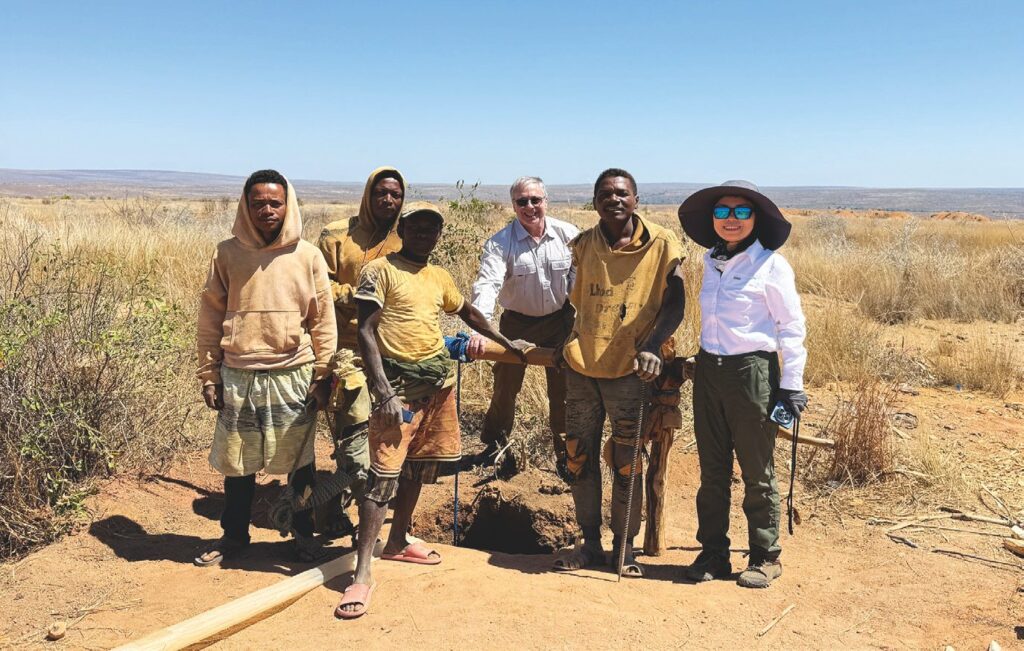
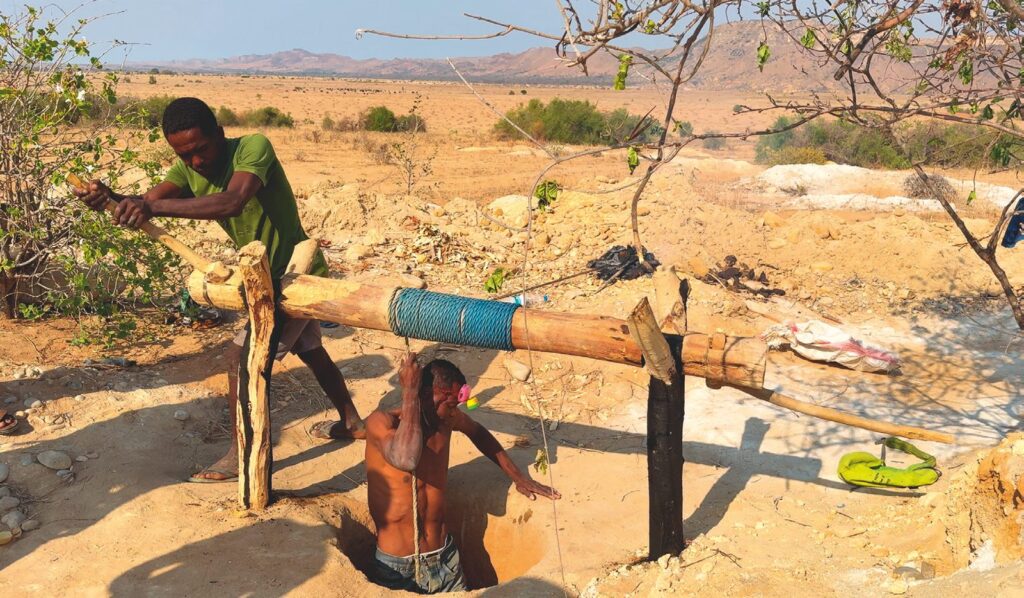
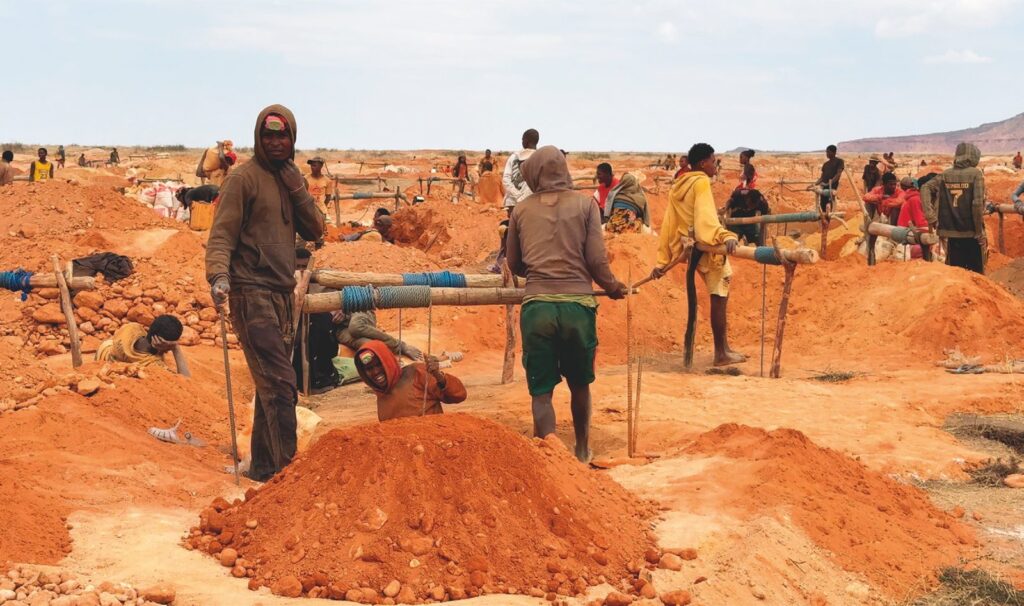
For artisanal mining, most of the mines were narrow cylinder-shaped shafts not much larger in diameter than a person’s width. Most of the cylinder-shaped shaft pit mines, which we saw and entered, were 20 to 30 meters deep with some as shallow as 5 meters, while others were over 50 meters. The walls of the cylinder shafts were much different than the 2×2-meter or 2×4-meter shafts used in open-pit mining in Sri Lanka.
In Sri Lanka, miners use foliage on the walls of the shaft to increase stability, as well as wood braces to secure the pit from cave-in, while also acting as ladders to go down and up the pits. Almost all the cylinder shafts in Madagascar have walls that are simply dirt with no supporting bracing. Buckets are lowered and brought out of the pits by wooden hand-powered makeshift winches. In Sri Lanka, buckets are used to bring the overburden, gem-bearing gravel, and even water out of the pits. In Madagascar, the miners often use these buckets to hand-lower their colleagues into and out of the pits. They step one foot into the bucket and hold onto the rope for going into and out of the pits.
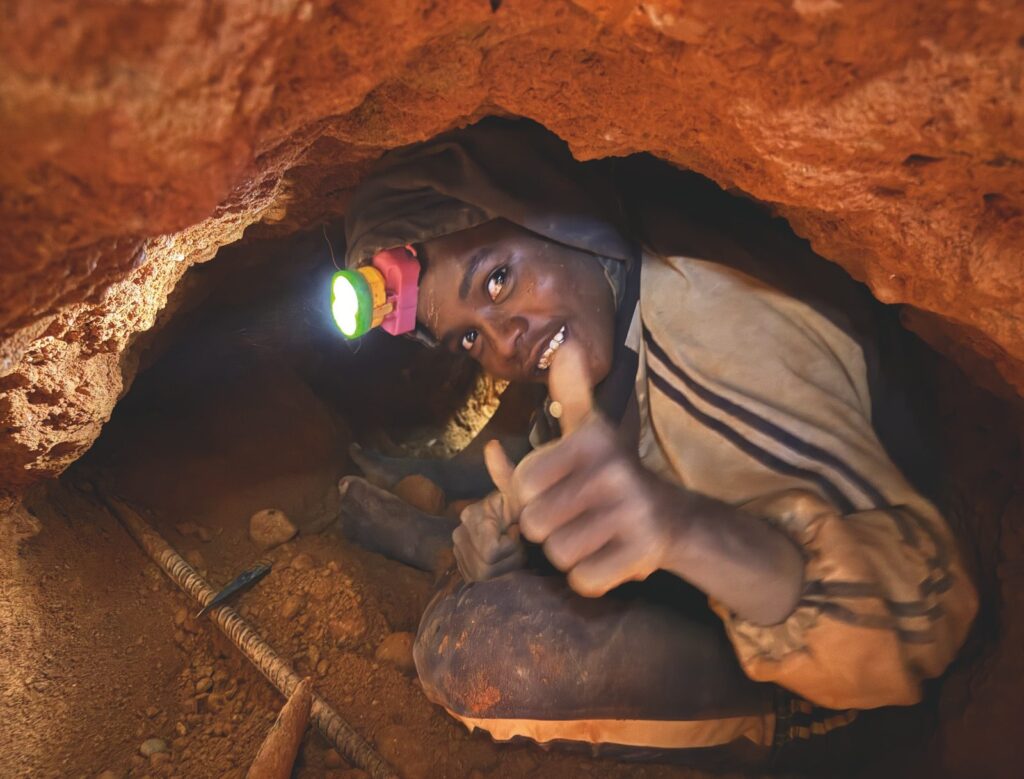
Also, like in Sri Lanka, once the shaft reaches the gem-bearing gravel, horizontal tunnels are dug to reach the gravel as far as possible. The difference in Madagascar is that these tunnels are often dug narrower, thus requiring the miners to work on their back or at best on their hands and knees. Very tight quarters, indeed.
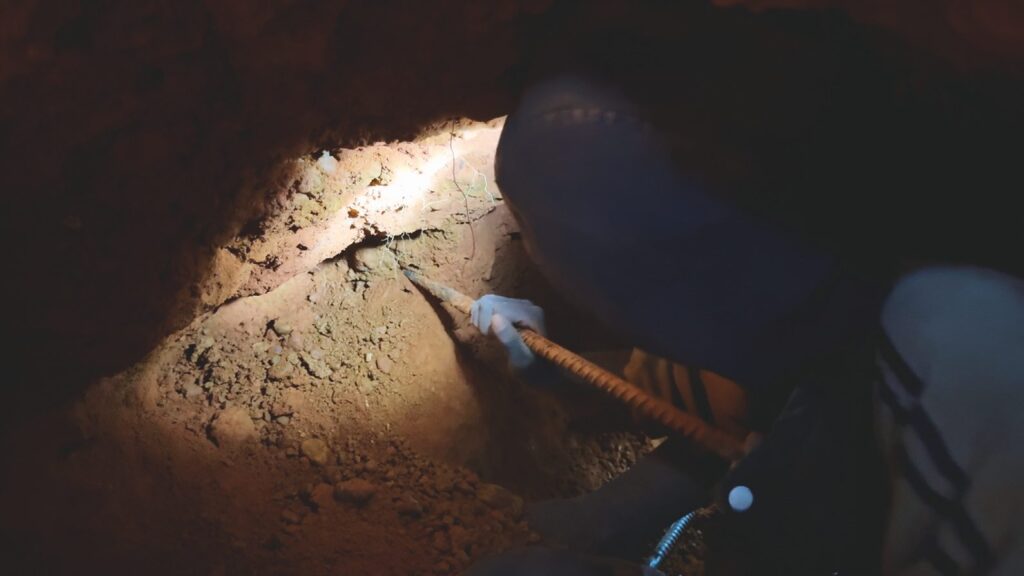
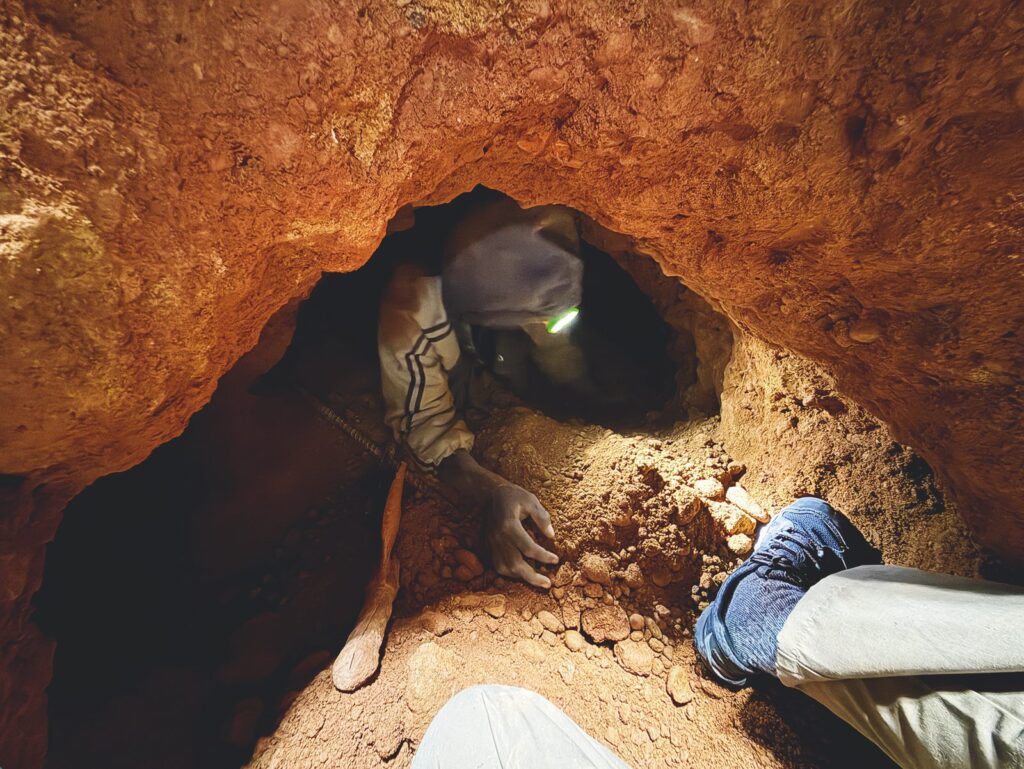
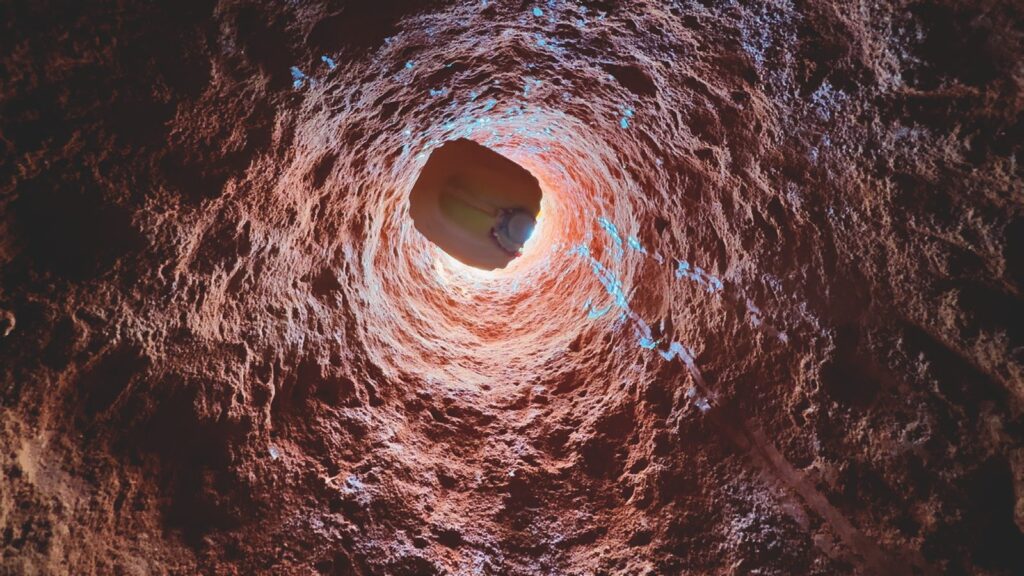
We entered some of these tunnels and dug out gravel for samples for ourselves as well as for documenting the mining process. Miners use metal tools that resemble rebar with a point at one end to dig the gravel in the horizontal tunnels. This tool works well to break up the earth in these tight quarters.
In one small pit (only 6 meters deep), the tunnel seemed almost too small for one miner. Yet, as we were filming, we saw the headlamp of another miner further back in the tunnel. The second miner was continuing to extend the tunnel while the first was digging up the gem gravel and loading it into the buckets to be hoisted up to the surface, packed into bags, and taken by truck to a nearby washing area by a bridge close to the road.
This mine was one of many of this type in the area called Manombo BE. The washing was often done in early morning until about 10:00. Mining would also start in the early morning and then stop for the lunch break from 12:00 to 15:00, the hottest part of the day. It would resume and continue until about 17:00 or 18:00.
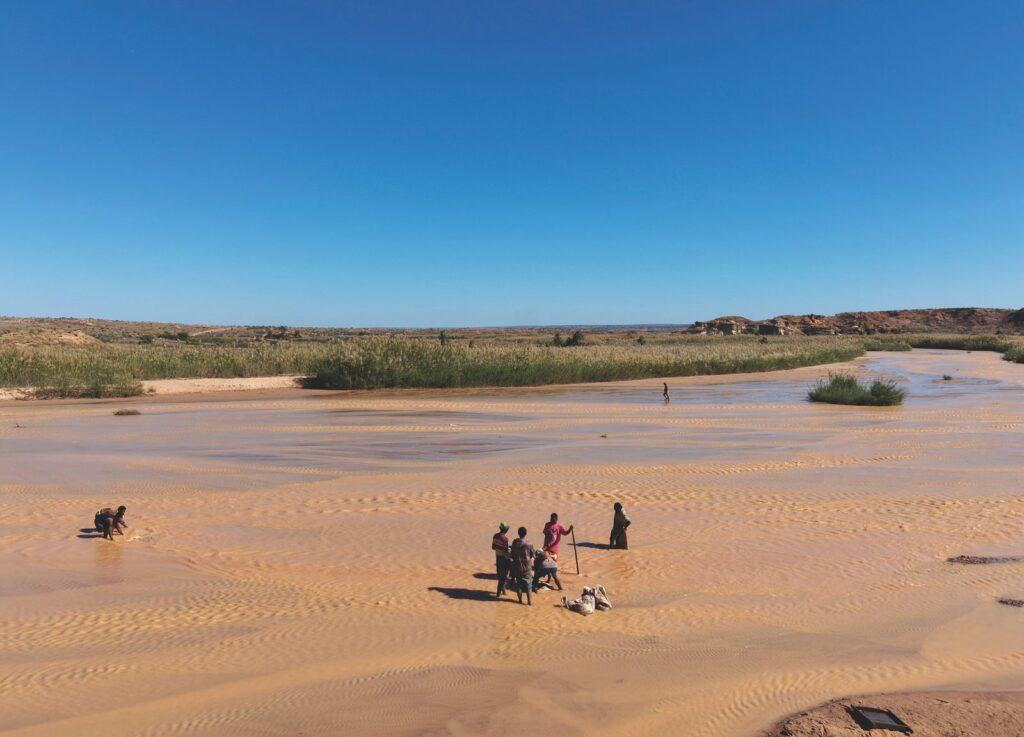
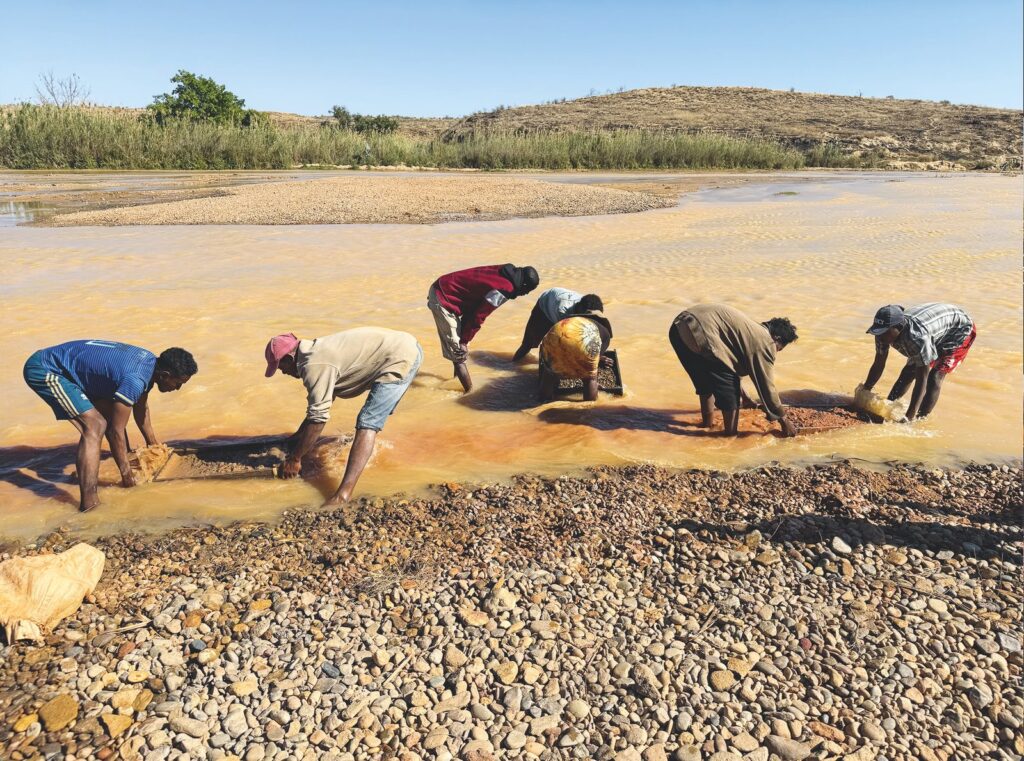
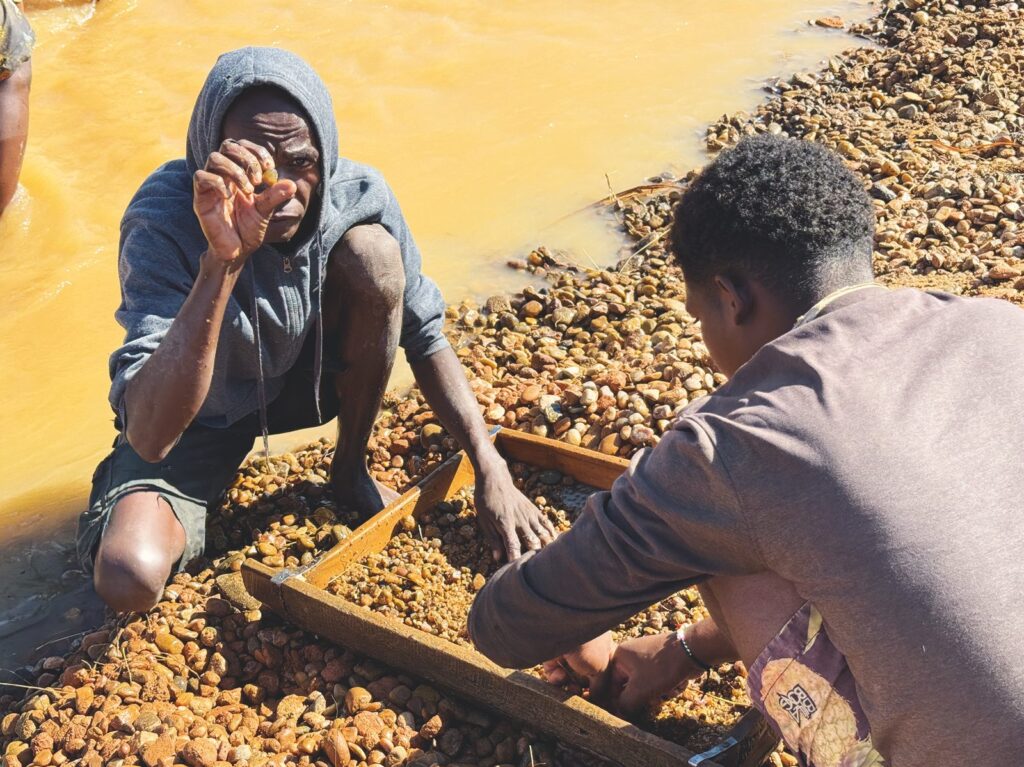
The washing process consisted of rectangular metal screens with wooden handles that were shaken back and forth in a river or some area with enough water. They were much different than the circular basket washing in Sri Lanka, but were very effective. Often, a team of two would hold the ends of the rectangular screen washer, moving it back and forth under the water to remove the soil and light material.
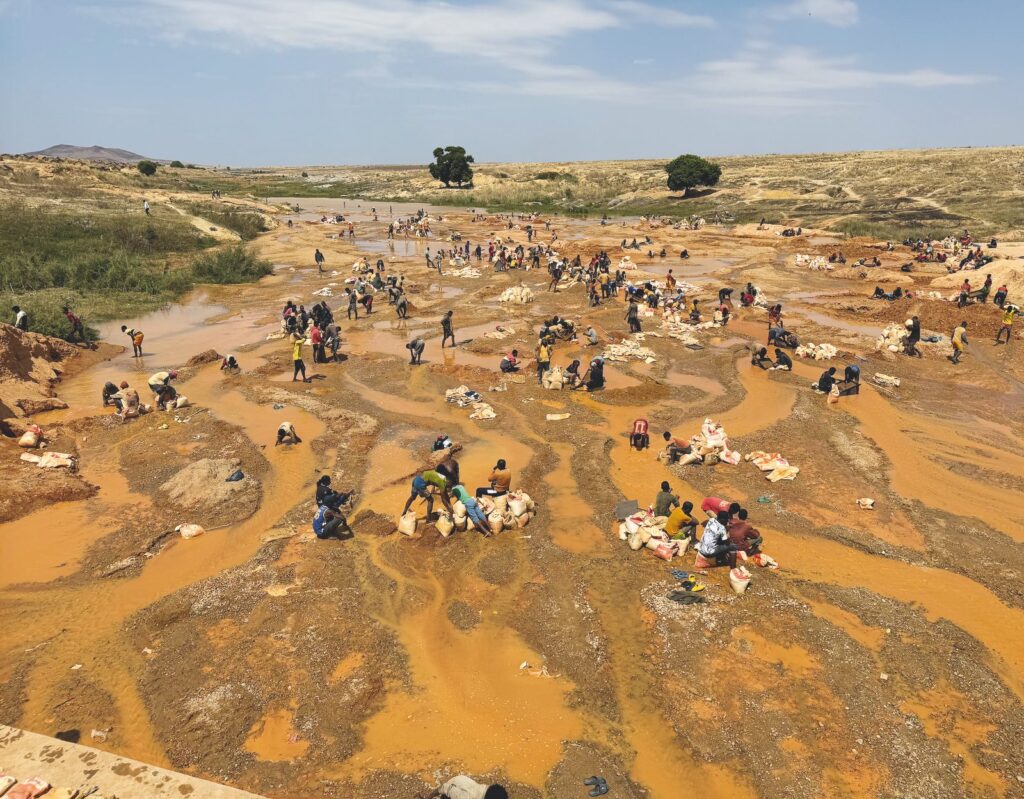
We saw similar washing at Antsoa (also spelled Antzhua) and many other areas that had designated washing areas where water was available. After removing the soil, the washers would carefully go through the gravel looking for sapphire and other gemstones. This involved using their hands to brush over the gravel spreading it out and spotting possible gems for closer examination.
It was interesting to compare the mining operation at Manombo Be and Antsoa. Both utilized a centralized washing area, and both mostly incorporated cylinder-shaped shaft pit mining. The Manombo Be mining consisted of numerous pit mines over an area that was tightly congested with holes. Like Swiss cheese.
Sorting through the washed gravel, looking for gemstones. (Photo: Andrew Lucas. ©Guild Gemology Education)
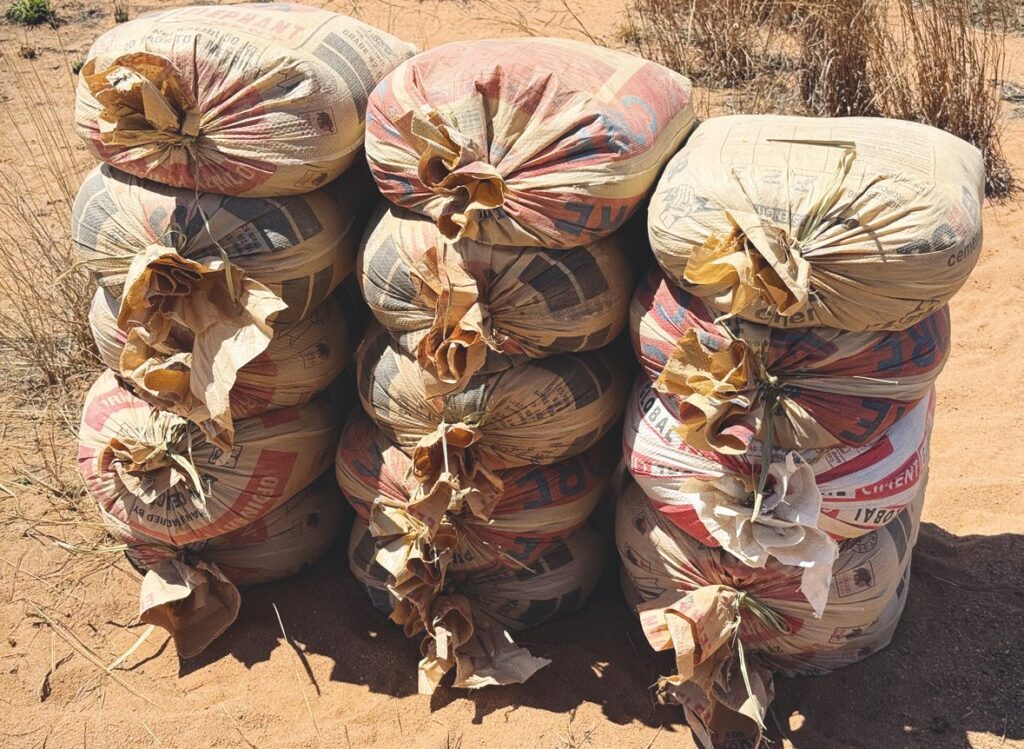
At Antsoa, the mines were more spread out and there were a few larger pit mines. The washing areas were centralized and very similar. The mining area in Manombo Be had pickup trucks that loaded the bags of gravel and took them to the washing area. One area we visited at Antsoa consisted of a licensed mining of three 2.5×2.5 square-kilometer areas. Because the mines were spread out, the miners bagged the gravel and placed it at the nearest dirt road for pickup, to be taken to the washing area.
In the licensed areas we visited, we observed several unauthorized miners working and removing gravel.
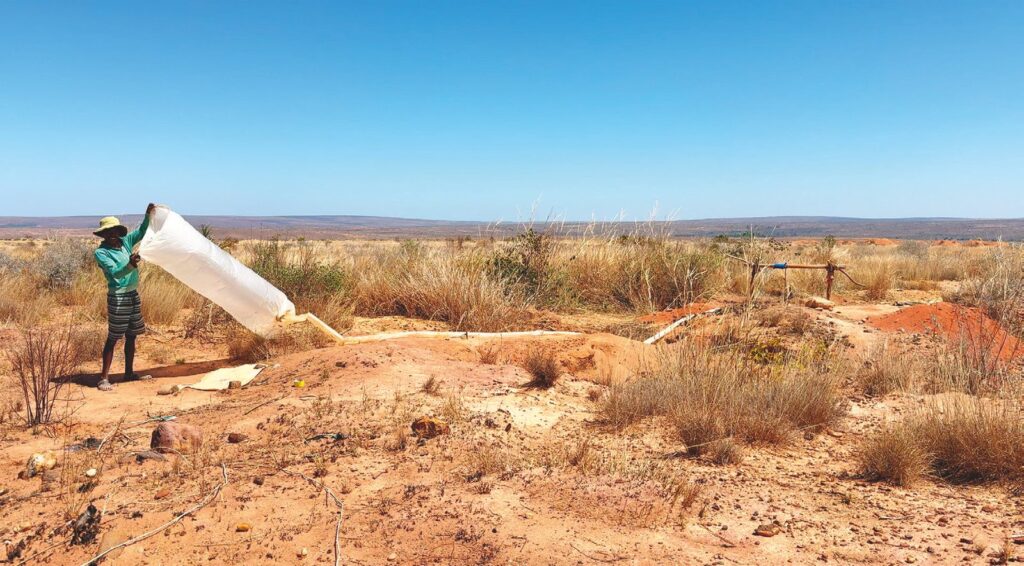
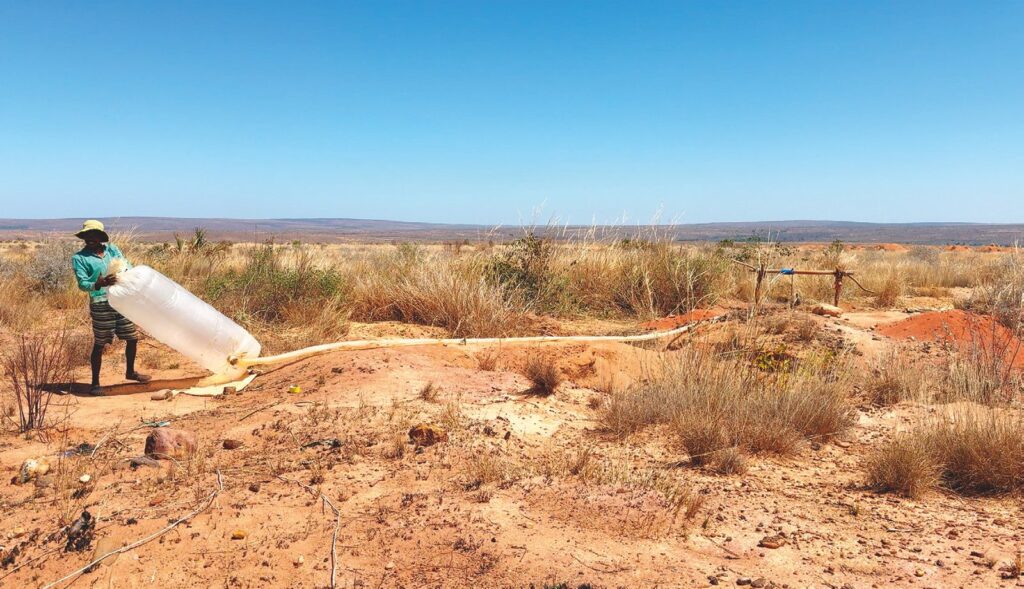
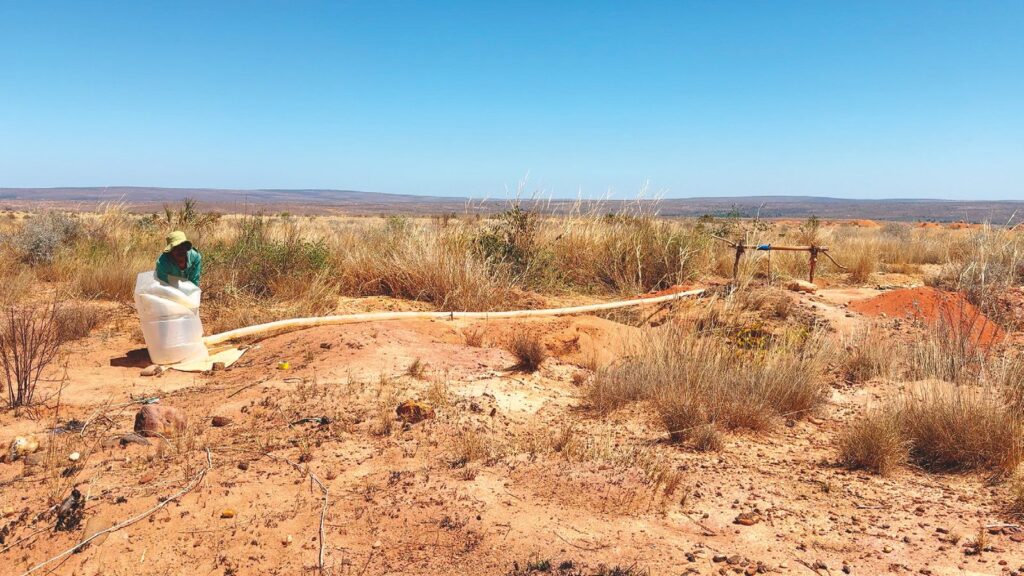
For deeper shafts and horizontal tunnels that extended into the earth, the airflow system was also manually operated. This was a fascinating and somewhat scary process to watch, even if it was an ingenious system. While one or more miners were in the pit, another would be at the surface operating a ventilation system. This system involved a cylinder-shaped plastic bag connected to plastic tubing that extended down into the shaft and the horizontal tunnels. The miner on the surface would literally drag the bag through the air to scoop up a bag full of air. He then pushed down on the bag and squeeze the air through the tubing down into the shaft. This was a rhythmic continual process to send fresh air and oxygen into the pit for the miners.
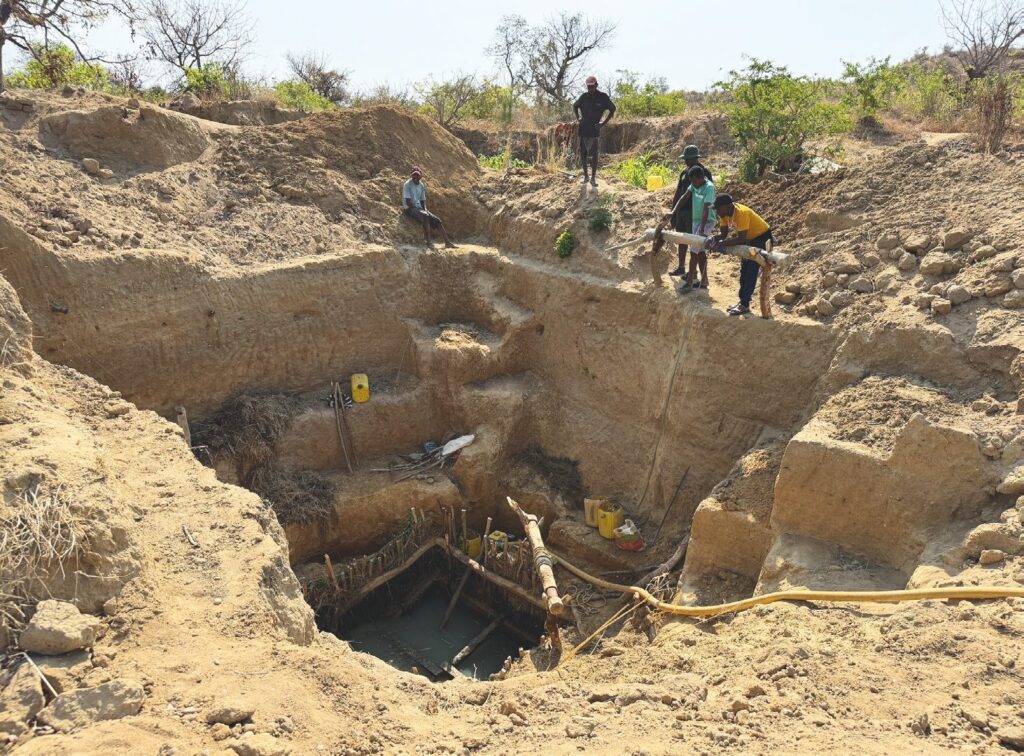
In some locations, ground water was not an issue and the pits were dry. In others, ground water had to be constantly removed either by hand power with the buckets and ropes or, when the miners had more resources, by using a water pump. These pumps were more commonly seen in the mechanized and partially mechanized operations.
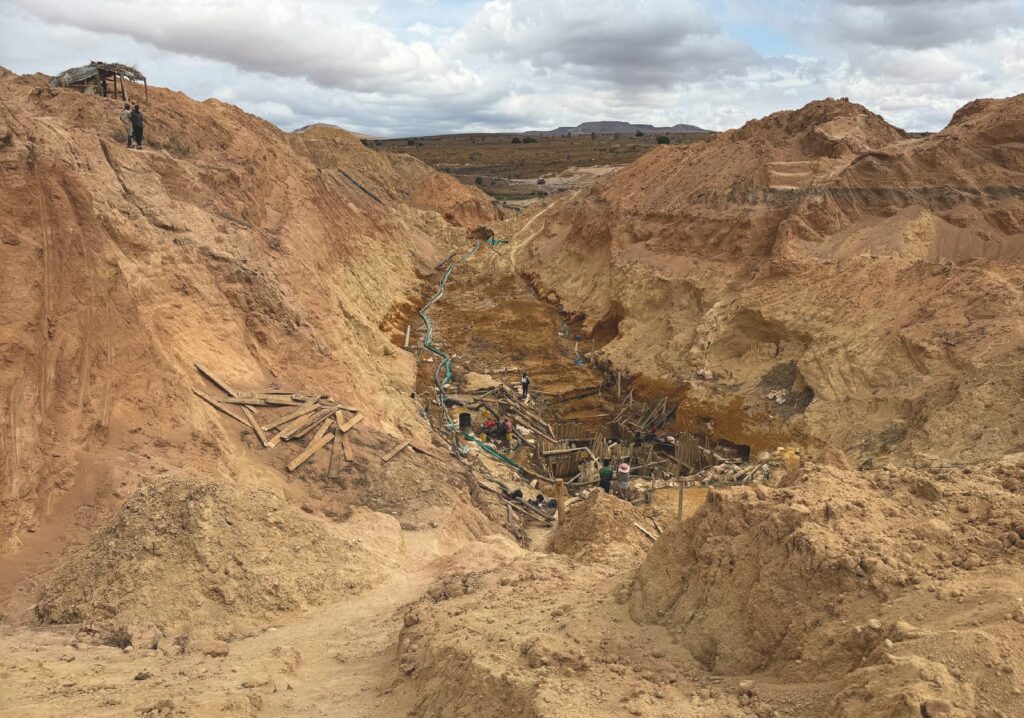
Some of the pit mining operations were considerably larger, even if hand-worked, and had the hypnotizing process of many miners working on ledges or steps moving down into the pit, with 20 or more miners shoveling. Some of the partially mechanized open-pit operations were much larger than many of the hand pit operations and you could see the excavator marks on the walls of the pit although the gravels were being removed by hand.
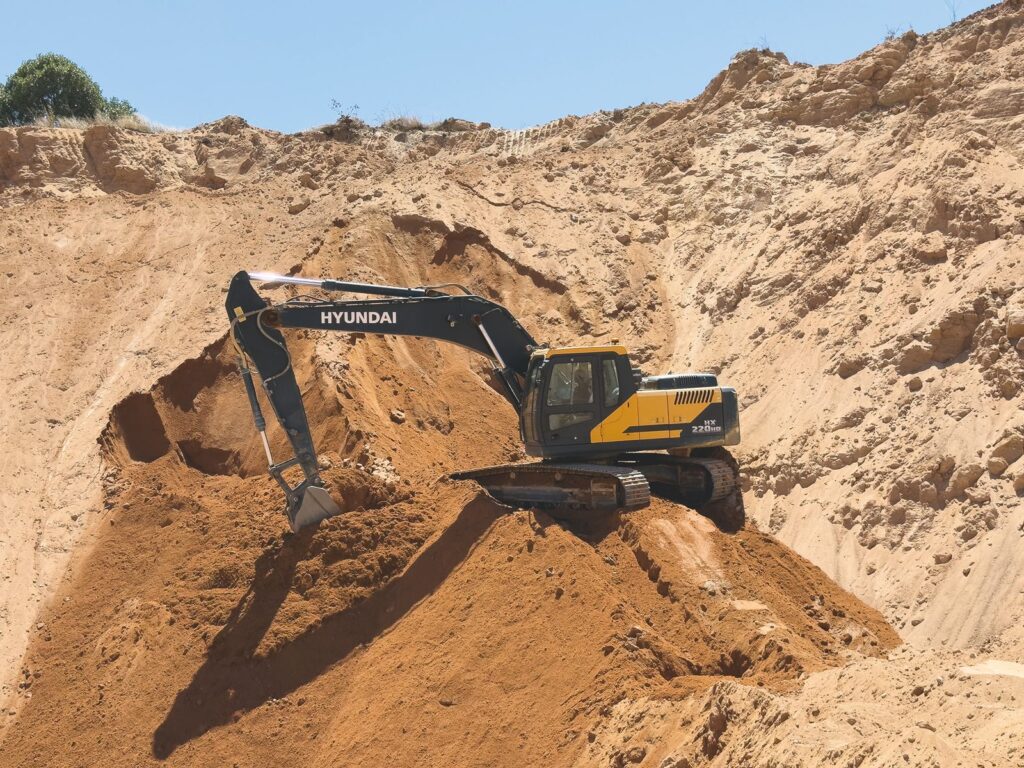
The fully mechanized operation of Mr. Jonathan that we visited used an excavator to dig the open pits, reach and extract the gravel, and take it to trucks for transport to the washing area and finally loading the gravel into the trommel and jig. This type of mining can be the most efficient if the deposit is suitable.
But in Madagascar, it is extremely difficult to get such a license. The mine we visited has held their license for decades. New mechanized licenses are almost impossible. And the maintenance, repair, and sustainability of equipment is not easily accomplished. The mine we visited employed 40 to 60 employees working every day. At the time of our visit, they were running two shifts a day and as they were also washing.
They cannot mine the pit we visited during the rainy season because the risk of a flash flood is too great, so they focus instead on their second mechanized open-pit operation where the water is not nearly as much of a problem during the rainy season.
They usually stop mining this pit at the end of November and resume in February. They had already finished mining the pits to the north of the current one we visited, which they had mined a year ago and had just restarted.

The pit mining operations they had worked all followed a paleochannel north to south. The current pit required them to remove approximately 20 meters of overburden. Mr. Jonathan’s family obtained their mechanized mining license more than 20 years ago.
The Local Markets
We researched four major rough trading markets during our expedition:
- Ilakaka
- Manombo
- Sakaviro
- Sakaraha
While many of the major Sri Lankan buying companies are present at all four or at least three of the markets, each has its own flavor.
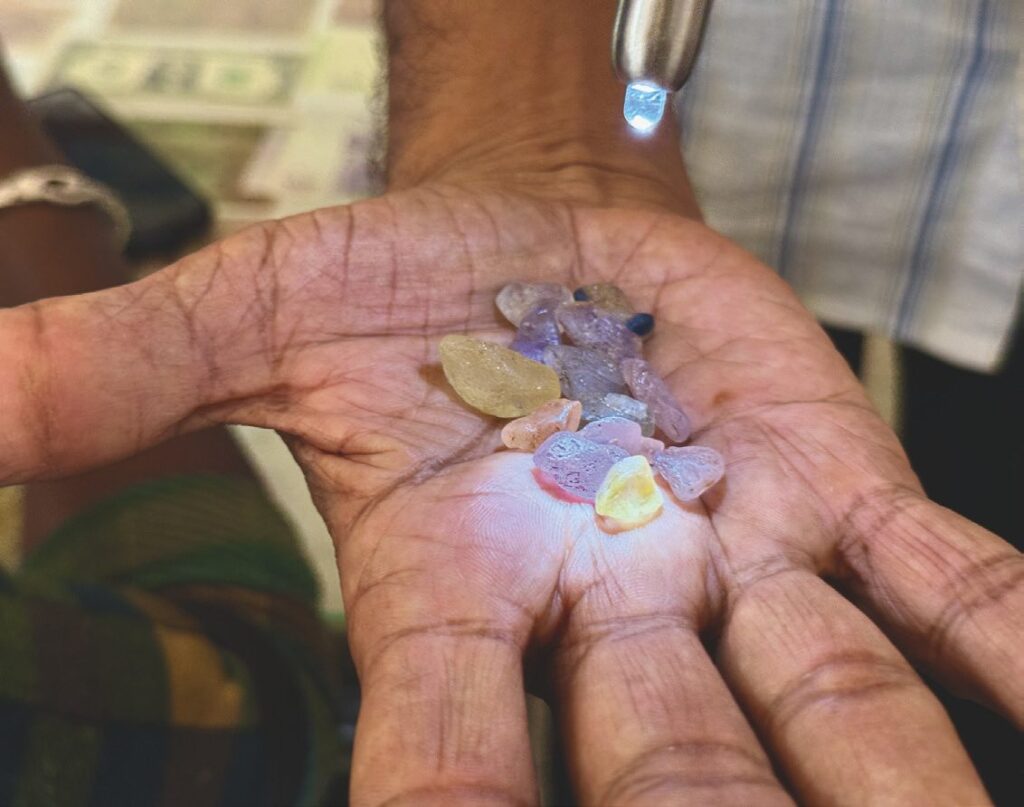
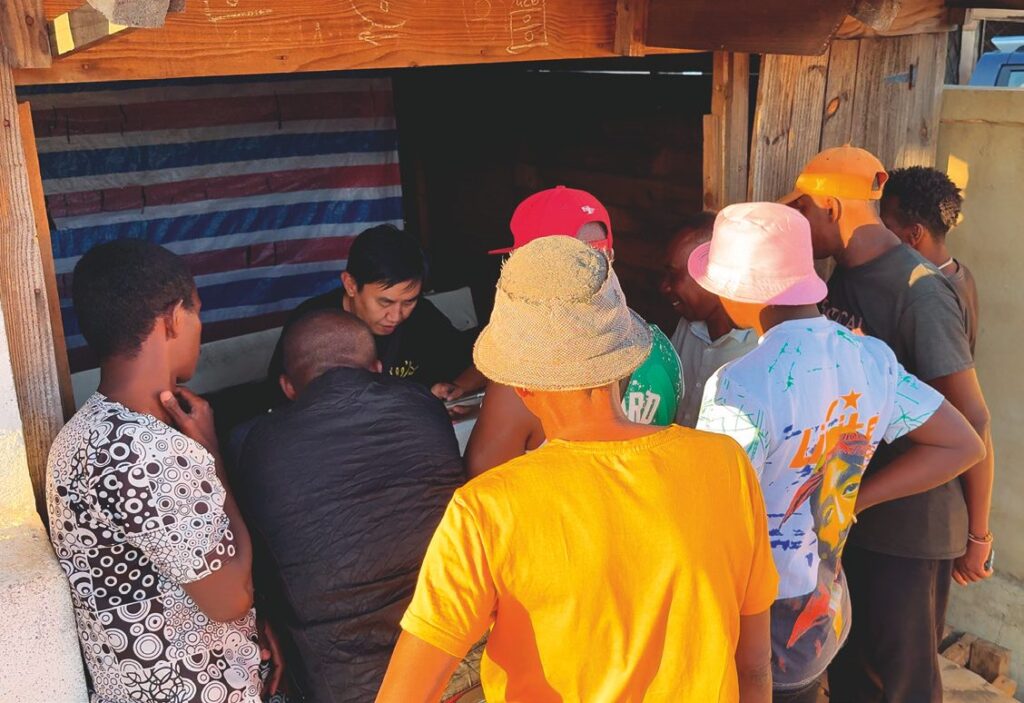
First are the markets that are dominated by Sri Lankan companies that buy rough and send it to Sri Lanka for cutting and possibly heat treatment.
Next would be Malagasy buyers whose numbers and buying strength have grown over the years. While there are also still important Thai buyers, they are fewer in number.
Some other foreign buyers are also present, but they are very small in number and type. The strengths of the gem market today in Madagascar are the Sri Lankan and Malagasy buyers.
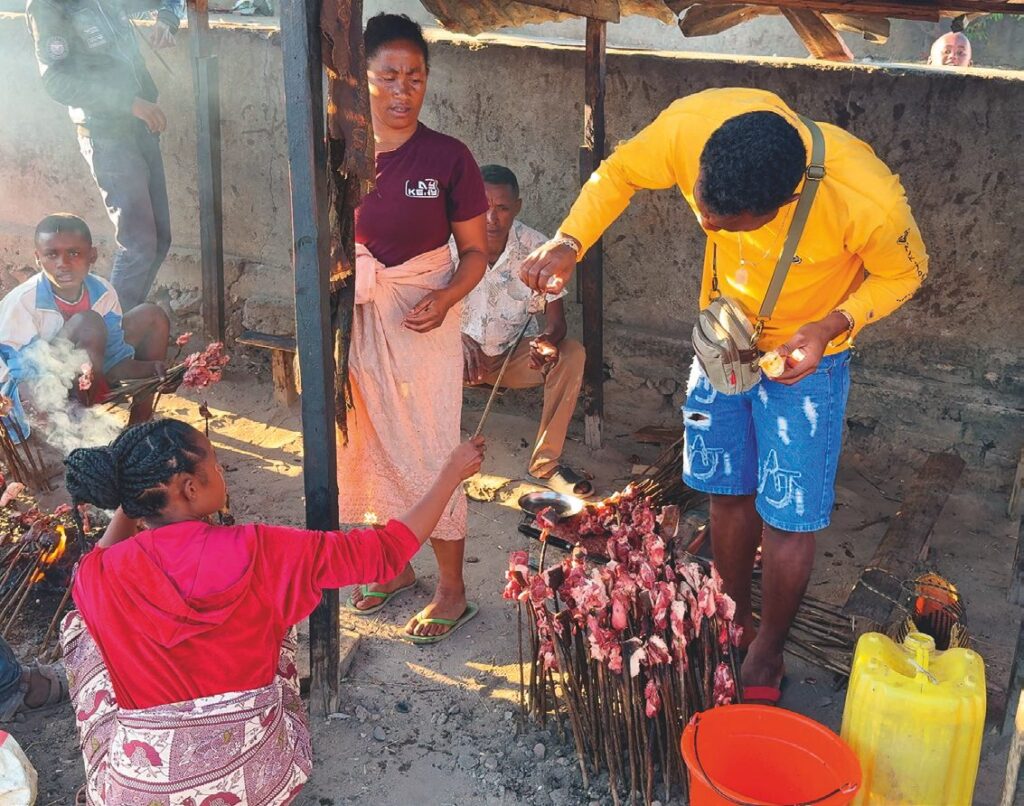
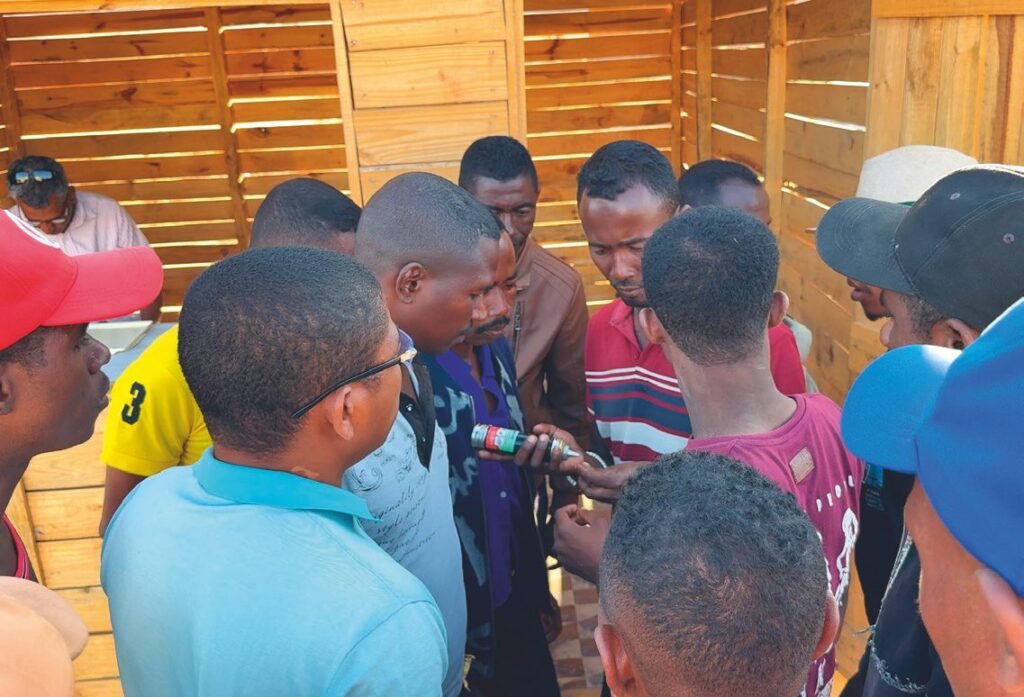
Ilakaka is the largest and most active market. It has the most street action going on of any of the markets. Here, you can find large buildings belonging to prominent Sri Lankan companies, smaller establishments of Sri Lankans, Thais, and Malagasy that consist of basically a small store front with a barred window to evaluate and buy stones. In the larger buildings, there are offices for more privacy as well as eating facilities and living quarters. This was true of the buildings of these Sri Lankan companies in other markets like Sakaviro.
While technically not legal for foreigners to trade in the street, we saw more of this action in Ilakaka where Malagasy locals would come up to “new faces” offering rough. Much of this rough was promoted as natural gemstones and unheated corundum.
These “new faces,” however, offered mostly synthetics, imitations, and heated sapphires, as well as low grade commercial natural stones. While filming a Sri Lankan dealer buying rough sapphire, we noticed a man show him rough sapphire with very distinctive blue “zoning.” The dealer quickly examined it and then rejected the stone even quicker. It was obvious why. The “zoning” was obviously blue ink. Another common practice in this market.
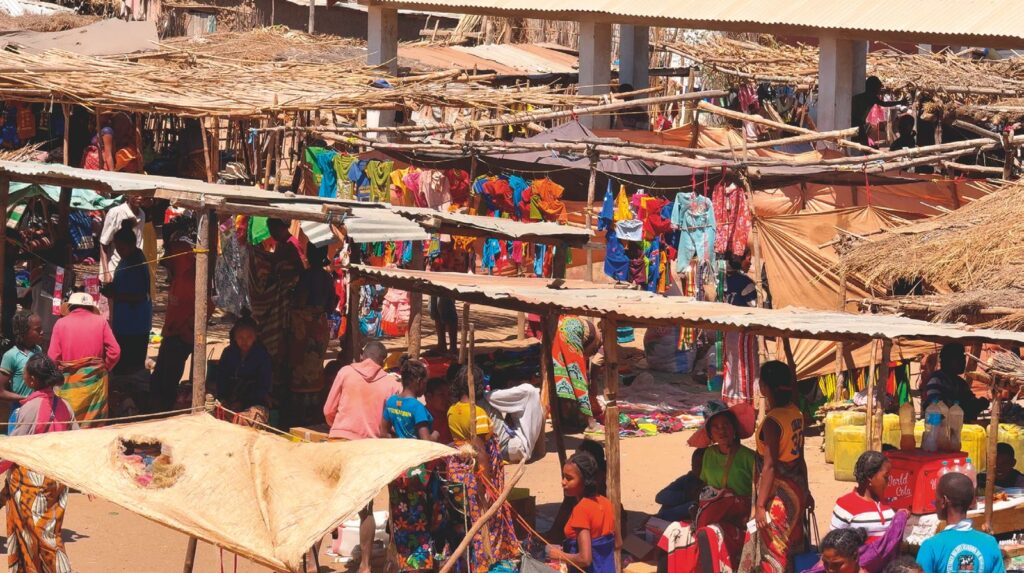
This was a bustling miner’s and trader’s market full of action and excitement. Besides the professional miners and traders, you would also see tourist groups and the lone adventurous tourist as well as some shops for tourists selling cut stones. Local hotels and restaurants serving gem industry clientele also flourished, as well as higher-end resorts just outside of town near the National Park that catered to foreign tourists. Most of the serious trading in Ilakaka was done in the morning and slowed down after lunch.
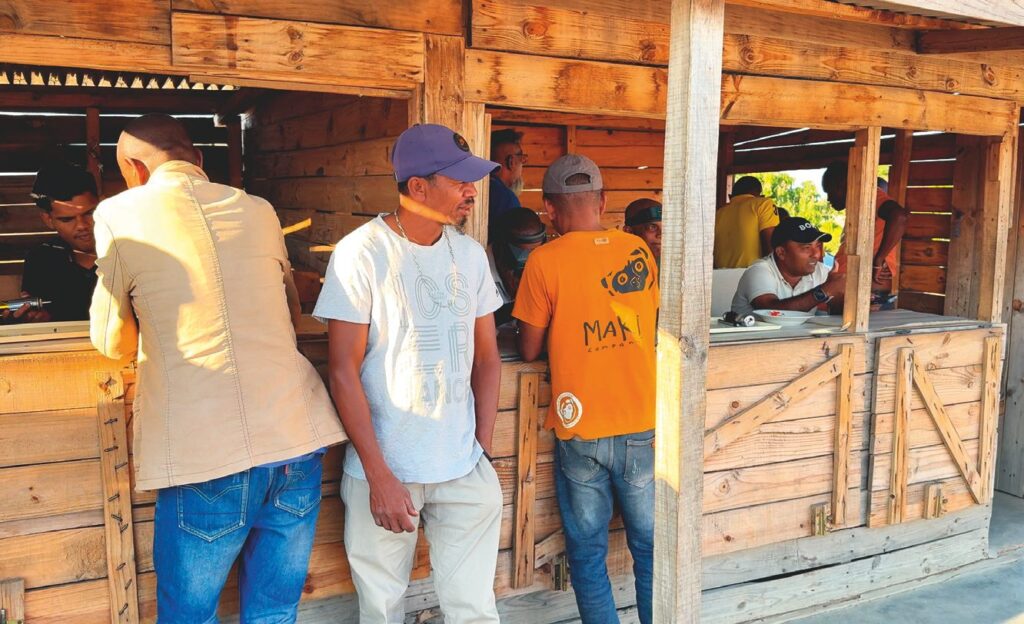
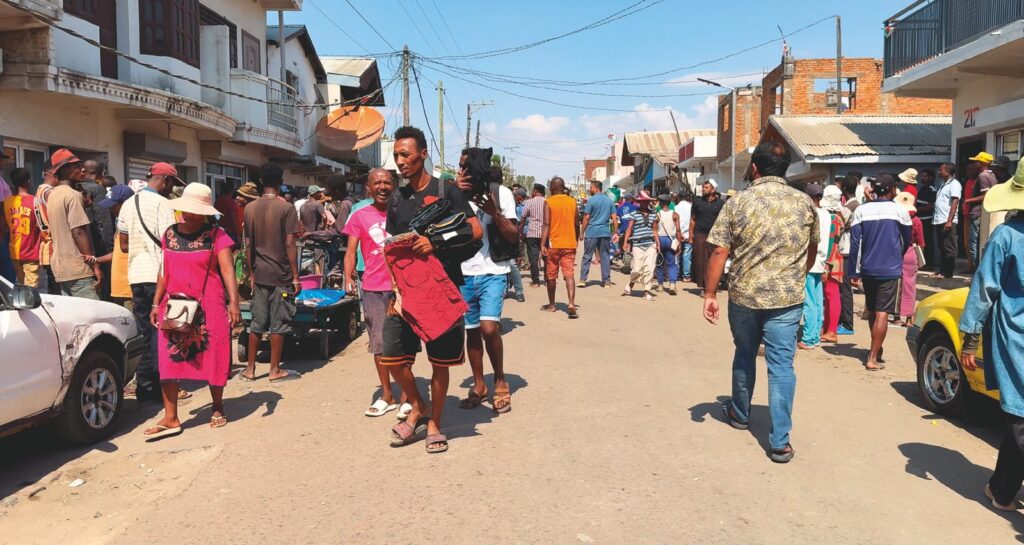
Sakaviro was a very different market. Many of the traders in Ilakaka during the morning rush would travel after lunch to Sakaviro for trading from 15:00 to 18:00, as that market became known as the afternoon market. This market was much more relaxed and catered primarily to Sri Lankan, Malagasy, and a handful of Thai professionals who were well known.
There was an area with open tables, trading in the street, and small shops with the barred windows and constant bartering. Along with the larger building of the important larger Sri Lankan companies. We very much enjoyed this market and found it a good place to do serious business.
The Manombo market had the most feel of a miner’s market. Much of the trading was focused on the production coming from right next to the town and we had a less wide range of production offering than the other markets. Some of the same Sri Lankan companies, Malagasy buyers, and Thai buyers seen at the other markets were also there. Because the competition for buying is so brutally fierce, most production goes to buyers that are always present in the areas closest to each area’s mining action.
The Sakaraha market has a very different feel to it. It seemed like this market was the most dominated by the bigger Sri Lankan companies with large buildings. While all the markets are dominated by buyers with longstanding relationships with miners, this was the market where that stood out the most.
The Mining/Trading Business Model
The business model that led to the dominance of Sri Lankan buyers in the market has been developing and thriving for decades. Sri Lankan companies finance Malagasy miners by providing funding for mining operation, food, shelter, and subsistence.
As Anas Gems described, this has continued for up to three generations. By providing needed funds, the miners who have relationships and agreements with Sri Lankan companies will bring the production to them first for viewing and the right of first refusal. They then negotiate the price. If an agreed price is not met, the miner can sell the production on the open market, but will pay a commission to the Sri Lankan for the funding provided to them. This system has been working very successfully for decades for both parties. Many Malagasy and Thai traders use a similar system, but the Sri Lankans seem to have a higher percentage of purchases.
During an interview with Mr. Fasly of Safras Masha Gems, he stated that their expenditures to support local miners are over US$100,000 a month. He buys from 500 regular suppliers, including miners and brokers, and has built relationships for over 20 years. Besides the funding to miners, Safras Masha also builds schools and pays teachers. They specialize in no-heat sapphires cut in Sri Lanka, and sell to important Chinese and New York City American dealers. They often sell smaller stones to Sri Lankan buyers.
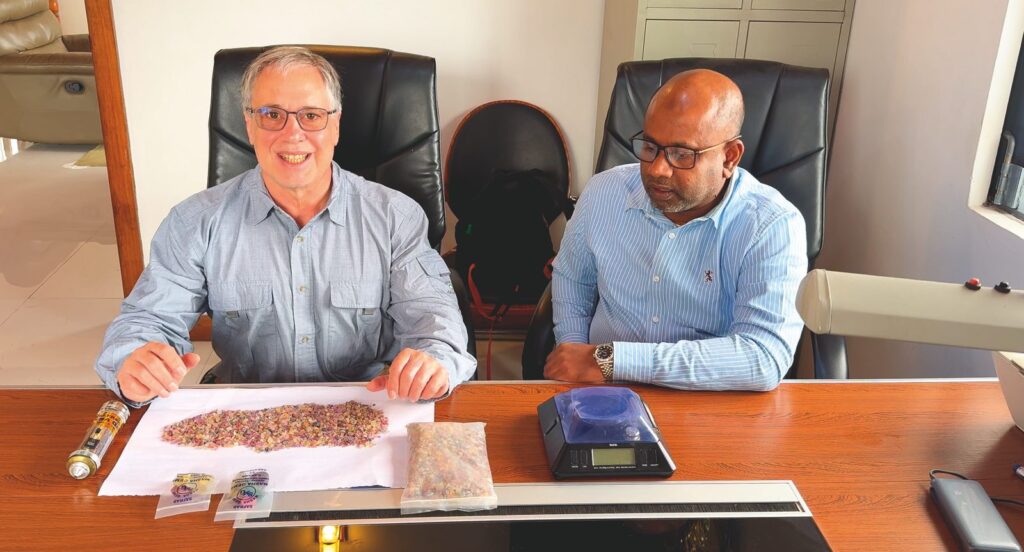
The huge presence of Masha Gems is felt in all the markets. Besides the above model, Masha Gems has licensed mining operations over 7 square kilometers, where Malagasy miners work the concession and bring the production to their offices in Sakaraha. They have held the mining concession since 2001, which they can renew each year until 2048. They estimate that after 27 years of mining their area, only 20% of the potential gem gravels have been mined.
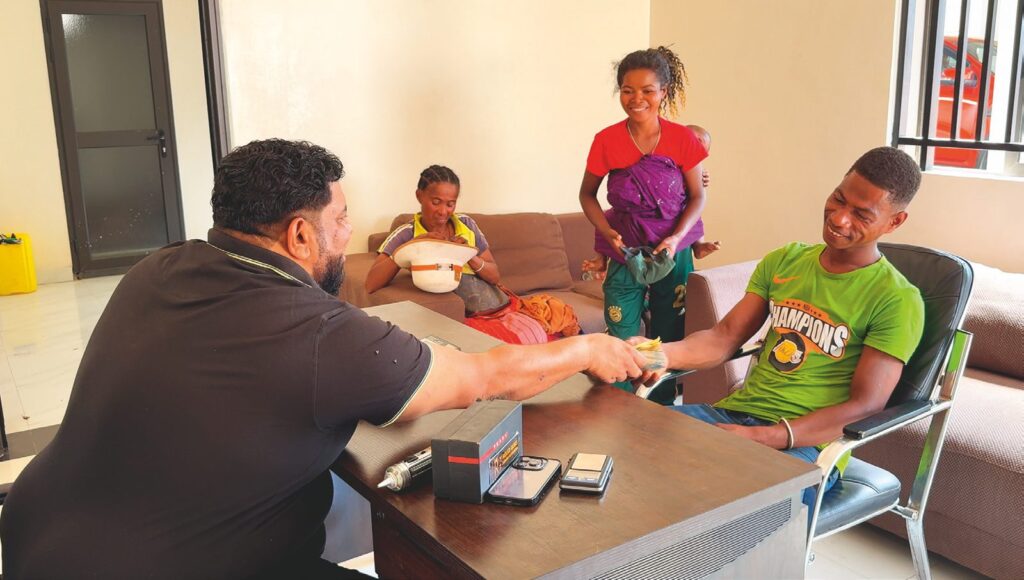
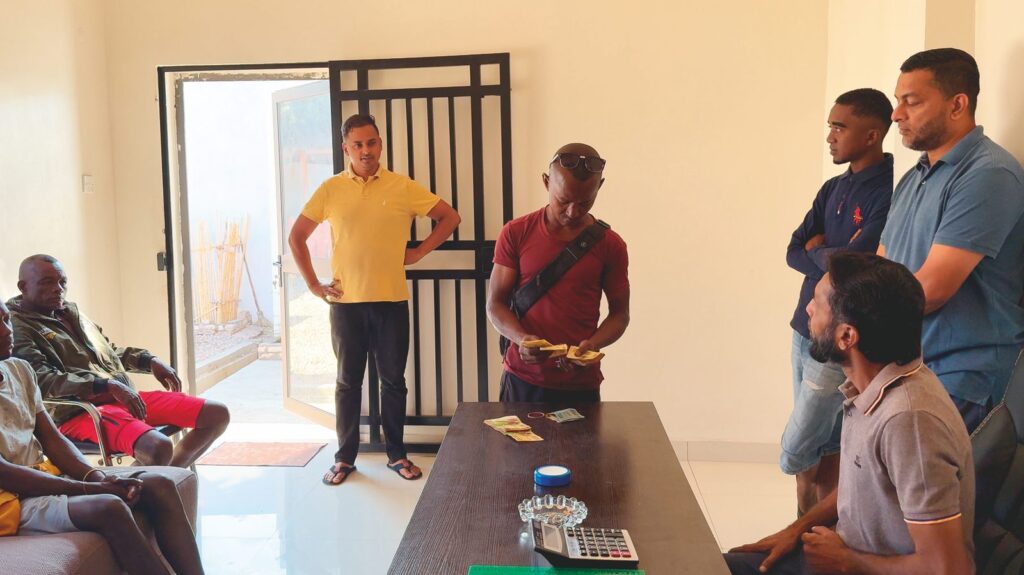
At Rolex Gems-Jabara, we watched a negotiation session between the Sri Lankan dealer Jabara and one of the miners he supports. This was very entertaining as the miner had his wife, infant, and mother in the office during negotiations and they all took part in the deal making. This started out with an initial price being offered and rejected and then a long discussion about the quality of the rough, cut yield, and market price. Jabara started with a stack of cash placed on the table leading to further negotiating, which had been brought into the office by an associate. Then, Jabara made a call to his associate and a bit more cash was brought in and placed on top of the original stack. This happened a couple of times until the amount was finally agreed upon in cash, concluding the deal, and the gems changing hands.
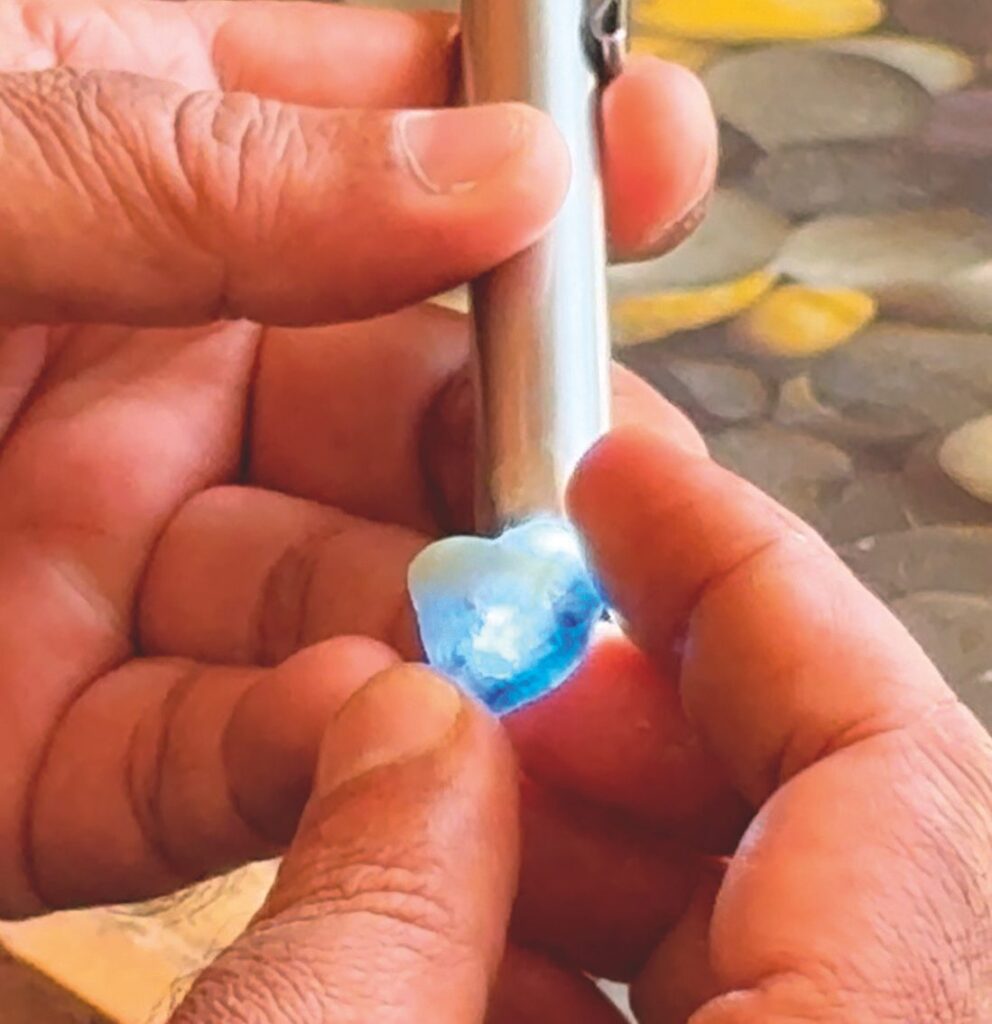
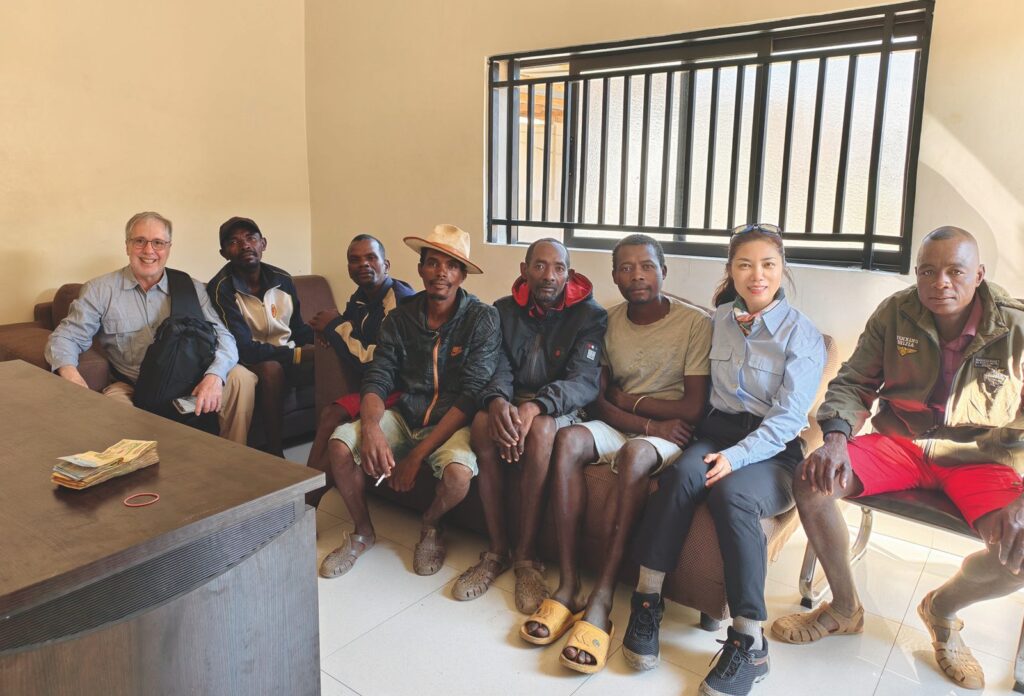
Another interesting example at Rolex Gems-Jabara was a group of miners negotiating through a broker in one of their trading offices. The deal had been made and the price agreed with the broker, but payment would be made to the broker in front of the miners and the broker would pay the miners.
However, the broker decided, while counting the cash, that a commission had not been included, or that someone else needed a payment, or for a variety of reasons, more money and negotiation was required, including phone calls. The same system was used where an associate of Mr. Jabara would bring more cash in for the new agreed price. But then, while counting the new money, the broker insisted that more was needed for a different reason. We were told this process could continue all day. It seems that local brokers can change an agreed-upon price, but not foreign buyers.
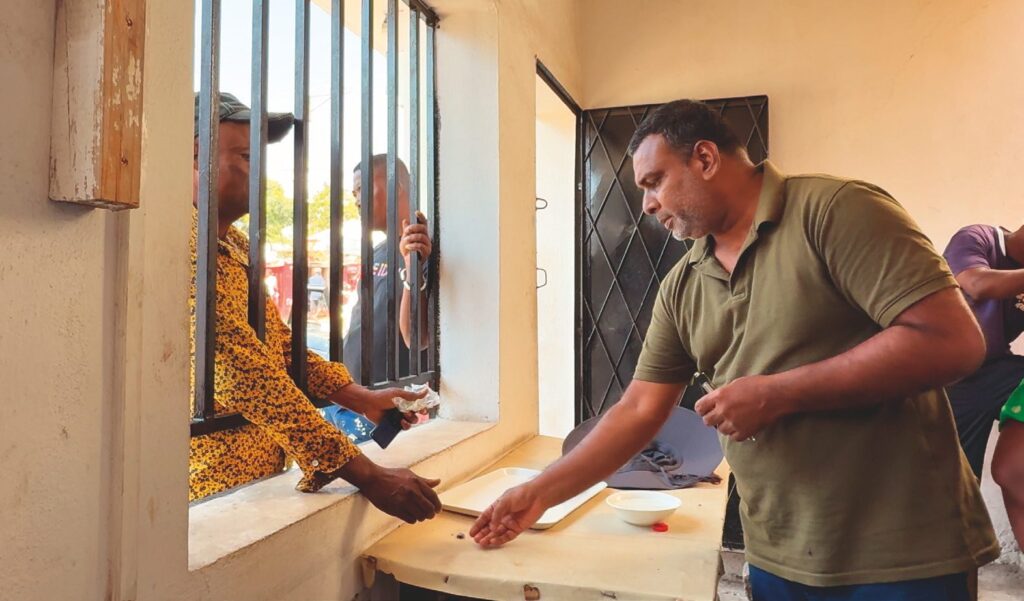
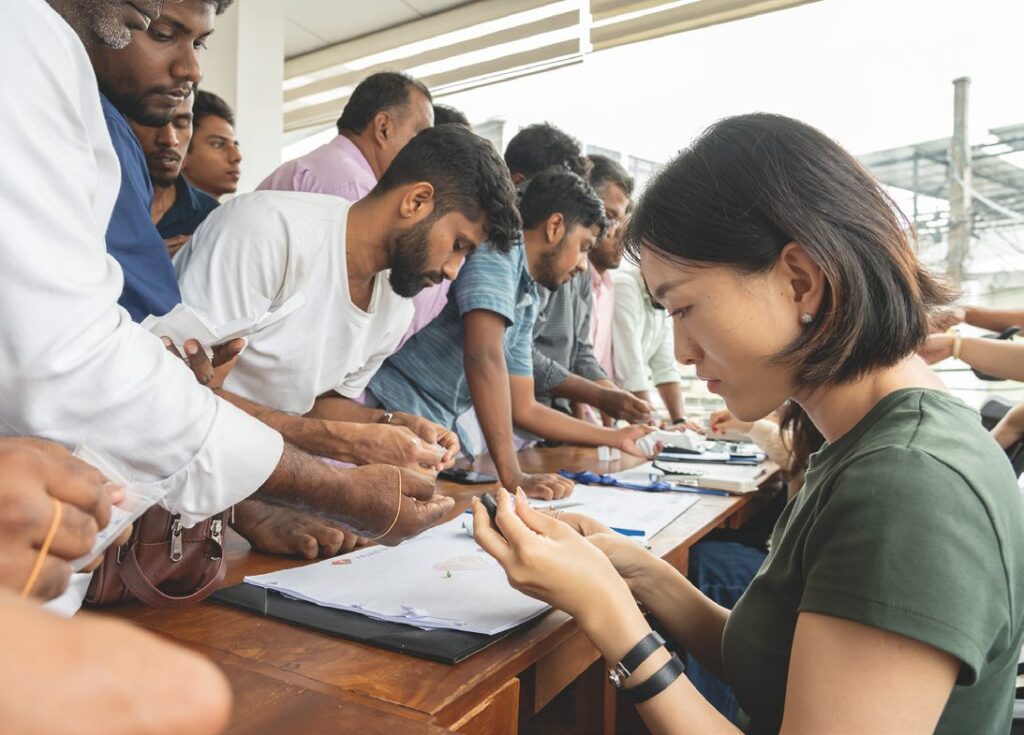
In Ilakaka and Sakaviro, especially, there were many buying shops with barred open windows facing the street. It was a system where the Malagasy miner or broker would come to the window and reach through the bars with the sapphire rough and place it on a white tray or the tabletop. The Sri Lankan dealer would then examine it. When finished, the dealer would place the stone back onto the tray or table and either make an offer or reject it. This method of passing the stone back and forth was common practice, as opposed to handing the stone directly to each other. We were advised to never, ever touch a stone in the market from a local seller whom you do not know well.
Mr. Jonathan holds regular rough auctions in Madagascar for his family company’s mining production. Most of the buyers are Sri Lankans, with some Thai, local Malagasy, and a few other foreigners. Some Chinese buy small size sapphires, especially pink. Smaller stones are cut in the capital and exported to the global market.
Jonathan’s family business has a very close working relationship with the communities located in their mining claim area and even with the artisanal miners. The local miners have an uncanny ability to trace the path of the paleochannels and the gem bearing gravels. They help Jonathan plan his mining route. They also allow their houses to be moved or even to not build around the mining path. When water is scarce for washing, they are allowed to bring their gem gravels to the area where Jonathan is washing, so they can use his water. He also allows them to sort through the runoff of his jig washing, as well as to sort through the leftover gravel that is not large enough to run through the jig.
The Production and Supply/Demand Equation
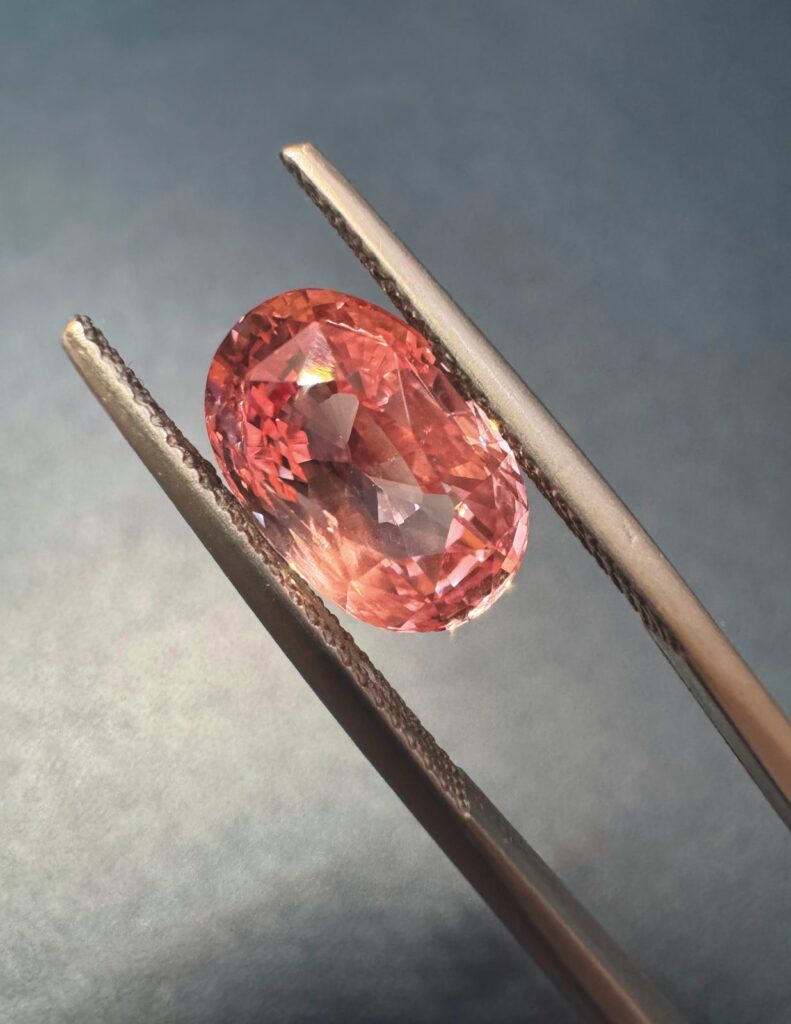
The metamorphic sapphire production that we saw in the Ilakaka-Sakaraha area was primarily pink, followed by Gueda, blue, and fancy colors, such as yellow and Padparadscha. We noticed a large amount of Gueda being purchased and going to Sri Lanka for heating and cutting. The sizes were predominately small, more so than in years past.
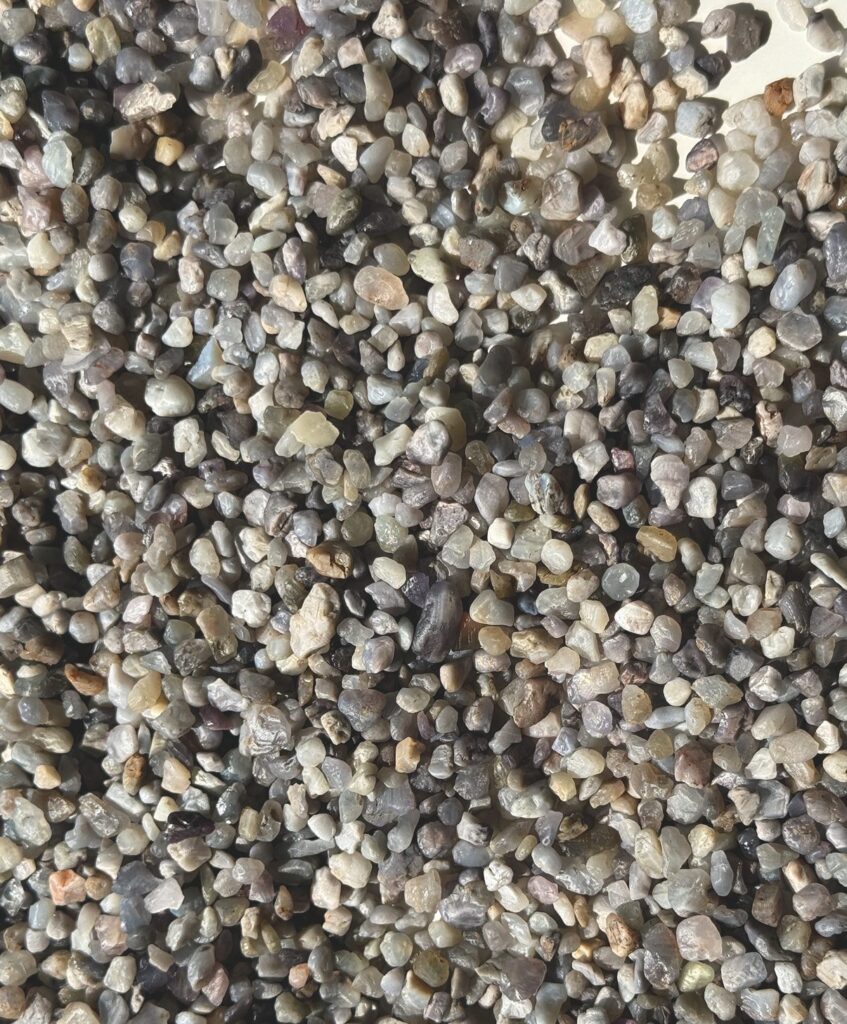
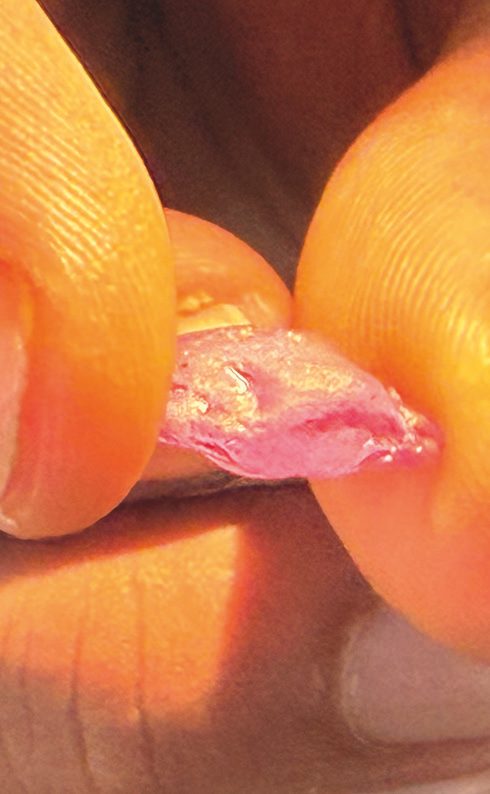
One thing everyone can agree on is that production is down. As one Sri Lankan dealer said, who was there from 1998, “The supply I could buy in a month to fill all my demands I cannot acquire in five months now.”
As Jonathan explained for his family mine production, “As a little boy, I saw my father produce 6 to 10 kilos per weekly washing. Now, I produce one if at all.”
Much of the statistical feedback we received for current production equated to about 20% to 30% compared to the peak levels in the past.
But this is not proportional to quality and size. The number of larger fine quality sapphires are a much lower percentage than in the past.
However, gueda for heating is higher. Most of the miners and dealers told us that there is enough commercial material and small sizes being produced to satisfy demand, but that prices are soft.
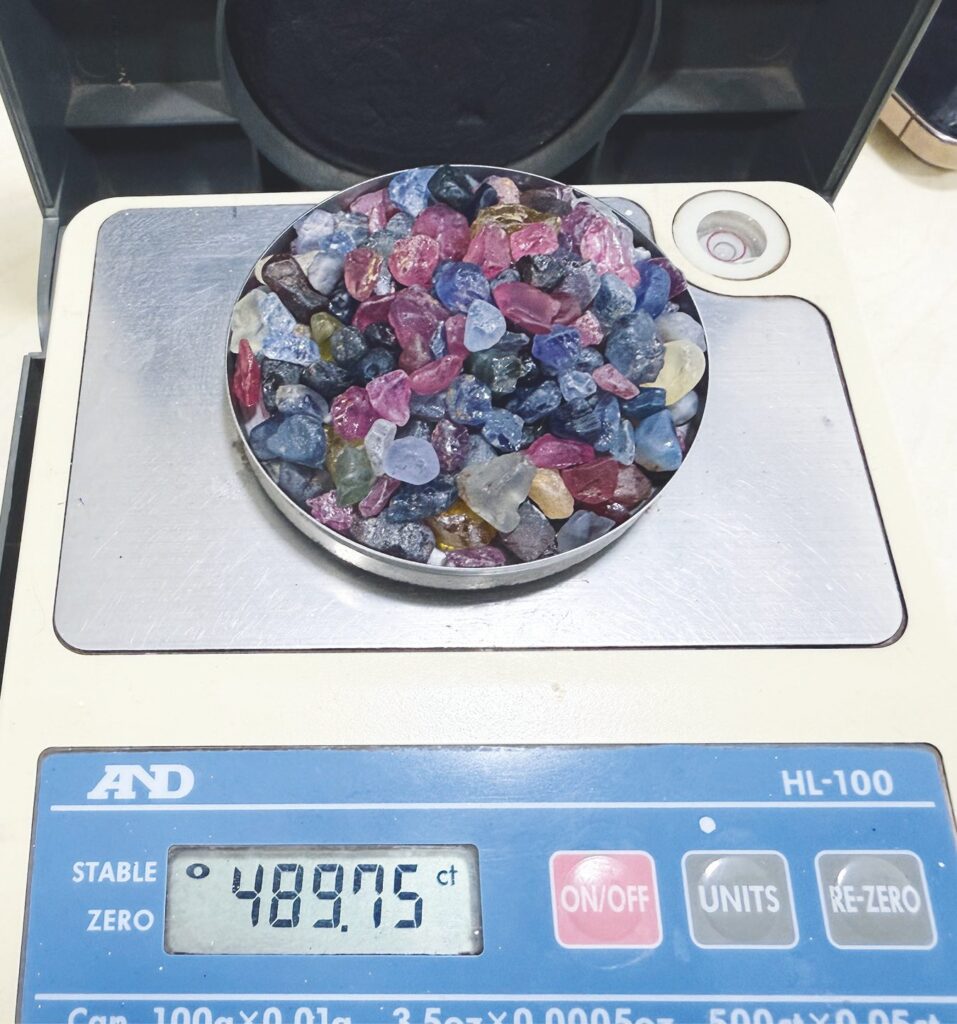
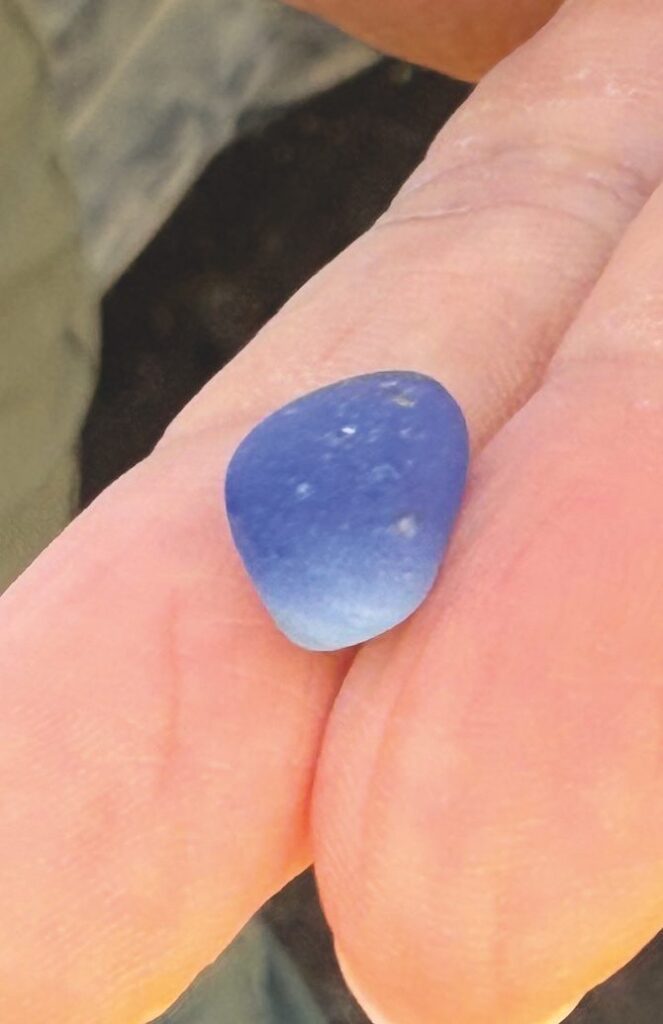
Yet, there was not nearly enough larger fine quality blues to satisfy demand and prices continue to rise. That seemed to be similar for pink and Padparadscha.
The Beruwala Connection
Sri Lankan gem industry members are very successful throughout Africa in buying rough and building long-term relationships with miners for a variety of gemstones in East African nations.
This has been especially true in Madagascar, Tanzania, and Mozambique for sapphire, ruby, spinel, tsavorite, alexandrite, cat’s eye, vanadium chrysoberyl, and other gemstone varieties.
Successful Sri Lankan colored gemstone businesses in Beruwala, Colombo, Ratnapura, and other gem trading locations in Sri Lanka often follow a family business model.
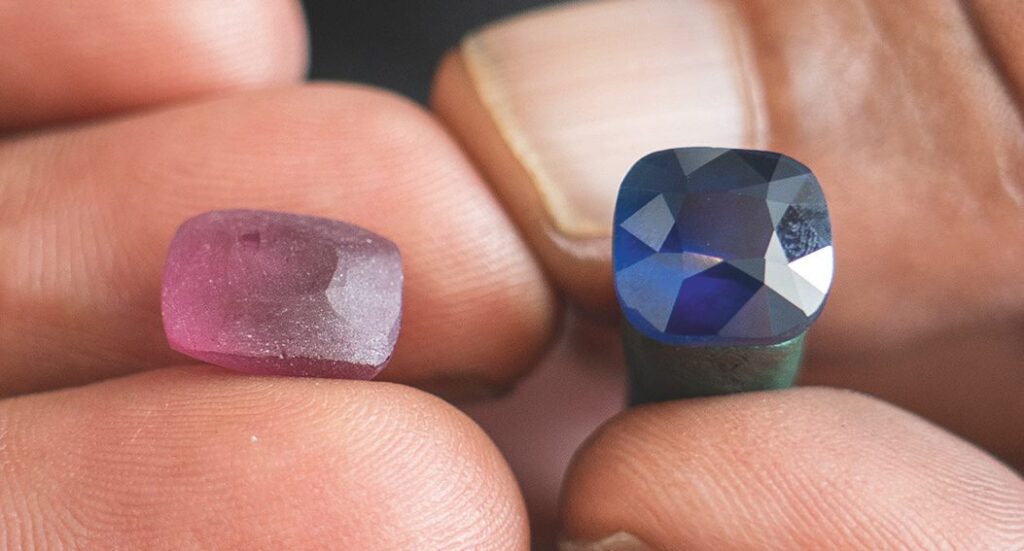
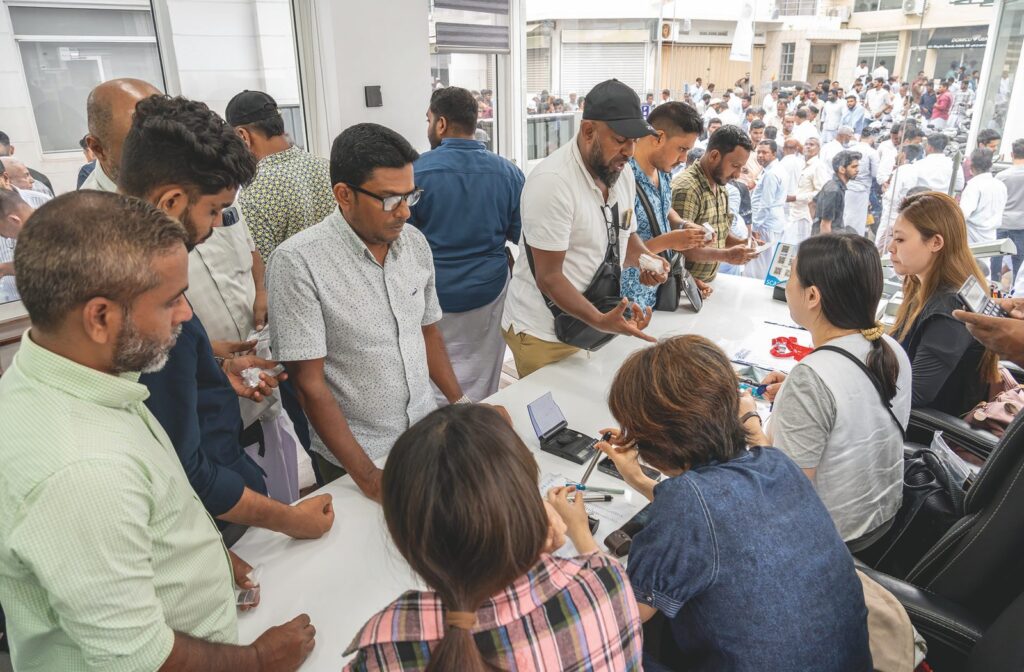
Beruwala is the leading center for treatment, cutting, and trading with their huge membership in the China Fort Gem and Jewellery Traders Association and manufacturing expertise. From there, East African and Sri Lankan gemstones go to other trading centers in Sri Lanka and to the global market.
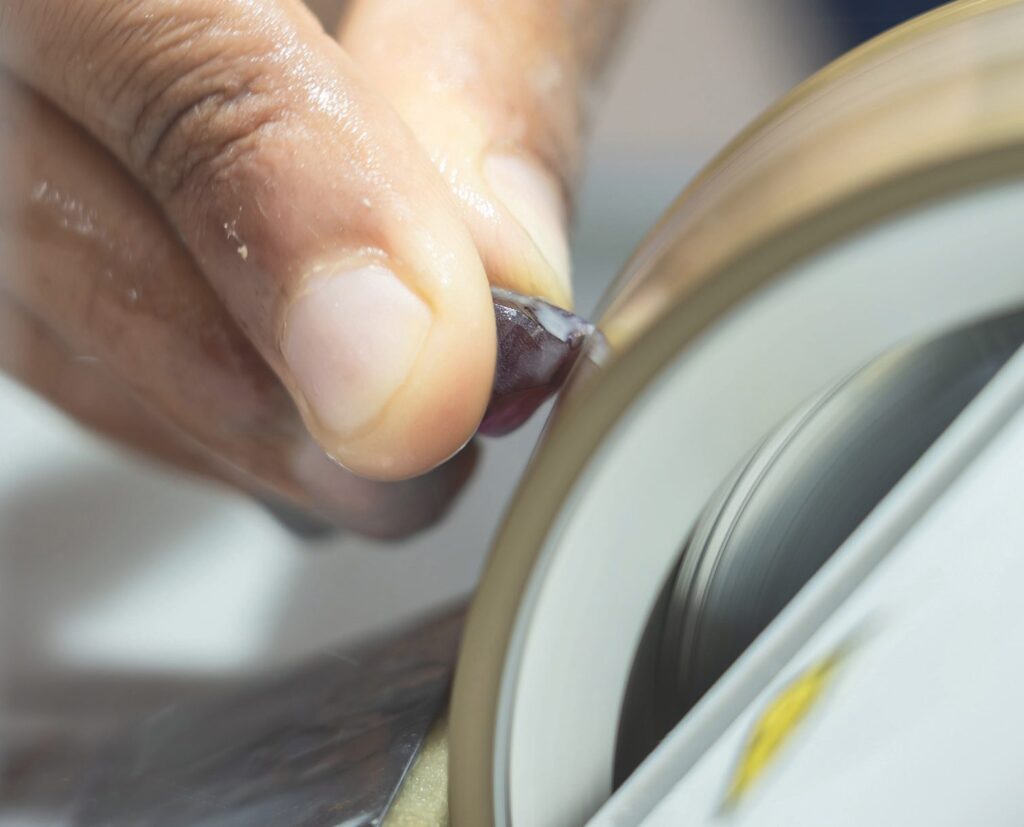
Sri Lankan family businesses often go back several generations, with numerous family members that work together in all the sectors of the mine-to-market wholesale supply chain. Cutters and dealers in Sri Lanka will often have brothers, uncles, and cousins that work in East Africa to secure rough.
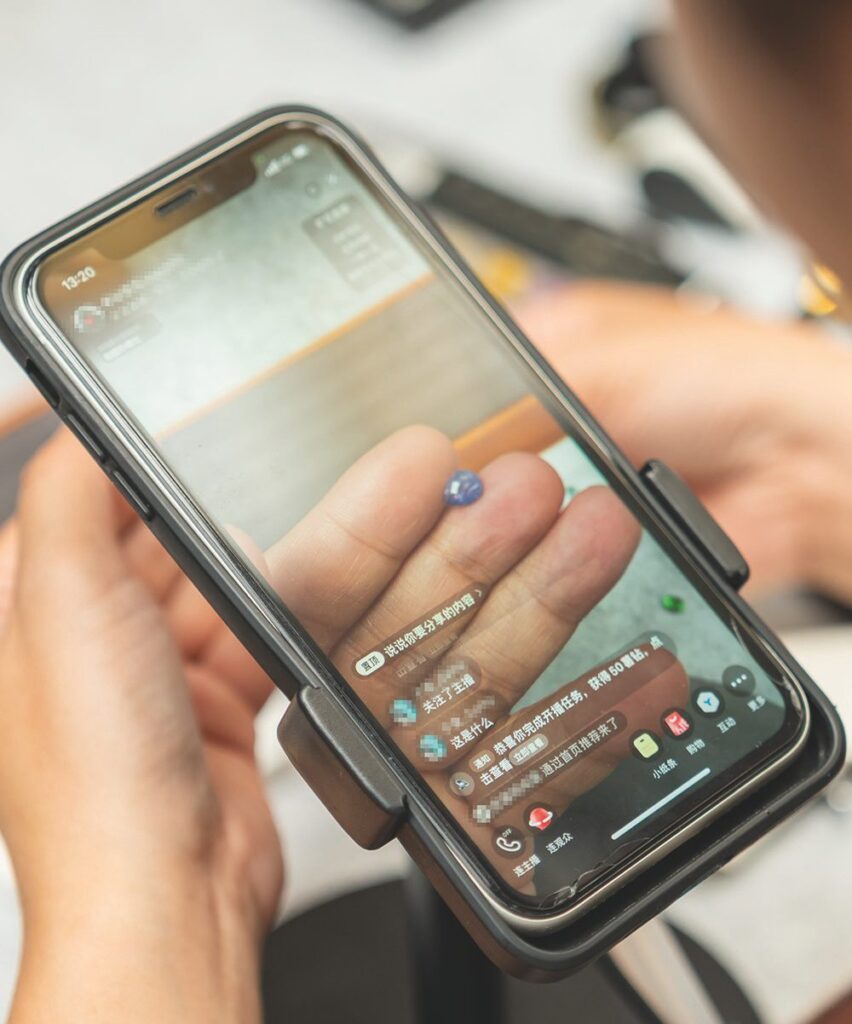
Family members might also rotate between Sri Lanka and Africa, or some members might specialize in rough procurement and spend long periods living in Africa. Just part of one family can be fully placed in mining, rough purchasing, treatment, cutting, trading in Sri Lanka as well as globally. One brother might be an expert in purchasing rough in Africa, and an uncle might specialize in heating and cutting, while another brother deals in the cut-stone sector and may spend time traveling to China, Japan, North America, Europe, and the Middle East.
Acknowledgements
The authors would like to thank the following for their support in our research: Anas Gems (Sakaraha); Beruwala Gems-Ashik; Blue Manik; China Fort Gem and Jewellery Traders Association.
Family expertise, teamwork, relationships, and trust make a strong partnership for a successful global mine-to-market colored gemstone business. The close family cooperation, as well as building relationships with local miners provides a strong business model. This combination has proved very successful in securing rough gemstones for the industry back in Beruwala and even in all of Sri Lanka.
About The Authors
Andrew Lucas is President of Guild Gemology Education and Senior Vice President of Guild Gem Laboratories. Ruby Liu is President of Guild Gem Laboratories and Founder Guild Gemology Education.