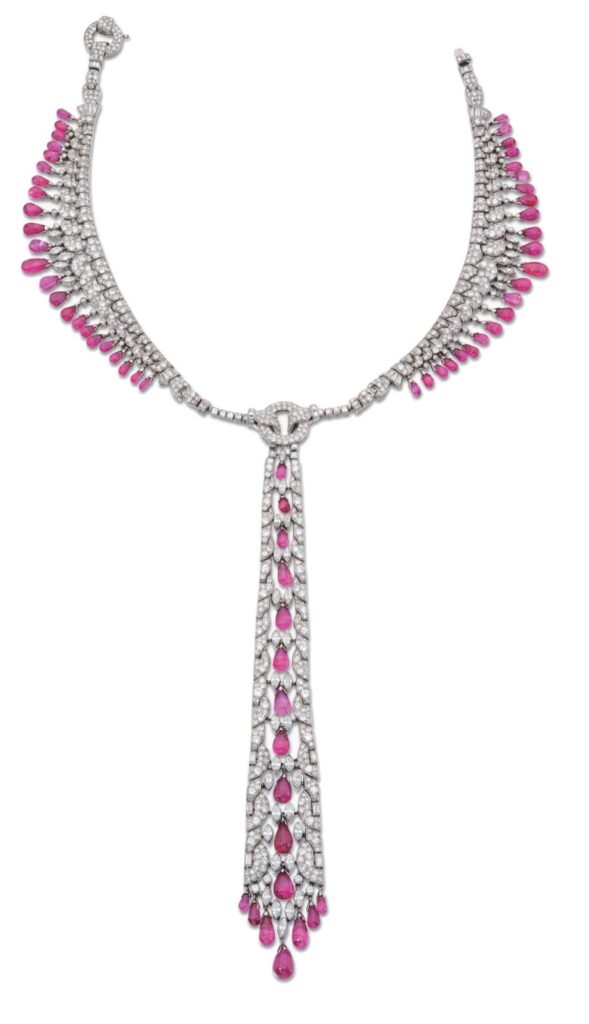
Paula Crevoshay is a name that has become synonymous with fine jewelry. As one of the most acclaimed jewelry artists of her time, her innovative creations—featuring vibrant gemstones and imaginative designs—have captured the attention of collectors, connoisseurs, and art lovers worldwide. Dubbed affectionately—and aptly—by many editors in the gem trade as the Queen of Color, she has elevated the art of jewelry to new heights. Her unique pieces are celebrated not only for their beauty but also for their intricate craftsmanship, artistic vision, symbolism, and the way they harness the power of color and light. To learn more about her journey, InColor caught up with Paula at her studio in Santa Fe, in the state of New Mexico.
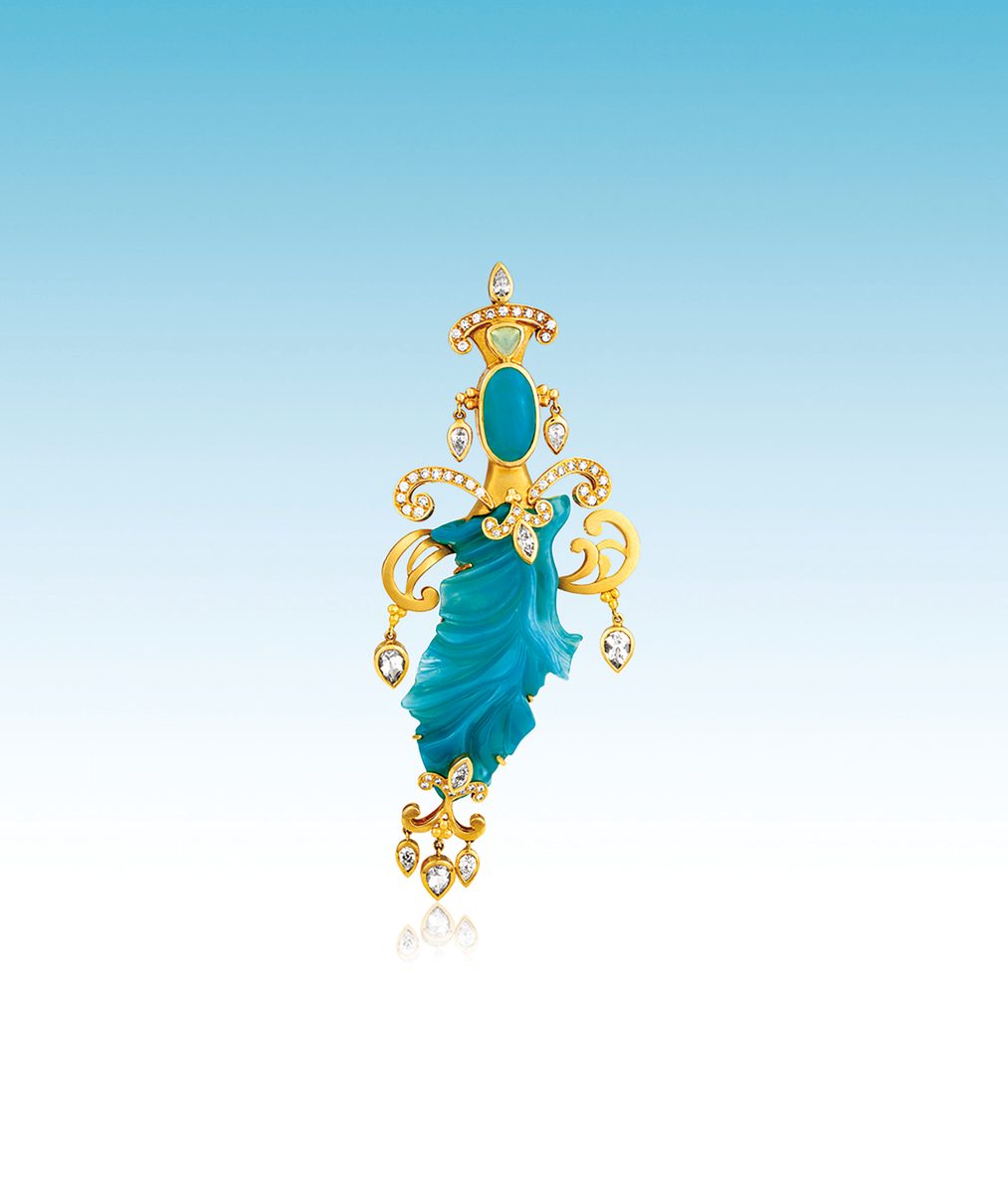
Life Steeped in Art and Inspiration
Paula Crevoshay’s journey into the world of fine jewelry is as captivating as the pieces she creates. Born in Baton Rouge, Louisiana, she was raised across the southeastern United States, experiencing the diverse cultures and landscapes that would later inspire much of her work. From a young age, her artistic talents were apparent, and she honed her skills through formal education. After earning a Bachelor of Fine Arts degree with honors from Virginia Commonwealth University in 1976, she followed up with a Master of Fine Arts degree from the University of Wisconsin in 1977, also with honors, and on a full scholarship.
Her path seemed to lead toward a career as a painter, and she planned to move to New York to establish herself in the world of fine art. However, life had other plans. Paula’s future changed course when she met George Crevoshay, a fellow student who would soon become her husband. George had been awarded a Fulbright Scholarship and an American Institute of Indian Studies grant, which took the couple to India from 1978 to 1981. They lived in Pune, near Mumbai, but George’s work took them to various Tibetan monasteries in India where they stayed for sometimes months at a time.
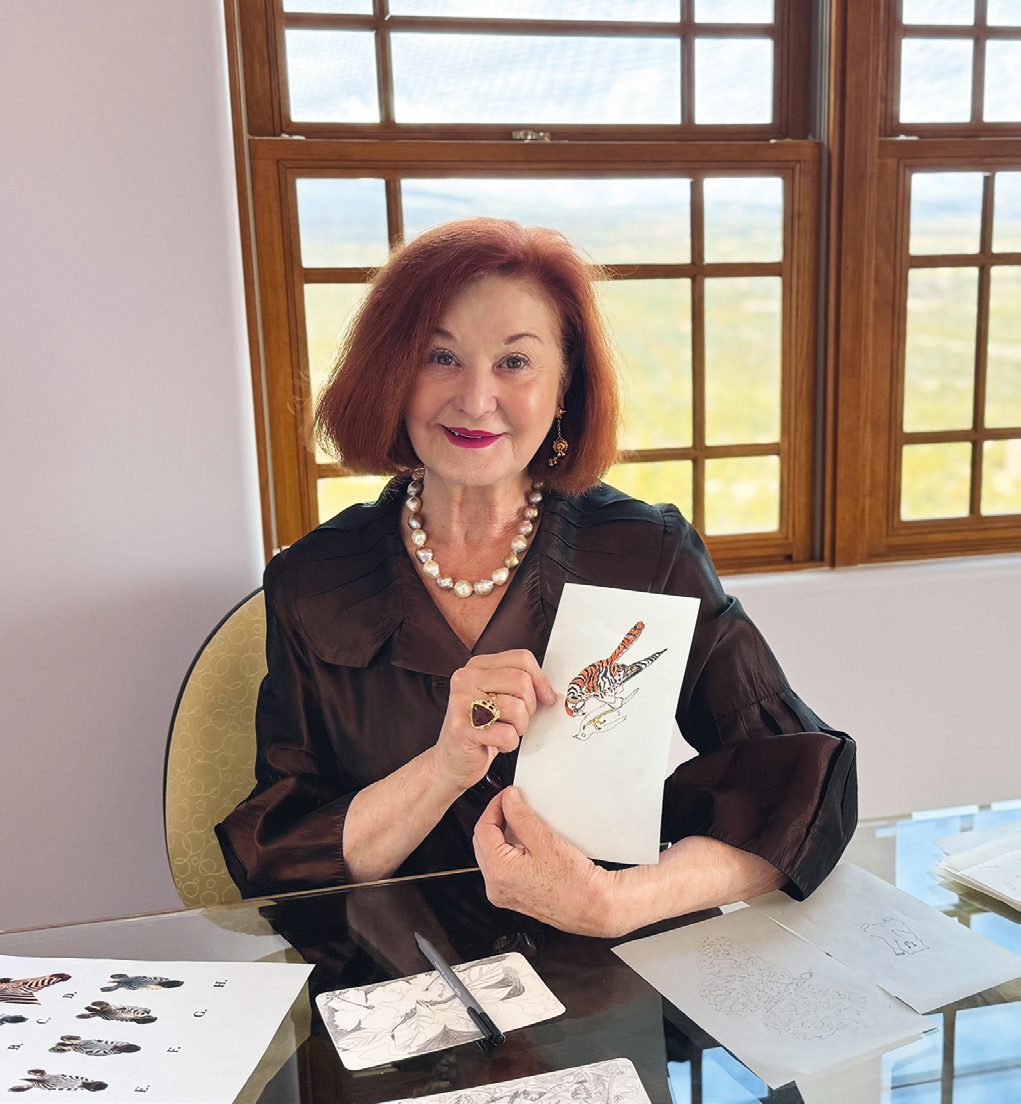
In India, Paula’s life became an exciting whirlwind of activities. She studied classical Indian dance, held solo art exhibitions in Mumbai and Pune, worked as an actress in Bollywood films, and even established a dispensary for medical care and nutrition at the monasteries.
Despite the many artistic endeavors she pursued in India, it was the vibrant world of jewelry that began to capture her imagination. “When I went to India, I had no idea how colorful, how beautiful, how fascinating, and how steeped in the jewelry arts that India is,” she reflects. The country’s rich heritage in metalworking and gem-cutting techniques, alongside the opulence of its jewelry traditions, left an indelible mark on the young woman. It was in India that she began noticing how gemstones could be used not only for their color but also for the unique light they emitted.
The Journey into Gemstones and Jewelry
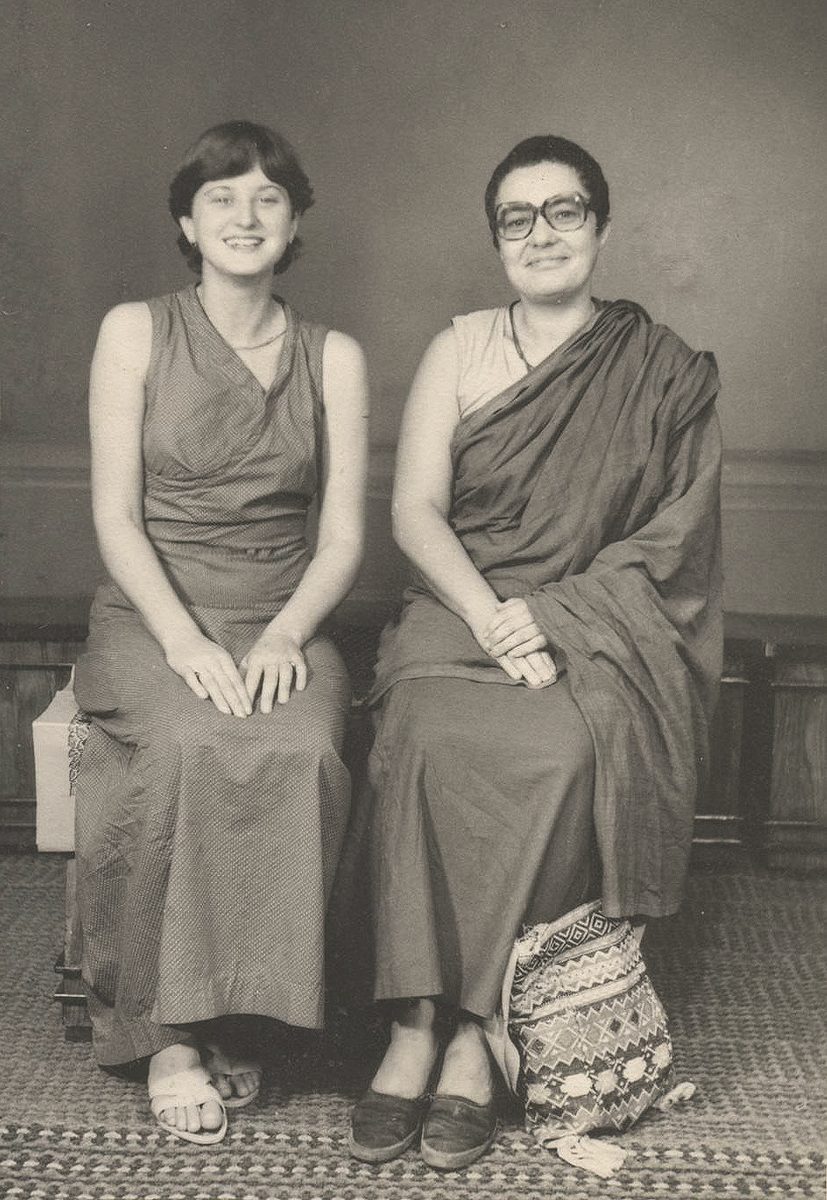
After returning to the United States, Paula and her husband found themselves immersed in the world of gemstones. George, with his language skills and a deep understanding of Asian cultures, began sourcing gemstones from Southeast Asia. Using their savings, the couple invested in gems and quickly sold their inventory. Their travels took them to Sri Lanka, Burma, Thailand, and Nepal, where they worked closely with local gem dealers and artisans. Paula spent approximately fifteen years in Asia over the course of their journey, gaining invaluable knowledge and a deep connection with the land and its gemstones.
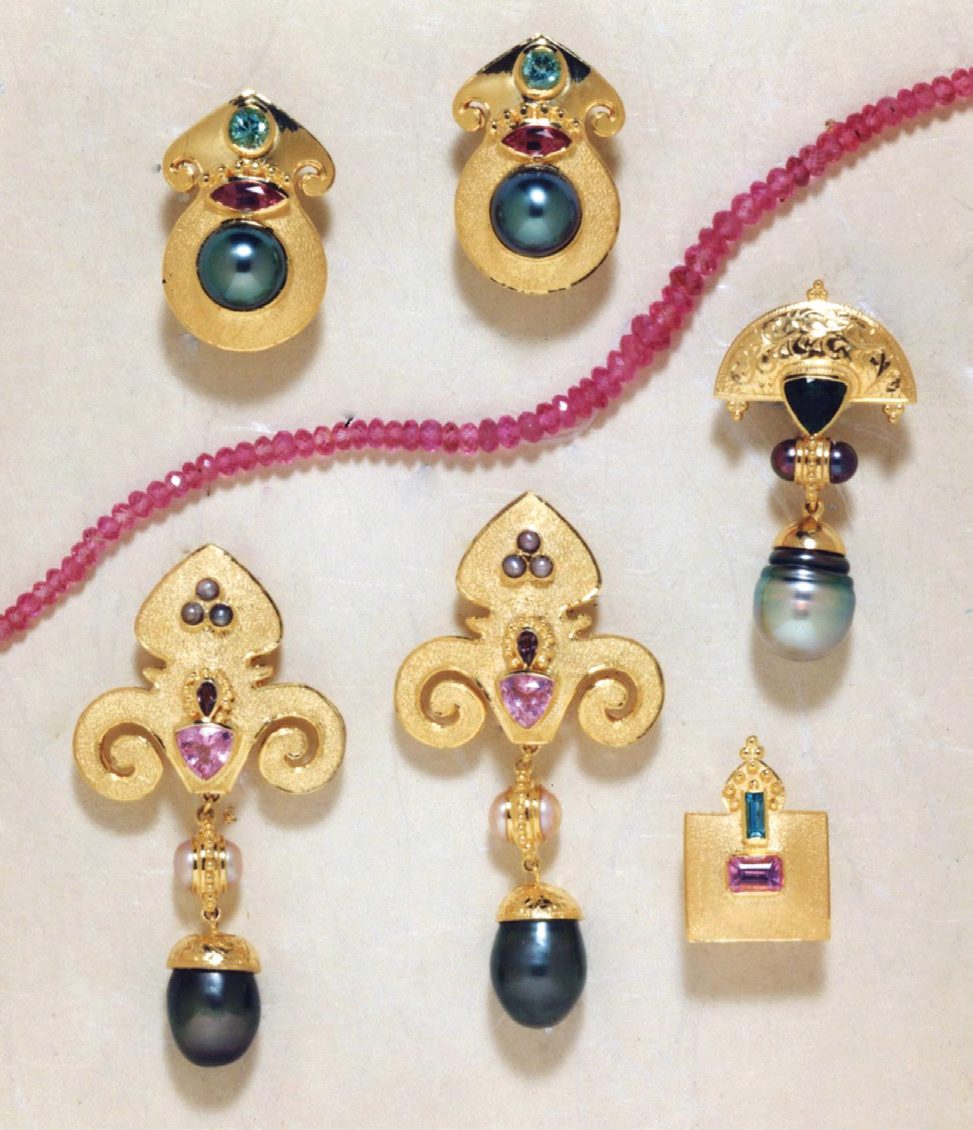
George’s gem expertise opened many doors for the couple and, before long, Paula started designing jewelry with the stones they were sourcing. In 1983, she launched her first collection, creating one-of-a-kind pieces. Her aim was ambitious—to return jewelry to its rightful place among the finest of the fine arts and to elevate the role of the jewelry designer from a craftsperson to an artist.
Paula’s art-focused designs were quite different from those often seen in the world of fine jewelry. “My first collection was small but focused, filled with inspirations from my travels in Southeast Asia,” she recalls. She found a talented manufacturer in Bangkok who helped to bring her vision to life. These artisans became like family to her, and their skill and craftsmanship played a critical role in shaping the success of her designs.
Loss and Renewal
Sadly, in 1996, her husband George passed away after a long but valiant struggle with cancer. Thus began Paula’s monochromatic period that lasted for several months. Although now handling all aspects of the company, from design to manufacturing to business, Paula slowly moved back into creating unique multi-colored pieces.
Sometime later, the young woman found love again. In 2000, she married Martin Bell, a long-time friend, to whom she had been introduced in 1992 during a chance meeting with mutual friends at a coffee shop in the Sands Casino in Las Vegas during a trade show. Being active in the same industry, she, George, and Martin (an owner of Rio Grande, one of the nation’s largest jewelry supply companies) soon became close friends, and Martin was among those who helped Paula get through the difficult period following George’s passing.
The brand continued to grow over the years. When the recession hit in 2008, however, retailers advised their clients to make less expensive products to weather the economic storm. But, while many others abandoned the high end, Paula and Martin knew that there were still consumers who wanted her quality of jewelry. So, instead of moving down market, they increased their range into even more upscale pieces.
Creatures of the Deep
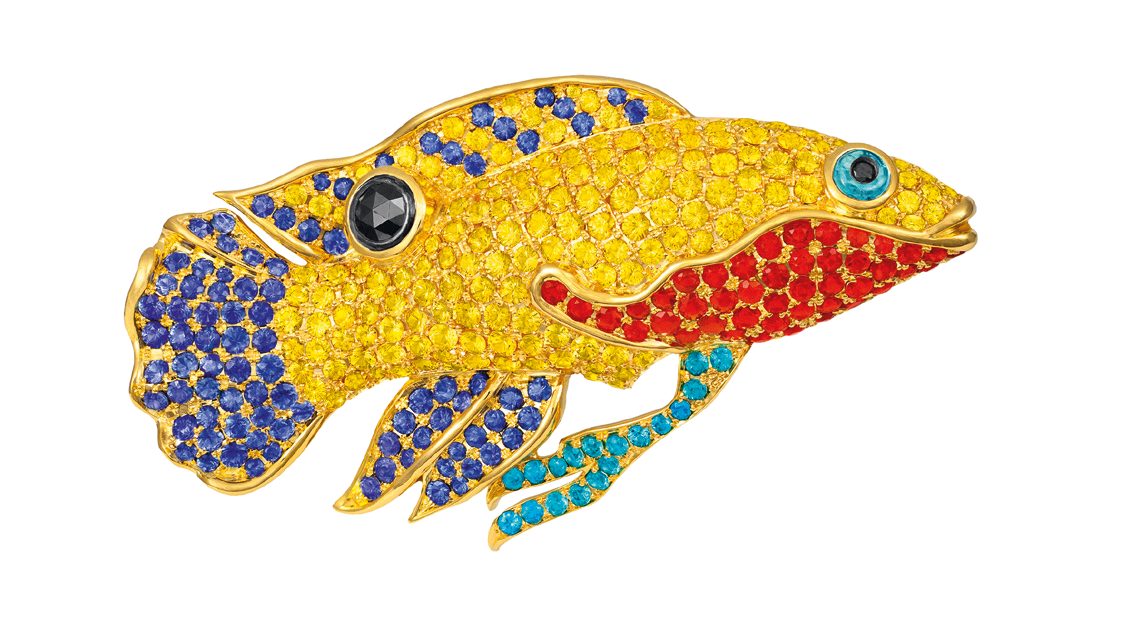
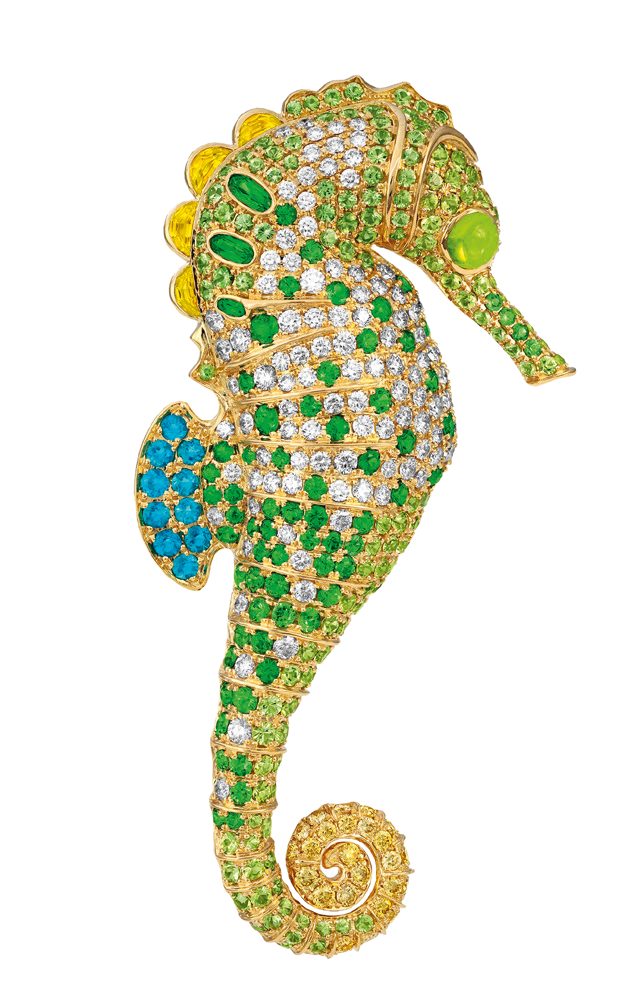
Among the subjects with Nature as her muse, Paula turned to the sea and its many colorful creatures.
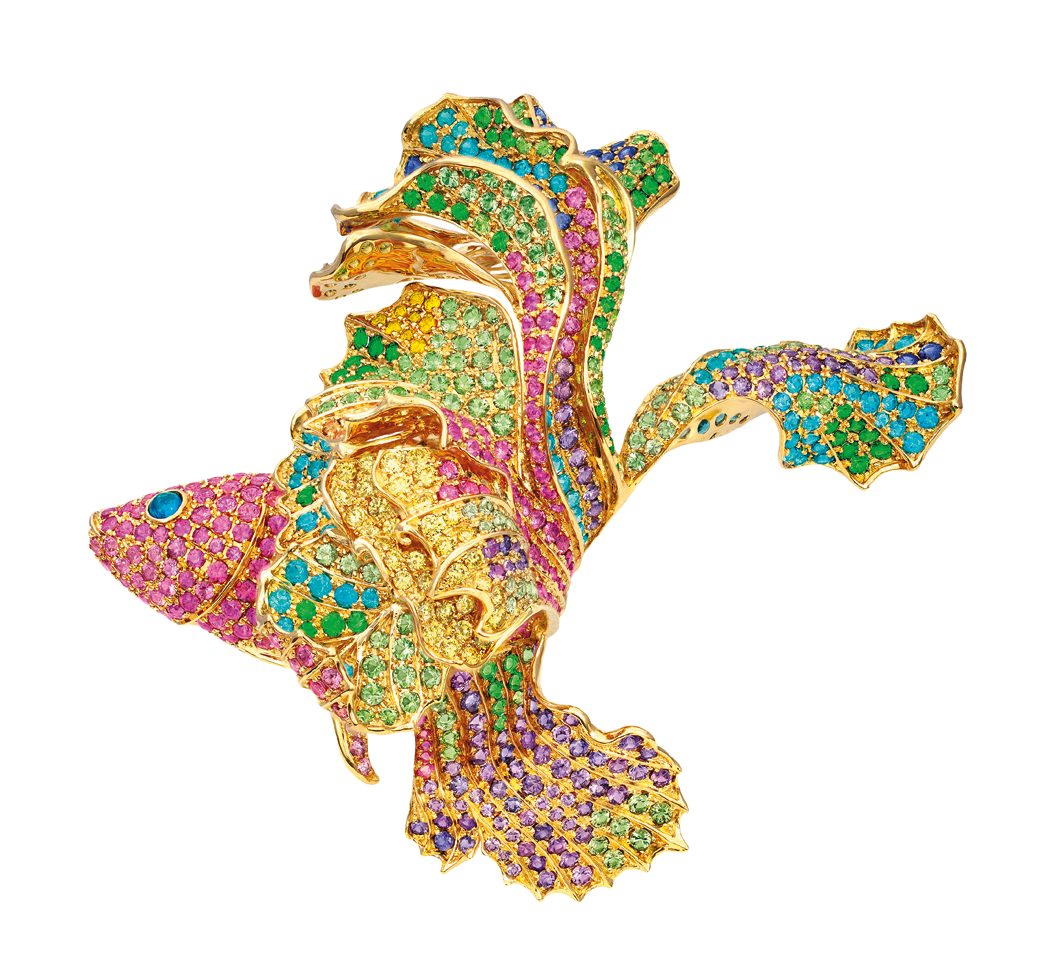
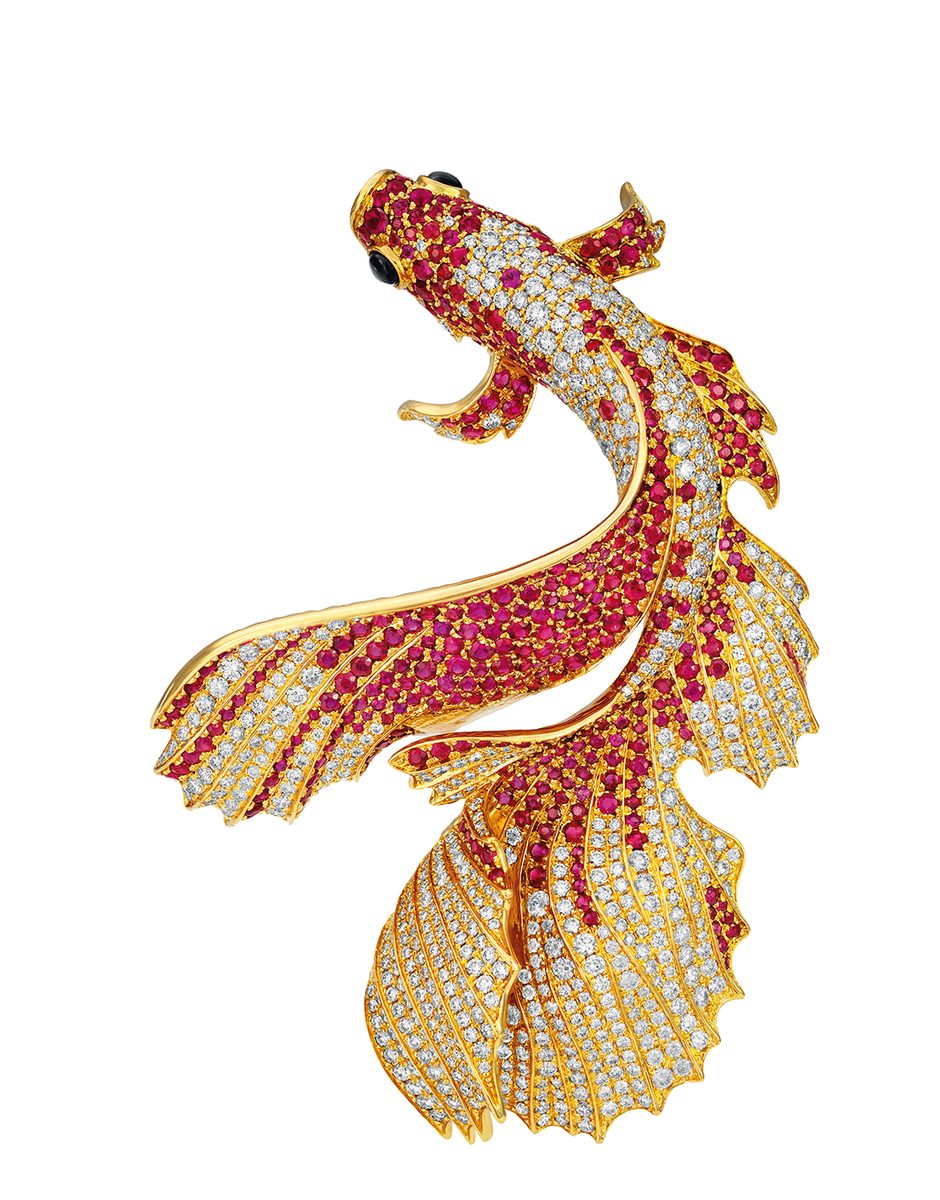
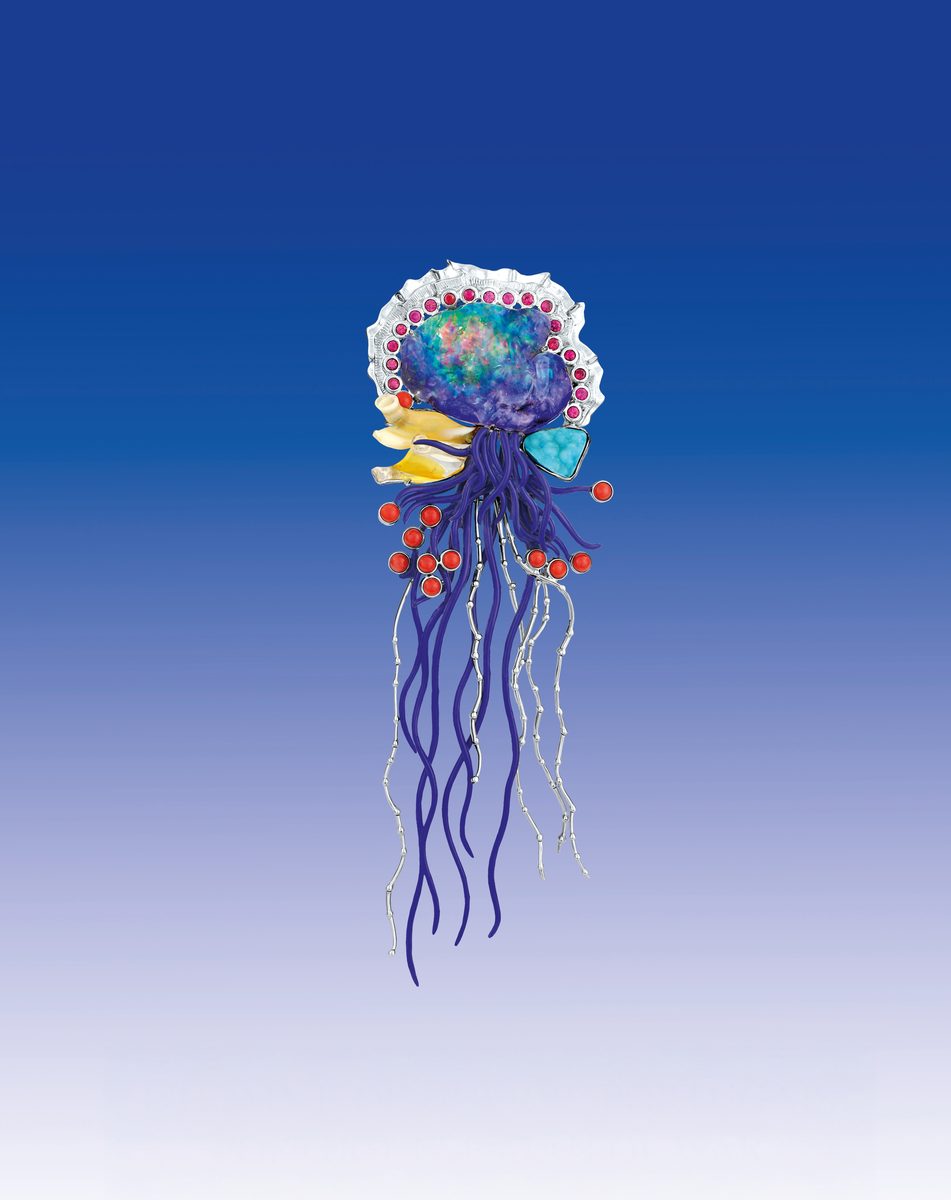
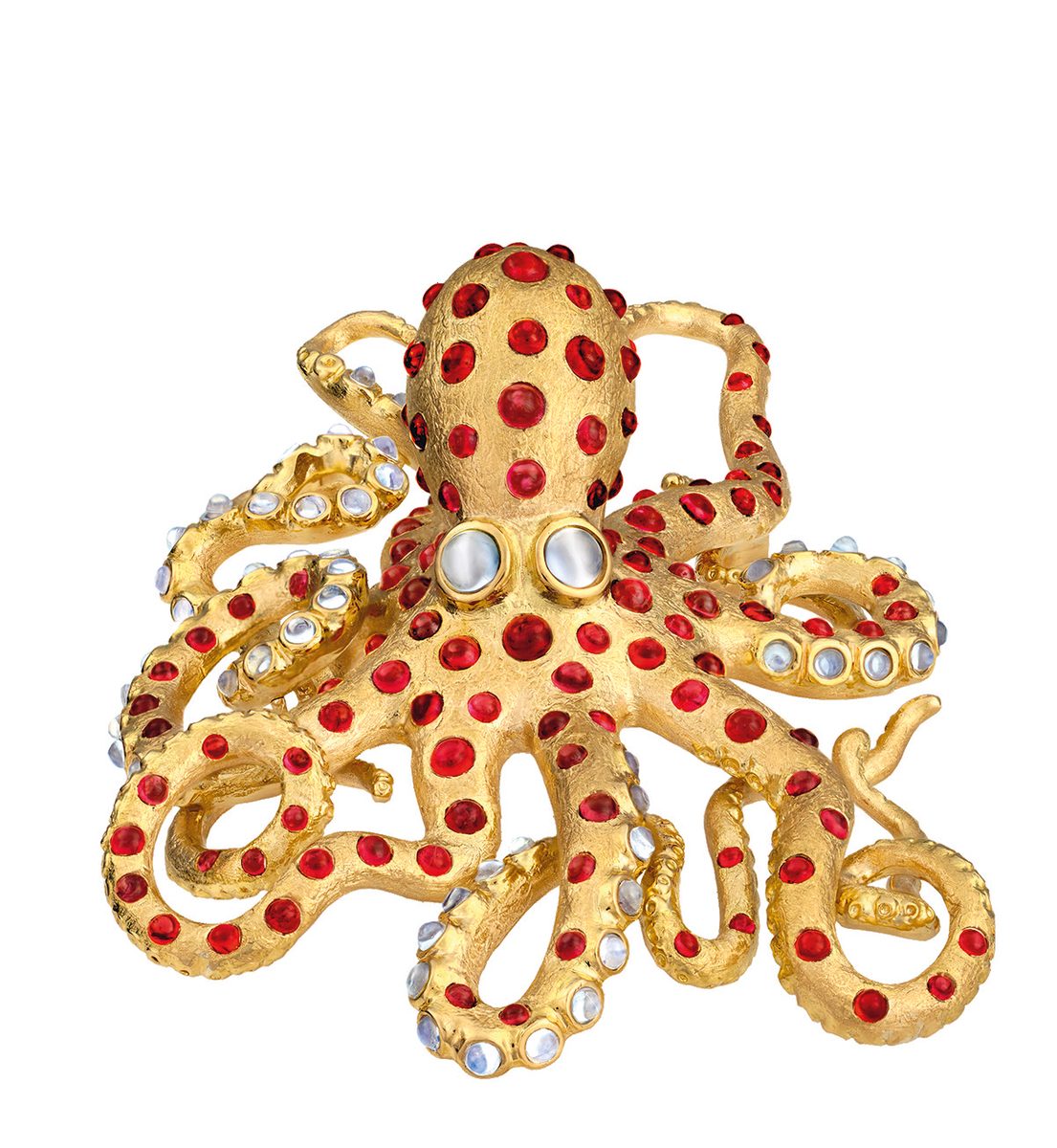
It then became necessary to expand their production outside of Bangkok. A year later, thanks to her intuitive abilities, Paula found a master craftsman in Hong Kong who could create her particular pieces, and who also became a great friend. “Call it destiny, call it intuition, or call it just plain luck in finding him,” she muses, “I have had this type of good fortune all my life around my artistic work.”
Creating Palettes of Light and Color
While fortune may certainly play a role in her success, there is no question that this gifted artist draws on her fine-arts background. “There was a time when jewelry was among the finest of the fine arts,” she explains. “Just witness the letter Michelangelo sent to a friend complaining about his troubles working on the Sistine Chapel, insisting, ‘I’m a jeweler, not a painter.’ Like Michelangelo, I was formally trained in the fine-art disciplines. But unlike Michelangelo, I am a painter, not a jeweler,” Paula declares. “My palette is not oil but gemstones.”
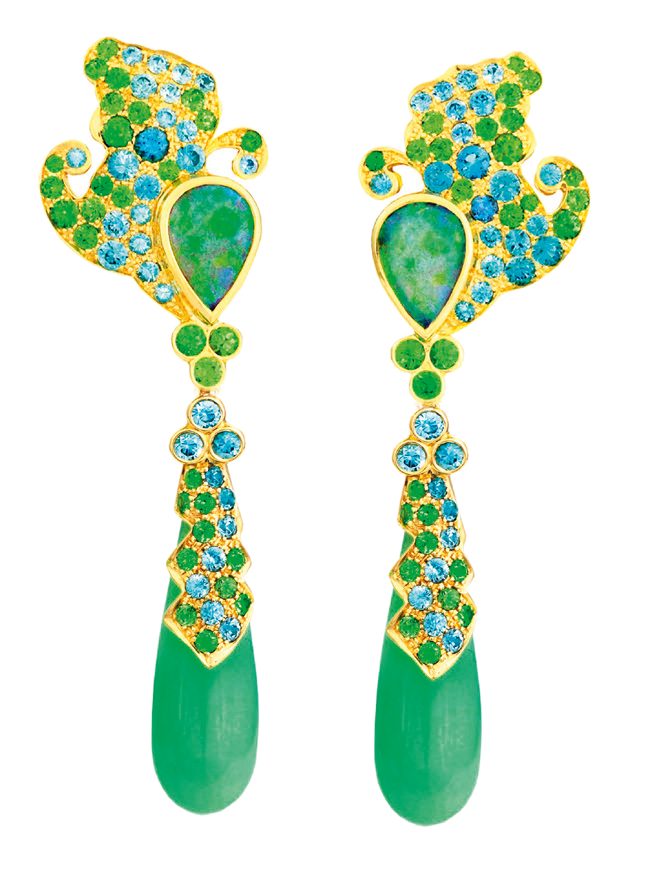
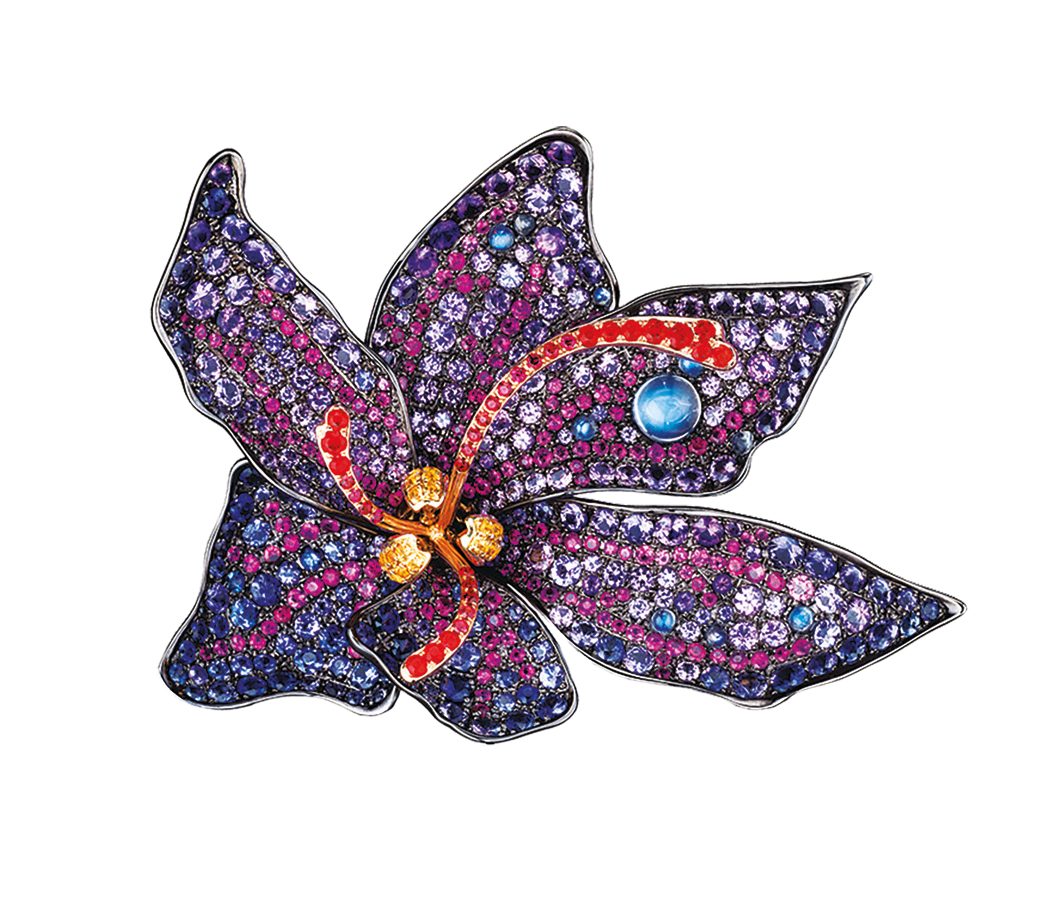
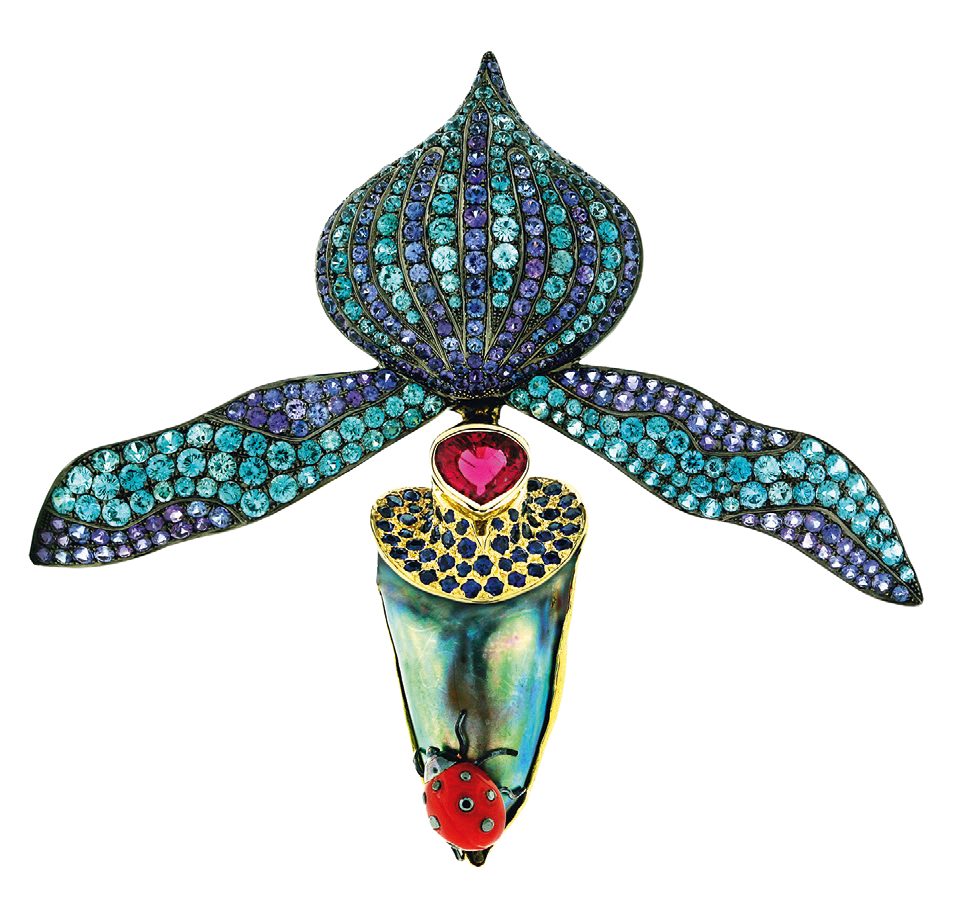
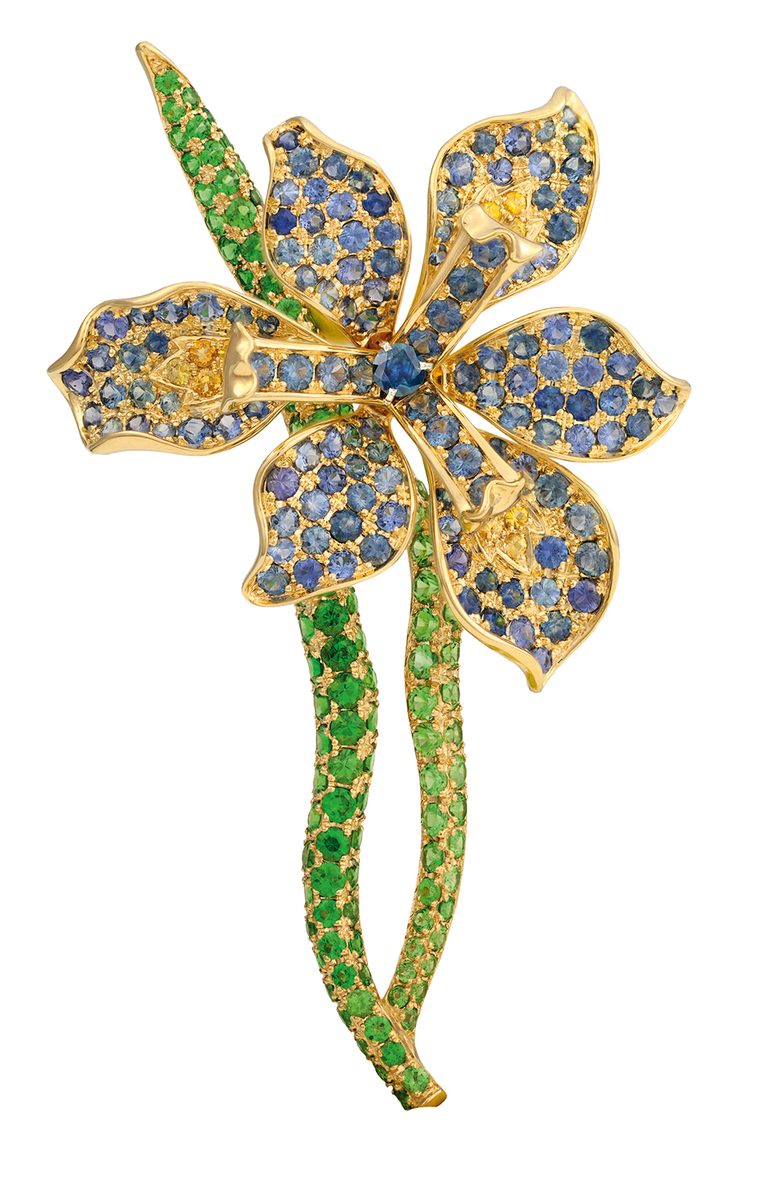
Gemstones are, indeed, her medium, and her palette is made up of an extraordinary array of stones. Her creations are not only about color; they are about light—what she calls tangible light. Each gemstone has its own inherent ability to transmit light, a quality that plays a crucial role in how she designs her jewelry. “I paint with gemstones, not just with their myriad colors, but with their light. It is truly the light of the Earth.”
Focusing not only on the visual appeal of the gemstones but also on how light interacts with them, Paula employs various cuts, including carvings, cabochons, and facets, all chosen carefully to reflect, refract, or transmit light in unique ways.
Highlighting the interplay of light in her pieces, Paula published her first book, Garden of Light, as part of her one-woman exhibition at the Carnegie Museum of Natural History. She was quickly in demand as a speaker and exhibitor at myriad other events. In 2015, she was asked by the director of the Orlando Museum of Art to participate in the museum’s 100th anniversary celebration, which was featuring important paintings from the Baroque period. The director felt that Paula’s jewelry evoked a sort of New Baroque and asked if she would lend pieces to be featured in juxtaposition with the Old Masters. In her speech, Paula talked about societal and cultural changes that were reflected in art and architecture (e.g. Versailles, St Paul’s Cathedral, Barberini Palace, etc) during that period, while making parallels to the current situation and, of course, incorporating aspects of her jewelry design.
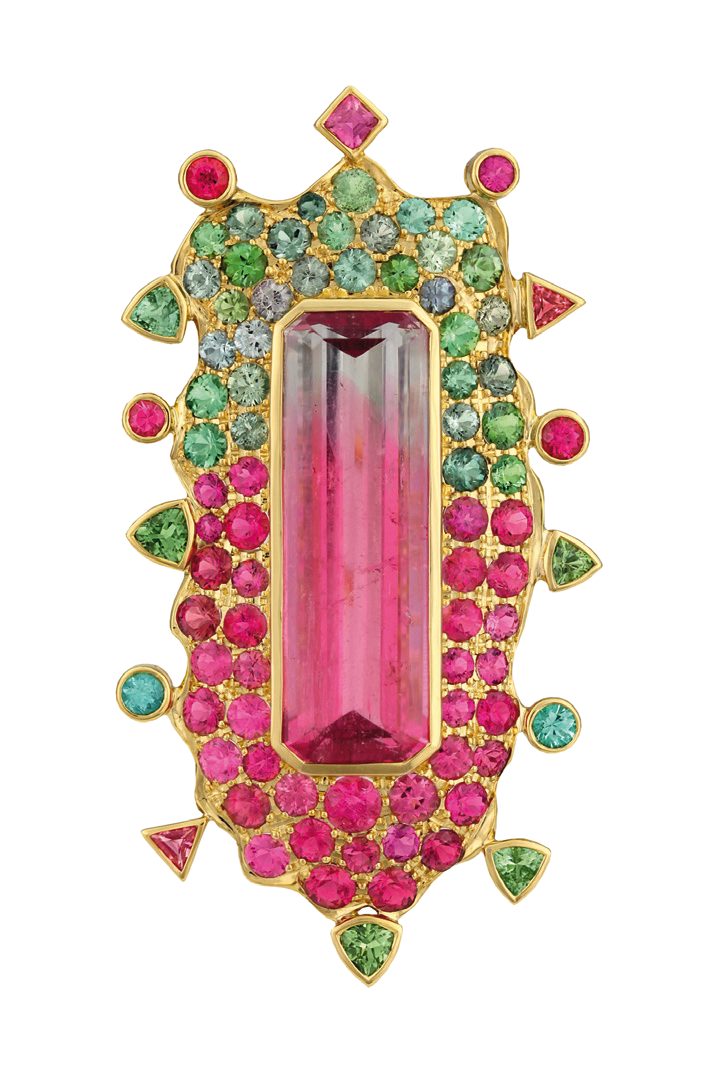
A year later, her work was featured, by special invitation, in the City of Light, at the Musée de Minéralogie at the Paris School of Mines. Coinciding with this event, she published her second book, Illuminations: Earth to Jewel, where the designer takes the reader on an illuminating tour of the magnificent gemstones that serve as her palette in creating her exceptional jewels. Other appearances and more books would soon follow.
Fascinating Flora
Botanicals are an integral part of Paula’s design inspiration, and feature a range of flowers and plants.
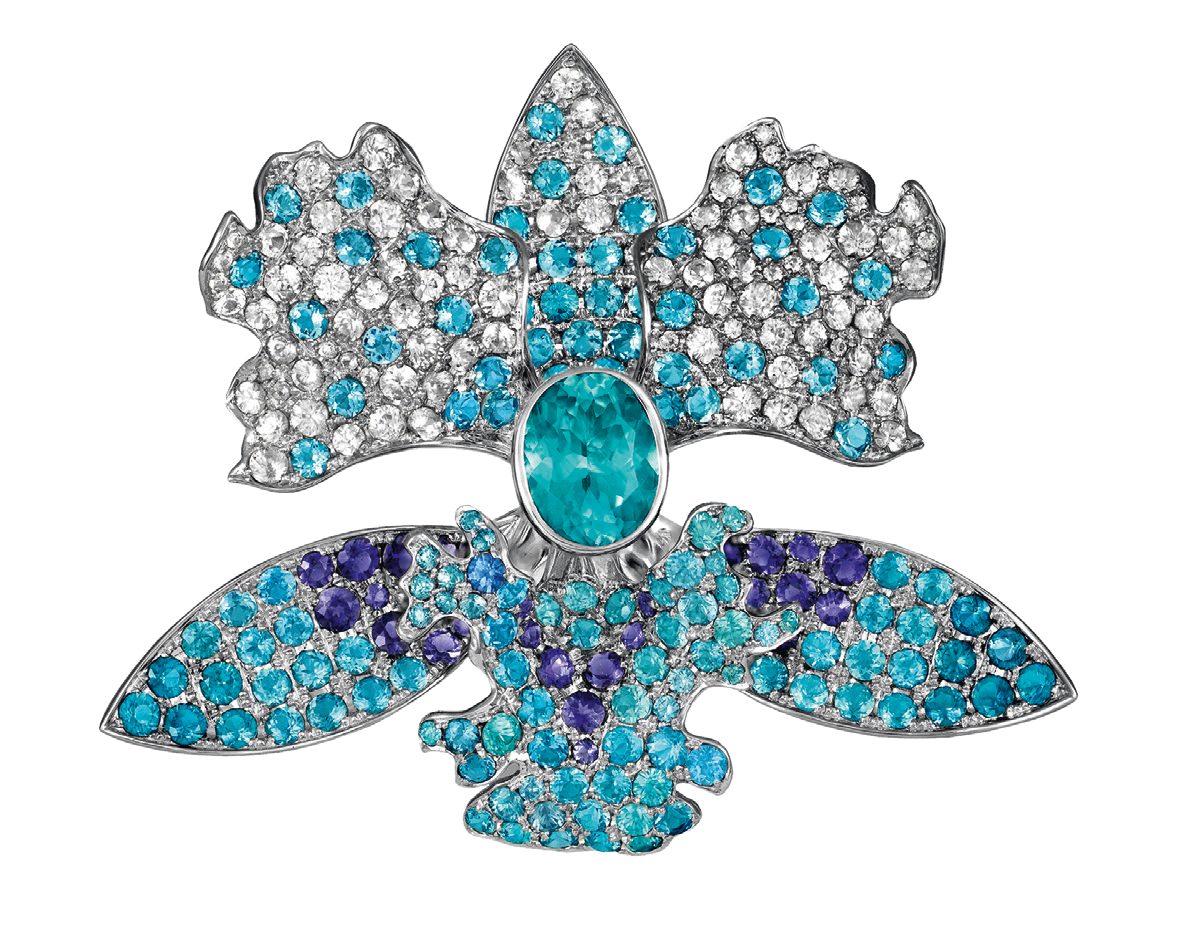
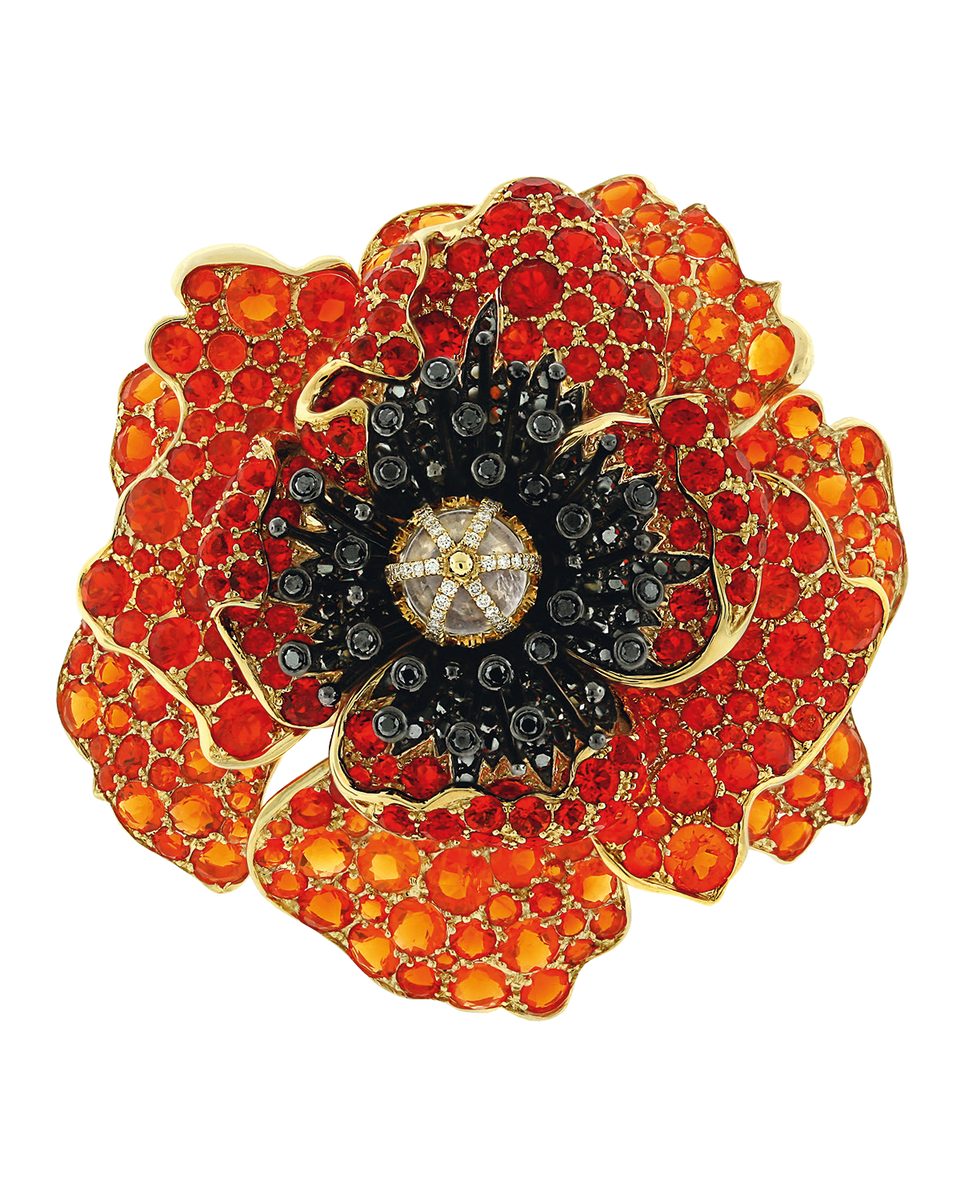
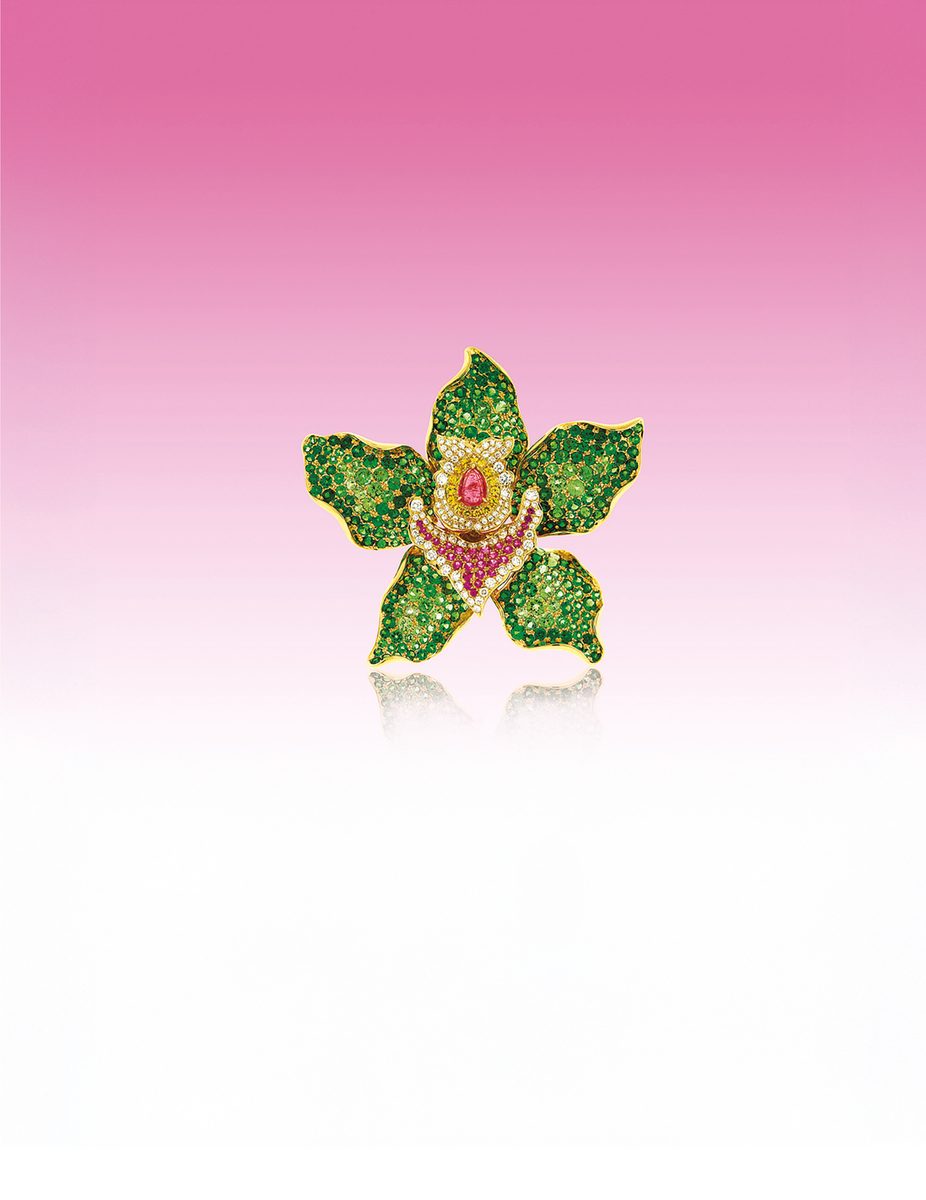
The Creative Process
Paula’s knowledge of gemology is also an essential part of her design process. Understanding the refractive index and Mohs’ scale of hardness, for example, helps her select the best stones for each piece. Her expertise also allows her to make substitutions when necessary, ensuring that her clients receive the best possible value for their money. “I would like to set every gemstone known to man, which may be hundreds or thousands,” she says, reflecting the boundless color possibilities that lie within her craft.
And, as fascinating as it is remarkable when it comes to combining and understanding colors, Paula is endowed with a heightened color perception that is known as tetrachromacy. This rare condition allows people to see as many as 100 million colors, compared to the average person’s one million. [The reason? Tetrachromats have four light-detecting cone cells in the retina instead of the normal three (trichromatic). More common in women than men, tetrachromacy lets them see color variations that others cannot perceive.]
Another aspect of the creative process is “listening to what the stone tells me,” she explains. “The stone comes first, 99.9% of the time.” When she finds a gem that speaks to her, she holds it in her hand, envisioning its message. She then draws the design in ink, detailing the harmony of color and form, with the first draft almost always ending up being the final design. “I am sort of a vessel for the design to flow through, from image to drawing. Mozart said the same thing; his music would come through him.”
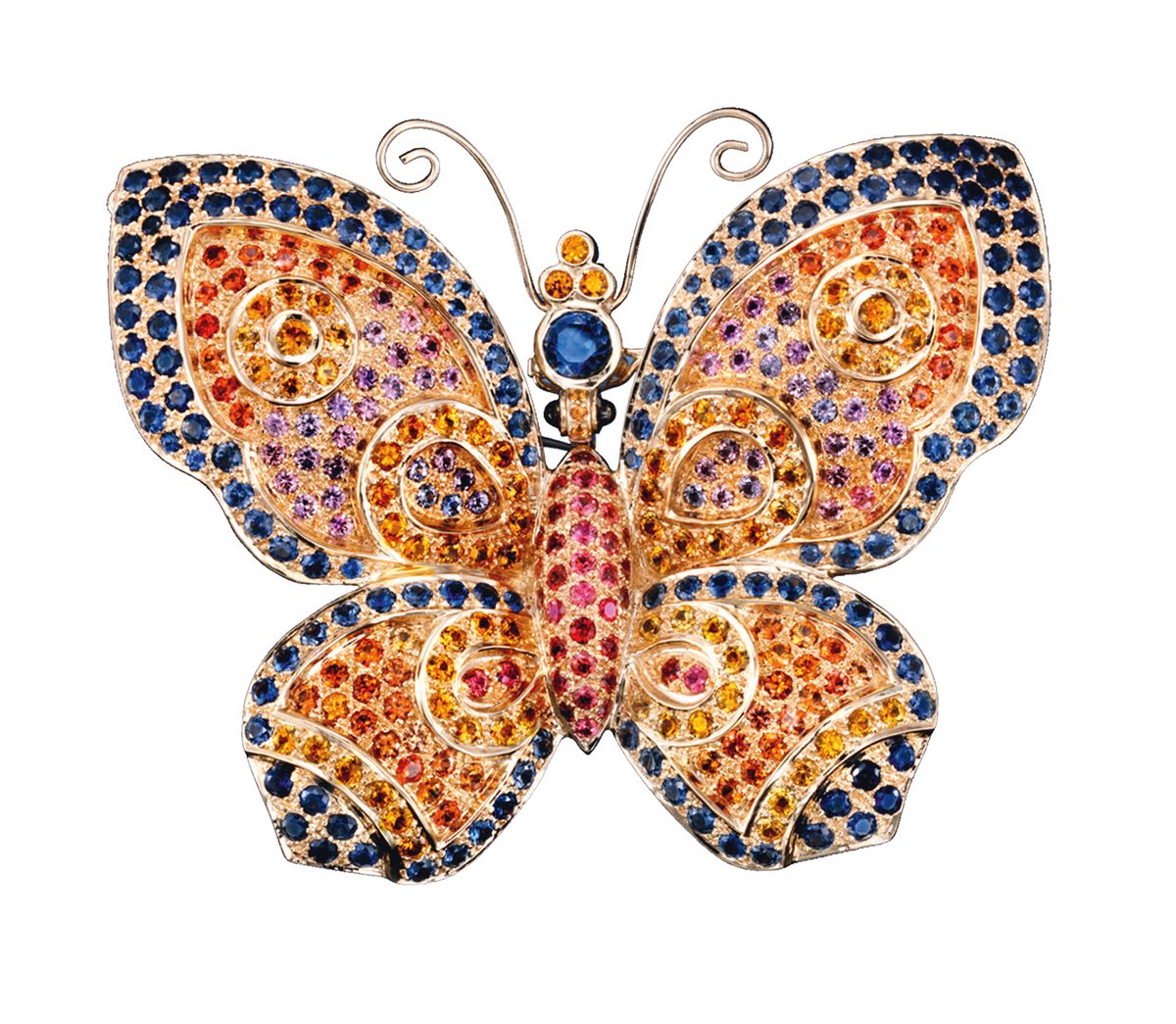
The artist’s designs often incorporate “gemological clues,” reflecting the unique qualities of the stones themselves. For example, if she is working with beryl, she might incorporate hexagonal shapes to mirror its crystalline structure, or with opal, she might include water motifs to reflect its hydrous nature.
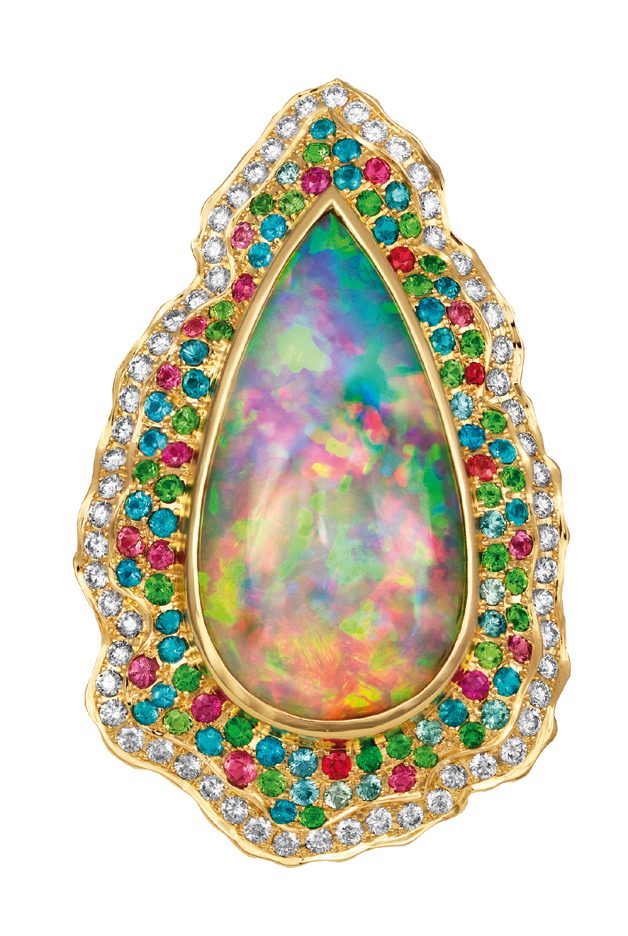
Although she is passionate about all gemstones, Paula has a special fondness for opal. “It’s such a colorful stone, a work of art,” she smiles, comparing it to the masterpieces of the great Impressionist painters. She is also drawn to tourmaline for its wide range of colors, as well as moonstone, sphalerite, and sphene.
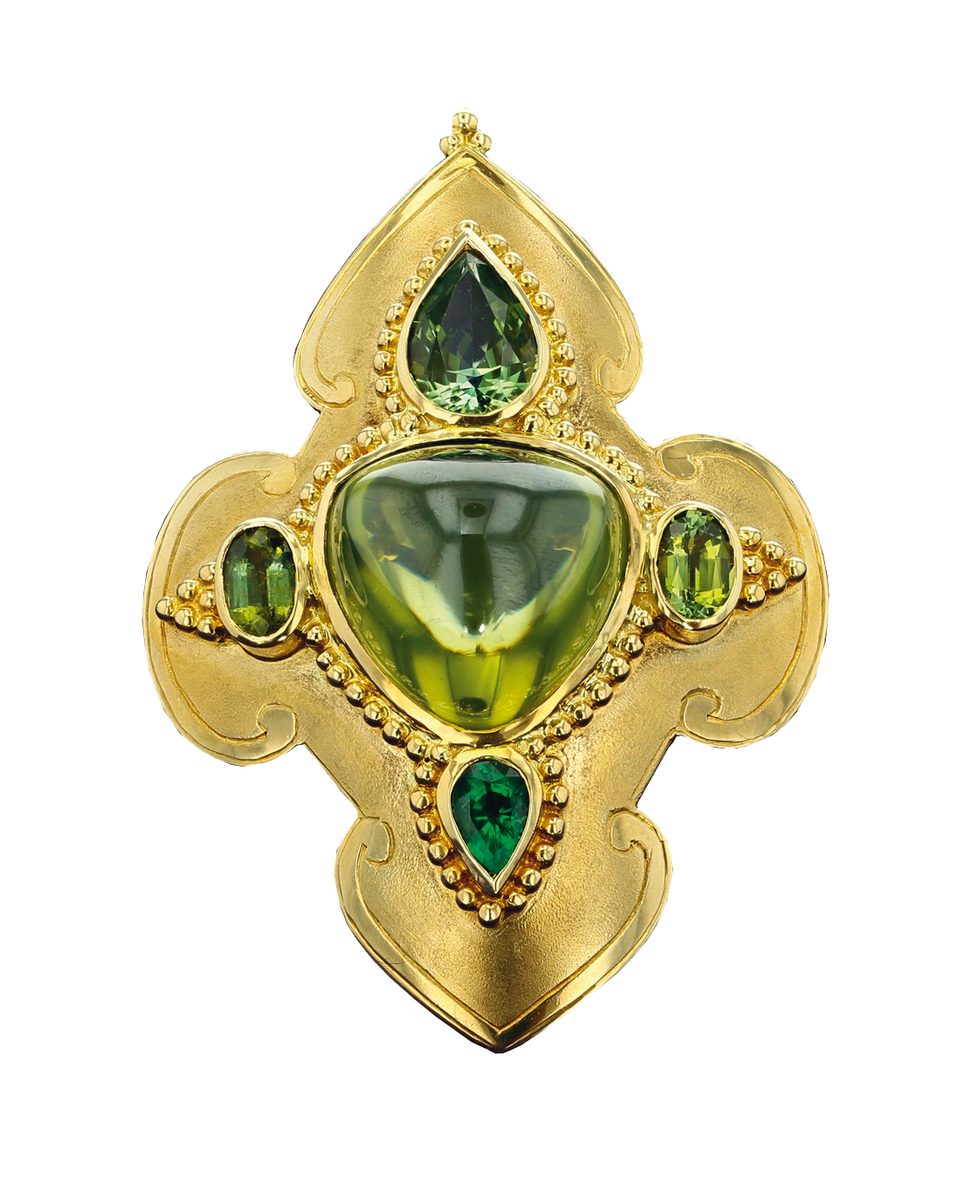
As for her favorite piece of jewelry, the artist’s answer is simple: “The one I am working on at the time.” Each piece she creates is a personal journey, and she often spends a great deal of intimate time with each design, which includes how the back will be intricately and beautifully finished as well. Still, she has a few favorites and often spends a long time with each. As examples, she cites the La Fleur de Rêves brooch, which took a year to make, and the Poppy ring, which took nine months.
Endangered Treasury
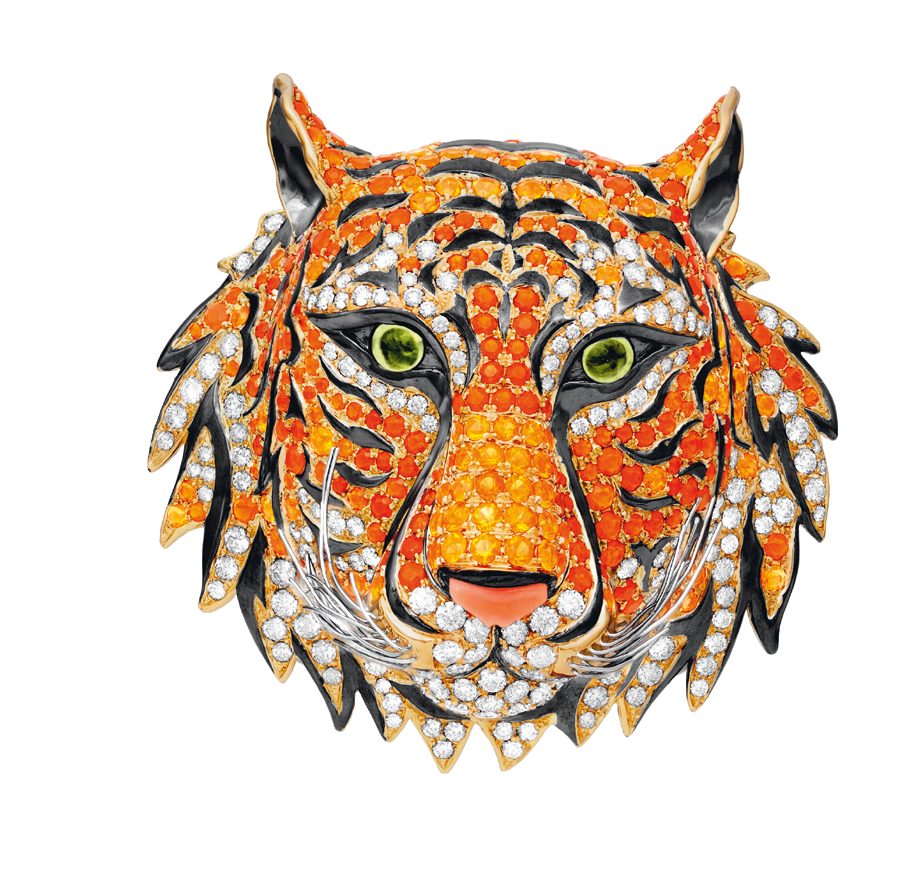
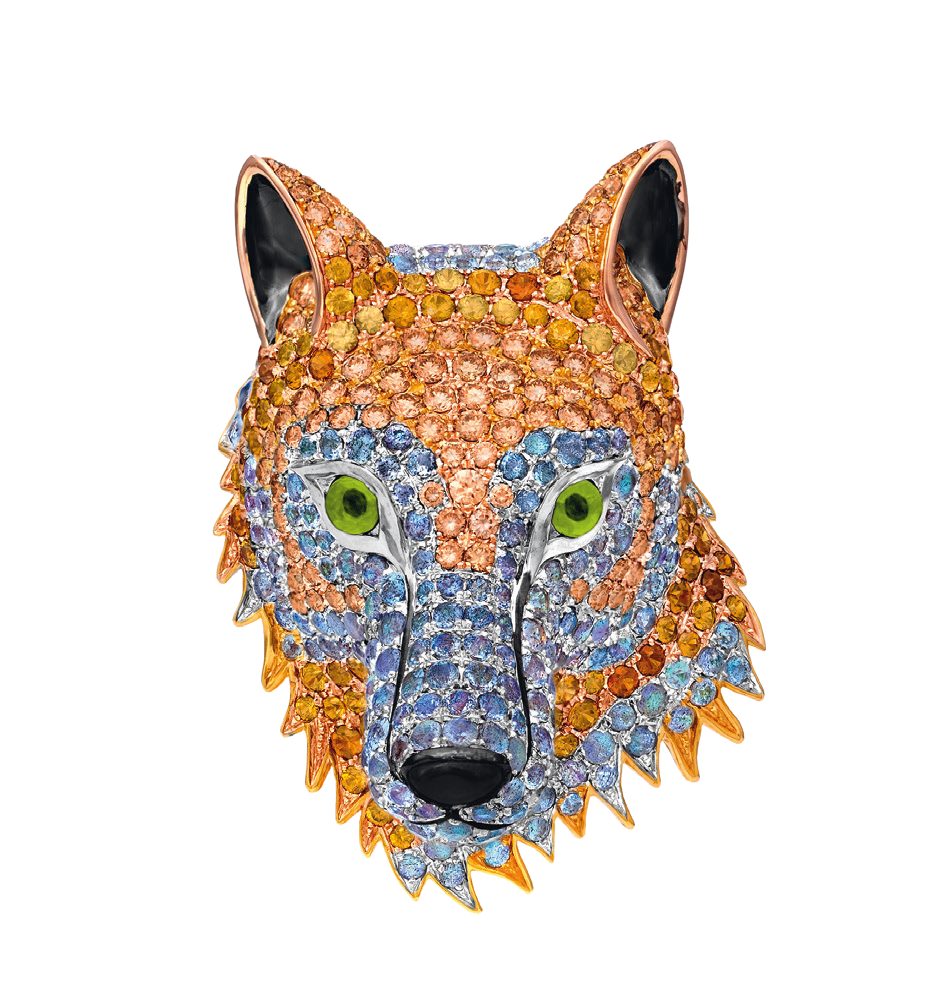
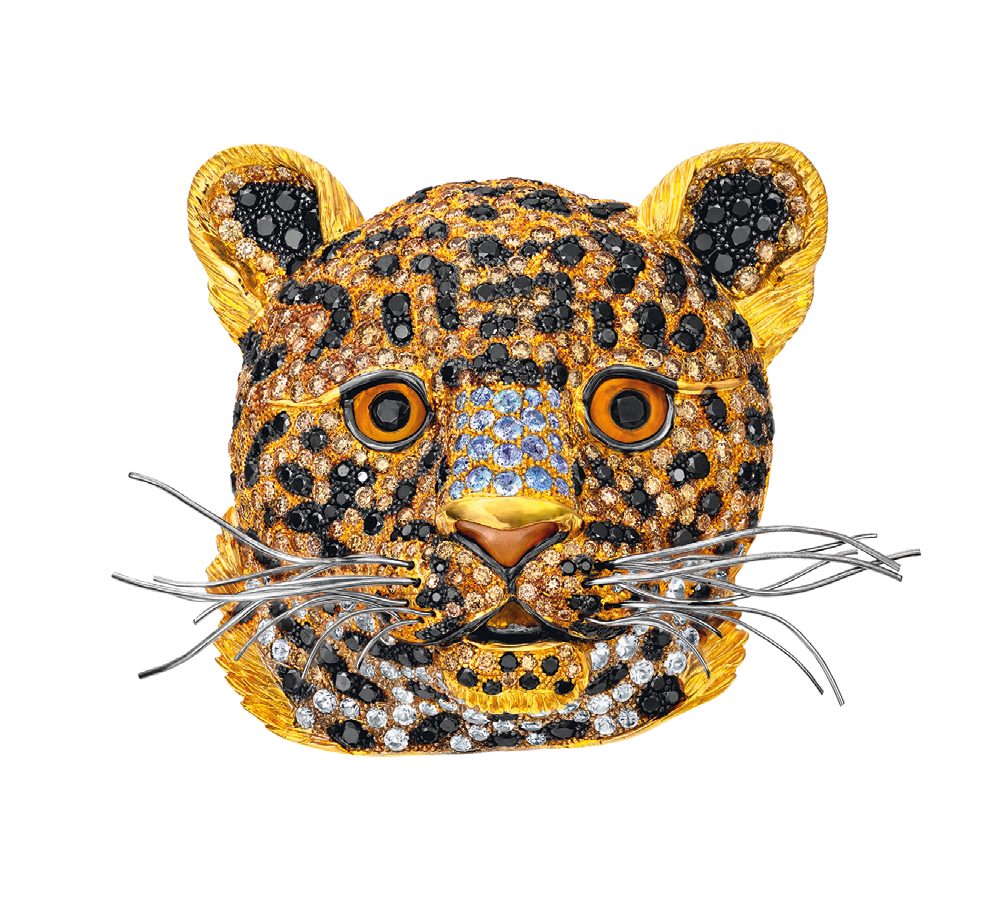
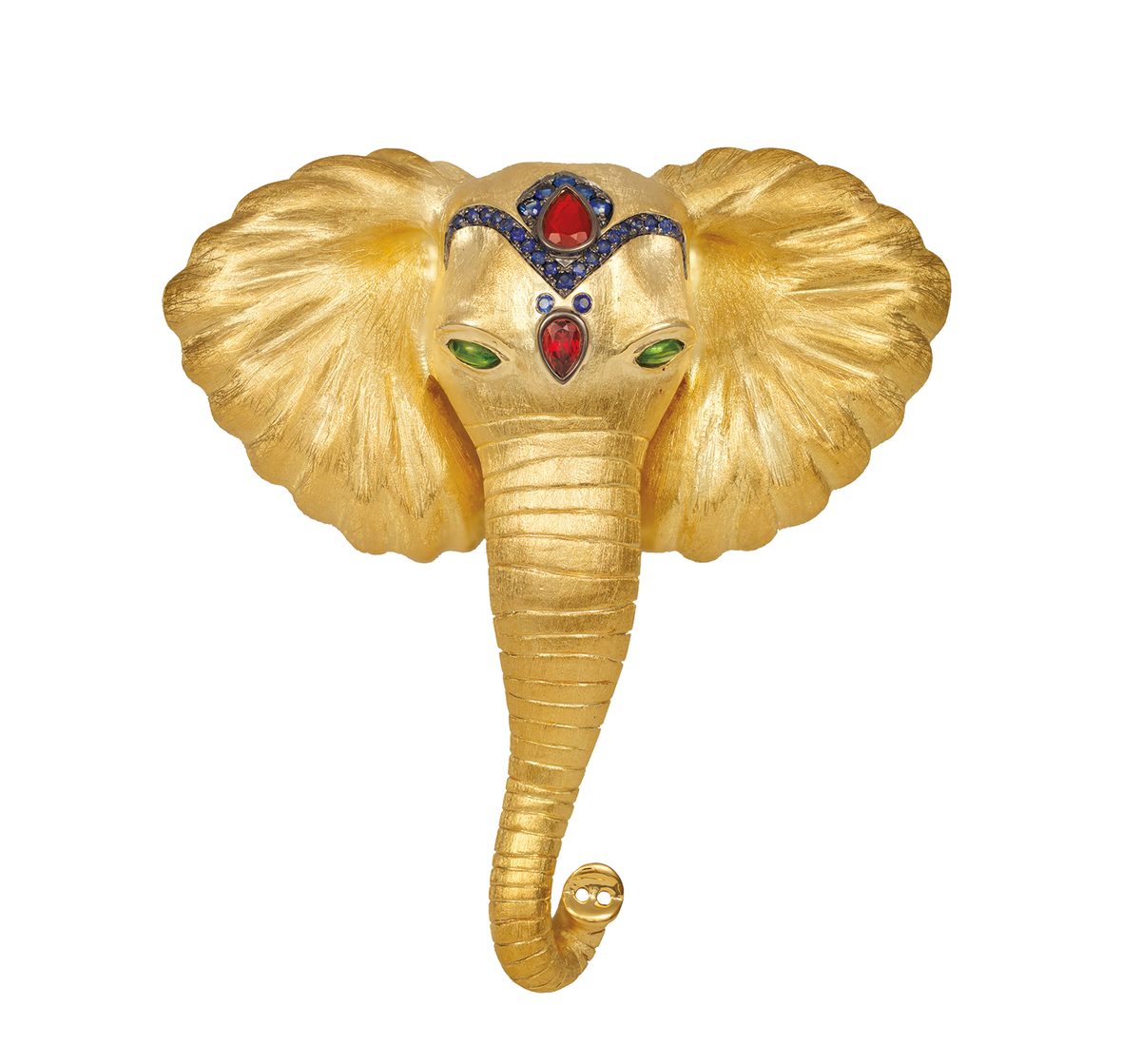
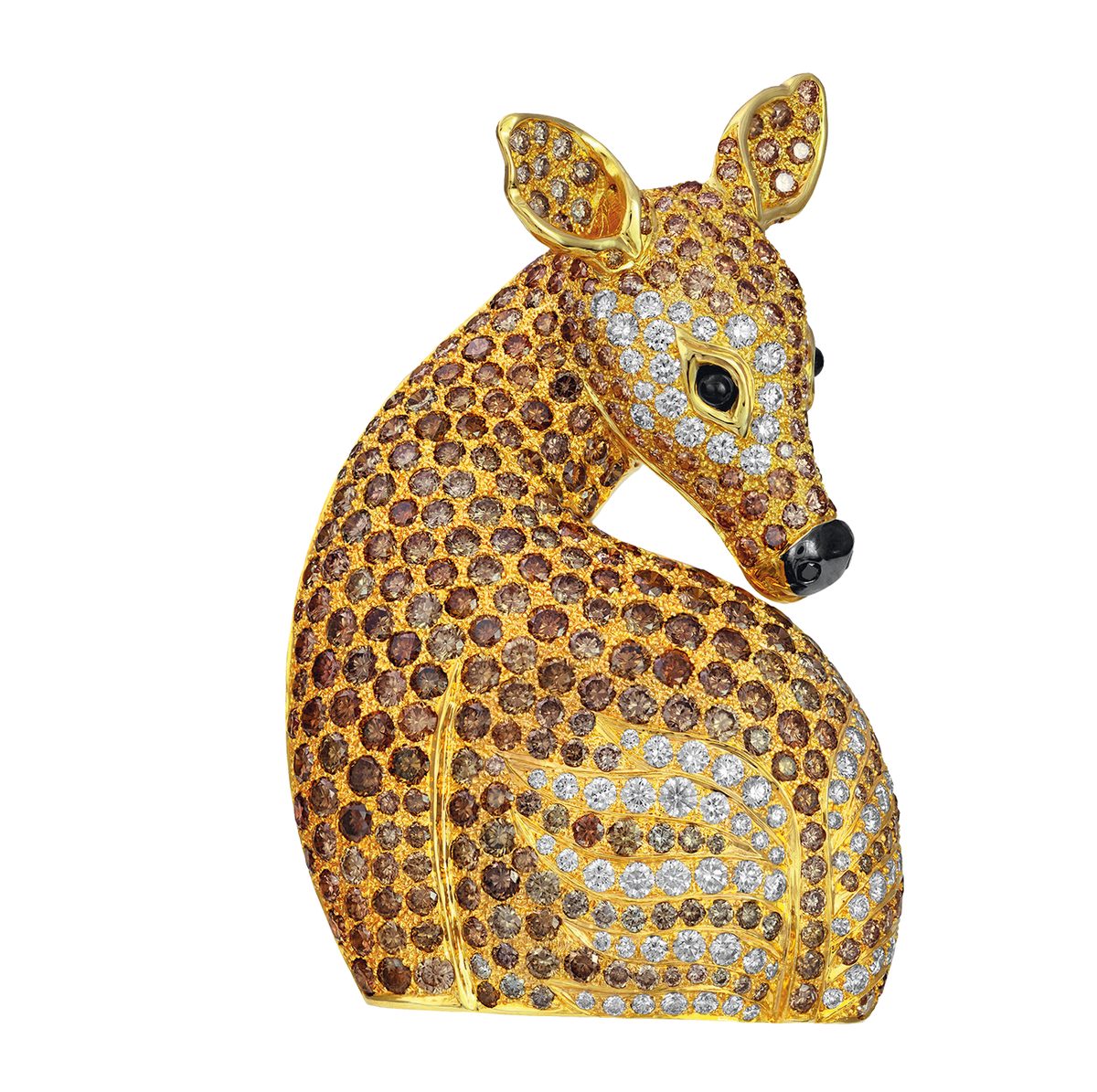
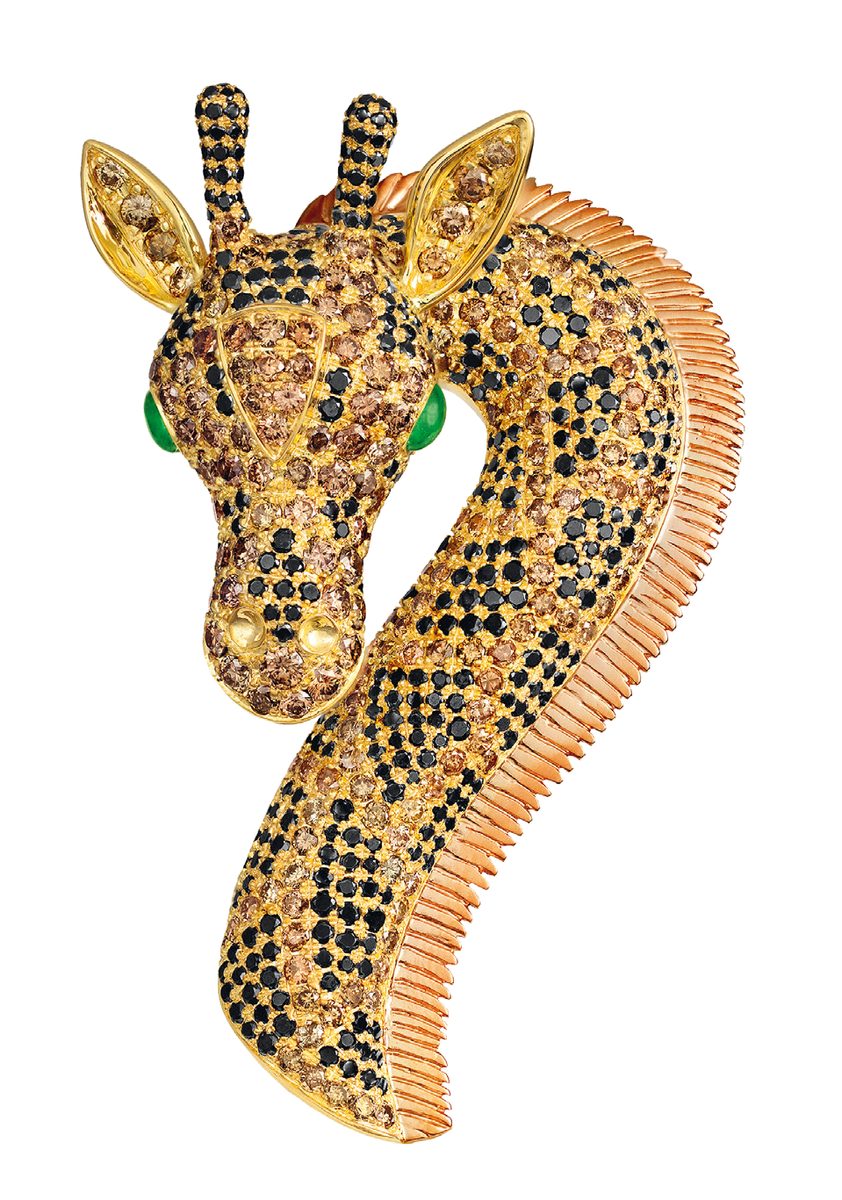
Protection of Nature and its wildlife is a priority for Paula. It is her hope that these jewels will help bring awareness to the plight of some of the world’s most threatened and critically endangered species.
Flights of Fancy
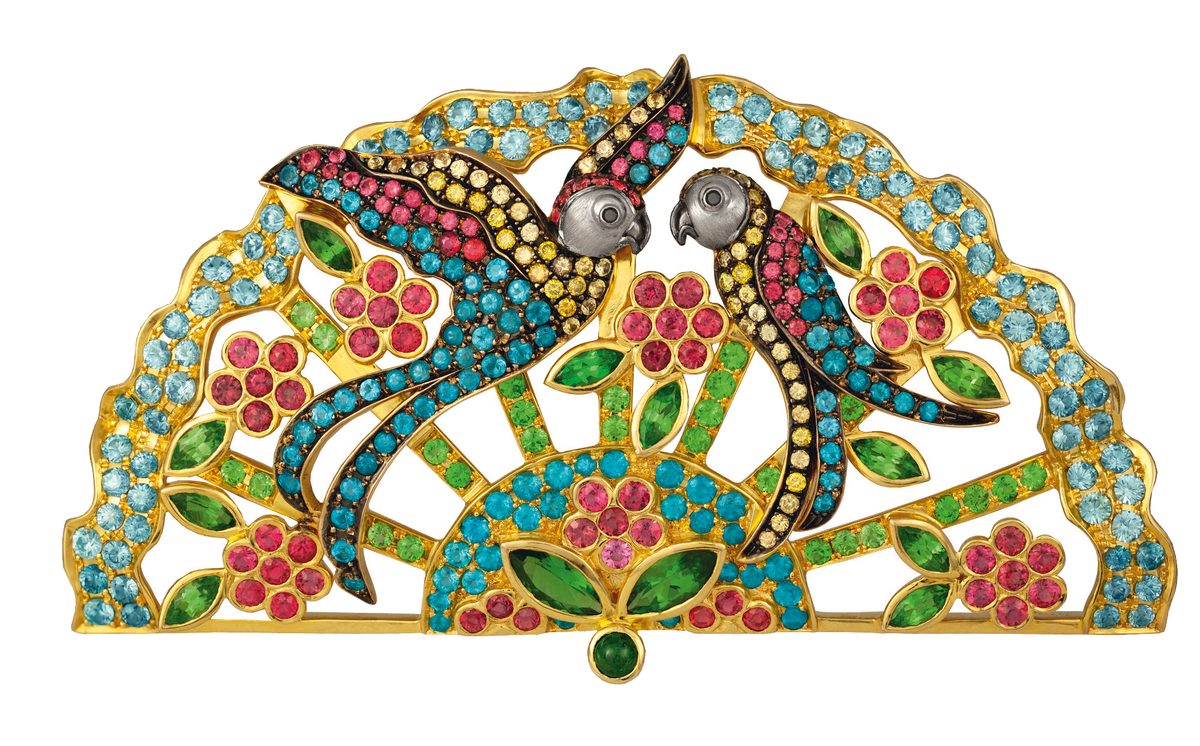
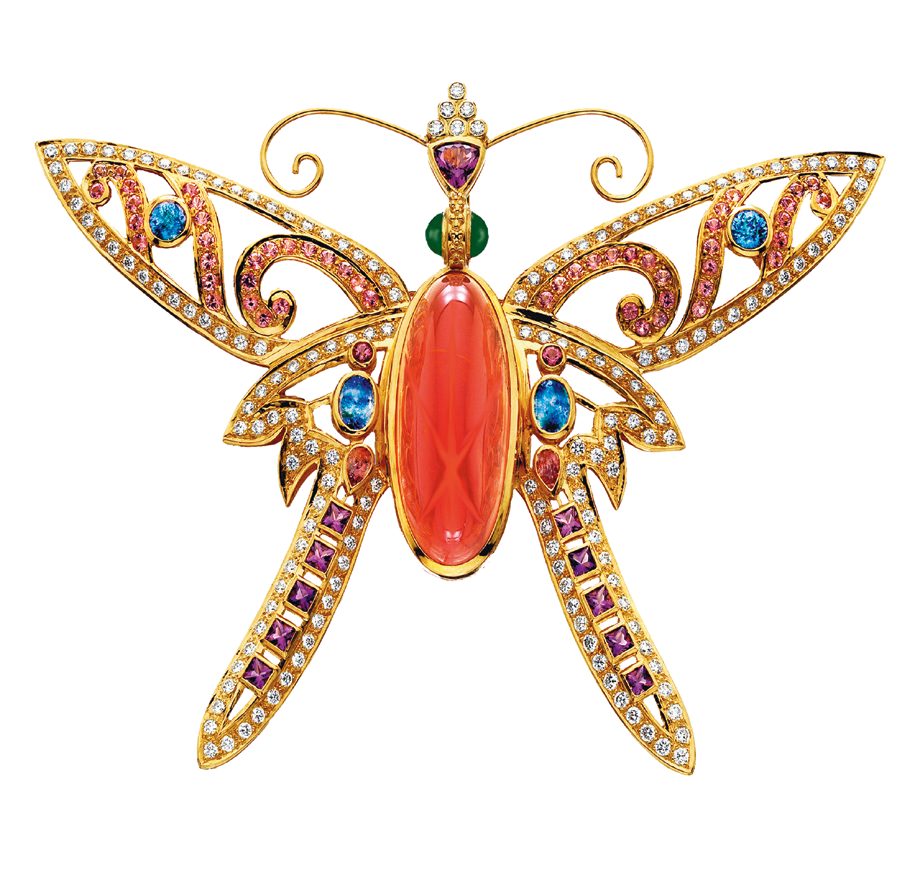
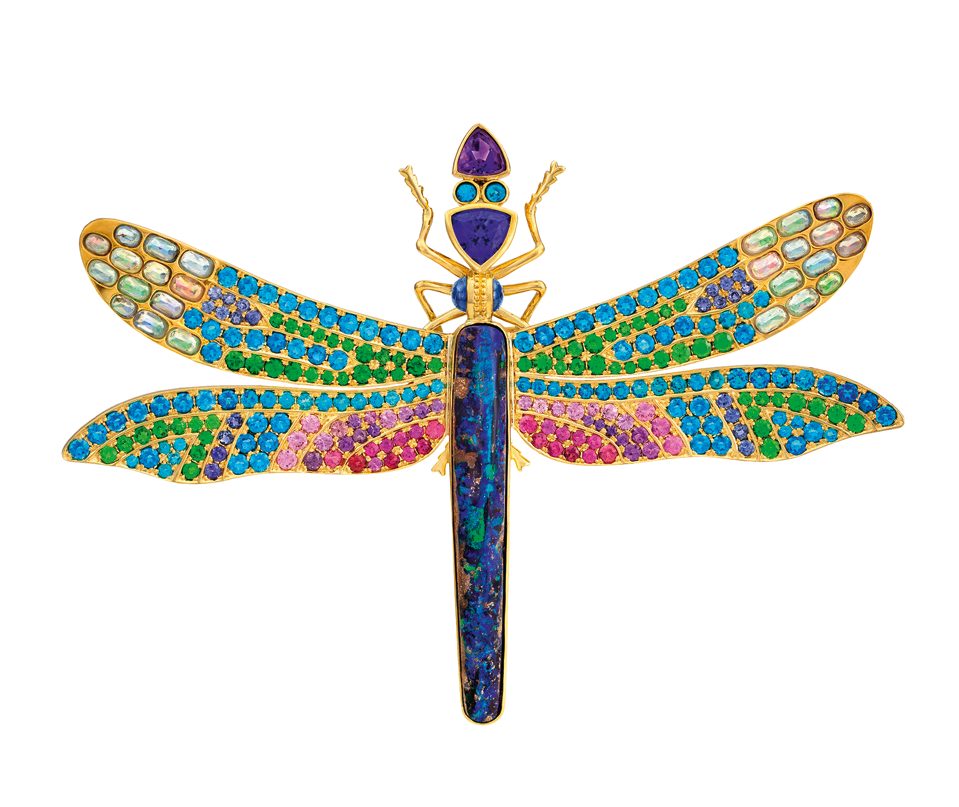
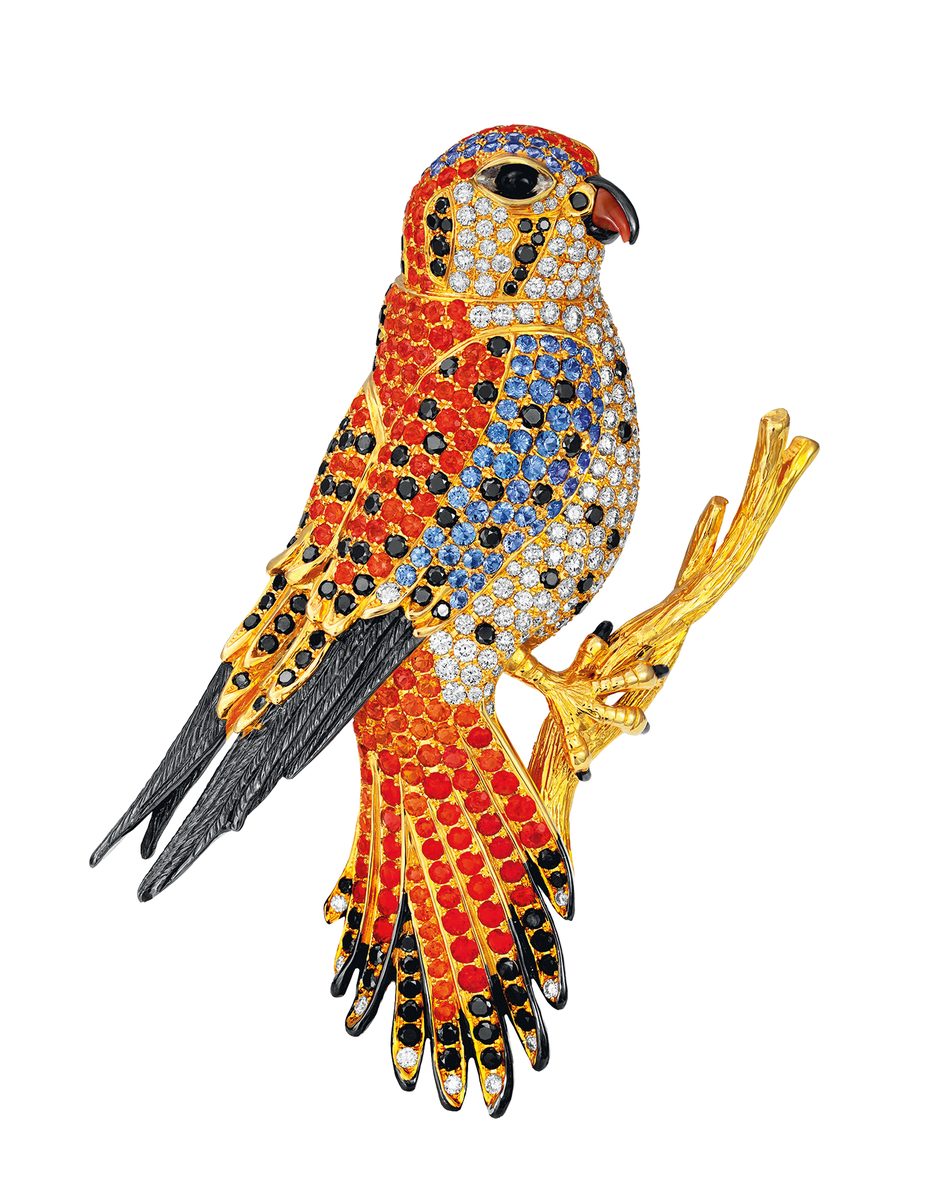
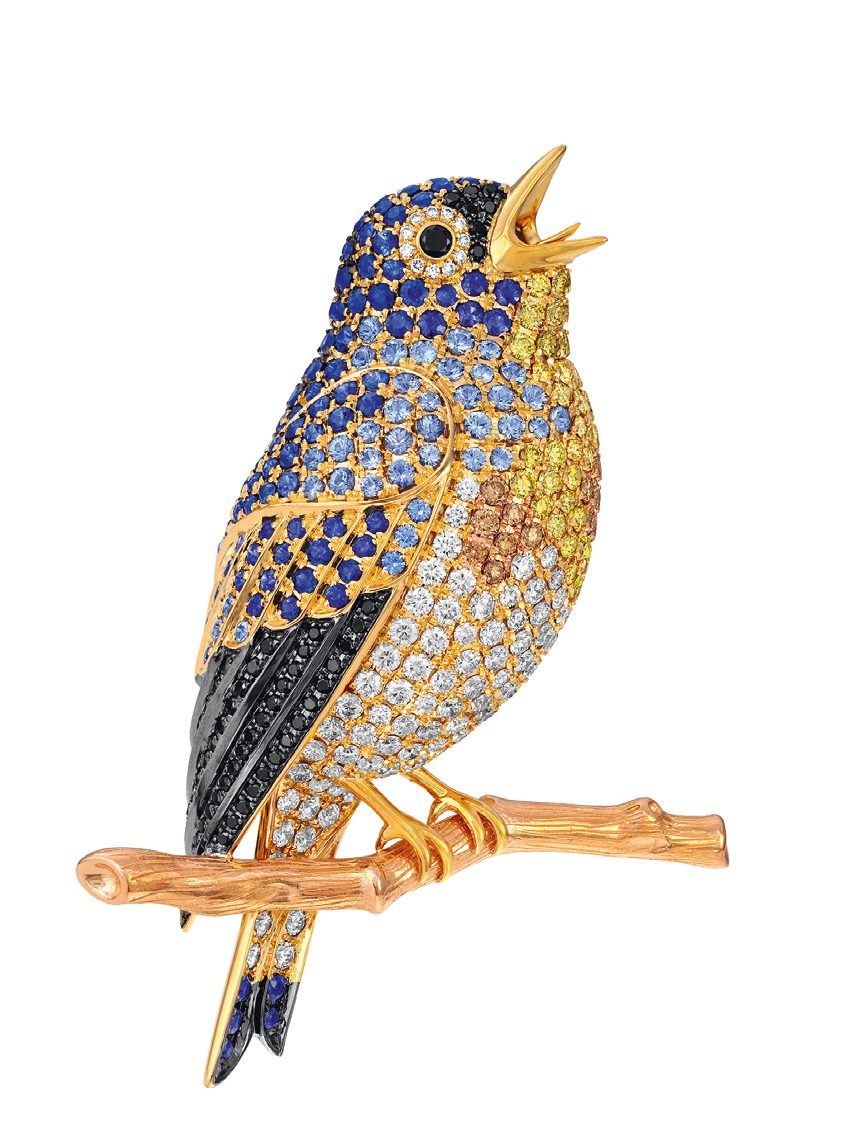
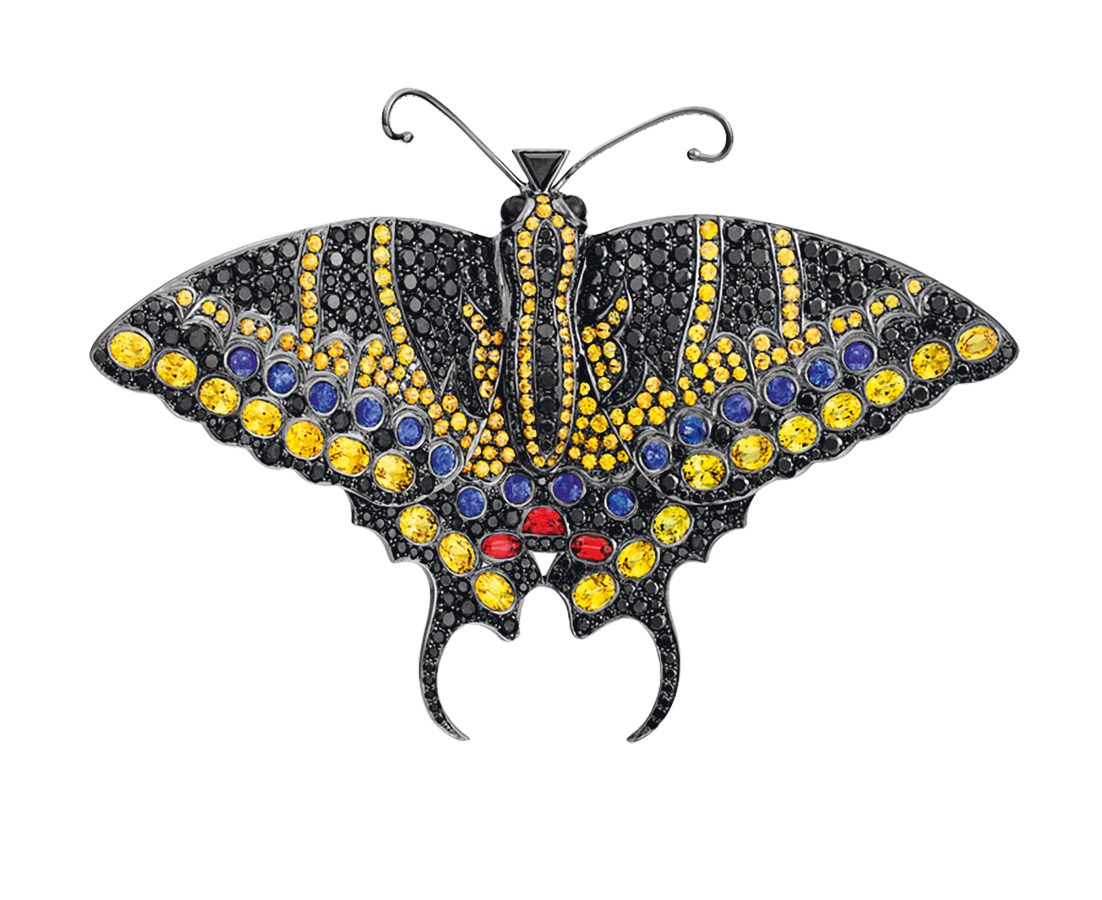
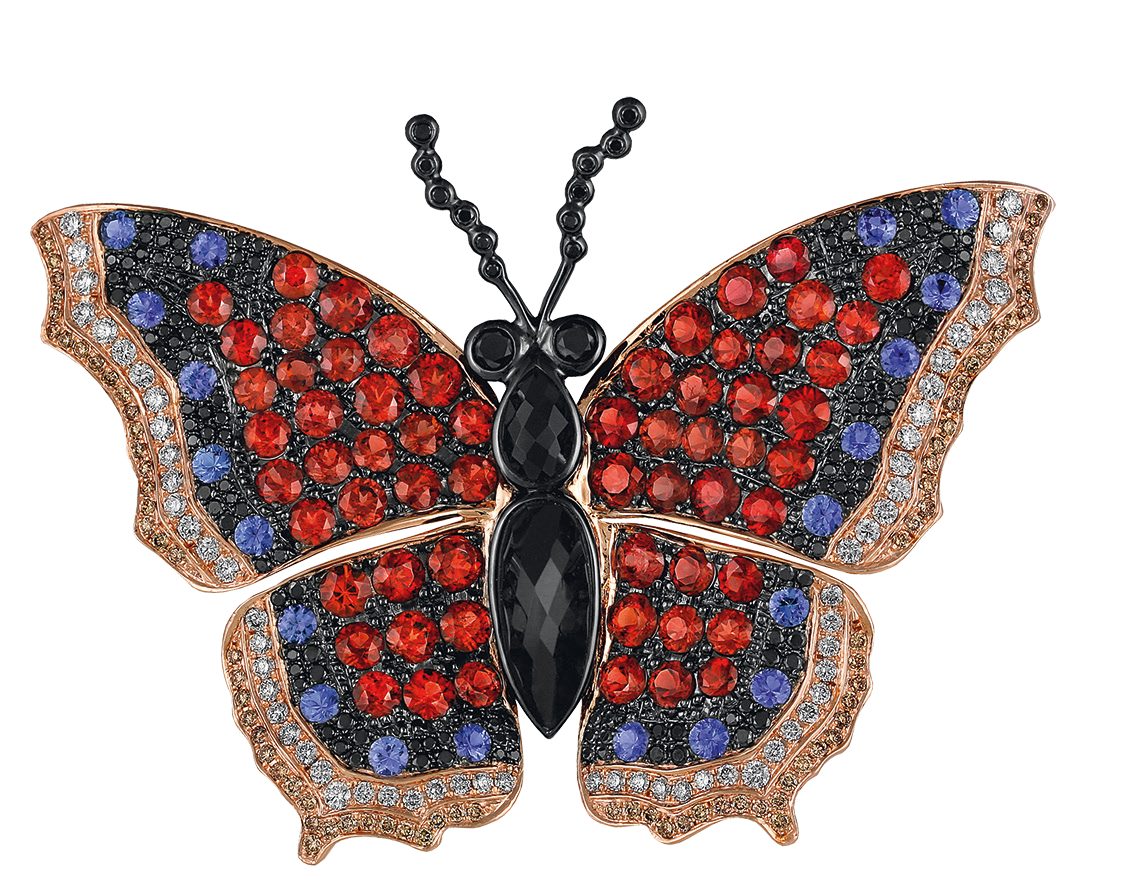
From birds to butterflies, dragonflies, and other winged beings, Paula captures their colors and essence as she recreates their Flights of Fancy.
Protecting Nature
Drawing on the natural world as her design muse, Paula has created major collections to evoke our fellow living beings: stylistic and realistic Butterflies, colorful Botanicals, spectacular displays of ocean life in Sea Creatures, and, very importantly, Endangered Treasury where she draws attention to some of the world’s most critically threatened species. Her most recent collection, Song Bird Treasury, offers a delightful and colorful rendition of our precious fine feathered friends.
Each jewel is an expression of her deep respect for the natural world and its beauty. “There is no greater inspiration found in art than Mother Nature,” she says thoughtfully. Her love for the natural world extends to not only raising awareness about endangered species, but also to giving a portion of the proceeds from the sale of pieces in the Endangered Treasury and Song Bird collections to organizations dedicated to saving these creatures that share our planet.
“All creatures great and small have a place. They are beneficial to our lives and helpful to our planet,” Paula reminds us. “I adore and am fascinated by the world’s creatures. When I learn of a certain song bird, for example, I want to understand it, to appreciate its colors, to learn what its habits are. I interpret these living beings in jewelry in the hope that more people will take better care of them and our planet.”
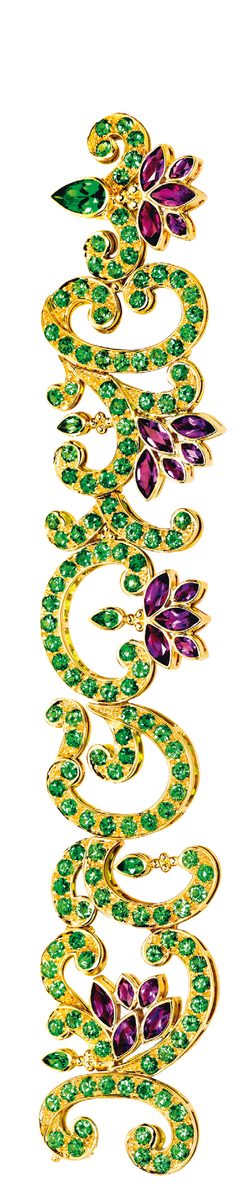
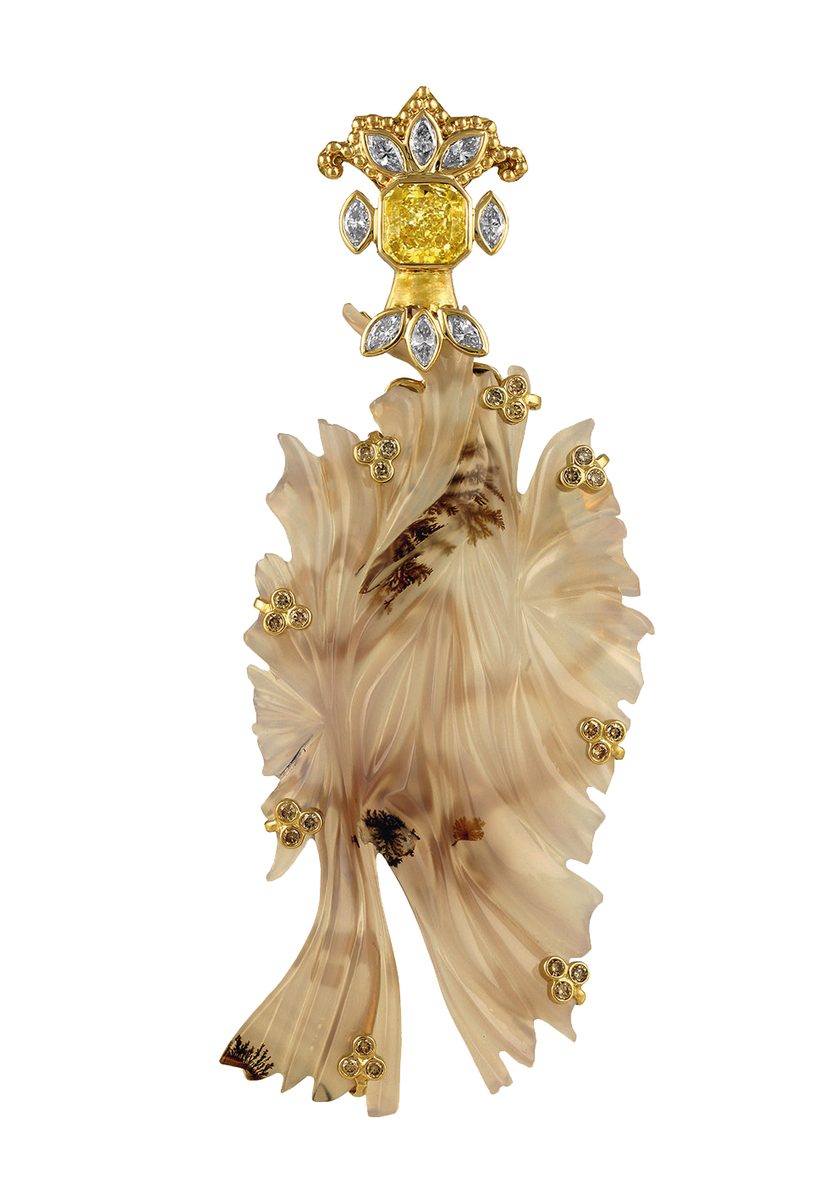
Collaboration is also an important feature of the Crevoshay brand. She has worked with many famous carvers, including the late Glenn Lehrer, combining talents to create masterpieces of form and color. [One such collaboration is Ice Angel co-created by Paula Crevoshay and Glenn Lehrer, that we featured on the cover of InColor issue 46, Spring Summer 2020.] “Working with the North American gem cutters is really wonderful, as it showcases the remarkable works of these talented individuals,” she comments.
Aside from Paula’s meaningful flora and fauna and her work with gem cutters, her other collections, including a men’s line, feature intricate color combinations in rings, earrings, necklaces and more, all with some inspiration drawn from Nature.
The Future of Fine Jewelry
At the forefront of the fine jewelry world, Paula is regularly invited to showcase her work in exhibitions across the globe, from the USA to Europe and Asia. Her creations have earned her more than 25 prestigious national and international awards, and her work is permanently displayed in renowned museums, including the Carnegie Museum, the Smithsonian Institution, the Perot Museum, and the British Council for the Arts in India, among many others.
Despite her many successes, however, this jewelry artist is not content to rest on her laurels. She continues to push the boundaries of her craft, always seeking new ways to challenge herself and her art. “Fine jewelry should invite engagement, evoke emotion, and elicit a reaction,” she asserts. “It can be exciting and dramatic, or it can also, at times, offer comfort and serenity. Today’s woman is empowered. She is connected with time and culture. She can wear whatever she wants. She was born to be jeweled.”
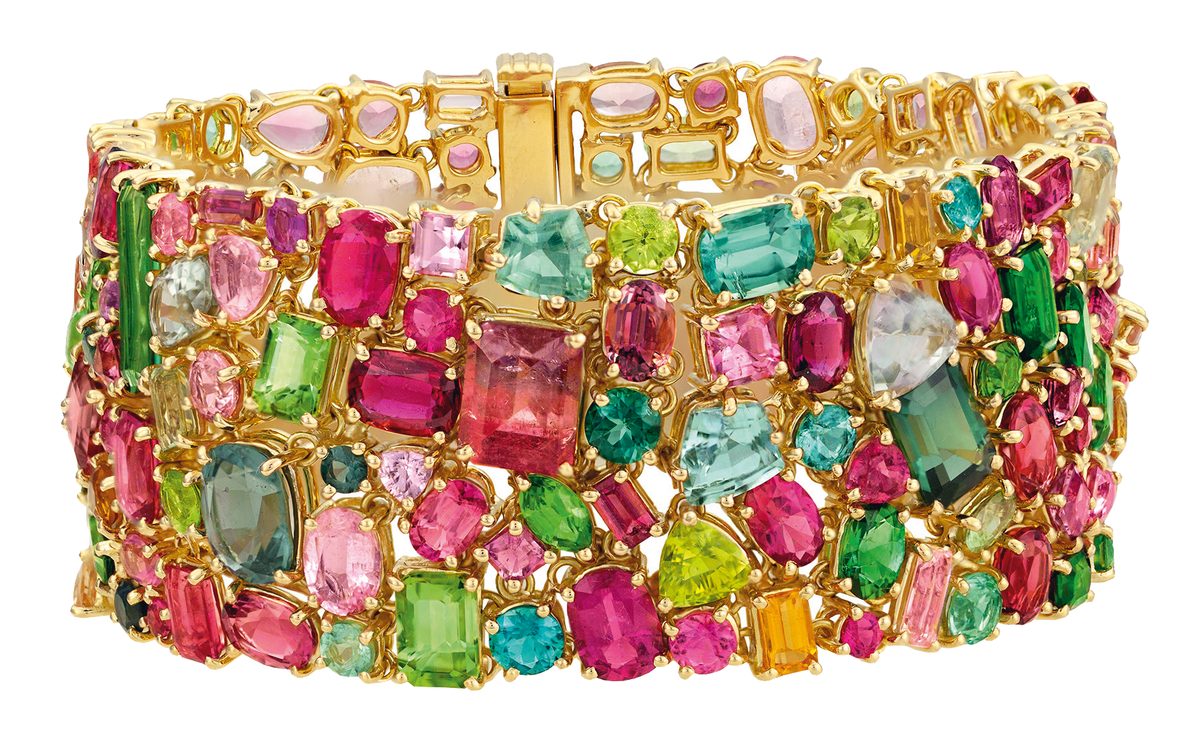
Paula Crevoshay’s one-of-a-kind pieces are more than mere jewels; they are works of miniature art that capture the beauty of the natural world and transform it into something timeless and emotional. As her journey continues, it’s clear that the Queen of Color will remain a leading and colorful light in the world of fine jewelry for years to come.
All images are courtesy of Paula Crevoshay.