Brazil was the world’s principal producer of diamonds for more than 150 years. The precious stones were discovered in the state of Minas Gerais near Diamantina in 1714, although the official “discovery year” was 1729, which was the year that the news reached Europe. A century and a half later, however, Brazilian production was eclipsed by that of South Africa.
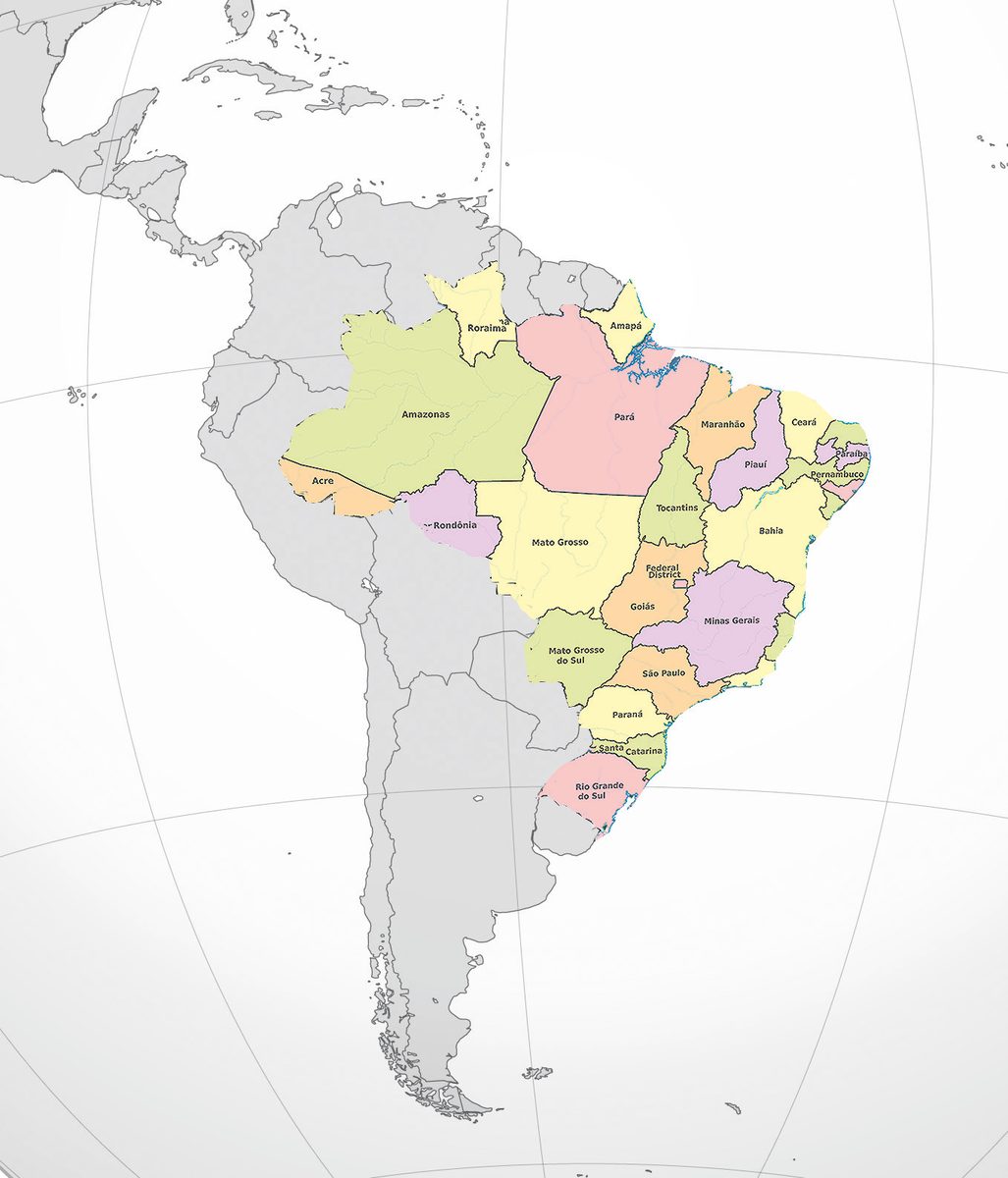
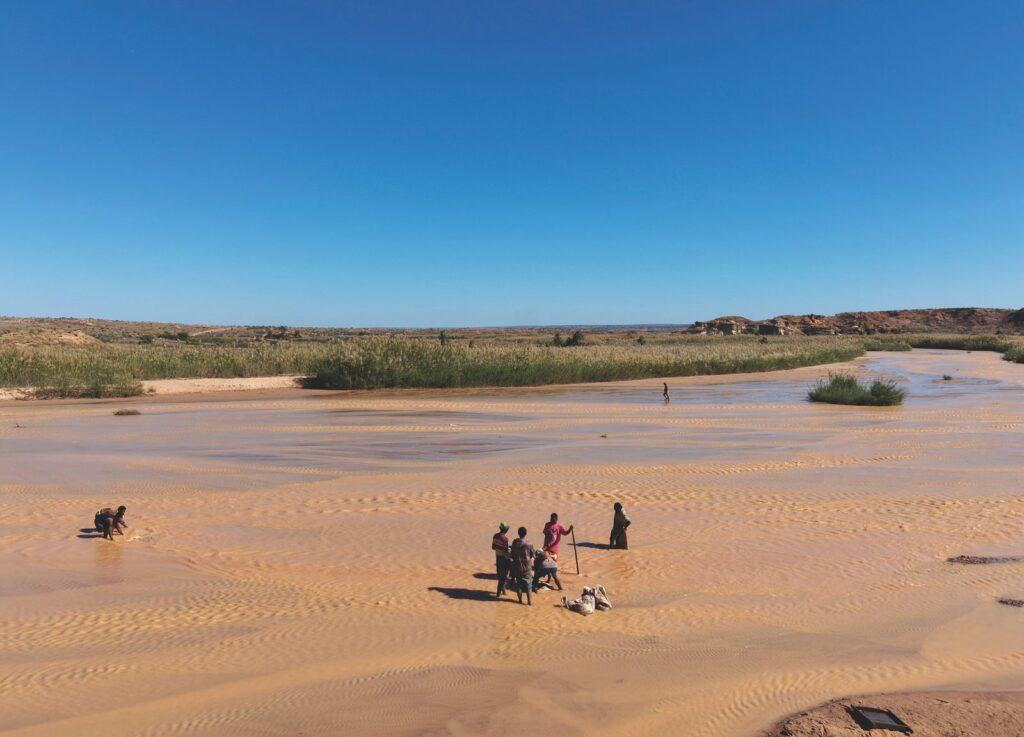
With the discovery of diamonds in the alluvial gravels of the Abaeté River and other rivers during the mid-18th century, artisanal diggers called garimpeiros migrated towards the western part of the country to a region called Triângulo Mineiro e alto Paranaiba (Minas Triangle and High Paranaíba), in the western part of the state of Minas Gerais.
In the 19th century, scientists described the diamond occurrences and provided the first geological descriptions of the region. In the 20th century, they tried to explain the genesis and regional geological setting of the precious stones.
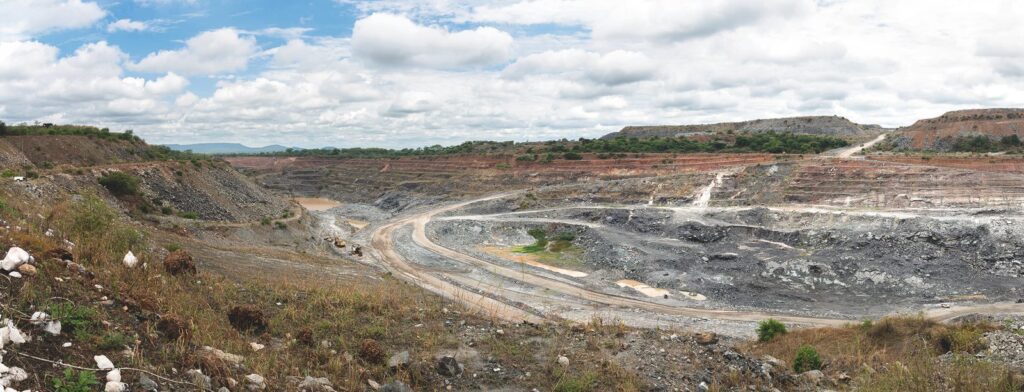
For over 250 years, the Triângulo Mineiro supplied most of Brazil’s diamonds, including rare colored diamonds. Surprisingly, almost all diamonds over 100 carats came from this region (Figures 1a and 1b).
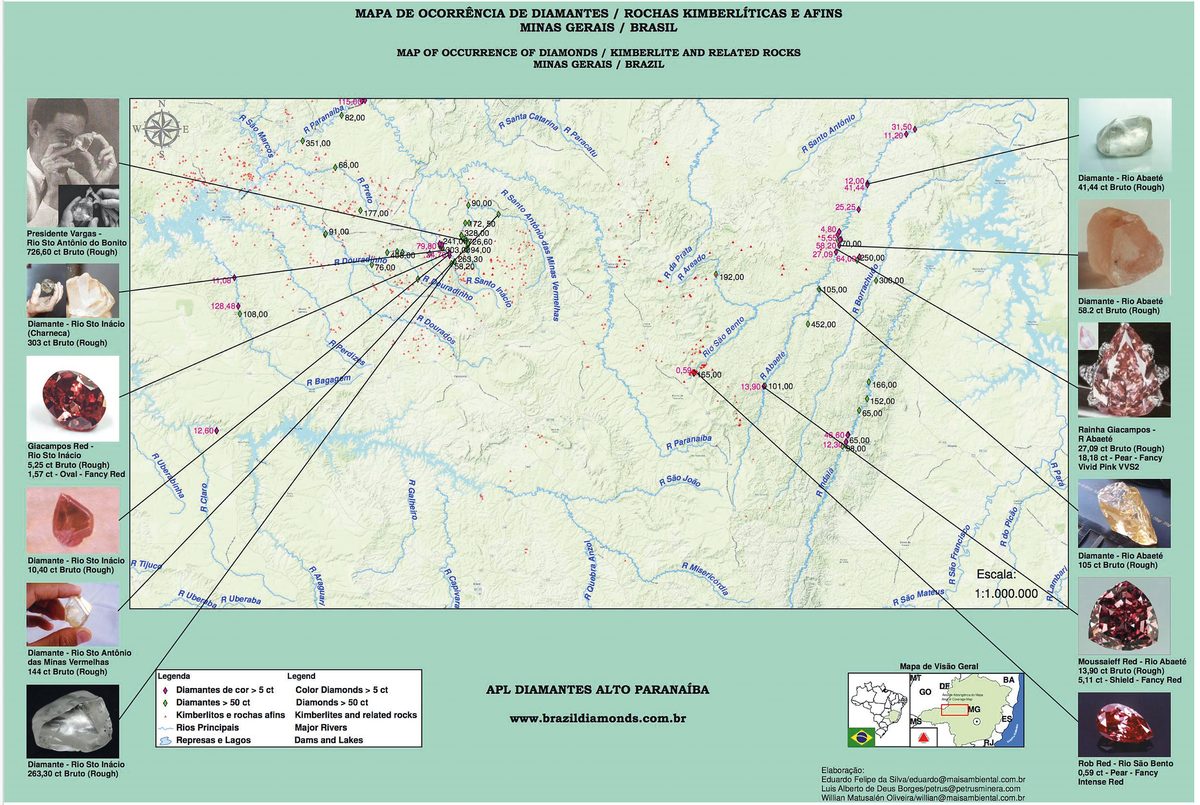
By the 1960s, almost all major diamond companies had arrived to explore the primary sources. But, after more than a half century of extensive investigation, they abandoned further exploration, leaving the region to small mining firms and to the garimpeiros. Although much of the exploration data remains proprietary, it reveals the discovery of hundreds of kimberlites, although the primary diamond source remains an enigma to this day (Karfunkel 2014).
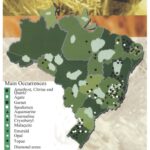
The most well-known locations for colored diamonds in Brazil are Coromandel (Figure 2), Patos de Minas, and other locations near rivers in Minas Gerais, and Juina in the state of Mato Grosso.
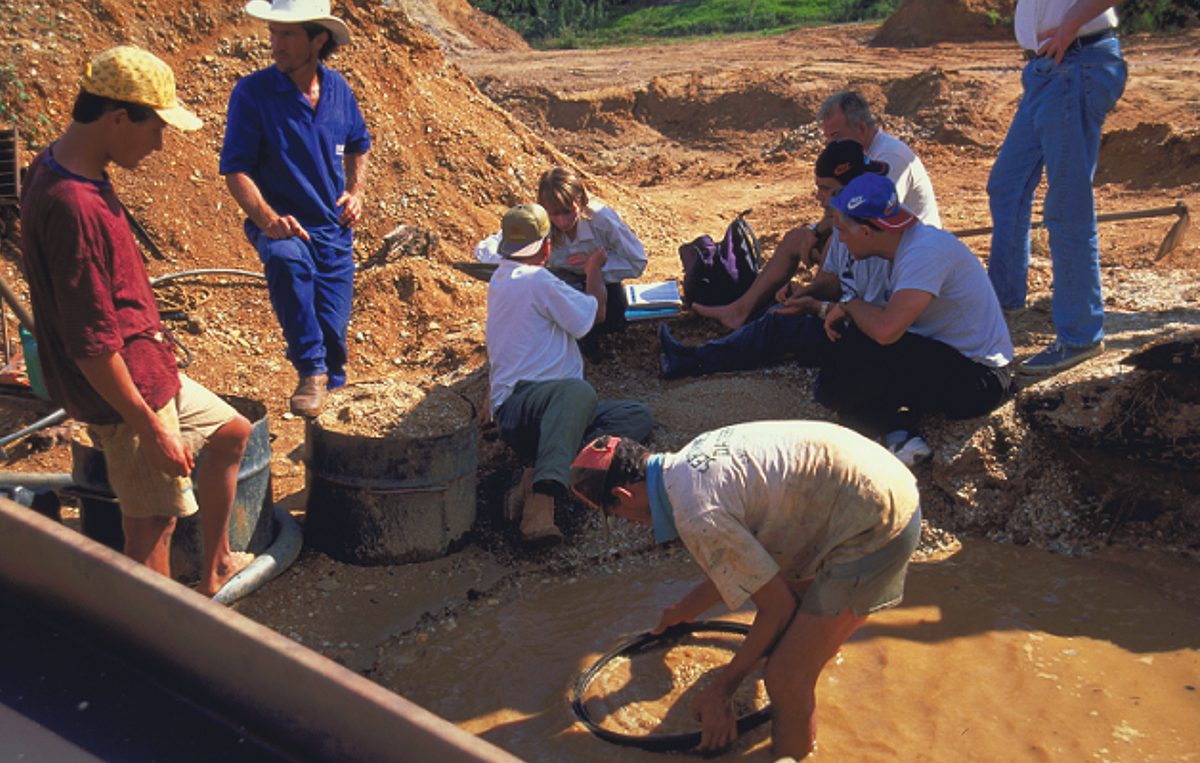
We went on our first of five research and educational trips to Brazil in 2000 via Uberlandia to the Coromandel area at the invitation of a New York diamond dealer. Our task was to estimate the rough diamond potential on his property near the Rio Pretto by sampling gravels above the bedrock.
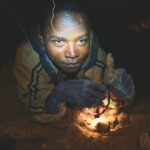
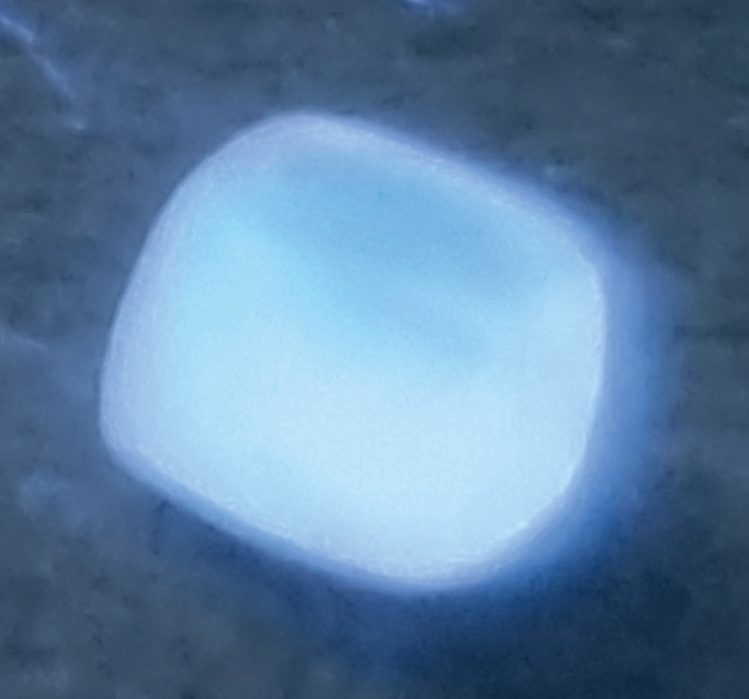
We worked for several weeks with an excavator and local miners, using simple washing operations and panning many kilograms of gravel. At the end of the long days, we were delighted when we turned the baskets, containing heavier indicator minerals – such as black picroilmenite – upside down, to find a diamond or two at the bottom (Figure 4).
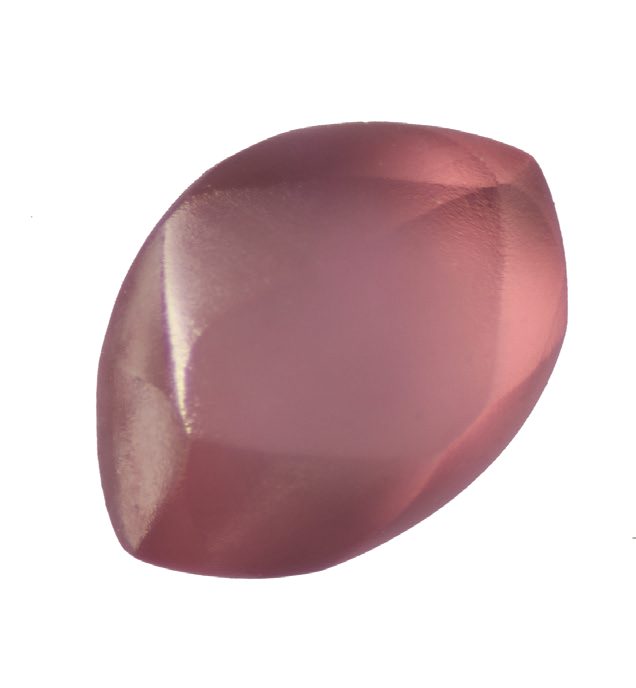
Some lucky artisanal diggers also occasionally found important pink diamonds in Triângulo Mineiro, such as the one shown in Figure 3.
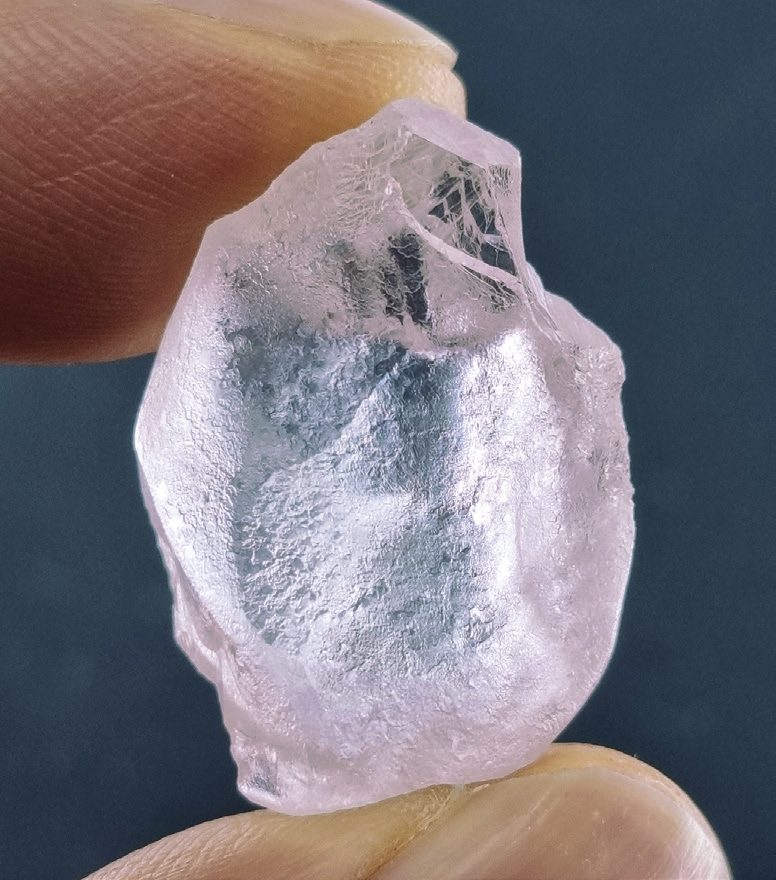
We also visited the center of the Brazilian diamond trade for 200 years, Diamantina, as well as a few localities where they mined diamonds from conglomerates. At the office of a colored-diamond dealer in Belo Horizonte, we acquired our first Brazilian colored diamonds for our research and educational workshops.
Large Colored Diamonds – The Where and the Why
India. Looking at a brief historical review of diamond colors, we can confidently say that India, which was the world’s first diamond producer, is a country that has produced some very rare blue and pink diamonds.
Based on the research of Yu Orlov (1977) and Ichiro Sunagawa (1990), the role of nitrogen serves to support the diamond’s crystallographic structure, i.e. the most common octahedral form (Type I). Because diamonds found in India are of the rare Type II (without nitrogen to hold the specific shape), they are large crystals (some cleavages) that are cut to stones of almost 200 carats (Figures 5 and 6).

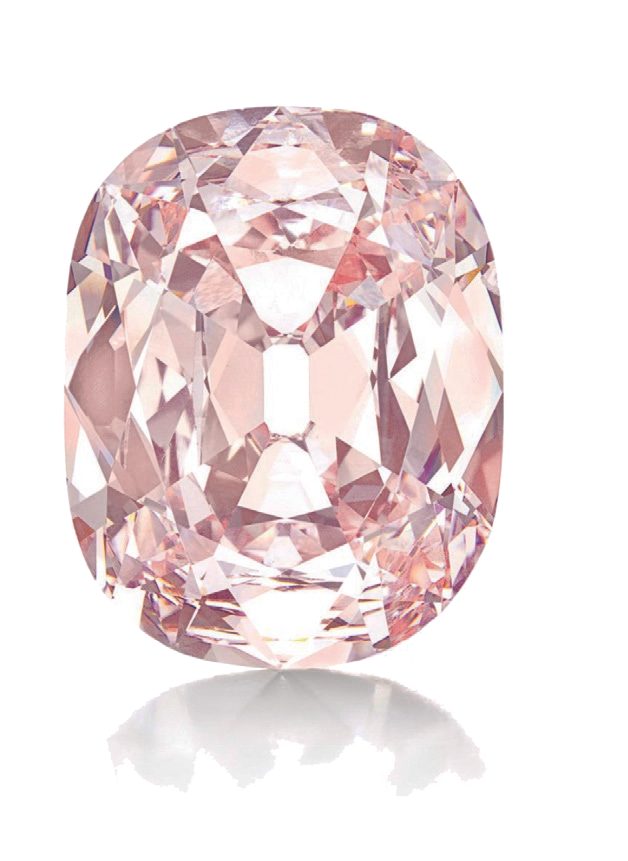
Brazil follows India as the next major supplier of such colors, whereas Borneo has been mentioned several times as historically a supplier of fancy colors, as well as central and South Africa.
Kunz (1901) notes that Brazilian stones command higher prices than African stones. Cattelle (1903) states that red, sapphire blue, and emerald-green are very rare and highly valued, and further notes that, when Brazilian diamonds first came on the market, European dealers tried to discredit them. The Portuguese turned the tables on them, however, by sending Brazilian diamonds to Goa where they were then sold as being of Indian origin!
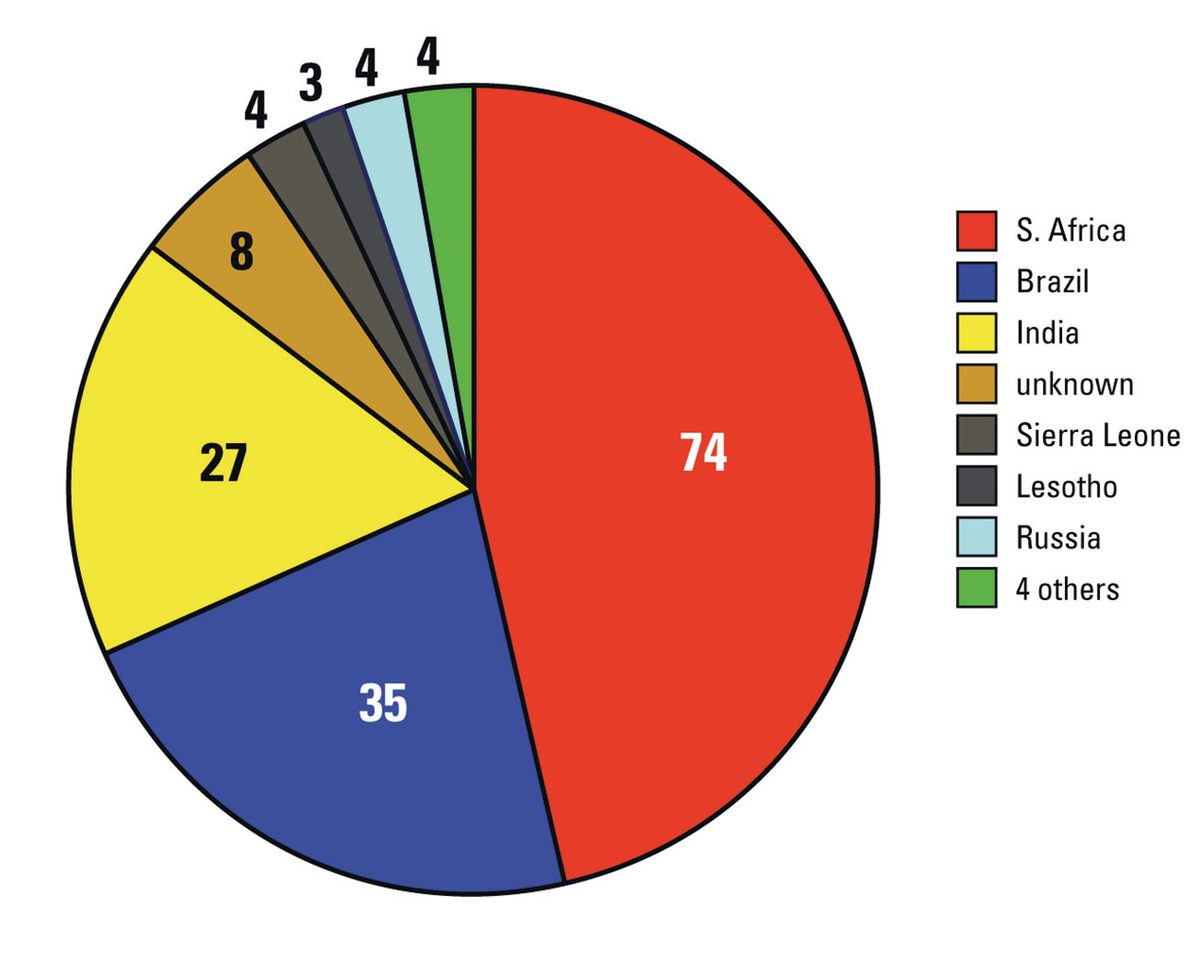
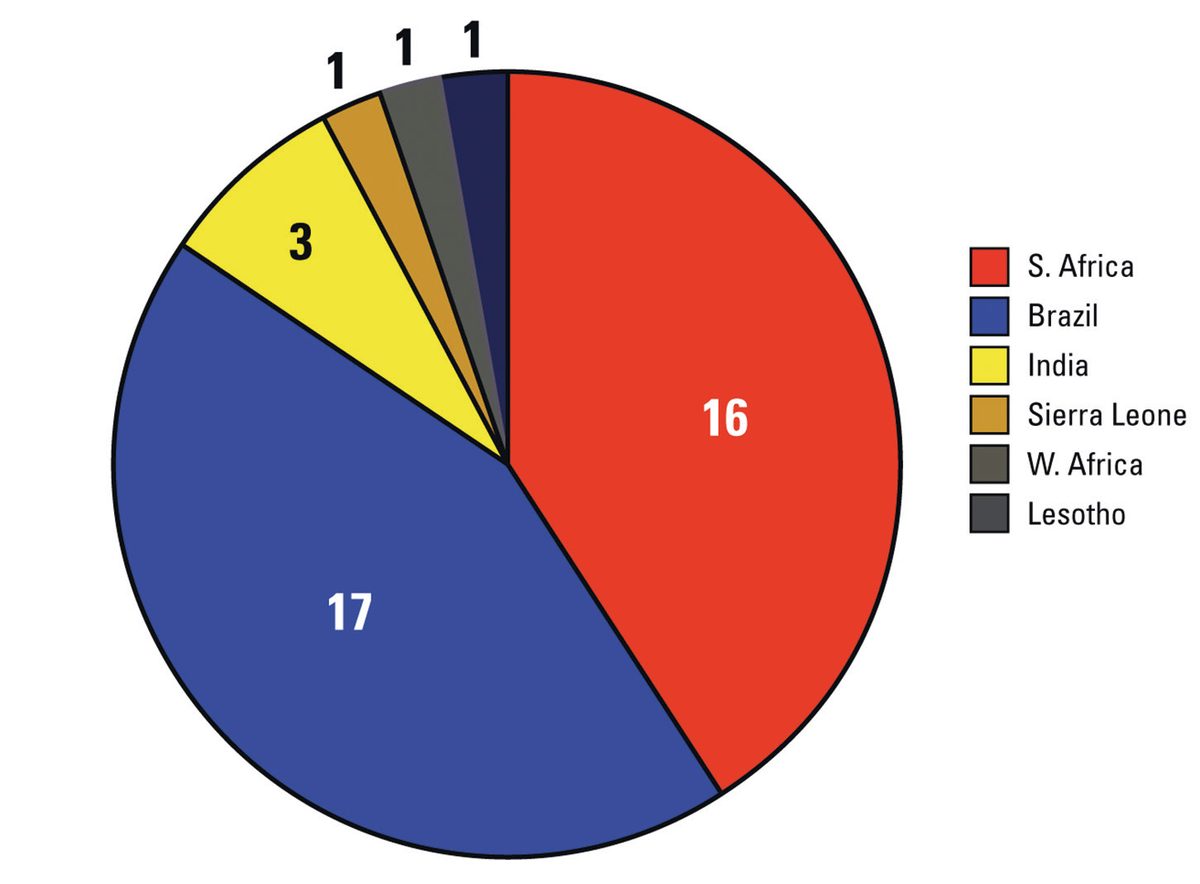
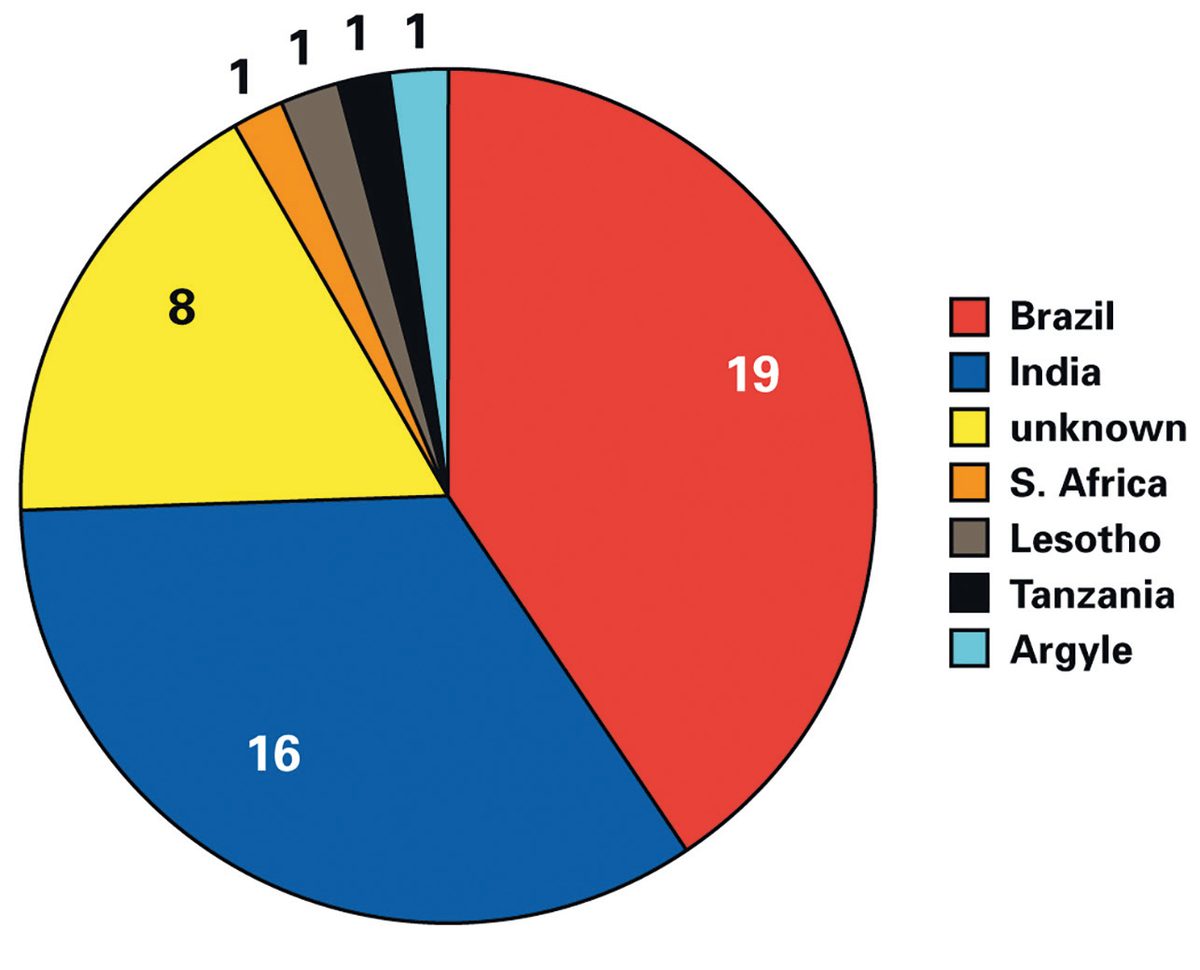
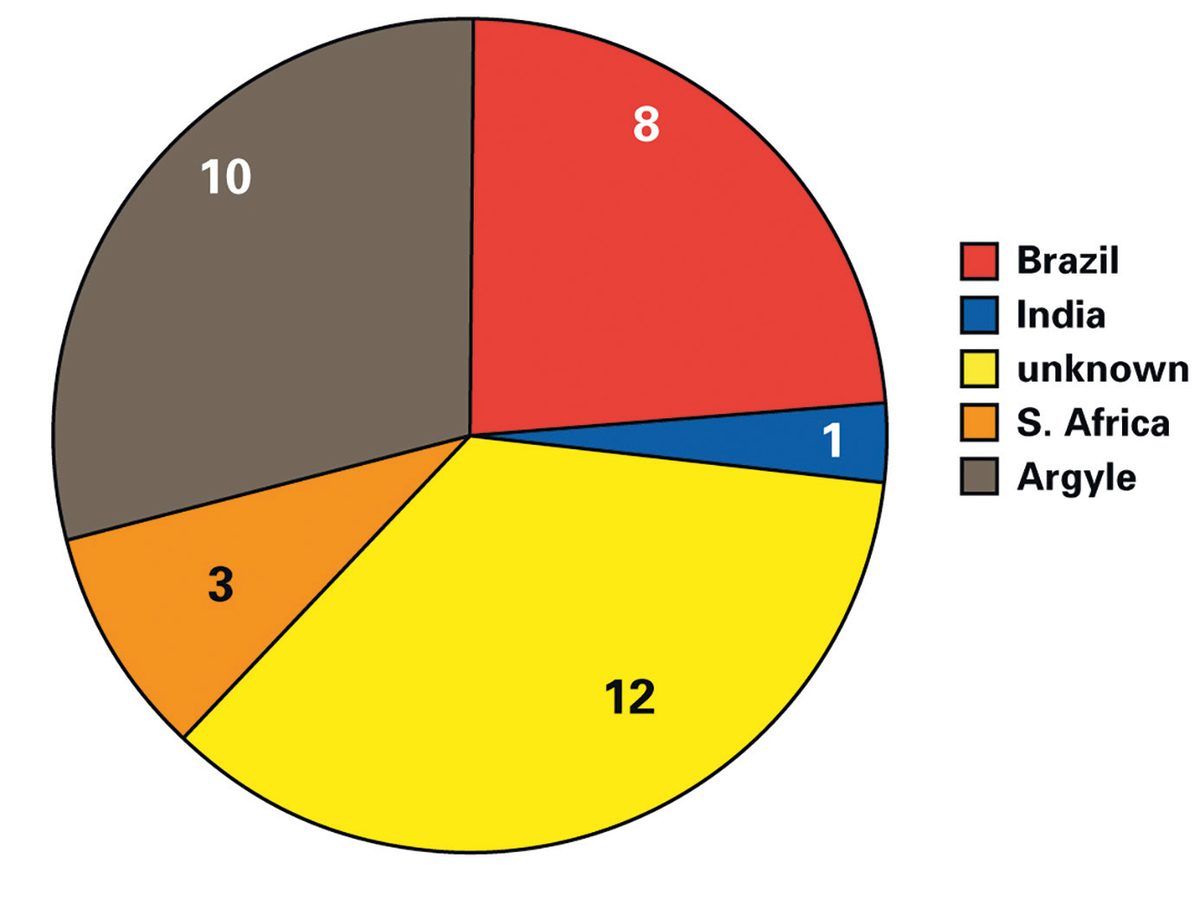
Brazil produced one-quarter to one-half of the largest diamonds in the world (Figures 8 and 9). These pie charts show the number of diamonds greater than 100 and 324 carats found in various countries.
We went to the spot on the Abaeté River where, in 1989, a boy found a “red 2.5-gram pebble” (13.90-carat rough) while swimming. He showed it to his farmer father, who took it to a Belo Horizonte jeweler who then sold it to William Goldberg, a cutter in New York.
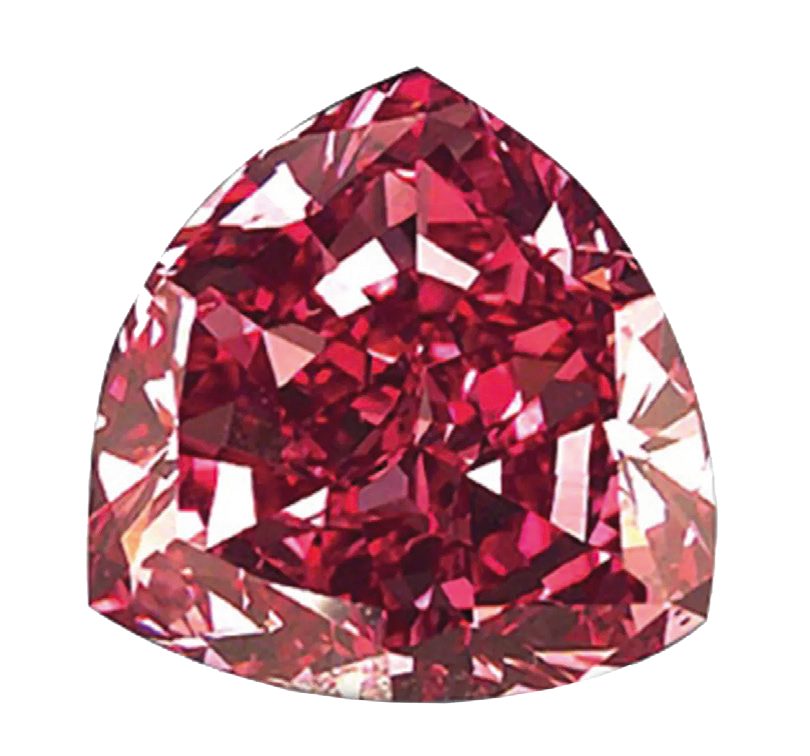
While working at GIA’s Gem Identification and Research department in New York, I had the opportunity to examine this 5.11-carat Moussaieff Red, then the largest red diamond that had been examined by any lab up to then (Figure 11).
Importantly, the Hancock Red (Figure 12) was the first gem to be sold for nearly US$1 million per carat in 1987 at Christie’s. Since then, colored diamonds have gained in appreciation both with the trade and among consumers. Prices and demand began to rise, as well as media coverage.
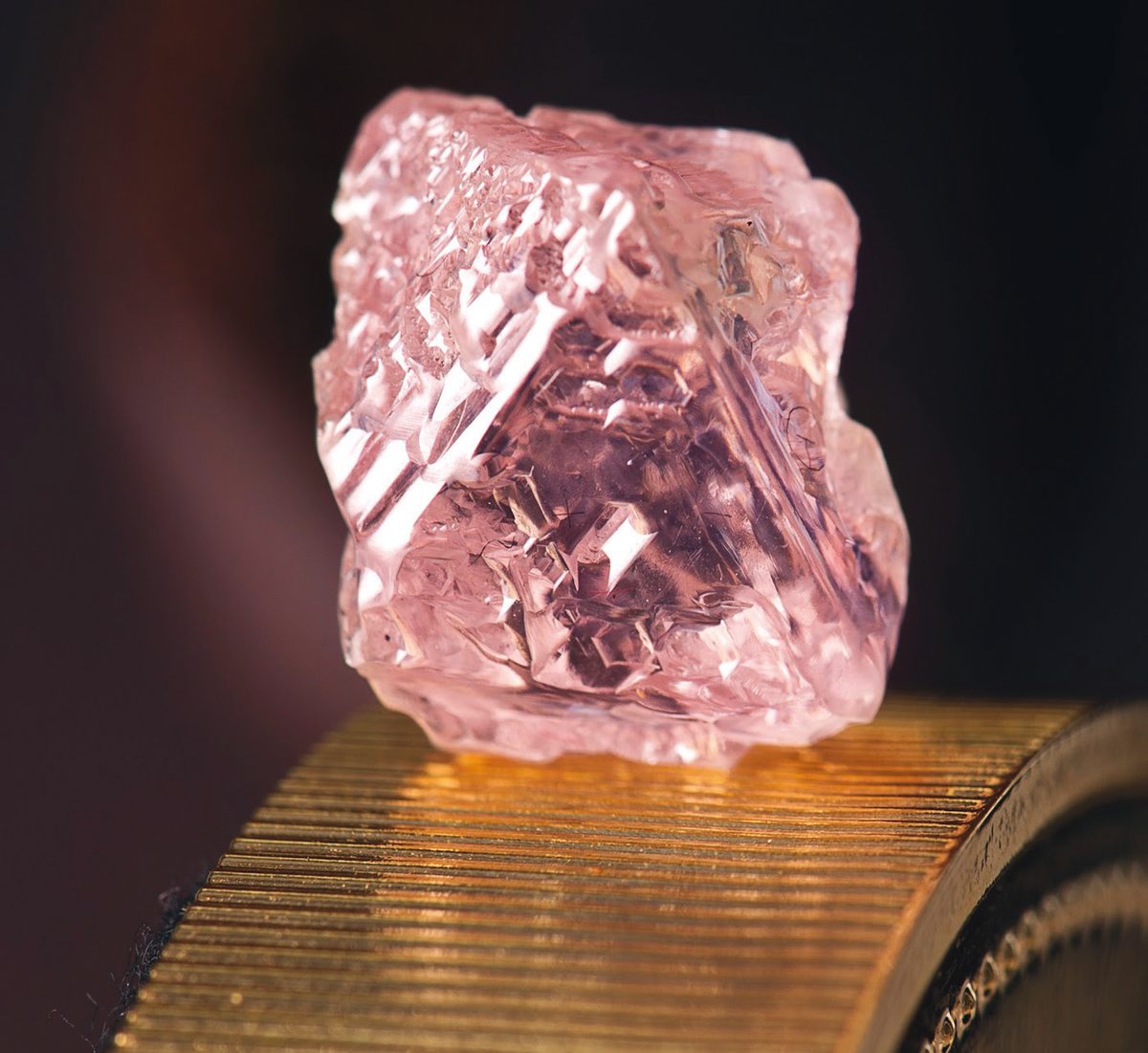
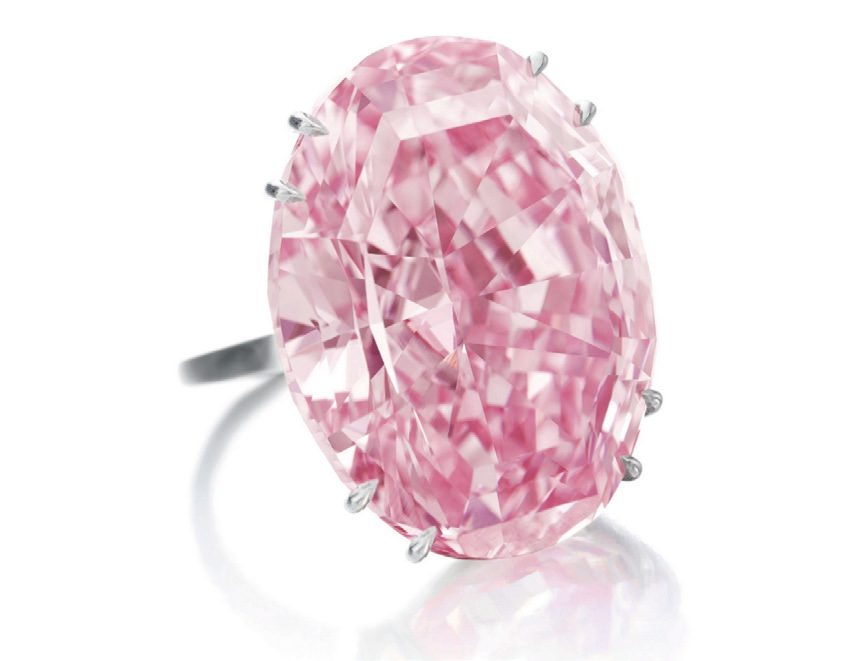
Australia. Since 1985, the Argyle Mine has been a recent supplier of large numbers of smaller pink diamonds, of which the largest so far was the 12.6-carat Pink Jubilee, unearthed in 2011 (Figure 15). While the Argyle mine in Australia is known for the number of pink diamonds it has produced, the mine closed in 2020.
Colors and Provenance
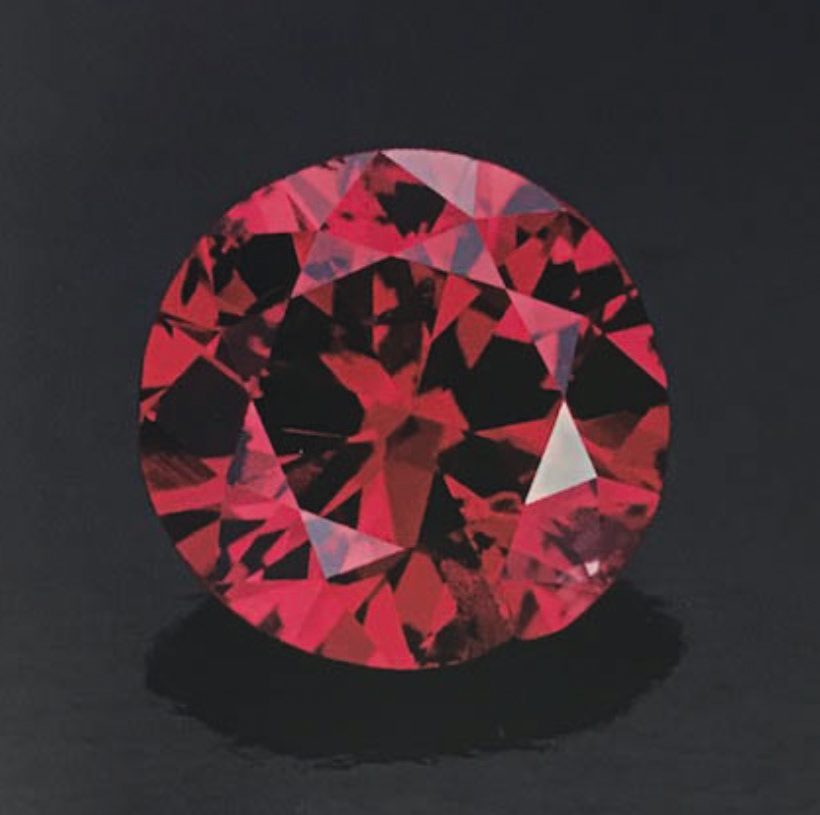
Dan Hoover (2018) reviewed the history of pink and red diamonds around the world and found that India and Brazil have produced almost half the pink diamonds weighing more than 12.7 carats. Additionally, Brazil appears to have produced significant numbers of red diamonds (Figures 13 and 14). Almost all the pink and red diamonds coming from Brazil originate from the Alto Paranaíba province in western Minas Gerais.
The Juina locality, in the state of Mato Grosso, produces unique deep (200 km) mantle diamonds. In studying them, we have confirmed their low nitrogen content and that they are Type IIa and Type IaB (Figure 10).
Historically, diamonds have commanded higher prices simply due to a specific origin, such as Golconda or Argyle (Deljanin, 2014).
Below is a brief look at where colored diamonds are principally mined.
Brown Diamonds: These are the most common and least expensive diamonds. They are mined in Angola, Borneo, Brazil, Congo, and Australia (Argyle, marketed as champagne and cognac). Exposure to extremely high pressure can cause plastic deformation creating vacancy clusters, that could be removed in Type II diamonds by the HPHT process, resulting in colorless diamonds. When found in irregular shapes and light brown they are priced higher than common Type I stones (octahedral, dodecahedral shape).
Yellow Diamonds: They are found primarily in Africa, including Angola, Central and South Africa (lighter Cape Yellow diamonds), Congo (lower grade), and Sierra Leone (Zimmi mine, coined the term Zimmi Yellow, after having produced some of the most extraordinary vivid yellow diamonds). Yellow diamonds have also been discovered in Brazil, Australia (the Ellendale mine used by Tiffany), and Borneo.
The presence of nitrogen (N3 form) is responsible for the yellow color, and single N causes the intense canary yellow. The largest yellow diamond (552.74-carat) found in Canada was discovered at the Diavik mine.
Blue Diamonds: India is responsible for two of the most famous diamonds in the world: the Hope Diamond and the Wittelsbach-Graff Diamond. The Argyle mine in Australia has also produced a fair number of smaller grayish-blue Type I diamonds that contain hydrogen and nitrogen, while classic blue diamonds are Type IIb and colored by boron. The Premier Mine in South Africa is a major producer of blue colors. Brazil and Central Africa occasionally still produce blue diamonds.
Green Diamonds: The majority are mined in Brazil, Australia, Guyana, and South Africa. Brazil, known for its diverse range of colored diamonds, yields some remarkable green specimens. The color is due to radiation that knocks carbon atoms from their lattice position and creates vacancies and interstitial nitrogen atoms. Some diamonds are also exposed to prolonged radiation while buried deep inside the earth and have green surface radiation stains. A white body with green skin, VS, either on the crystal or polished diamond is an indication of natural radiation.
Pink and Red Diamonds: It is believed that roughly 90% of the world’s pink diamonds are found in Australia, in the famous Argyle mine (Figure 15). Brazil, Venezuela, South Africa, and sometimes Central Africa are also known to produce the beloved pink gem, as well as Russia (Archangelsk) although a location in Siberia is known for more purple colors.
The color is caused by plastic deformation, creating unique defects believed to include nitrogen. Natural reds are the rarest and most expensive of all colored diamonds.
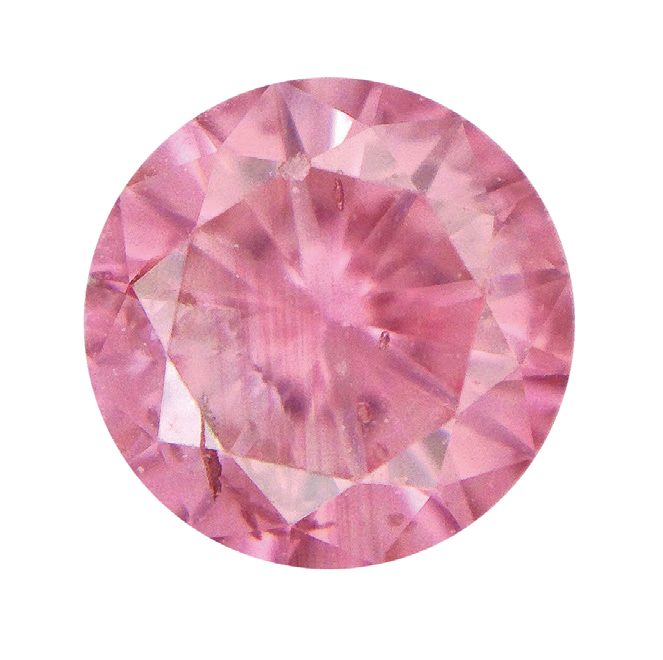
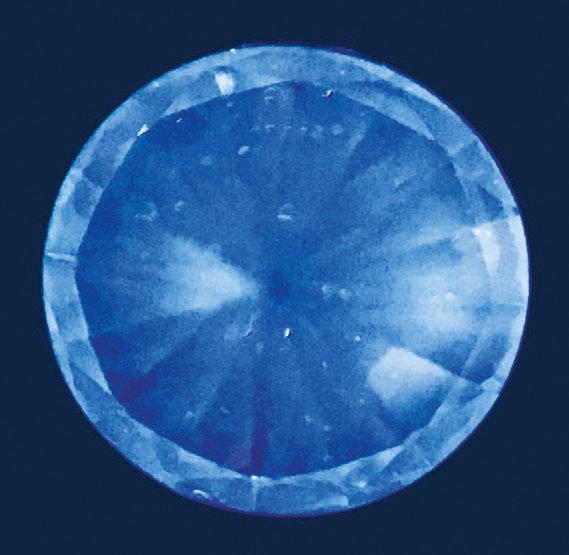
In 2007, author Branko Deljanin received a grant from Rio Tinto for a research project in conjunction with an international team on the characterization of pink diamonds of different origins (natural, treated, and synthetic). The team found that Argyle stones exhibit typical strong blue fluorescence under a LWUV lamp (Figure 16) caused by absorption of the N3 center – 415nm and a characteristic fingerprint in the infrared part of the spectra (Deljanin 2008).
While rare Golconda diamonds are Type IIa, Argyle pinks contain nitrogen and are typically more in the ‘B’ (1175 cm-1) form than ‘A’ (1282 cm-1) making them Type IaAB (Deljanin et al 2008).
From 2014-2020, the GRS Research Swisslab in collaboration with the CGL Canadian Gemlab, accumulated data on pink diamonds from seven countries: Australia (at the Argyle Mine in 2014), Brazil, Congo, Canada, Russia, South Africa, and Venezuela. We have been using standard gem instruments and advanced spectroscopy (VIS, FTIR and PL) along with other advanced techniques to identify provenance type (Deljanin et al 2015).
Some Brazilian, Russian, Venezuelan, and African sources also display strong blue fluorescence, so other advanced tests are key to separation.
When a pink or blue diamond is tested and determined to be from the Argyle Mine in Western Australia, GRS and CGL labs issue grading reports on these diamonds. They have proprietary reporting using their grading protocol (1-10 Fancy Plus™ system with five extra grades for Dark and Deep, for a total of 15 grades) and produce provenance reports jointly (Deljanin 2015, 2016).
The value of Argyle pinks is 20-30% higher than non-Argyle due to consistent branding by Rio Tinto over 30 years and the closure of the Argyle diamond mine in 2020. Argyle has thus become a favored provenance.
In general, consumers are conscious about product origin. In addition to demanding Fair Trade coffee, they want to know where their diamonds (white and fancy colors) come from.
Conclusion
One in 10,000 diamonds are colorful enough to be called a Fancy Colored Diamond. The availability of colored diamonds is less today, simply because there are fewer of them coming out of the (approximately 30 active) diamond mines around the world.
This apparent lack of availability is, however, what we would expect, since natural-colored diamonds are exceptionally rare. Few new diamond mines are coming online, and the existing ones are working at near full capacity or have even closed.
Today, with the internet, it is easy to promote fancy colored diamonds through articles and social media to a wide audience. Therefore, we are seeing the demand for these rare gems grow from very modest beginnings into a full-blown stampede, where certain dealers (those with access to large and important stones), have a waiting list of clients for certain colors and sizes (Deljanin 2013, 2014).
Clearly, higher quality stones in larger sizes with exceptionally rare or highly saturated colors will have the highest gains in price and value over the next five to ten years.
While prices of colorless diamonds decreased 40% in the last two years, fancy color prices are strong. Pinks and blues, for example, represent the most concentrated form of wealth in the world (Figure 17).
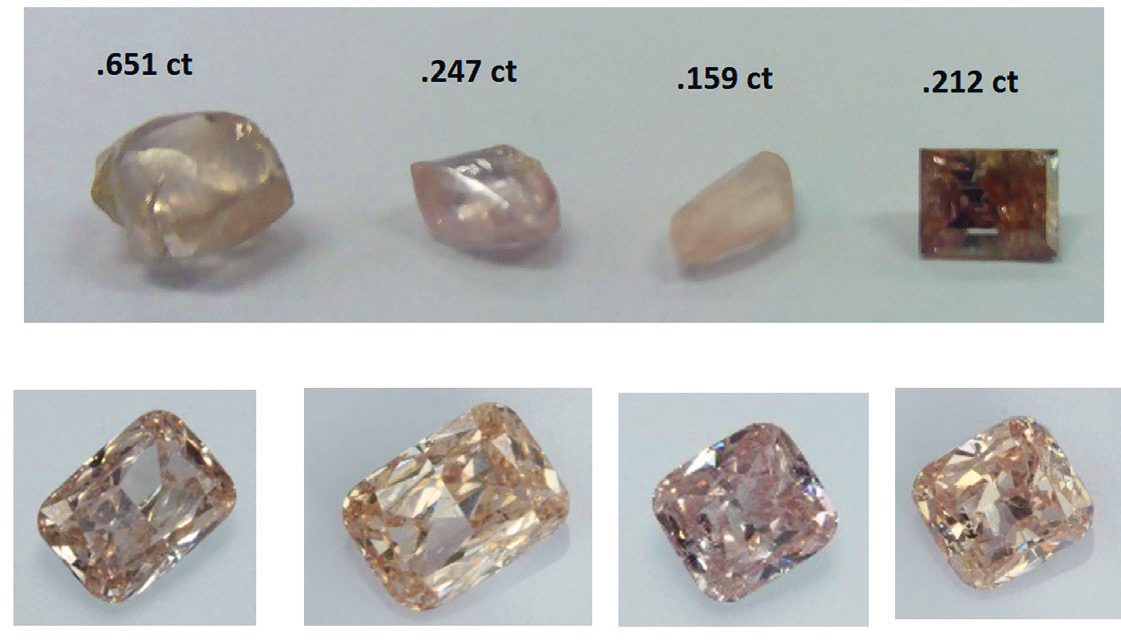
In Brazil, there are no major mining operations, but rare colored diamonds are still being found by garimpeiros. They are large in size compared to other countries, as the majority contain low amounts of nitrogen impurities (Type IIa or Type IaB), thus allowing the crystals to grow freely.
Unfortunately, mining is sporadic and the supply chain from rough to dealers to cutters, to wholesalers and retailers is not without its problems. It is also difficult to legally export rough or polished diamonds from Brazil.
Time will tell if larger mining operations on kimberlites in Mato Grosso and Bahia states will stabilize the diamond sector in Brazil, and we see more beautiful Brazilian diamonds.
Acknowledgments
The authors wish to recognize the late geologist Don Hoover for his dedication to research on pink diamond sources and his map of the Coromandel area and the important diamonds discovered there. We appreciate the assistance of Jurgen Schnellrath (University of Brasil) and Joachim Karfunkel (Federal University of Minas Gerais) for research articles provided and the introduction to Brazilian diamonds. Brazilian dealer Daniel Berringe was kind to provide photos and descriptions of Brazilian rough colored diamonds used in this article. We also appreciate the support of Thiago Leite from Real Gems who organized educational workshops on colored diamonds in Rio de Janeiro, following the ICA Congress in May.
References
Deljanin, B., D. Simic, A. Zaitsev, J. Chapman, T. Middleton, A. De Stefano, et al. 2008. Characterization of pink diamonds of different origin: Natural from Argyle, irradiated, HPHT treated, treated with multiprocess, coated and synthetic. Oral presentation at European Diamond Conference, Berlin, Germany and Proceedings Volume of Diamond and Related Materials.
Deljanin, B. 2013. Fancy that, A technical take on fancy colored diamonds. Jewellery Business.
Deljanin, B. 2014. Pretty in Pink – How origin reports for pink diamonds may affect their value. Jewellery Business.
Deljanin, B., A. Peretti, M. Allesandri. 2015. The World of Pink Diamonds and Identifying them. InColor 58.
Deljanin, B., A. Peretti, M. Allesandri. 2016. Origin of Pink Diamonds – Are they from Argyle, Canada, Laboratory or elsewhere? AGTA Prism.
Hofer, Stephen C. 1998. Collecting and Classifying Coloured Diamonds, 742 p.
Hoover, D.B., J. Karfunkel, D. Walde, R. A. V. Moraes, G. Michelfelder, F. E. Renger, L. C. B. Ribeiro, K. Krambrock, C. F. Klock. 2017. The Alto Paranaiba region, Brazil: A continuing source for pink diamonds? Australian Gemmologist.
Hoover, Donald B., Joachim Karfunkel, Luiz C.B. Ribeiro, Gary Michelfelder, Roberto A.V. Morais, Klaus Krambrock, Dennis Quintão, Detlef Walde. 2018. Diamonds of the Alto Paranaíba, Brazil: Nixon’s Prediction Verified? Australian Gemmologist.
Karfunkel, Joachim, Donald Hoover, Augusto Fonseca Fernandes, Geraldo Norberto Chaves Sgarbi, Klaus Kambrock, Gustavo Diniz Oliveira. 2014. Diamonds from the Coromandel Area, West Minas Gerais State, Brazil: an update and new data on surface sources and origin. Braz. J. Geol. 44 (2).
Orlov, Yuri. 1977. The Morphology of Diamonds. New York, NY, John Wiley & Sons.
Sunagawa, Ichiro. 1990. Growth and morphology of diamond crystals under stable and metastable conditions. Journal of Crystal Growth, Vol 99, Issues 1–4, Part 2.
About the Authors
Branko Deljanin, President of Canadian Gem Lab, is a research gemologist with extensive experience in advanced testing of diamonds and gemstones, and is an instructor at diamond and colored gemstone workshops in 25 countries. He has organized eight international gem conferences, with the next BrankoGems Conference to take place in Montana, June 13-15, 2025 with three trips to sapphire mines. His latest book with renowned co-authors is entitled DIAMONDS – Natural, Treated and Laboratory-Grown (2021). For contact: www.gemconference.com
Elena Deljanin is an experienced gemologist at Gemmological Research Industries (GRI) working closely with precious gems and as a researcher and consultant on rough diamonds. She sorted rough diamonds at the first Canadian diamond mine, Ekati, in the mid-1990s. Together with Branko, she is an instructor at the ATC Center (Gem-A school) in Vancouver for gemological programs leading to the prestigious FGA degree.